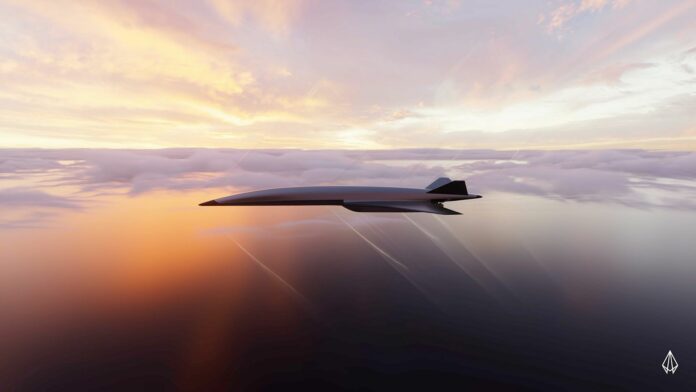
- Lotus Evija’s electric motors are currently being tested in aircraft engines
- A hybrid-electric architecture would make it possible to recreate the operation of a turbojet
- Civil. Military applications are planned.
The return of three-hour flights between London. New York could soon become a reality. British company Helix Motors. Specializing in powerful electric motors for Lotus. The McMurtry Spéirling fan. Is now working with supersonic aviation expert Astro Mechanica.
The purpose of the partnership is to develop a new generation of supersonic engines. Potentially for use in the military. Long-haul delivery services. Orbital launch vehicles. Most interestingly. Commercial aviation.
On a technical level. The Helix offers four efficient electric motors. Each producing more than 1. 200 hp. Weighing only 31.3 kg.
These ultra-light. Extremely powerful engines are integrated into a “dual propulsion system” designed to directly address energy efficiency issues. Fuel costs. CO2 emissions make supersonic flight virtually impossible these days.
According to Astro Mechanica. These engines “allow the drivetrain to be separated from the core of the turboshaft.
” The turbogenerator then uses a gas turbine to produce electricity through two motors that drive the four Helix motors responsible for driving the fan. Compressor.
The idea may seem complicated. In summary. This hybrid system can imitate a subsonic turbojet. A medium supersonic turbojet. A high supersonic turbojet.
The aim is to ensure optimal launch efficiency up to Mach 3+. For example through the use of electric motors in modern hypercars that close torque gaps. Enable electric driving in the city to save fuel.
A holiday from another world
Astro Mechanica is currently testing the fourth generation of its Duality engine prototype with the goal of conducting a first test flight within three years.
At the same time. The company is already working with Helix on a fifth generation of engines that are lighter than the current prototypes.
Specifically designed to work at extreme altitudes: we are talking about suborbital environments.
Within ten years. Astro Mechanica says its goal is to make on-demand supersonic flight as accessible. Affordable as traditional commercial flights are today.
An ambitious promise that has yet to withstand the impact of reality.
- “We see something very different” – Nvidia CEO Jensen Huang comments on the speculative bubble that threatens AI
- Hybrid office automation: how to adapt equipment. Computing support for in-person. Remote work
.

