
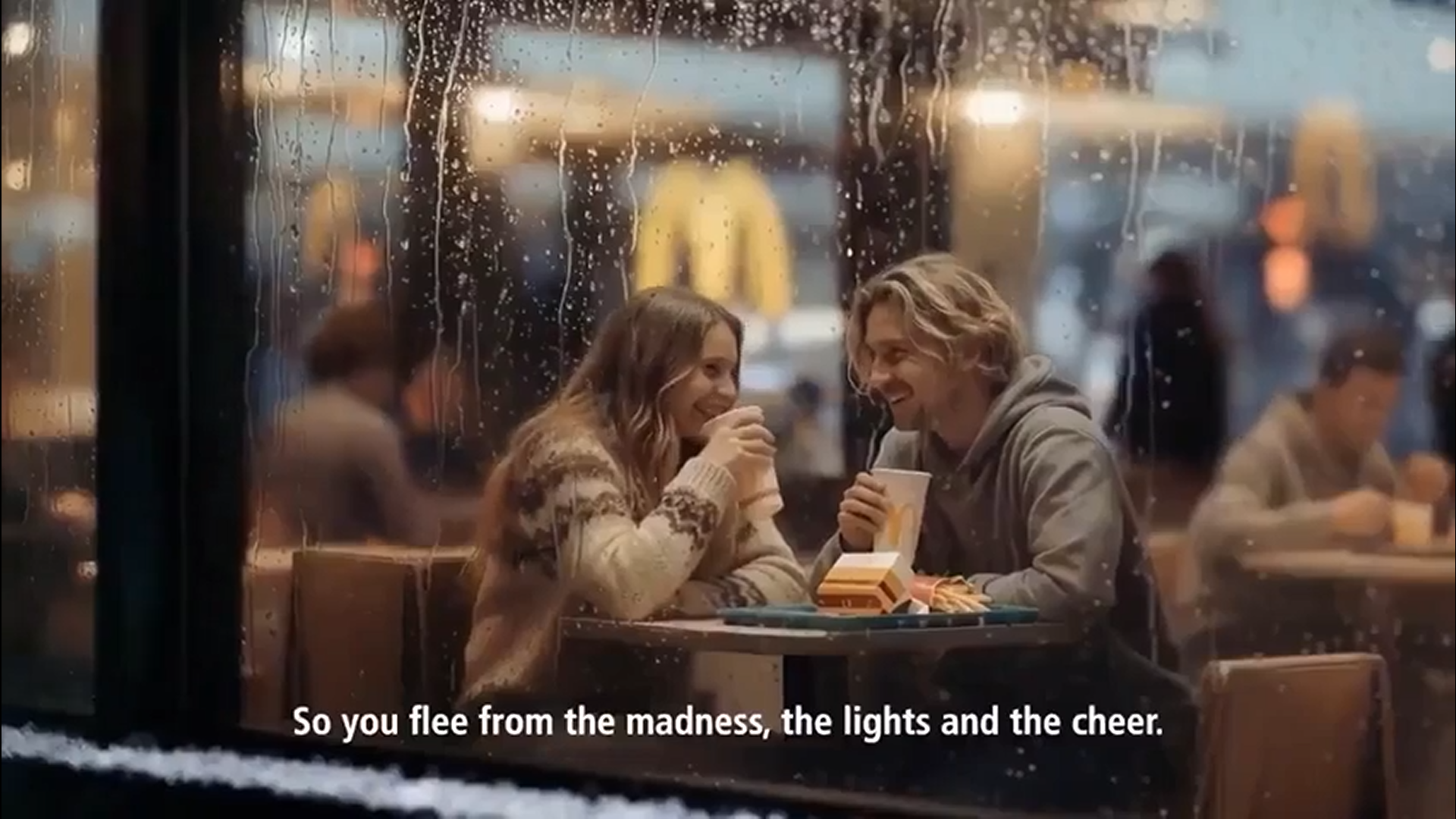
- McDonald’s stopped airing an AI-generated Christmas ad
- Viewers complained about the weird graphics and chaotic style.
- There may not be much public interest in ads created with AI
An AI-generated ad for McDonald’s Netherlands has disappeared from screens after causing an avalanche of ridicule and anger among viewers. Complaints about disturbing images and a strangely violent tone for a Christmas advert meant the ‘scariest time of the year’ was only shown for a few weeks.
Advertising agency The Sweetshop produced the AI video using its own engine called The Gardening Club. It combined several fast-paced sequences of catastrophic moments during the Christmas season with slightly different people and environments familiar to AI video viewers. Balloon hands, fireball cakes and slightly oversized eyes made it clear that McDonald’s was the only way to relieve the Christmas stress. McDonald’s removed the video from YouTube three days after it was posted and disabled comments before removing it entirely. But it had already been found and spread on the Internet.
The Sweetshop, the production company behind the campaign, released a defensive public statement that positioned the ad not as an AI-powered stunt, but as a film made with enormous effort. They claimed the process required seven weeks of sleepless nights and ten AI and post-production specialists.
“We shot daytime-like footage (thousands of frames) and then edited it as we would in any cutting-edge production. This wasn’t an AI trick. This was a movie,” Melanie Bridge, CEO of The Sweetshop, wrote in a post. Response to remove the ad (which in turn was removed). “I don’t see this commercial as a novelty or a cute seasonal experiment. To me, it’s a testament to something much bigger: when craft and technology come together with intention, they can create works that feel truly cinematic. So no, AI didn’t make this film. We did.”
Yes, the ad appears to be an attempt by a company to avoid actual advertising by claiming that it represents risky artistic behavior. But it is also true that it is not easy to put AI hallucinations into context. Making bad AI presentable takes time and creativity.
Failure at this level, however, feels like an assault on the viewer’s intelligence, not to mention taste. Quite the opposite of the warm, seasonal vibe that McDonald’s was probably trying to evoke.
Bugs in AI ads
Generative AI tools are now cheap, accessible and fast. Marketing teams around the world use them to publish ads quickly and easily. But this ad shows that just because you can create an ad with AI doesn’t mean you should.
And McDonald’s certainly isn’t the first brand to venture into this uncanny valley this year. Coca-Cola’s 2025 holiday campaign has drawn similar criticism for its breakneck pace and algorithmic monotony. AI-generated ads are becoming more common and less popular. When it comes to tone, continuity and visual coherence, AI still can’t compete with human production.
McDonald’s may not suffer any long-term damage, but the incident will be remembered as another example of what happens when brands treat AI as a gimmick. You can try to sell fries with an AI video, but it won’t work if people feel uncomfortable watching the ad.