How We Review E-Bikes: Our Method, Scoring and Sources
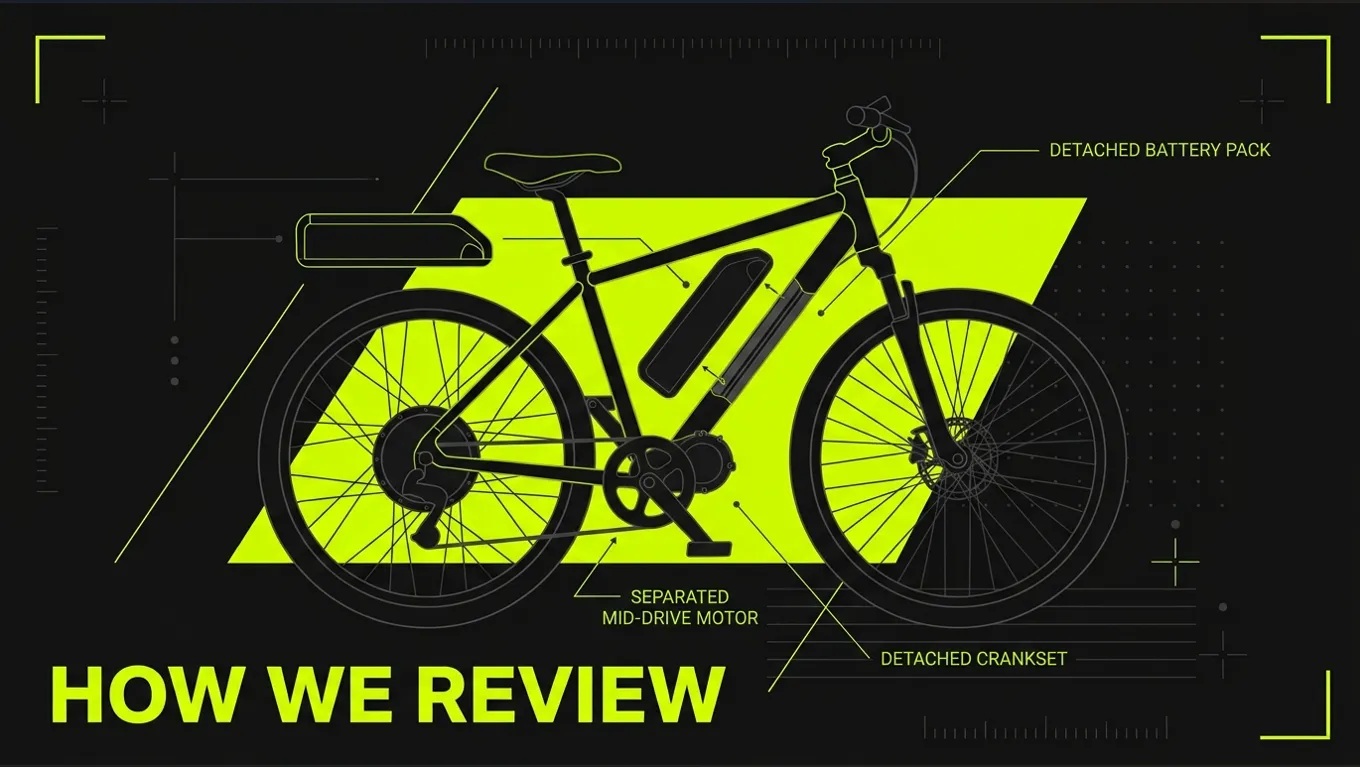
NewForTech reviews e-bikes from the desk, not the saddle. Every rating comes from independent research and source checks, because we do not ride, weigh or lab-test the bikes. This page explains how we review e-bikes, how the scores work and where the method runs out.
Read it before you trust a rating. A score is only as useful as the method behind it, so ours is public.
- Every review is built from independent research, not from physically testing the bike.
- Each review states its real source count and the date it was last verified.
- Five sub-scores cover range, weight, value, components and longevity, then average to one rating.
- Affiliate links never change a score, and every article with one carries a disclosure.
- Skip our ratings if you need lab-measured range or a feel for fit and ride.
How we review e-bikes
A NewForTech review is a research product. We collect what manufacturers, retailers, owners and independent reviewers have published. Then we check those claims against each other.
That method has a clear strength. Spec sheets, owner reports and outside benchmarks rarely agree, so the gaps between them are the most useful finding. When sources conflict, the review says so instead of picking a winner for you.
Reviews never describe a ride as if we took it. When a sentence reports how a bike feels or behaves, it names the source. If research turns up nothing on a point, we leave the point out.
Every review follows the same layout, so the method, the specs and the scores sit in the same place each time. Spec tables carry a standing note that all figures are manufacturer-claimed.
The five source types we cross-check
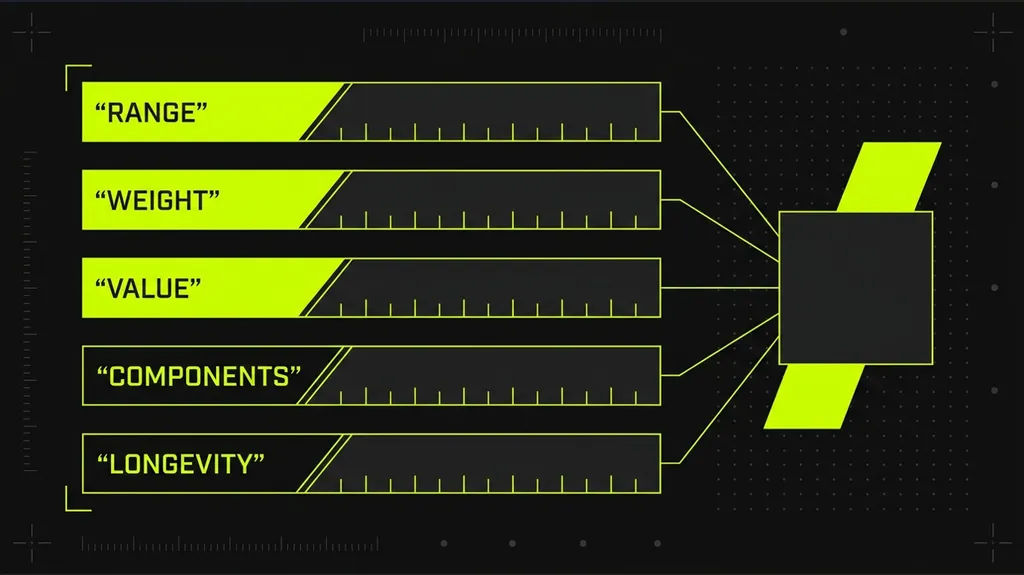
The five sub-scores that feed every rating. credit: NewForTech illustrationEvery review draws on at least three of five source types. We use whatever exists for that bike, and we never count a source we did not open.
First come manufacturer specs and official documentation. These supply the numbers, such as battery capacity, motor power and listed weight. Second are verified-purchase and retailer reviews, which expose recurring complaints that spec sheets leave out.
Third are independent expert reviews and lab benchmarks, taken from outlets with no affiliate tie to the bike. Fourth are forum and support threads, where owners report problems months after buying. Finally, price-history data shows whether a discount is real or simply the usual price.
Each type has a weakness, which is why we use them together. Manufacturer specs are claims, and retailer reviews come from self-selected buyers. Benchmarks cover few bikes, while forum threads are anecdotes. Because the weaknesses differ, a point that holds across all five is far more likely to be true.
Each review prints its actual source count, the categories used and a last-verified date. If a review says 14 sources, that is the number we opened.
What we check on every e-bike
Scoring starts only after the basic facts hold up. Four checks come first: the legal class, the battery, the safety standard the maker names and the warranty terms.
Legal class and assist limits
A bike’s class sets the rules for where it can be ridden, so we record it first. In Europe, the EN 15194 standard covers pedal-assist bikes with a maximum continuous rated power of 0.25 kW. Assistance must fade out and cut off at 25 km/h, or sooner if the rider stops pedalling.
US federal law defines a low-speed electric bicycle as having working pedals and a motor up to 750 W. Most states then sort bikes into three classes. Class 1 and Class 2 assist up to 20 mph, and Class 2 adds a throttle. Class 3 is pedal-assist only, up to 28 mph. When a listing claims a speed or power outside these limits, the review flags it.
Battery capacity and safety standards
Battery capacity anchors every range judgment. Watt-hours equal volts multiplied by amp-hours, so a 48 V, 10 Ah pack stores 480 Wh. If a listing gives only amp-hours and volts, we do the multiplication ourselves.
We also note which safety standard the maker names. UL 2271 covers the battery pack. UL 2849 covers the whole e-bike electrical system, not just the battery. A certified battery does not certify the full bike, so the review says which one the listing claims. Neither standard says anything about range or motor performance.
Warranty, spare parts and support
We read the warranty for its length, for what it excludes and for whether the battery is covered separately. We also check whether replacement batteries and chargers are sold on their own. A bike that cannot be repaired after the warranty ends loses points under longevity, however well it is specified.
How we score range, weight and value
Each e-bike gets five sub-scores on a 0 to 10 scale, shown to one decimal. A 5 means typical for the bike’s type. Scores above 8 or below 3 need strong evidence from more than one source.
We explain range, weight and value first because they are the hardest to compare across listings.
Range
Range is the least reliable number on any spec sheet. Sellers’ own buying guides say makers usually quote it for a light rider, flat ground and low assist. Add a heavier rider, a hill or a higher assist mode, and that distance can shrink sharply.
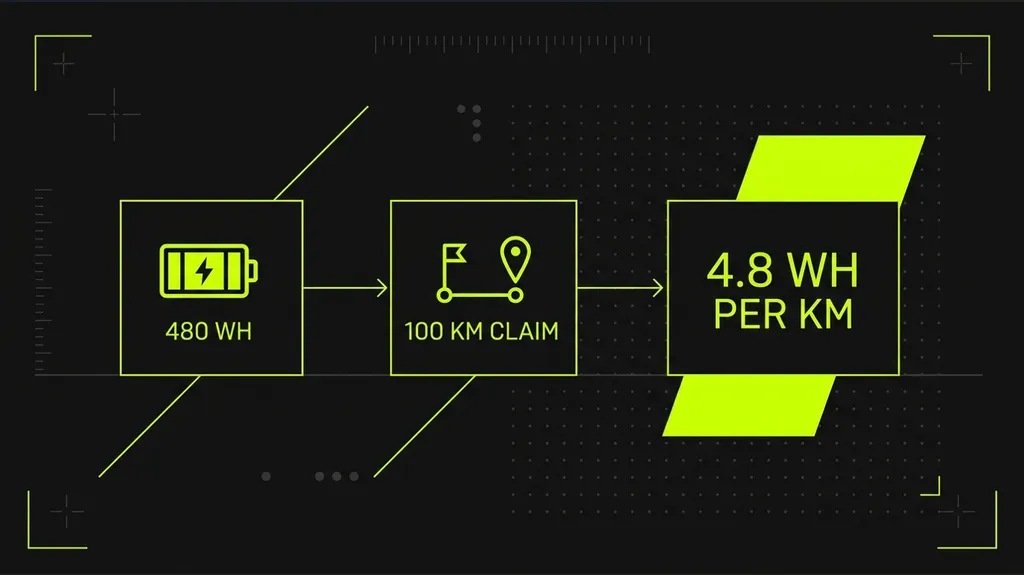
How a range claim becomes an implied energy figure. credit: NewForTech illustrationSo we score the claim, not the number. First, we divide the battery’s watt-hours by the claimed distance to get the implied energy use. On a 480 Wh pack, a 100 km claim implies 4.8 Wh per km. Next, we compare that figure with similar bikes and with the distances owners report. Finally, we check whether the maker states its test conditions, and the review reports them when it does.
A bike whose claim matches owner reports outscores one with a bigger number and a bigger gap. If owner reports are thin, the review says so.
Weight
Weight is scored against the bike’s type, never across types. A folding bike and a cargo bike are not judged on the same scale.
We take the listed weight from the maker and confirm it on at least two pages. Retailers copy spec sheets and sometimes drift, so a mismatch gets flagged in the review. When both figures appear, we record weight with and without the battery.
Lighter does not always win. A cargo bike is judged on what it carries, while a commuter that lives upstairs is judged on every kilogram.
Value
Value compares the price with what the bike offers. We weigh battery capacity, motor, components, warranty and what is missing from the box, such as lights or fenders. Price history matters too, because a discount means little if the bike has sold at that price for months.
We pick one or two direct alternatives with a similar class and battery size. That way the comparison uses real rivals instead of a category average.
The score uses the regular price. If we find a real coupon code, the review lists it, but the code does not move the score. Shipping costs and warranty terms count because a bike that is costly to ship or repair is not cheap. The review also states which market the price applies to, since shipping and import costs vary by country.
The five-part scorecard and the overall score
Two more sub-scores complete the card. Components covers the motor, brakes, drivetrain and tires, plus any safety standard the listing names. Longevity covers warranty length, replaceable batteries, spare-part supply and repair reports from owners. It also notes whether the maker states a battery cycle rating, since capacity fades with use.
The table below shows what each sub-score draws on. Every review uses the same five rows.
| Range | Watt-hours, implied energy use, owner reports |
|---|---|
| Weight | Listed kg against bike type |
| Value | Regular price against what the bike offers |
| Components | Motor, brakes, drivetrain, named safety standard |
| Longevity | Warranty, battery swaps, spare parts, repair reports |
The overall score is the plain average of the five sub-scores, rounded to one decimal. No sub-score counts double. If a review ever weights them differently, the text states the weighting. A verdict of one to three words, such as Recommended, sits beside the number.
Affiliate links and editorial independence
Some links on NewForTech are affiliate links. If you buy through one, we may earn a small commission at no cost to you. Every article that carries one includes a disclosure.
Buy buttons are also coded as sponsored, so search engines can see the relationship. In the US, the FTC’s Endorsement Guides treat affiliate links as a connection that must be disclosed clearly.
Retailers and manufacturers do not influence our verdicts. We re-check pricing, availability and specs independently of any affiliate relationship. A bike with no affiliate link goes through the same scorecard.
We publish a coupon code only after finding it on a retailer or affiliate-network page we opened. Codes are never invented.
Corrections and updates
Prices, stock and specs change, so every review shows the date its sources were last verified. Treat an old date as a warning. Before a date changes, the research is re-run. The date is never edited alone.
If you spot an error, tell us through the site’s contact page. We re-check the claim against its sources, fix the text and update the verified date. When a fix changes a score, a dated correction note goes at the top of the review.
Manufacturers can send corrections too. A claim changes only when a spec sheet, certification listing or similar document backs it up. A request alone never moves a score.
Frequently Asked Questions
01 Does NewForTech test e-bikes in person?
02 Do affiliate links change a rating?
03 Why does real e-bike range differ from the claim?
04 How do I report an error in a review?
Who should skip our ratings
Desk research has a real limit: it cannot catch a fault in one bike. A loose bolt or a rattling motor can reach a single buyer without ever appearing in the reports we read. Owner reports also lag behind a launch, so a model that just arrived has little to read.
So skip our ratings if you need lab-measured range or a verdict on fit. Riders who are very tall, very short or carrying heavy loads should test-ride before buying. For everyone else, treat a score as a well-sourced starting point, and check the review’s source count and date before acting on it.