
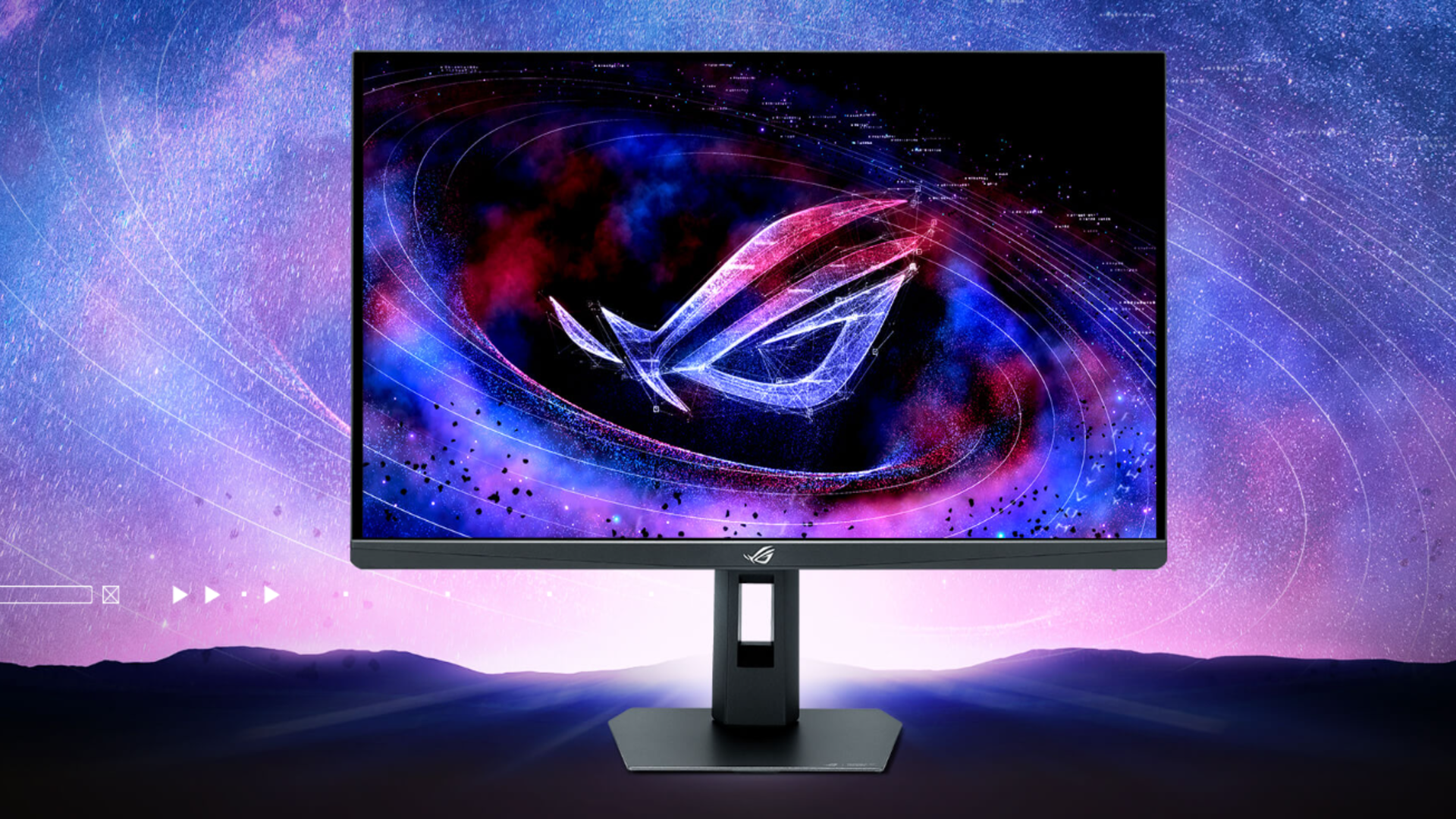
- Asus ROG Strix XG27JCG offers 5K resolution with high refresh rate and sharp graphics
- Extreme Low Motion Blur 2 handles backlight zones for clearer, faster scenes
- The display offers a wide color gamut suitable for video editing workflows.
Asus introduced the ROG Strix XG27JCG to expand its presence in the 5K monitor segment and target both gamers and creative users.
The screen combines high refresh performance with compact visual details on a 27-inch Fast IPS panel with a resolution of 5120 x 2880.
Offers a 180Hz overclocking mode. However, maintaining this level requires modern GPUs with sufficient bandwidth and compatible graphics hardware for stable 5K output.
Improved motion clarity with ELMB 2
As part of the company’s focus on motion clarity, the ROG Strix XG27JCG features Asus’ updated Extreme Low Motion Blur 2 system.
The setup uses dual-band backlighting with multiple coordinated zones that adjust lighting during fast-paced scenes.
This gives the screen a more structured approach than previous ELMB designs.
Asus claims the XG27JCG offers brighter output and clearer motion, though these claims still require independent verification.
The monitor is designed for gaming activities, but is also suitable for larger workloads that may require the flexibility of a professional monitor.
With a DCI-P3 color gamut of 97% and VESA DisplayHDR 600 certification, the XG27JCG can serve as a monitor for video editing and other workflows that require accurate color reproduction.
But the HDR implementation still relies on edge lighting and can struggle to maintain uniformity in dark scenes.
The company noted that the 5K design offers much more workspace than comparable 4K displays.
However, real productivity gains depend on application scalability, not just resolution numbers.
AI-powered features such as Dynamic Shadow Boost, AI Visual and Dynamic Crosshair rely on automatic interpretation of the scene to adjust contrast, orientation and visibility.
These additions can support some game scenarios, but reduce manual accuracy.
For connectivity, this device has DisplayPort 1.4 DSC, HDMI 2.1 and USB-C with 15W Power Delivery, which maintains flexibility but limits the overall capabilities of the dock.
The stand supports height, tilt, swivel and swivel adjustment using a compact base to reduce desk space requirements.
With this launch, the market for 5K displays continues to grow and the price range also expands.
For example, the JapanNext 5K 27-inch screen costs $227.49, which puts it in the low-end segment, while the KTC H27P3 5K 27-inch screen costs $749.99, which puts it in the premium range.
These differences will determine interest in 5K panels and influence how quickly the technology can move beyond specialized use, with affordability still the key factor.