
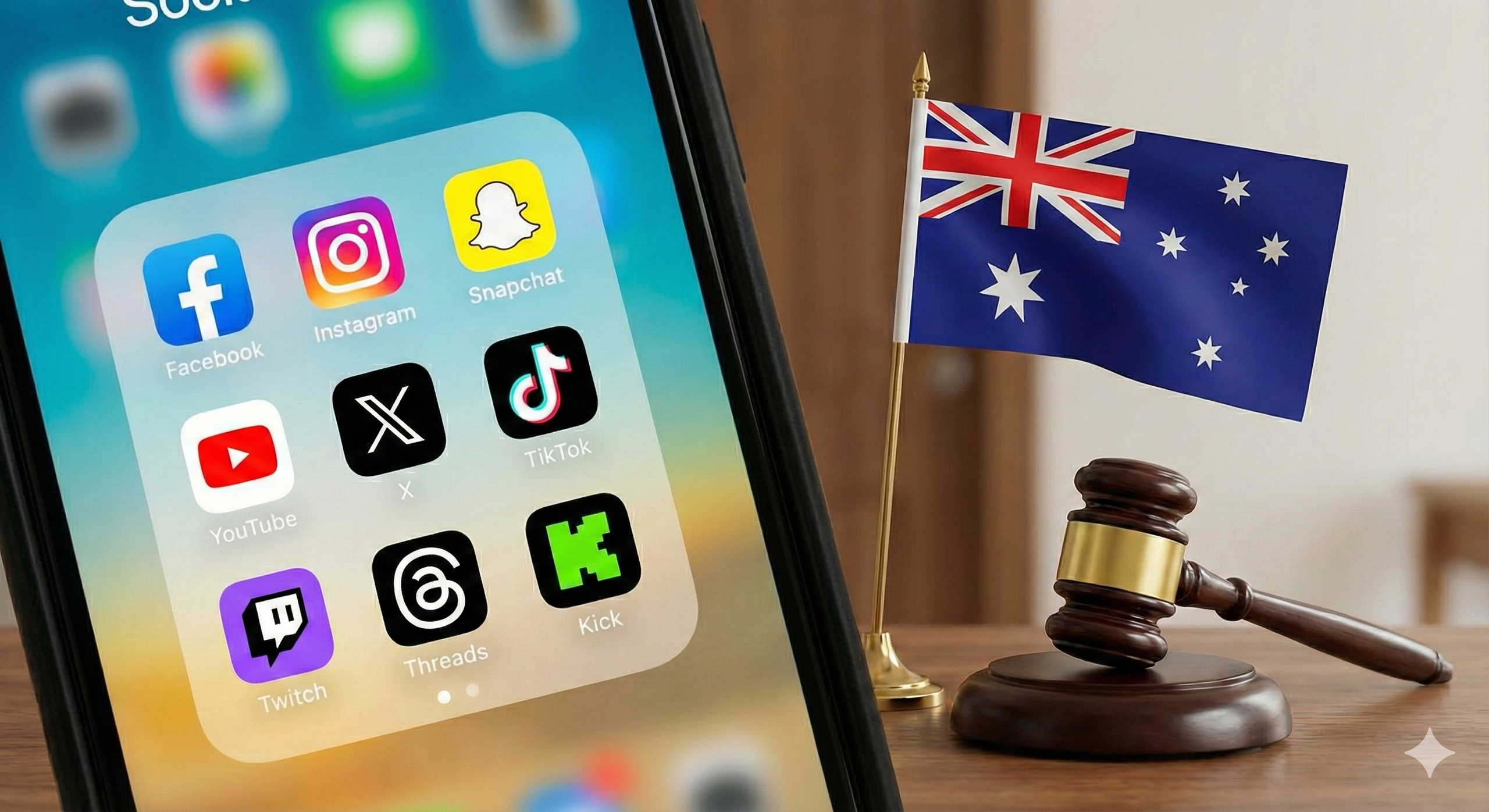
- Australia’s social media ban comes into effect on Wednesday, December 10.
- Some social media platforms will start deleting accounts this week
- Experts warn of major compromises in data protection and security
Australia’s ground-breaking social media ban will be introduced next week. As of December 10, popular social media platforms including Instagram, Snapchat, TikTok and YouTube must take “appropriate measures” to prevent under-16s from using their services. If they don’t, they face fines of up to 49.5 million Australian dollars (about $32 million).
Communications Minister Anika Wells said the legislation fulfills a “moral obligation” to protect children online. “We’re firmly on the side of the parents, not on the platform,” says Wells he told the BBC.
However, experts are concerned about the data protection risks associated with mandatory age verification. “Age verification systems are surveillance systems that threaten the privacy and anonymity of every individual. But the Australian government has recently decided to ignore these dangers,” the US company said.
The National eSafety Commissioner also clarified that affected social media platforms must prevent under-16s from using a VPN to bypass restrictions, although the regulator declined to explain how this would be done.
How does the social media ban work?
Details of the specific methods of age verification that will be used are not yet known. However, it seems that some are trying to avoid the problem and act quickly.
Meta announced that it would launch I will be deactivating existing accounts this week.. It said it will notify affected accounts before the deadline to “give them the opportunity to back up their contacts and memories.”
The company said using App Store authentication methods would be more effective than platform-specific measures. During an initial investigation the guardian says the selfie video platform is working successfully for some. Findings from the Australian Government’s Age Assurance Technology Study suggest facial age estimation systems may be less effective for Indigenous Australians and people closer to 16 years of age.
TikTok and Snap said so which would use behavioral tracking technology to predict a user’s age. “If we identify someone who claims to be 25 years old, but their behavior indicates they are under 16, we will disable those accounts from December 10,” said Ella Woods-Joyce, TikTok’s head of public policy for Australia. Reuters said.
Snapchat has now started rolling out age verification Sample before the introduction date of December 10th. To verify the user’s age, the platform offers two options: ConnectID, which validates identity against existing bank information, or k-ID, which uses government identification and facial scanning technology.
YouTube also recently joined the list and confirmed that it will also block access for children under 16. However, the company did. criticism of the lawThey said they “believe in protecting children.” IN the digital world, no Of The digital world.
The company is vague about how it determines a user’s age, saying only that it “analyzes age and other signals associated with your Google Account.”
During the first two-year evaluation, the methods used can be developed. “It’s not a cure, it’s a treatment plan, and treatment plans will continually evolve as we adapt, treat the damage and see what works and what doesn’t,” Wells told the BBC.
Implications of age verification for data protection
Since each platform uses different tools to verify the age of users, it is difficult to estimate the overall impact on user privacy.
While some tools arguably offer more privacy protection than others, almost all involve the collection and analysis of sensitive data, from official documents to biometric or behavioral analytics.
Cyber security expert Stacey Edmonds warned that mass collection of this data could lead to an increase in fraud. “What is the most important thing that scammers and predators want from us?” “Our personal information and data … and we share it,” Edmonds ABC said.
Dr Catherine Page Jeffery, professor of media and communication at the University of Sydney, echoed those concerns in a statement: “Young people and parents doubt this will work and are concerned about privacy and data security.”
Alternative solutions may endanger children’s safety
Similar to similar restrictions in the UK and several US states, most recently in Missouri, demand for VPNs in Australia is expected to increase next week. However, this hasty circumvention of restrictions can lead users into dangerous territory.
“A lot of people look for a free VPN and end up downloading a bunch of other spam software onto their computers or phones, increasing the risk of a data breach,” Daswin De Silva, professor of artificial intelligence and analytics at La Trobe University, told ABC News.
“It’s going to look a little messy down the road.” That’s what Minister Wells said.. “Major reforms are always needed.” But the Internet is extremely chaotic, and compromising one element almost always has unintended consequences elsewhere.