
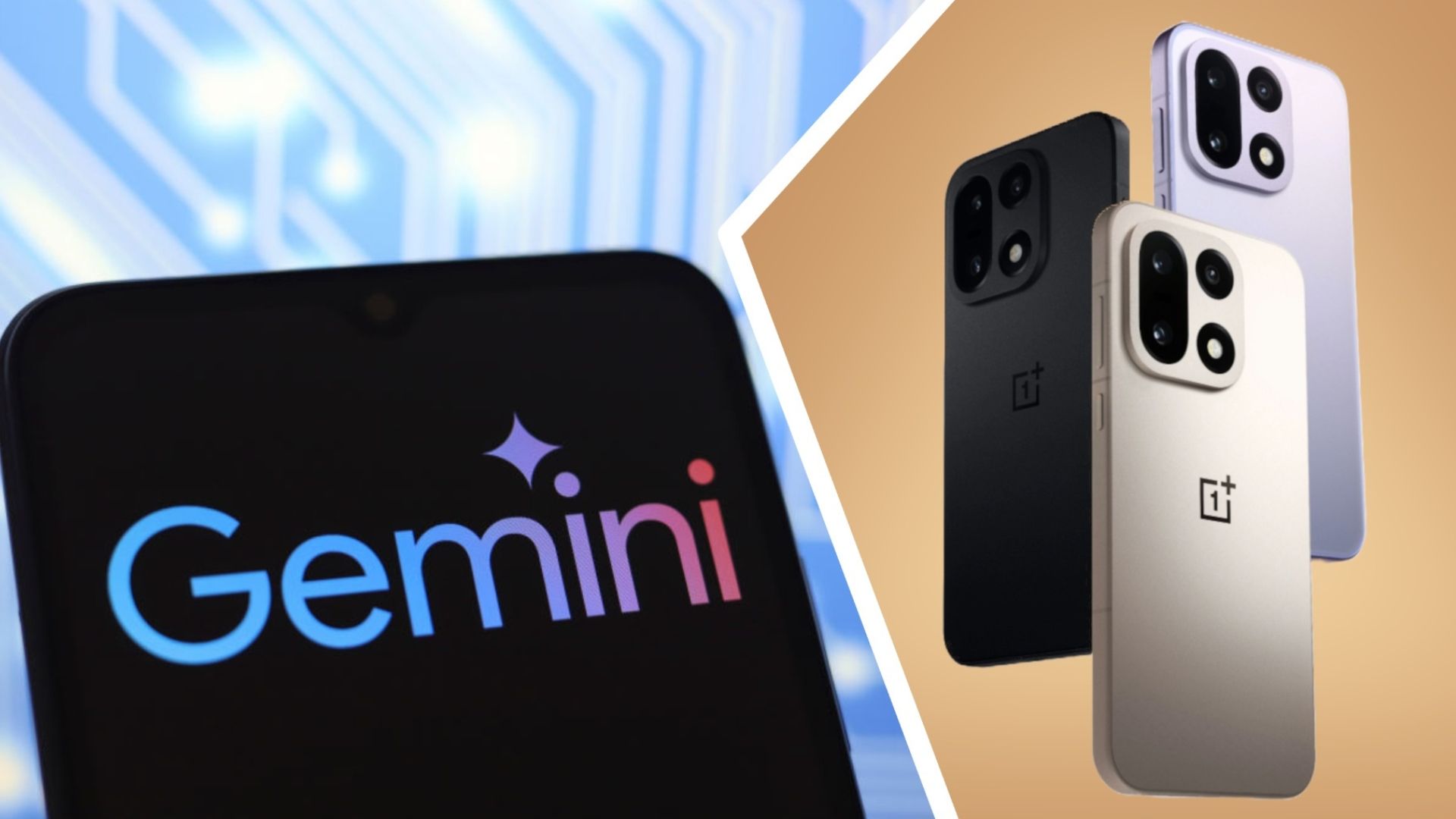
OnePlus is taking a step towards truly personal artificial intelligence in smartphones, based on Google Gemini. The manufacturer has confirmed a new integration with its Mind Space feature, which turns user-recorded notes, thoughts and content into data that can be understood and used by artificial intelligence.
If the promise is fulfilled, the OnePlus smartphone could behave even more like a digital companion and expand on the already promising Mind Space concept.
“To unlock the full potential of Mind Space, we worked with Google to deeply integrate Mind Space with Google Gemini. This powerful integration allows Gemini to access the information stored in Mind Space and combine it with its advanced LLM and real-time Internet access. This is the industry’s first personal AI using Gemini.
Through Google Gemini, you can connect to Mind Space to extract and use previously recorded information,” said Shi.
For anyone attracted to the principle of Mind Space, a smart space that you activate with the plus button and with which you can contextually store personal information on your device, the integration with Google opens up interesting possibilities.
According to Celina Shi, Gemini could use this data to answer questions, plan events, or even automate certain tasks based on context. An area that only a few virtual assistants master today.
What role does mental space play?
Mind Space represents OnePlus’ desire to provide a space where the user can place what concerns him mentally: tasks, goals, reminders, notes… The idea is to keep these elements in an active place rather than letting them get lost in a forgotten application. Then the phone can do something relevant with it.
With Gemini, a OnePlus 15 equipped with OxygenOS 16 can understand that the user wants to organize a birthday, carry out a renovation project or book a trip to the city. The device can then help you search, write messages, create lists or manage your data. This is exactly the change we are looking for: an artificial intelligence that no longer just reacts, but acts based on context.
Of course, it all depends on how much trust Google and OnePlus have in handling personal data. But the sector is clearly moving in that direction. An AI becomes most relevant when it really knows its user, and the more it knows, the more effective it becomes.
The promise of OnePlus artificial intelligence
OxygenOS 16 represents the next big step forward for OnePlus software, as it aims to go beyond simple AI devices.
The system debuts on the OnePlus 15 and is based on the “Intelligent Yours” philosophy. The goal: AI adapts to the user and not the other way around.
According to the brand, this approach aims to simplify everyday life, stimulate creativity, improve organization and strengthen security. And all this without compromising the phone’s performance.
These promises may sound familiar to you, as they have become part of the conversation for many brands. But the integration of the twins brings real news. Samsung is also working with Google, but OnePlus claims to be the first to connect Gemini to a personal storage system like Mind Space.
This strategic approach by Google makes sense: OnePlus doesn’t have the resources to develop a basic AI model, but its expertise in fast and lightweight features has been a hallmark for more than a decade.
Now we have to see how Mind Space and Gemini work together in real conditions. But everything indicates that OnePlus wants to play a central role in the next generation of smartphones equipped with artificial intelligence. If gaming succeeds, the device can behave less like a screen and more like an extension of the brain.