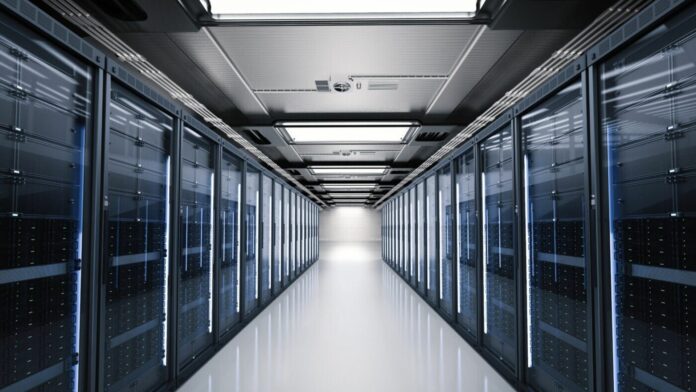
- About 7,000 data centers operate outside the effective range of 18 to 27 degrees Celsius.
- Every year, about 600 places around the world experience heat temperatures exceeding 27 degrees Celsius.
- Despite the heat, Singapore has more than 1.4 gigawatts of data centers.
Most of the world’s data center capacity is located in climates that offer consistent cooling and are less energy efficient.
According to ASHRAE industry guidelines, the optimal inlet temperature range for data centers is 18°C to 27°C.
However, an analysis of data centers around the world revealed that approximately 7,000 of the 8,808 operating facilities operate outside this limit.
Climate change has now become the global norm
About 600 facilities are located in areas where the average annual temperature is above 27 °C, while most of the remaining facilities operate in colder regions where temperatures are below 18 °C.
For example, in Singapore temperatures reach around 33°C and humidity levels often exceed 80%.
But the country has more than 1.4 gigawatts of operating capacity, and authorities have approved hundreds of additional megawatts under strict efficiency controls.
Higher ambient temperatures increase cooling requirements, reduce energy transfer efficiency, and place additional strain on the local power grid.
Data centers contributed about 7% of the country’s electricity consumption in 2020, and this figure is expected to increase significantly if capacity expansion continues at the current pace.
The demand for cloud hosting is also increasing in areas where the weather is already hot.
The global energy industry estimates that data centers will consume approximately 415 terawatt-hours of electricity in 2024, equivalent to about 1.5% of global demand.
This number is expected to double by 2030 as higher-density systems become more popular.
Server siting decisions are typically based on power availability, electricity prices, access to water, land costs, and regulatory incentives.
When operators evaluate new designs, these considerations often take priority over temperature compatibility.
Air cooling remains the dominant approach worldwide, accounting for more than half of data center cooling installations.
Liquid cooling is gaining momentum, especially in high-density racks with power consumption over 100 kW, but upgrading existing equipment is still capital intensive.
Many of the most popular data center markets face energy and water shortages, limiting the effectiveness of mitigation strategies.
Extreme heat could affect nearly two-thirds of the world’s largest data centers by 2040, according to a risk assessment.
In many countries, including Singapore, Nigeria and the United Arab Emirates, all operating plants are already located in areas with temperatures above 27 °C.
Overall, the evidence suggests that current expansion models prioritize short-term demand and regulatory compliance over long-term environmental performance.
There are reports that artificial intelligence is in bubble territory, with celebrities like Michael Burry and Pat Gelsinger warning against overvaluation and speculative hype.
The rapid expansion of AI workloads is causing unprecedented growth in data centers, resulting in rapidly increasing power requirements and operating costs.
This increase in energy consumption clearly reflects the economic impact of the so-called AI bubble, combining inflated expectations with real pressure on infrastructure.
For volume device

