
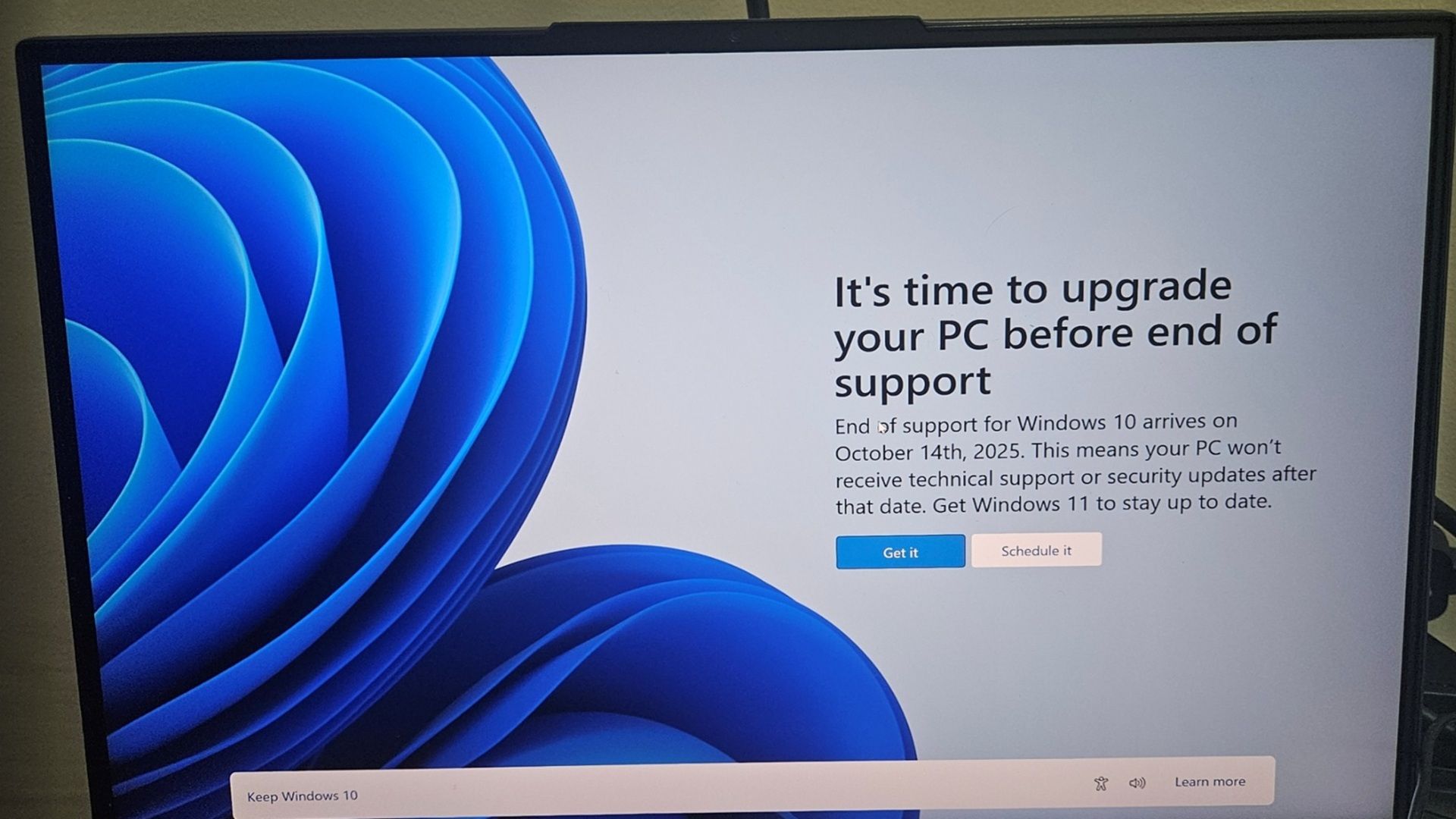
- Windows 10 is still found on two out of five active desktops worldwide
- Companies delay updates with paid security enhancements for critical systems
- Consumers keep their old computers running for lighter tasks and backups
Despite the end of free support for many versions of Windows 10, usage data still shows a slow transition to Windows 11.
Statistics from November 2025 show that Windows 11 accounts for 53.7% of active Windows PCs, while Windows 10 still accounts for 42.7%.
The data covers both consumer and business entities and highlights only a limited number of locations, which already limits reliable interpretation of adoption trends.
Updates for Windows 11 seem very slow
Even with these caveats, Windows 10’s continued existence seems hard to ignore, and the gap between the two systems is closing much more slowly than many hardware vendors expected.
Enterprise environments continue to be more cautious about large-scale changes to operating systems.
Many companies still using Windows 10 rely on extended security updates as a structured fallback mechanism rather than as a permanent sanctuary.
Analysts describe this approach as strategic because it covers critical systems connected to legacy apps and specialized devices and currently does not support Windows 11 drivers.
In many organizations, large-scale computer replacement resources remain unallocated for a large portion of active fleets.
Migration costs go beyond licenses and hardware and include compatibility testing, deployment planning, redevelopment and workflow disruption associated with the transition from desktop software.
One of the main obstacles to Windows 11 is the lack of features that will force an immediate change in business purchasing behavior.
Other than the end of free support, there were few clear incentives to discontinue regular device replacement programs.
Hardware vendors report that upgrade efforts lag far behind previous operating system transitions.
Dell executives have publicly confirmed that the Windows 11 version is in the double digits after previous update cycles, reflecting previous support timelines at similar times.
In an uncertain economic environment, companies seem reluctant to undertake large, unplanned upgrade programs that are closely tied to operating system timelines.
Consumer usage data further complicates overall adoption statistics.
Many Windows 11 device buyers continue to use older Windows 10 PCs as a second computer for limited tasks.
These existing systems continue to generate traffic that is included in the public usage statistics.
In some parts of Europe, consumers continue to receive security updates without paying for them, further reducing the need to replace working hardware.
Familiar workflows and connectivity to existing productivity tools exacerbate this decline for non-enterprise users.
Available data suggests that Windows 11 growth is a result of net additions rather than true replacements.
On paper, Windows 10 appears to be in slow decline as data shows that Windows 11’s operational advantages are limited.
IN the record