Kingbull Discover 2.0 Review: The Fat Tire eBike That Punches Way Above $1,099

The Kingbull Discover 2.0 review most buyers want right now is simple: does it actually hold up, or is it another budget bike that looks great on paper and disappoints on the road? After digging into the specs, pulling independent test data, and cross-referencing owner feedback, the answer is more nuanced than either camp wants to admit. At $1,099 with a Bafang 750W motor, a genuine torque sensor, and Samsung cells in the battery pack, this bike puts real pressure on competitors that cost $200 to $400 more. But there are things about it you should know before hitting checkout.
Kingbull ships from a US warehouse within 2 business days. Shipping availability and costs vary by location — check the retailer at checkout.
- Bafang 750W motor, genuine torque sensor
- Samsung 720Wh battery, removable, key-locked
- 400 lb payload; 150 lb rear rack included
- Zoom hydraulic disc brakes, both wheels
- $1,099 undercuts comparable competitors by $200+
- Tested range 40 miles, not the claimed 60
- 77 lbs heavy for carrying up stairs
- 80mm fork; short for serious trail riding
- Display washes out in strong direct sunlight
Affiliate link · Price and availability subject to change — verify at checkout
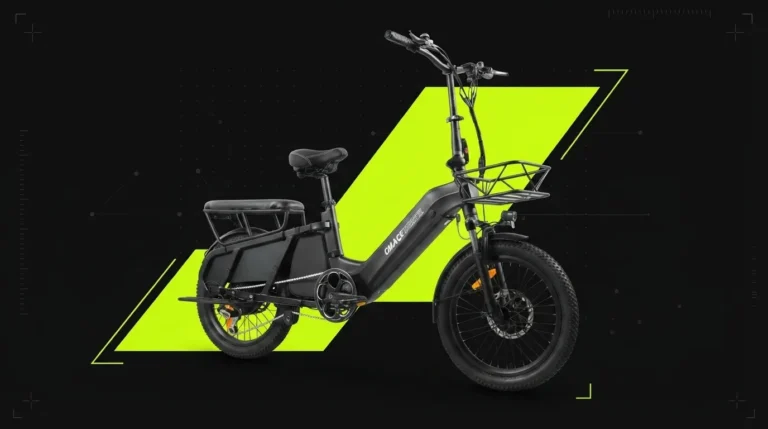
The Kingbull Discover 2.0 is a 26-inch fat-tire e-bike powered by a Bafang 750W rear hub motor (1,300W peak) and a removable 720Wh Samsung lithium battery. It ships as Class 3 at 28 mph, comes with Zoom hydraulic disc brakes on both wheels, a genuine torque sensor, and a rear rack rated to 150 lbs. Independent testing returned 39.7 miles of real-world range at maximum assist on hilly terrain. At $1,099, it undercuts the Aventon Aventure 2 and RadRover 6 Plus by $200 to $400 while matching or exceeding them on most key specs.
Contents
Design and Build Quality
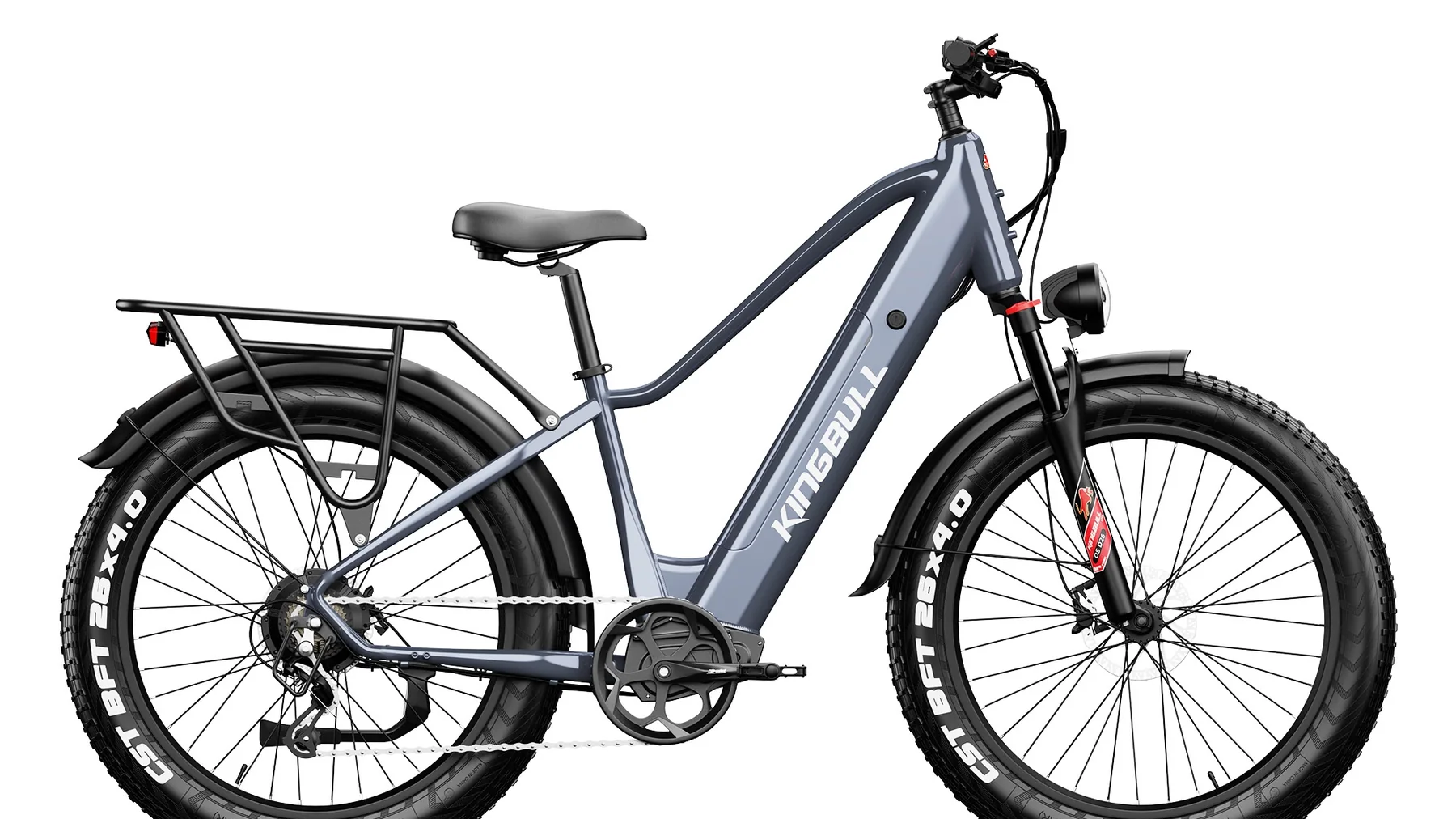
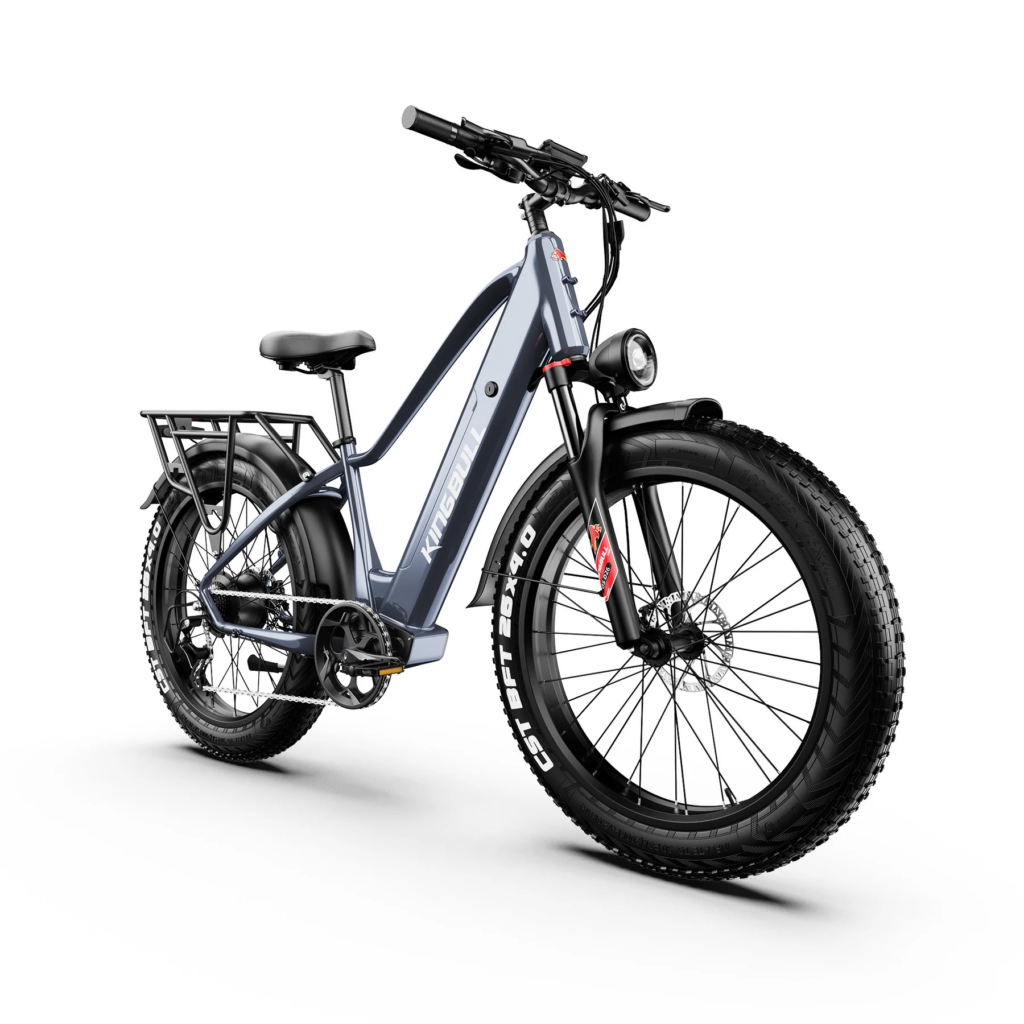
The frame is full aluminum alloy, and Kingbull has done something that most bikes in this price range don’t bother with: the battery sits inside the downtube, flush with the frame, rather than bolted onto it like an afterthought. Internal cable routing keeps the lines hidden. The welds are clean. On first look, the Discover 2.0 reads like a commuter bike that costs $400 more than it does.
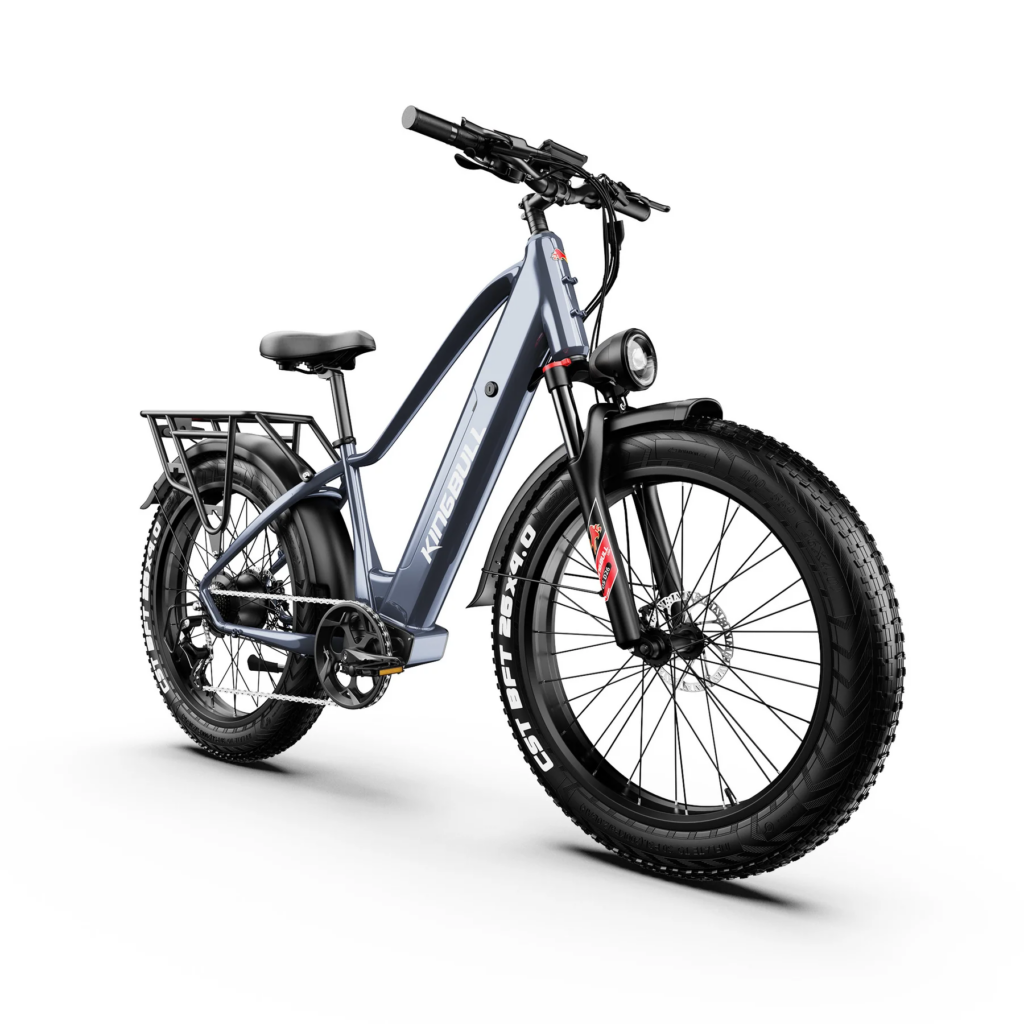
It comes in White, Pink, and Space Gray. The step-over geometry gives it a sporty stance, and there is also a step-thru version (the Discover ST 2.0) for riders who want easier mounting. Both share the same powertrain and battery. The integrated 48V LED headlight and brake-activated taillight are built into the frame rather than clamped on as accessories, which tells you something about how this was designed. The battery locks with a key and can be removed for indoor charging, which matters if your storage situation is not ideal.
At 77 lbs, it is not a bike you want to carry up three flights of stairs. That is typical for fat-tire bikes in this category, but it is worth being realistic about. The 26″ x 4.0″ CST tires give it a wide, planted stance. Standing next to it, the Discover 2.0 looks bigger than most people expect from the product photos.
Technical Specifications
| Specification | Detail |
|---|---|
| Motor | Bafang 750W Brushless Rear Hub (1,300W peak) |
| Torque | 80 Nm |
| Sensor | TROG-1B Torque Sensor + Brake Sensor |
| Battery | Samsung 48V 15Ah (720Wh) Lithium-ion, removable |
| Claimed Range | Up to 60 miles (ideal conditions) |
| Charge Time | 5–6 hours (3A UL-certified charger) |
| Top Speed | 28 mph (Class 3) / 20 mph (Class 2, switchable) |
| Pedal Assist Levels | 5 |
| Brakes | Zoom HB-875-E Hydraulic Disc, 180mm rotors (F&R) |
| Front Suspension | Kingbull OS-D26 Coil Spring, 80mm travel, lockable, preload adjust |
| Rear Suspension | None (hardtail) |
| Drivetrain | Shimano 7-speed (SL-M315-7R + RD-M310) |
| Tires | CST C-1752 26×4.0″ Puncture-Proof |
| Frame | Full Aluminum Alloy, Integrated Battery Design |
| Display | KB35H Custom Color Display (backlit) |
| Max Payload | 400 lbs (rider + cargo combined) |
| Rear Rack Capacity | 150 lbs |
| Bike Weight | 77 lbs (with battery) |
| Rider Height | 5’3″–6’6″ |
| Colors | White, Pink, Space Gray |
| Warranty | 2 years (frame + electronics) |
| Price | $1,099 |
Spec data sourced from Kingbull product listing and cross-referenced with the commuter e-bike testing methodology used in our previous reviews.
Performance
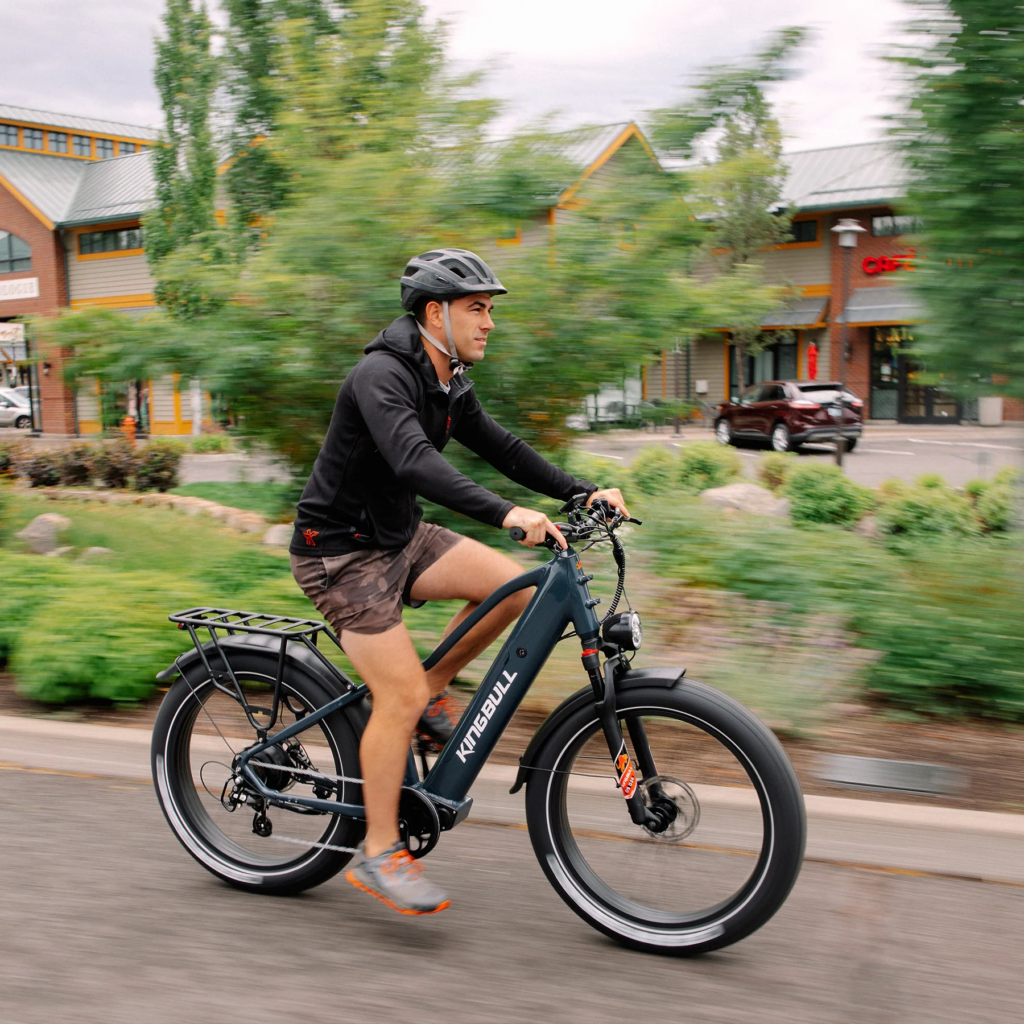
The Bafang motor here is the same family found on bikes that sell for $400 more. That is not filler. Bafang rear hub motors have a long track record and a global parts ecosystem, which matters more than most buyers realize when something eventually needs servicing. The 80Nm of torque enables the Discover 2.0 to climb up to 35° inclines according to Kingbull, and independent riders on YouTube have confirmed it handles prolonged 10% grades without the motor getting too warm or pulling power. Acceleration from a stop is fast but not jolting, which is directly because of the torque sensor.
That torque sensor is the detail that separates the Discover 2.0 from most sub-$1,500 fat-tire bikes. Cadence sensors — which most competitors at this price use — just detect whether you are pedaling and dump a fixed amount of power. A torque sensor reads how hard you are pushing and scales motor output in real time. The result feels noticeably more natural, especially at slower speeds in stop-and-go city riding. It also conserves battery. How much? Hard to say exactly, but the difference over 30 miles of mixed riding is measurable.
The 7-speed Shimano drivetrain (SL-M315-7R shifter paired with the RD-M310 rear derailleur) is Shimano’s Altus-tier hardware — functional, reliable, and easy to find parts for. Not glamorous. But it shifts cleanly and holds adjustment well, which is what you actually want on a 77 lb bike with fat tires.
Comfort and Handling
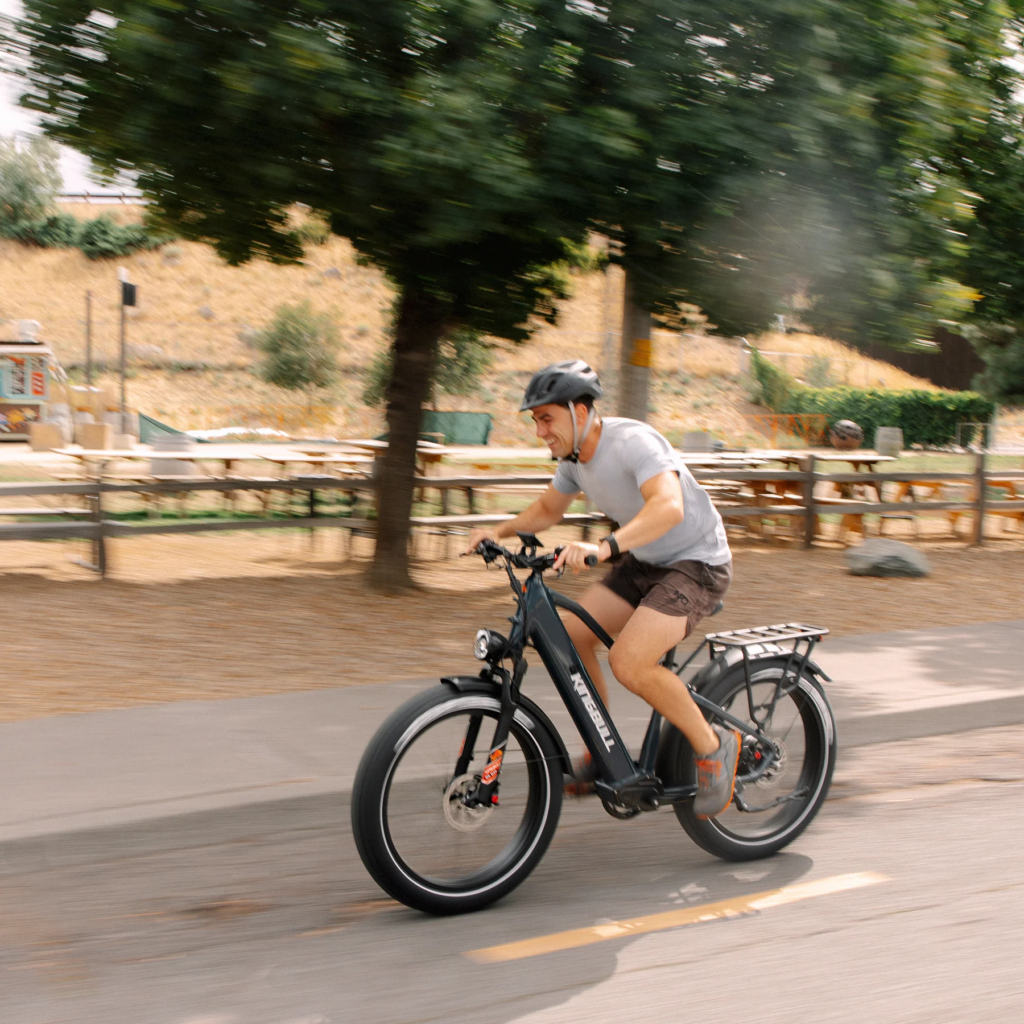
The 26″ x 4.0″ CST fat tires absorb a lot of what the road throws at you before the fork ever has to work. Potholes, gravel edges, expansion joints in asphalt — they mostly disappear under those tires. The front coil-spring fork has 80mm of travel with lockout and preload adjustment, which is enough for city riding and maintained gravel paths. For genuine mountain biking on technical singletrack, 80mm is on the short side. That is an honest limitation and one riders should weigh if technical trails are the primary use case.
The eco-leather saddle is legitimately comfortable for 45-minute rides. Beyond that, it depends on the rider. One owner who commutes 12 miles each way reported no saddle discomfort after two weeks, though he noted he would consider a suspension seatpost for longer weekend rides. The handlebar width at 700mm gives good control at lower speeds, and the upright geometry suits commuting better than aggressive trail riding. Riders between 5’3″ and 6’6″ fit the step-over frame; a 6’1″, 215 lb rider reported the fit as “great” without any modifications.
The twist throttle works in Class 2 mode (capped at 20 mph throttle-only) or alongside PAS in Class 3. One thing worth knowing: throttle at full power requires PAS to be active first. Pure throttle-from-rest is available, but hitting the top of Class 3 power through throttle alone requires the PAS system engaged. Most riders will not notice. If you planned to ride throttle-only without pedaling, factor that in.
Battery and Range
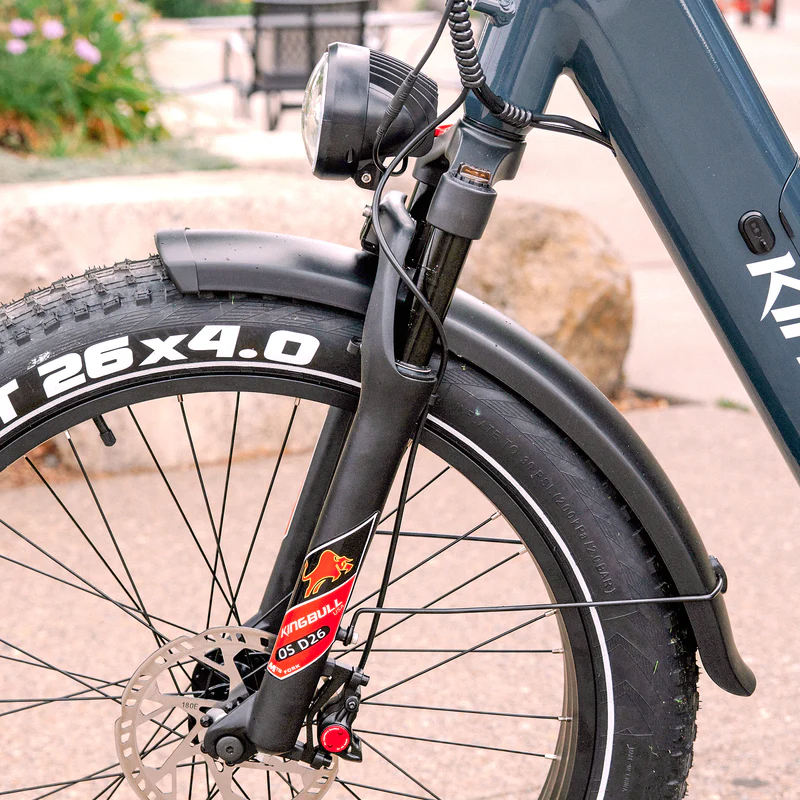
Samsung cells power the 48V 15Ah (720Wh) pack. That is a name worth caring about — Samsung’s lithium cells have consistent discharge curves and documented thermal safety histories that cheaper no-brand cells do not. The battery sits inside the downtube and removes with a key lock, which means you can take it inside to charge without wheeling the whole bike up.
Now, the range. Kingbull claims 60 miles. The honest figure is lower. The 720Wh capacity divided by a reasonable consumption rate of 15Wh per mile gives an upper realistic ceiling of around 48 miles — and that assumes flat terrain, light assist, and moderate rider weight. An independent tester at eBikeDaily rode 39.7 miles using PAS 5 continuously on hilly terrain. Riders on lower assist on flat ground will get closer to 45–50 miles. Nobody should plan a 60-mile trip on this bike without a charging plan.
The gap between the 60-mile claim and the 39.7-mile test result at maximum assist is large but not unusual for this category. Manufacturers derive range figures from ideal lab conditions. The 5–6 hour charge time via the included 3A UL-certified charger is average for 720Wh; there is no fast-charge option. If you need the bike ready by morning, plug in the night before.
Safety Features
Braking
The Zoom HB-875-E hydraulic disc brakes with 180mm rotors on both wheels are a genuine step up from the mechanical disc brakes on older Kingbull models and most competitors at this price. Hydraulic brakes self-adjust as pads wear, require less lever force, and provide more consistent stopping power in wet conditions. The motor cutoff fires the moment a brake lever is pressed, cutting power before the mechanical braking takes hold. In the eBikeDaily test, braking from 20 mph felt “firm and smooth without sudden jerks” — which is what you want at 28 mph near traffic.
Lighting and Visibility
The integrated 48V LED headlight uses the main battery rather than a separate cell, which means no separate charging and no battery running dead mid-commute. The rear taillight activates automatically when you pull a brake lever. Reflectors are built into the pedals. This covers the basics — it is not a nighttime trail setup, but for commuting on lit streets it is adequate. For unlit paths at night, add a secondary light bar.
US e-bike law classifies the Discover 2.0 as Class 3 at its default 28 mph setting. Class 3 bikes are permitted on most roads but excluded from some shared-use paths — regulations vary by state and municipality. The display lets you switch it to Class 2 (20 mph) for trail access where Class 3 is restricted. Check your local rules. Kingbull’s prior e-bike coverage on this site also covers regulatory context for US riders worth reading before your first ride.
Accessories and Extras
In the Box
The Discover 2.0 ships 85% assembled. Electronics come pre-installed. Basic assembly — handlebars, pedals, front wheel — requires standard tools and takes most riders under 30 minutes. Inside the box: the bike, a 3A smart charger, and a free gift pack that includes a cable lock, an air pump, and a phone mount. The rear rack and dual fenders come fitted from the factory. That alone represents around $80 to $100 of accessories most competitors leave off and charge extra for.
Recommended Upgrades
The stock saddle works fine. A suspension seatpost makes a real difference on longer rides, particularly on gravel. A higher-output charger (if Kingbull releases one) would cut charge time meaningfully — right now 5–6 hours is the floor. For riders who run the bike at night regularly, a secondary handlebar-mounted light adds useful coverage beyond what the integrated headlight provides. Panniers fit the rear rack mounting points; the 150 lb rack capacity means most bags stay well within limits.
Model Comparisons
vs. Aventon Aventure 2 (~$1,299)
| Spec | Kingbull Discover 2.0 | Aventon Aventure 2 |
|---|---|---|
| Motor | Bafang 750W / 1,300W peak | Bafang 750W / 1,130W peak |
| Battery | Samsung 720Wh | LG 720Wh |
| Sensor | Torque | Torque |
| Top Speed | 28 mph (Class 3) | 28 mph (Class 3) |
| Payload | 400 lbs | 400 lbs |
| Brakes | Zoom hydraulic 180mm | Tektro hydraulic |
| Gears | 7-speed Shimano | 8-speed Shimano |
| Bike Weight | 77 lbs | 77 lbs |
| App Connectivity | No | Yes (Aventon app) |
| Turn Signals | No | Yes (integrated) |
| Price | $1,099 | ~$1,299 |
The Aventure 2 costs $200 more and gives you app connectivity, integrated turn signals, and an 8th gear. The Discover 2.0 has a higher peak motor output (1,300W vs 1,130W) and a lower price. Both batteries are nominally 720Wh. The LG vs Samsung debate is mostly irrelevant at this cell grade. For riders who want the app and turn signals, the Aventure 2 is worth the premium. For riders who want the best core spec per dollar spent, the Discover 2.0 wins that argument without much effort.
vs. RadRover 6 Plus (~$1,499)
| Spec | Kingbull Discover 2.0 | RadRover 6 Plus |
|---|---|---|
| Motor | Bafang 750W / 1,300W peak | 750W / 750W peak |
| Battery | Samsung 720Wh | 672Wh |
| Sensor | Torque | Cadence |
| Top Speed | 28 mph (Class 3) | 20 mph (Class 2 only) |
| Payload | 400 lbs | 275 lbs |
| Brakes | Zoom hydraulic 180mm | Tektro hydraulic |
| Bike Weight | 77 lbs | 72.5 lbs |
| Walk Assist | No | Yes |
| Price | $1,099 | ~$1,499 |
The RadRover 6 Plus costs $400 more than the Discover 2.0 and is meaningfully outspecced on most metrics that matter for performance. The cadence sensor vs torque sensor difference alone is felt on every ride. The RadRover counters with walk assist mode, a slightly lighter frame, and Rad Power’s established dealer network across the US — which is a real advantage if local service matters to you. If it doesn’t, the Discover 2.0 is the harder case to argue against.
Frequently Asked Questions
Is the Kingbull Discover 2.0 worth buying in 2026?
How fast does the Kingbull Discover 2.0 actually go?
What is the real-world range of the Kingbull Discover 2.0?
Does the Kingbull Discover 2.0 have a torque sensor?
How heavy is the Kingbull Discover 2.0 and who is it not right for?
Is the Kingbull Discover 2.0 street legal in the United States?
Final Verdict
The Kingbull Discover 2.0 review keeps coming back to the same point: this bike costs $1,099 and comes with a Bafang motor, Samsung battery, torque sensor, Zoom hydraulic brakes, a rear rack, dual fenders, and a free accessory kit. The Aventon Aventure 2 — which is widely considered the benchmark fat-tire commuter under $1,500 — costs $200 more and is not a materially better bike for most riders. The RadRover 6 Plus costs $400 more and loses on every key performance metric. That context matters.
The honest limitations are real. The 60-mile range claim is aspirational — plan for 40 miles in real use. The 80mm fork is not a trail fork; riders who want to run technical trails should either look at a full-suspension model or accept that the Discover 2.0 is better suited to gravel paths and city riding than true off-road use. At 77 lbs, it needs a garage, a ground-floor room, or a strong helper. The color display is harder to read in strong sunlight. None of these are dealbreakers for the majority of riders who want a durable, versatile commuter-plus-trail bike that does not cost $1,500.
The score is 4.3 out of 5. It would be higher if the range claim were calibrated more honestly. It would be lower if the price were not this good. As it stands, the Kingbull Discover 2.0 is one of the stronger spec-per-dollar arguments in the fat-tire category right now.