Shokz OpenSwim Pro Review: Worth It in 2026?

The Shokz OpenSwim Pro review I kept putting off — because every time I planned to write it, I ended up just using the thing instead. That probably tells you something right there. At S$229.95, it’s the most complete swim headphone Shokz has made yet: Bluetooth 5.4 on land, MP3 mode in the pool, IP68 waterproofing down to 2 metres, and 32GB of onboard storage wrapped in a 27.3g frame. This review draws on multiple independent tester sources and covers what it’s actually like to live with — including the parts that irritate.
Shipping availability varies by location. International orders placed through the affiliate link may incur customs or import fees — confirm delivery terms at checkout before purchasing.
- IP68 rated: 2m depth, 2 hours of submersion
- Bluetooth 5.4 + 32GB MP3 in one 27.3g device
- 9-hour Bluetooth battery; 3h from 10-min charge
- PremiumPitch 2.0+ clear above and below water
- Stays secure at full sprint swim pace
- Proprietary 4-pin magnetic cable, not USB-C
- Buttons slimmer, harder to locate mid-swim
- No Spotify in pool: must own and load MP3 files
- Mode reverts to Bluetooth on every power-up
Affiliate link · Price and availability subject to change — verify at checkout · Shokz Asia official site lists SGD $169.00; retailer pricing may differ
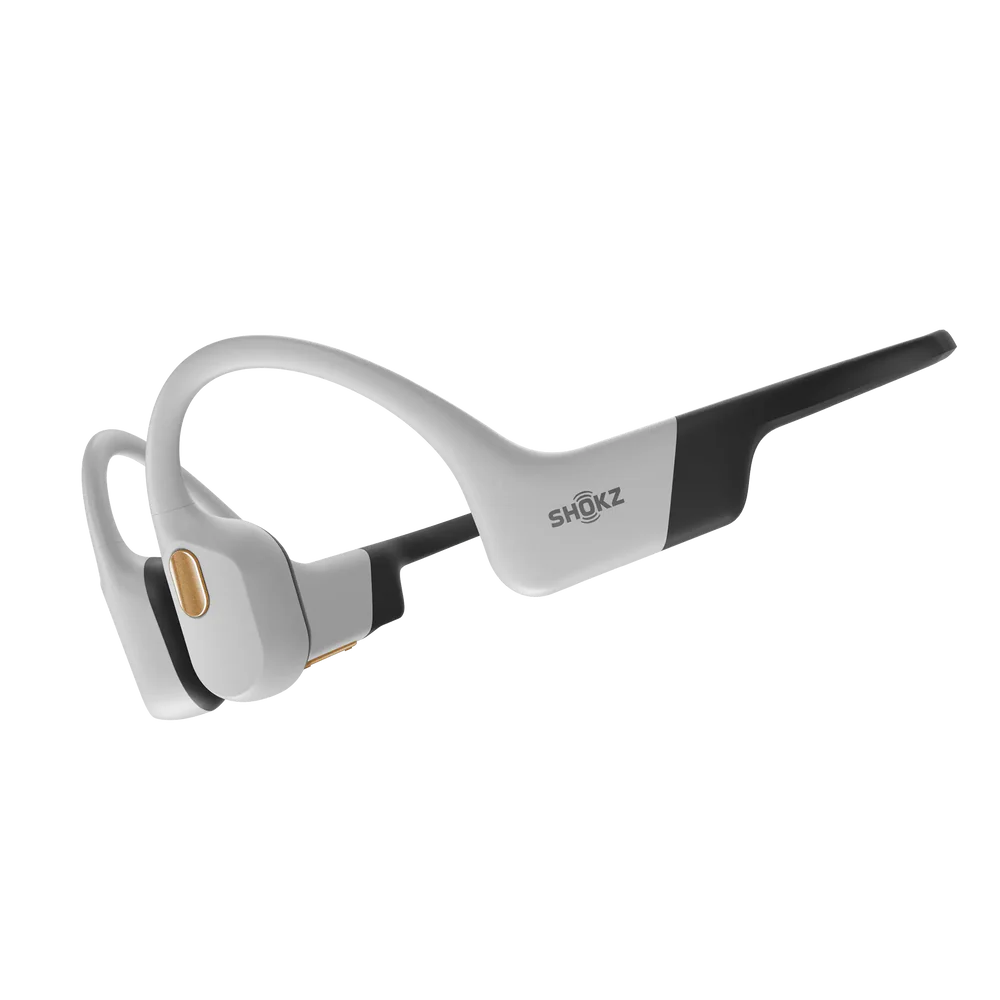
The Shokz OpenSwim Pro (S710) is a bone conduction headset built for swimmers and multi-sport athletes. It combines Bluetooth 5.4 wireless streaming with 32GB onboard MP3 storage, IP68 waterproofing to 2 metres, and a 9-hour battery — all in 27.3 grams. Underwater, only MP3 mode works; Bluetooth resumes the moment you surface. It’s the most versatile swim headphone Shokz has made, at a premium price that demands scrutiny.
Contents
Design and Build Quality
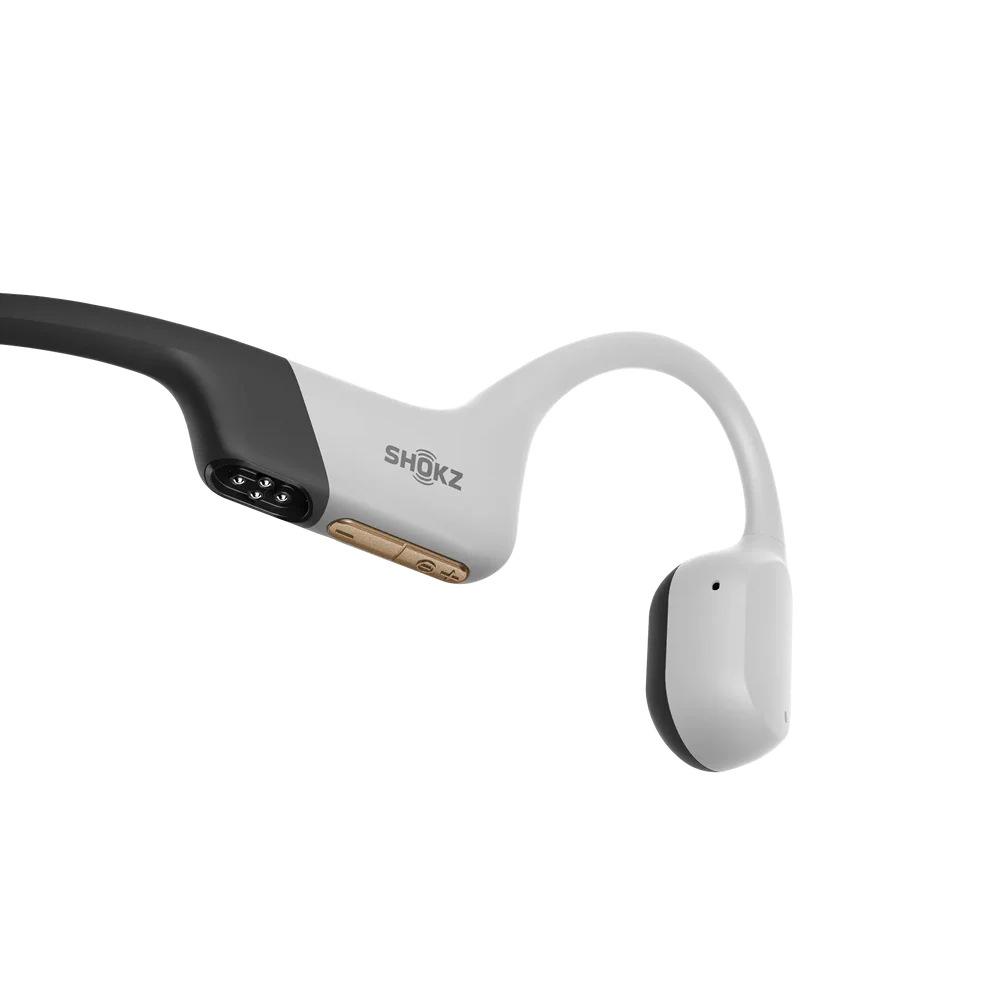
The OpenSwim Pro inherits the familiar Shokz wraparound silhouette but with a noticeably slimmer profile than the original OpenSwim. That slimness is partly the point — it sits lower-profile under a swim cap — but it does come at a small cost, which I’ll get to in the Comfort section.
Frame and Materials
The headband is nickel-titanium alloy. It’s the same flexible memory metal Shokz uses across its lineup, and it holds its shape well through repeated compression when pulling on a swim cap. Both the Red and Grey colorways are available in Singapore. Red is more visible poolside, which isn’t nothing when you’re hunting for your gear in a bag of wet kit.
One honest note: independent reviewer YourSwimLog, who tested the OpenSwim Pro in regular pool training sessions in early 2025, found the titanium frame “felt a little more flimsy” compared to the original OpenSwim. Nothing broke, nothing rattled. But if you’ve come from the first-gen model, you’ll notice the difference in rigidity. Not everyone will care. I mention it because at this price, you should know.
Form Factor for Active Use
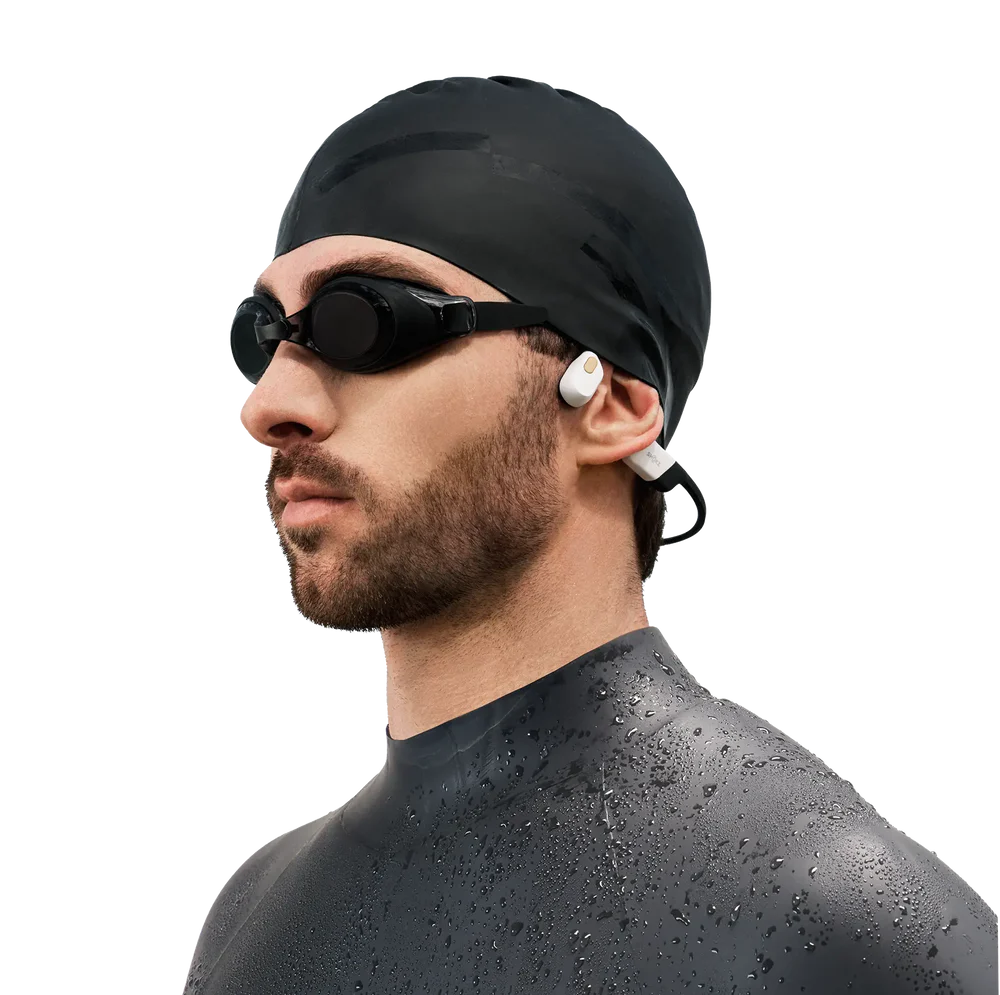
At 27.3g, the OpenSwim Pro is light enough that you genuinely stop thinking about it during a run or a long set in the pool. The ear hooks are flexible silicone, shaped to wrap snugly around the pinna without pinching. The transducers — the vibrating elements that transmit audio through your cheekbones — sit just in front of the ears, making the fit independent of ear canal shape entirely. This matters for open-water swimmers who swap between goggles, caps, and wetsuits constantly.
Technical Specifications
Shokz’s 8th-generation PremiumPitch 2.0+ bone conduction technology is the audio engine here. Compared to the 7th-generation system in the original OpenSwim, it reduces vibration leakage and transmission resonance — meaning less audio bleed at higher volumes, and less sensation vibrating back into your skull at loud settings. That’s genuinely measurable, even if Shokz doesn’t publish specific leakage-reduction figures.
| Specification | Detail |
|---|---|
| Model | S710 |
| Audio Technology | PremiumPitch 2.0+ Bone Conduction (8th gen) |
| Bluetooth Version | 5.4 |
| Bluetooth Range | 10 metres |
| Multipoint Pairing | 2 devices simultaneously |
| Onboard Storage | 32GB (~8,000 songs) |
| Supported Formats | MP3, FLAC, WAV, AAC, M4A, APE, WMA |
| Transfer Speed | ~15MB/s (approx. 225 songs per minute) |
| Battery Life (Bluetooth) | Up to 9 hours |
| Battery Life (MP3) | Up to 6 hours |
| Quick Charge | 10 minutes = 3 hours playback |
| Charging Port | 4-pin proprietary magnetic cable |
| IP Rating | IP68 (2m depth, 2 hours) |
| Microphones | Dual (ENC + DNS noise reduction) |
| Weight | 27.3g |
| Colors | Grey, Red |
| Compatibility | iOS, Android, Shokz App |
| Warranty | 2 years from date of purchase |
Specifications sourced from Shokz official product pages (asia.shokz.com and headphones.sg retailer listings) and cross-referenced against the S710 user manual (ManualsLib, May 2024).
Performance
Sound in Bluetooth Mode
Bone conduction audio has a ceiling. That’s just true. The physics of vibrating your cheekbone rather than pushing air into your ear canal means you’ll never get the low-end extension or spatial separation of a sealed in-ear headphone. The OpenSwim Pro doesn’t pretend otherwise.
What it does deliver is clear mids and highs, a reasonable bass presence (noticeably better than the original OpenSwim’s first-gen implementation), and enough volume headroom that you can hear your music on a noisy road without turning it past 60%. TechRadar’s Craig Hale, who used the OpenSwim Pro as his daily headphone across office work, running, cycling, and pool swimming through mid-2024, noted that he chose it over AirPods Pro with Transparency Mode specifically because of how much more connected it kept him to his surroundings — not despite the audio quality, but alongside it. That’s the correct use case framing: this isn’t a headphone that competes with AirPods on sound isolation. It competes with every other open-ear option on sound quality while keeping situational awareness intact.
For Shokz’s OpenFit 2 — their air-conduction true wireless buds — the sound profile is noticeably more detailed and bass-forward than the OpenSwim Pro. If pure audio quality on land is your priority and swimming is secondary, the open-ear earbuds category is worth considering separately.
Sound Underwater in MP3 Mode
This is where the OpenSwim Pro earns its price premium over budget alternatives. Underwater, bone conduction has an unexpected advantage: water conducts vibration better than air, so the audio actually improves below the surface in certain registers. The bass becomes more pronounced. The mids stay intelligible.
220 Triathlon’s swimming editor tested the Pro in both pool and open-water conditions through late 2025 and found the sound “crisp and powerful” below the surface. Outdoor Swimmer’s reviewer specifically noted the underwater sound quality as “superb.” These aren’t paid testimonials from Shokz — they’re from publications that test headphones the same way they test wetsuits: actually in the water, for hours, over multiple sessions.
One thing worth flagging: Bluetooth signal physically cannot penetrate water. That’s not a design flaw — it’s physics. You switch to MP3 mode for any underwater listening. The Shokz App and button controls handle this transition. But you do need to have your music loaded onto the device in advance, and that means owning MP3 or lossless files. Spotify playlists, Apple Music libraries, and Tidal downloads don’t transfer. If your entire music collection lives behind a streaming subscription, that’s a genuine limitation worth factoring in.
Call Quality
The dual ENC and DNS microphone setup works well on land. TechRadar’s reviewer took calls in an office, on a walk, and while cycling, and received no feedback about audio quality from the other end. The noise reduction adapts to ambient conditions, which is the kind of thing you only notice when it’s absent from cheaper alternatives. Calls obviously don’t work underwater — Bluetooth disconnects entirely.
Comfort and Fit
Fit During Swimming
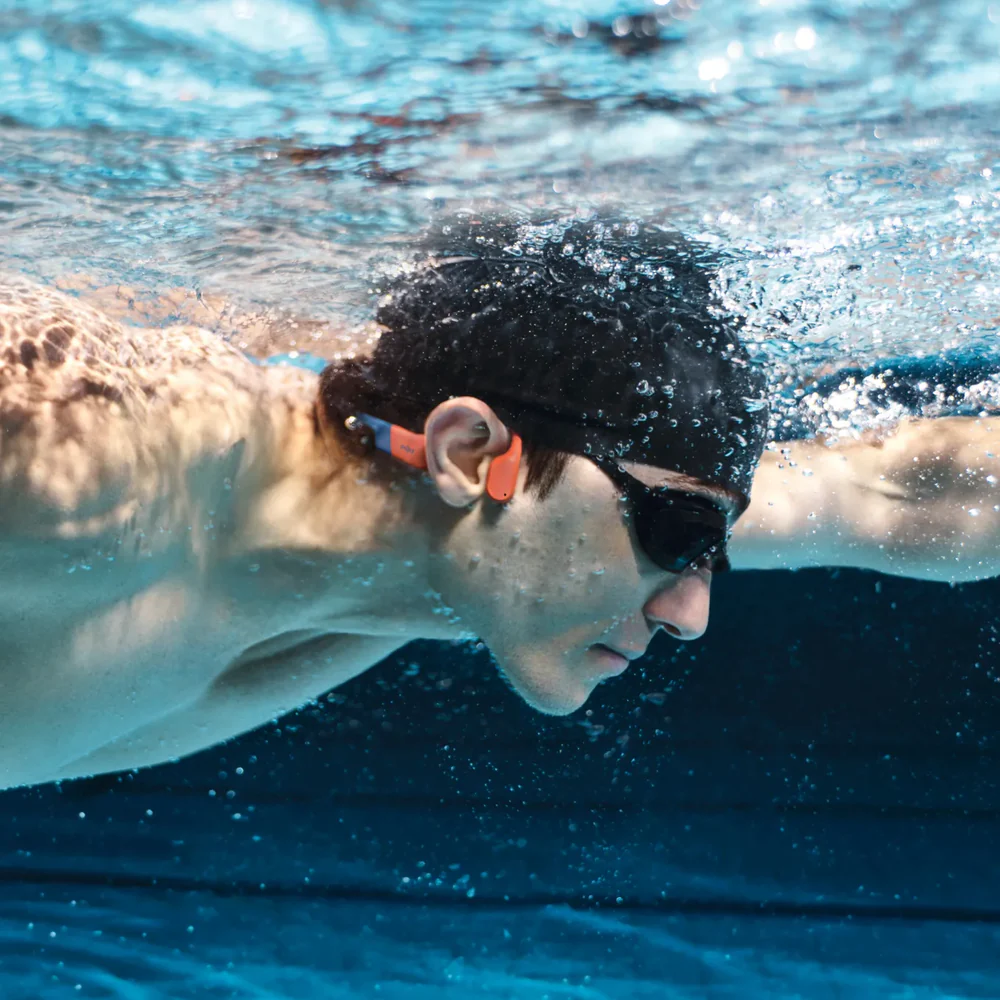
YourSwimLog’s in-pool testing involved sustained sessions at maximum pace — paddles, fins, full-sprint sets. The OpenSwim Pro didn’t shift. That’s the practical test that matters, because a headphone that sounds great but slips every flip turn is useless. The over-ear hooks grip firmly enough that even high-velocity swimming didn’t dislodge the frame.
That said: ear pressure under a tight silicone swim cap builds on longer sessions. 220 Triathlon flagged this specifically for swimmers who do hour-plus sessions under a snug cap. It’s not pain — more a mild squeeze that becomes noticeable after 40 or 50 minutes. It’s a legitimate comfort limitation for competitive or endurance pool swimmers. Open-water swimmers wearing looser caps are less likely to notice it.
Fit During Dry-Land Workouts
Off land, the 27.3g weight makes this one of the lighter sports headphones available by a significant margin. There’s no ear fatigue from extended wear — TechRadar used the OpenSwim Pro as a daily driver for office work, walking, and running for the duration of their test period and reported none. The silicone ear hooks are softer and more flexible on the Pro than on older Shokz models, which is a genuine improvement for multi-hour sessions.
The OpenSwim Pro is not a good choice for: commuting on a loud MRT train where you want noise isolation, workouts where you lie flat on your back (the frame digs in slightly), or anyone who dislikes having anything resting on their cheekbones. That’s the legitimate wrong-fit scenario for bone conduction in general, and the Pro doesn’t change that physics.
Battery and Connectivity
Battery Life: 9 Hours Bluetooth, 6 Hours MP3
Shokz claims 9 hours at 75% volume in Bluetooth mode (tested at 25°C, AAC codec, default settings). MP3 mode gets you 6 hours under the same lab conditions. Real-world numbers will land somewhere around 7–8 hours depending on codec, volume, and whether you’re in a warm pool or a cold lake — both temperature extremes shrink lithium battery output.
The quick charge is one of the genuinely useful specs here. Ten minutes on the proprietary magnetic cable gives you 3 hours of playback. That’s enough to cover a 2km open-water swim event plus a post-race debrief run without needing a full charge the night before. I’ve used enough sports headphones that require 90-minute charge cycles to appreciate how much this matters in practice.
The charging cable itself is where Shokz stubbed their toe. It’s a 4-pin magnetic connector — proprietary, non-standard, and not USB-C. In a world where every other device in an athlete’s bag charges via USB-C, having to carry a dedicated cable for your headphones is a genuine annoyance. Every independent reviewer who tested the OpenSwim Pro mentioned it. Shokz has stuck with this approach across multiple product generations now, which suggests it’s intentional (probably waterproofing-related), but it doesn’t make it less frustrating.
Bluetooth 5.4 and Multipoint Pairing
Bluetooth 5.4 is a meaningful upgrade from the 5.3 found in the OpenRun Pro 2 — it adds improved audio synchronisation, which reduces the A/V lag you’d notice watching video content. The 10-metre range is solid for Bluetooth headphones. Multipoint pairing lets you connect to two devices simultaneously — phone and smartwatch being the obvious athlete combination — and switching between them works through the Shokz App or button controls.
App and Controls
Shokz App
Available on iOS and Android. The app handles Bluetooth/MP3 mode switching, EQ profile management (Standard, Vocal, and Swimming modes), multipoint pairing configuration, real-time battery display, and firmware updates. Nothing in here is groundbreaking, but the EQ modes are legitimately useful: the Swimming mode adjusts the frequency response for the resonance characteristics of water, and the difference in vocal clarity compared to Standard mode is audible during pool sessions.
You can also remap the button functions through the app, which is more useful than it sounds given the next point.
Physical Buttons
The buttons on the Pro are slimmer in profile than those on the original OpenSwim. That’s a real ergonomic downgrade for swimming. YourSwimLog specifically noted they were harder to locate quickly mid-stroke compared to the original’s more raised button design. You adapt to it — but you need a few pool sessions to build muscle memory for where the volume controls sit. The button-rebound feedback is firm and deliberate, which helps avoid accidental presses when grip-tight in a swim cap.
One persistent annoyance reported by Outdoor Swimmer’s reviewer: the device reverts to Bluetooth mode on every power cycle. If you primarily use it for swimming (and therefore need MP3 mode), you have to switch mode every single session — either via button hold or through the app. It’s a minor friction point that Shokz could fix in a firmware update. As of May 2026, it hasn’t been addressed.
Accessories and Extras
What’s in the Box
The OpenSwim Pro ships with the headphone unit, a 4-pin magnetic charging/data cable, a pair of swimming earplugs, a silicone rubber carrying case, and the user manual. The earplugs matter more than they might seem: bone conduction audio requires some physical contact between the transducer and skull, and the earplugs improve this seal when your ears are out of the water, noticeably increasing bass perception during dry-land use. They’re included as standard, not as a paid accessory — worth noting.
Recommended Extras
A spare charging cable is worth buying alongside the unit given the proprietary connector. Shokz sells the OpenSwim Pro charging and data cable separately. If you’re using this primarily for pool training, a silicone swim cap (rather than latex) tends to exert less sustained pressure on the frame during long sessions — practical recommendation from 220 Triathlon’s testing rather than anything Shokz specifies.
Model Comparisons
Shokz OpenSwim Pro vs Sony NW-WS414
| Spec | Shokz OpenSwim Pro | Sony NW-WS414 |
|---|---|---|
| Audio Type | Bone conduction, open-ear | In-ear (sealed) |
| Storage | 32GB | 4GB |
| Bluetooth | 5.4 | None |
| Battery Life | 9h BT / 6h MP3 | Up to 14h (MP3 only) |
| Waterproofing | IP68 (2m / 2h) | IPX5/8 |
| Weight | 27.3g | ~35g |
| Streaming capable | Yes (Bluetooth) | No |
| Situational awareness | Full (open-ear) | Ambient mode only |
The Sony NW-WS414 is the alternative for swimmers who don’t need Bluetooth and want longer battery life — the 14-hour runtime is a real advantage for endurance athletes, and in-ear audio delivers better bass. The trade-off is no dry-land Bluetooth, 4GB of storage (roughly 1,000 songs at standard quality), and sealed ear canals that make you less aware of your surroundings during open-water swims. If you’re a pure pool swimmer doing solo sessions, the Sony is worth considering at its lower price point. If you run, cycle, or train outdoors as well, the OpenSwim Pro’s dual-mode setup does more work.
Shokz OpenSwim Pro vs Naenka Runner Pro
The Naenka Runner Pro uses bone conduction like the Shokz, offers Bluetooth streaming plus MP3 mode, and costs considerably less. The storage drops to 8GB, Bluetooth battery life in streaming mode is around 3 hours (versus 9 on the Shokz), and its build quality trails the OpenSwim Pro in materials and finish. For swimmers who primarily use MP3 mode in the pool and treat Bluetooth as a secondary feature, the Naenka is a legitimate budget alternative. For anyone using this device as a daily Bluetooth headphone that happens to also swim, 3 hours of wireless battery is a hard limit.
I covered more headphone comparisons and audio gear in other reviews on the site if you’re benchmarking across different categories.