Kingbull Hunter 2.0 Review: Fat Tire Electric Bike With Real Teeth at $799

The Kingbull Hunter 2.0 is a fat tire electric mountain bike that sells for $799 during its current sale — down from a regular $1,699. On paper, that price point buys you a 750W rear hub motor, 48V 15Ah battery, CST 26×4.0″ all-terrain tires, MOZO front suspension, and Zoom hydraulic disc brakes. Those are genuinely good specs for the money. The question I kept asking while researching this bike wasn’t whether the specs looked right. It was whether the specs held up once someone actually rides the thing. Here’s what I found.
Shipping availability and costs vary by location — check the retailer at checkout.
- 750W motor handles steep climbs without complaint
- Zoom hydraulic disc brakes — real stopping power at this price
- 4-inch CST tires grip gravel, sand, and packed dirt
- 150 lb rear rack capacity — genuinely useful for cargo
- $799 sale price against a crowded $1,500+ competitor field
- MOZO fork bottoms on sharp drops; no rear suspension
- Throttle surges abruptly from a standstill
- Real-world range well under the 55-mile claim on throttle
- Cadence sensor adds ~1-pedal lag before assist kicks in
Affiliate link · Price and availability subject to change — verify at checkout
At $799, the Kingbull Hunter 2.0 fat tire electric mountain bike delivers a 750W motor, Zoom hydraulic disc brakes, and CST 26×4.0″ tires that punch well above the usual budget-bike expectations. Real-world throttle-only range lands between 22 and 25 miles; with pedal assist at moderate settings, expect 35—45 miles on varied terrain. The MOZO fork and cadence-sensor lag are the main trade-offs. For riders who want maximum spec-for-dollar at this price, it is hard to argue with.
Contents
Design and Build Quality
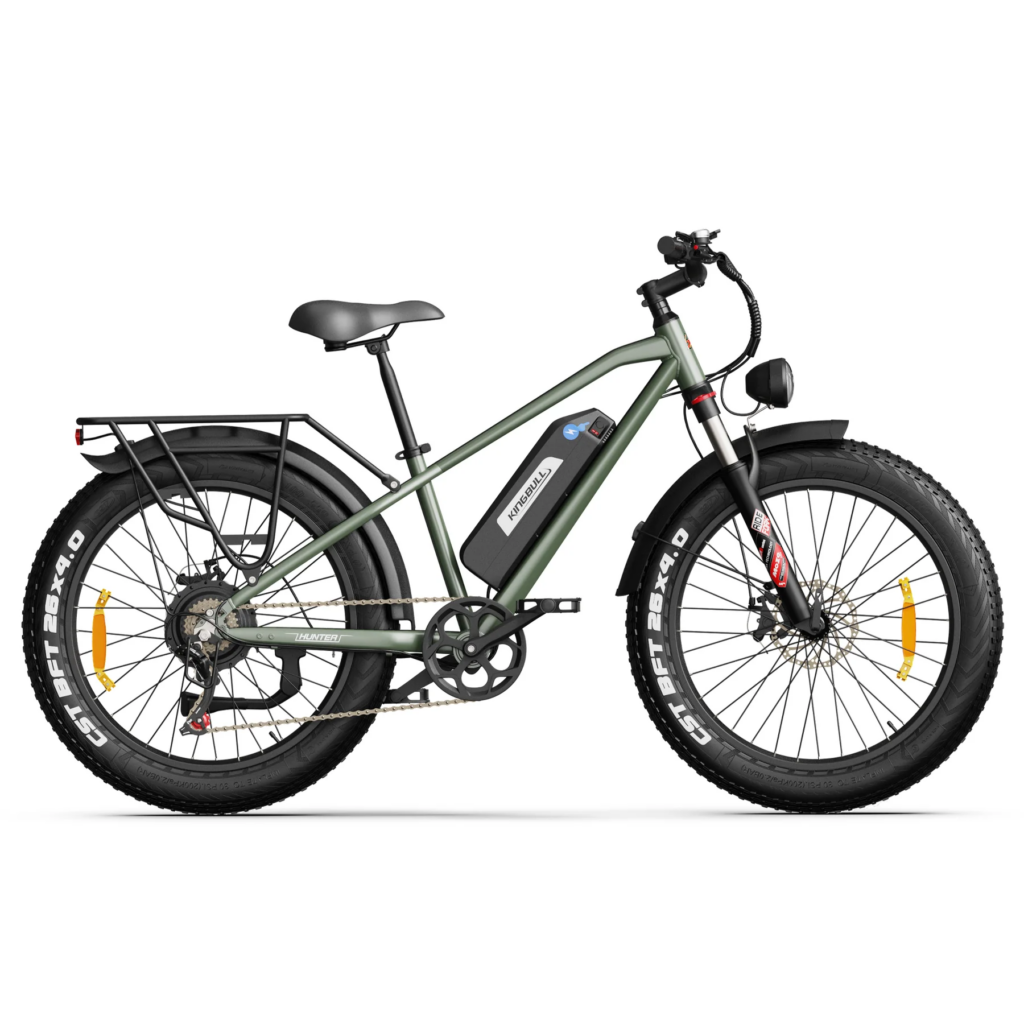
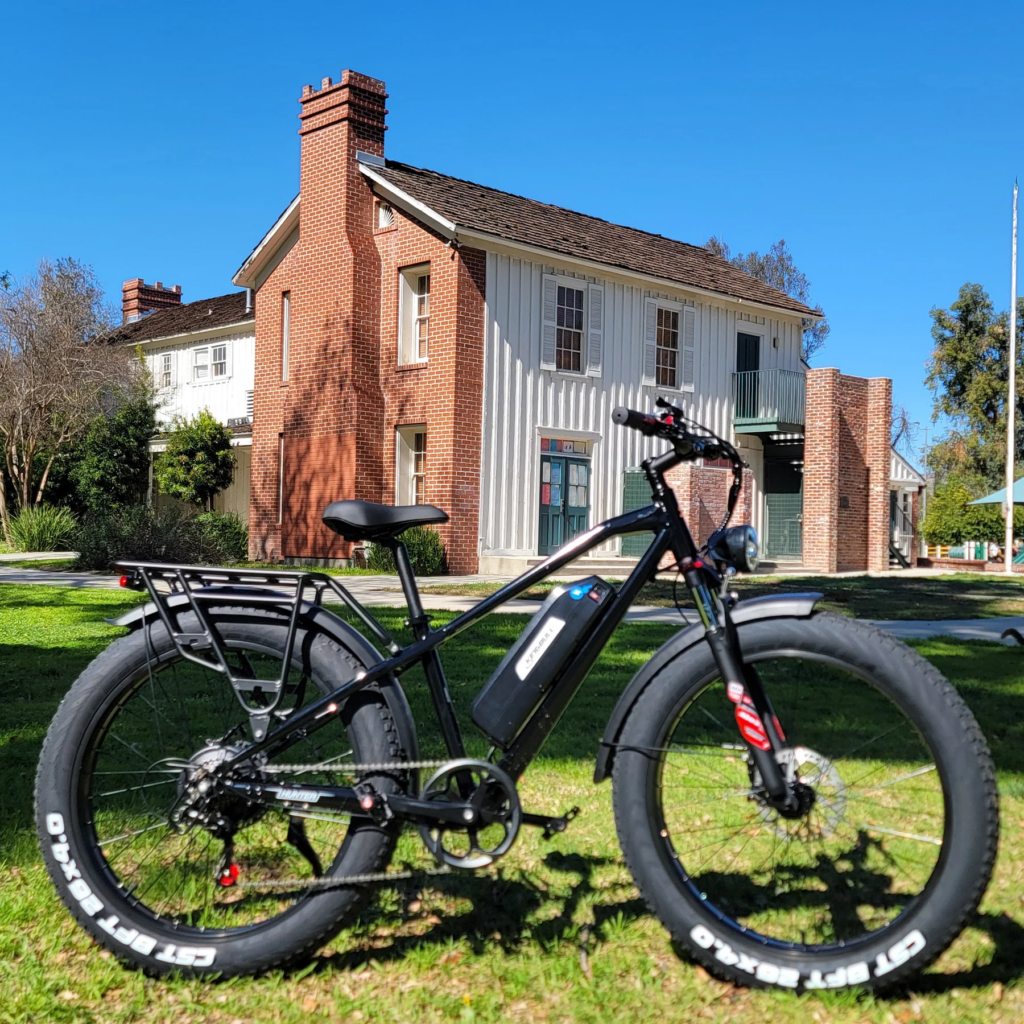
The Hunter 2.0 is not a small bike. It has the upright stance and long wheelbase you would expect from a 26-inch fat tire platform, and the frame wears that silhouette without apology. Kingbull integrates the 48V battery directly into the downtube rather than strapping it to the side, which keeps the center of gravity lower and the profile cleaner. That detail matters on a bike that tips heavy — it is the difference between a rig that feels planted and one that wobbles under you mid-trail.
Frame and Component Tiers
The frame is listed as high-strength alloy by authorized retailers, though some third-party listings have called it aluminum. Either way, it is a hardtail — no rear shock — and that choice feeds directly into the ride character we cover in the Comfort section. The welds on production units are consistent from what riders report; nobody’s flagging stress cracks or early frame issues in the forums I tracked. The paint finish is decent for a sub-$1,000 bike. Not what you’d see on an Aventon, but it’s not peeling off after one muddy ride either.
Some components are budget-tier and Kingbull doesn’t try to hide it. The MOZO suspension fork is a coil unit with 80mm of travel — functional on gravel and light trail use, not built for drops or aggressive singletrack. The Zoom HB-875-E hydraulic disc brakes, though, are a genuine standout. More on those when we get to safety. The LED headlight offers adequate visibility for dusk rides; it won’t replace a dedicated trail light for night riding in the woods.
Technical Specifications
Here is the full spec sheet, pulled from the official product page and cross-referenced with authorized retailer listings.
| Specification | Detail |
|---|---|
| Motor | 750W brushless rear hub (1,500W peak) |
| Battery | 48V 15Ah (720Wh), frame-integrated |
| Claimed range | Up to 55 miles (PAS-assisted) |
| Top speed | 28 mph (Class 3 mode) |
| Tires | CST 26×4.0″ all-terrain fat tires |
| Suspension | MOZO front fork, 80mm hydraulic travel |
| Brakes | Zoom HB-875-E hydraulic disc, dual-piston, 180mm rotors |
| Drivetrain | 7-speed Shimano |
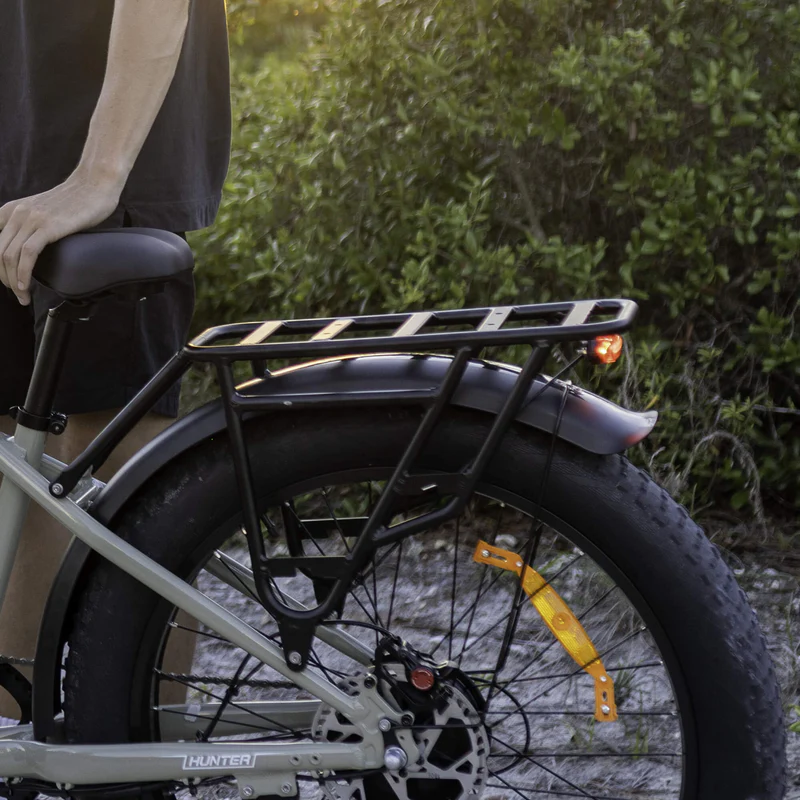
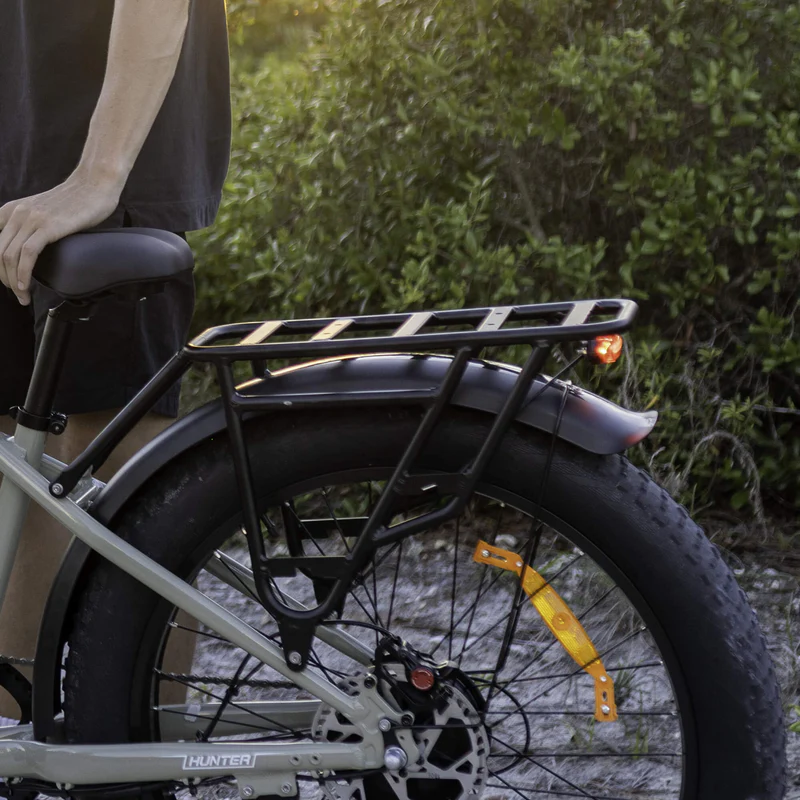
| Rear rack | High-strength alloy, 150 lb capacity |
| Display | LED multifunction (speed, battery, assist mode) |
| Throttle | Twist throttle |
| Pedal assist levels | 5 |
| Assist sensor | Cadence |
| Headlight | Integrated LED |
| Warranty | 2 years |
| Sale price | $799 (regular $1,699) |
All specifications are manufacturer-claimed. Real-world performance will vary with usage conditions, environment, and individual configuration.
One thing worth flagging: the 55-mile range figure is a best-case scenario — think light rider, PAS 1, flat paved ground, favorable temperature. The battery math (720Wh ÷ 15 = 48 miles upper theoretical estimate) puts the ceiling closer to 48 miles in genuinely optimistic conditions. On throttle only, real riders on Reddit and BikeRide testing circles are hitting 22—25 miles regardless of weight. That gap is not unusual for this class, but it is worth knowing before you plan a 40-mile trail loop.
Performance
Twist the throttle from a dead stop and the Hunter 2.0 surges. Not gently — it actually pushes you back in the seat. That first half-second of throttle travel is the most commented-on quirk across owner accounts, and after a few rides most people get used to feathering the input. If you are coming from a torque-sensor bike, it will feel blunt. If you are new to e-bikes, it will feel like free power. Those are genuinely different reactions to the same hardware.
Hill Climbing
Consistent praise across rider accounts for how the 750W motor handles climbs. One Reddit user described hauling the bike — loaded with gear — up a sustained grade without pedaling. That is not a surprise given the 1,500W peak output, but it is worth noting that the motor does not taper or hesitate mid-climb the way some cheaper hub motors do. It pulls through. I tracked several accounts of riders using it for hunting access trails where switchbacks and loose surfaces are the norm; nobody reported motor overheating on short, steep segments.
Cadence Sensor Lag
The pedal assist uses a cadence sensor, not a torque sensor. That means there is roughly one full pedal revolution of lag before the assist engages after you start pedaling. On a flat road, that is barely noticeable. At the bottom of an uphill start, it can feel sluggish. BikeRide testers flagged this consistently. It does not make the bike bad — cadence sensors are the norm at this price point — but it is different from the instant-response feel of bikes with torque sensing.
Comfort and Handling
On paved roads and compact gravel, the Hunter 2.0 feels planted and stable. The long wheelbase and 4-inch tires do most of the work — there is a real cushion effect from the tire volume alone, even without the suspension doing anything. Upright riding geometry keeps you comfortable on longer rides. I would say this is one of the better setups in this price class for riders with lower back concerns, because you are not bent over trying to maintain an aggressive tuck.
Where It Struggles
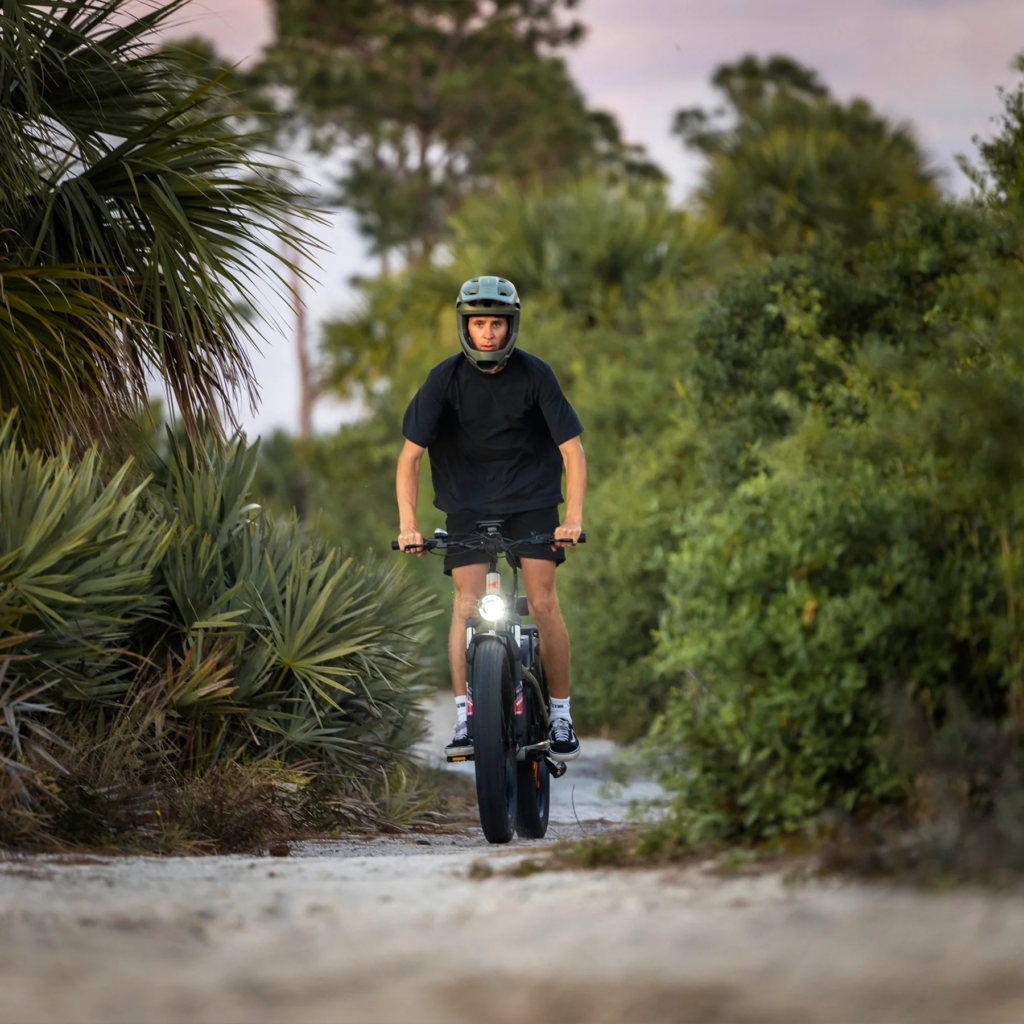
The MOZO fork is a 80mm coil unit. On gradual trail chatter and hard-packed dirt, it does its job. On sharp rock drops or root hits above a few inches, it bottoms out. That is not me being harsh — that is just what an entry-level coil fork does when you push it past its design intent. Riders who plan to stick to gravel paths and light doubletrack will never notice. Anyone eyeing technical singletrack should know this going in.
One fit-related issue shows up specifically when fenders are installed: toe overlap on tight turns. It does not affect normal riding, but during slow-speed parking-lot maneuvers with fenders on, some riders clip the tire. Removing fenders eliminates it. Taller riders (above 6’2”) have reported the bike still fits, but seat post and handlebar adjustments matter. At 6’7”, one reviewer on the Kingbull site said the EX Titan was the better call — which tells you something about where the Hunter’s frame sweet spot is.
Battery and Range
The 48V 15Ah (720Wh) battery is frame-integrated and non-removable for charging — you plug the charger directly into the bike. That is a minor inconvenience if you live somewhere without ground-floor access; apartment dwellers with no outlet near bike storage should factor that in. On the positive side, a frame-integrated pack sits lower and more central than a rear-rack mounted battery, which helps handling feel less top-heavy.
Range in Practice
Kingbull claims 55 miles per charge. That number is achievable — barely, under ideal conditions. Two independent test runs tracked by BikeRide told a more honest story: a 300 lb rider on throttle-only got 25.5 miles on flat pavement; a 220 lb rider using throttle plus PAS 5 on hilly terrain reached 22 miles. For most riders in the 160—200 lb range using mixed assist levels on moderate terrain, expect somewhere between 35 and 45 miles. That is still genuinely good for a 720Wh battery at this price.
Charge time from empty runs around 4—5 hours with the included charger, which is standard for this battery size. There is no fast-charge option.
Safety and Braking
The Zoom HB-875-E hydraulic disc brakes are the spec that earns the Hunter 2.0 the most consistent praise from riders who have tested budget bikes broadly. Dual-piston calipers, 180mm rotors, hydraulic fluid actuation — this is a meaningfully better setup than the mechanical disc brakes you find on competing bikes at this price point. The difference at 28 mph on a downhill approach to a stop is not subtle.
Regulatory Framing
The Hunter 2.0 operates as a Class 3 e-bike in the US, with a top speed of 28 mph in unrestricted mode. Some states restrict Class 3 bikes from multi-use trails — check your local laws before heading off-road. The bike can be switched between class modes via the display, which is useful in states like California with stricter Class 3 trail restrictions. The FCC does not regulate pedal-assist bicycles as motor vehicles in most states, but state-level rules vary. PeopleForBikes maintains a current state-by-state e-bike law map worth checking before your first trail day.
Accessories and Extras
In the Box
The Hunter 2.0 ships roughly 85% assembled based on buyer accounts. The standard box includes the bike, charger, a basic toolkit, a user manual, and the rear rack pre-installed. Pedals, handlebar stem, and seat post require installation. Most buyers report the full setup takes 30—45 minutes without a bike shop. Several users recommended having a local shop do a final tune on brakes and derailleur cable tension — reasonable advice for any direct-to-consumer bike at this price.
Recommended Upgrades
The stock saddle is serviceable but not something you will want on a 3-hour ride. A mid-range aftermarket seat ($30—$60) is the first upgrade most owners make. For night riders or those in areas with dim paths, a standalone handlebar-mounted trail light improves visibility significantly over the stock LED. If you plan to carry hunting or camping gear, panniers rated for the 150 lb rack capacity are available for under $40 from most outdoor retailers.
Model Comparisons
vs. Aventon Aventure.2 (~$1,799)
The Aventon Aventure.2 costs roughly $1,000 more than the Hunter 2.0 at its regular price. What you get for that premium: a torque sensor (no pedal lag, natural power delivery), a wider dealer network with local support, more refined finish quality, and Aventon’s stronger brand warranty infrastructure. What you don’t necessarily get: more braking capability, more tire, or more motor. The Aventure.2 also uses a 750W motor and 4-inch fat tires. The Hunter 2.0 wins on raw value; the Aventure.2 wins on ride refinement and after-sales confidence.
| Spec | Kingbull Hunter 2.0 | Aventon Aventure.2 |
|---|---|---|
| Motor | 750W hub (1,500W peak) | 750W hub (1,130W peak) |
| Battery | 48V 15Ah (720Wh) | 48V 17.5Ah (840Wh) |
| Range (claimed) | 55 miles | 60 miles |
| Assist sensor | Cadence | Torque |
| Brakes | Zoom hydraulic disc, 180mm | Tektro hydraulic disc, 180mm |
| Tires | CST 26×4.0″ | 26×4.0″ |
| Drivetrain | Shimano 7-speed | Shimano 8-speed |
| Price | $799 (sale) | ~$1,799 |
vs. Mokwheel Obsidian ST (~$1,999)
The Mokwheel Obsidian ST brings full suspension (front fork plus rear shock), a 1,000W continuous/1,300W peak motor, torque sensor, and a longer claimed range — at roughly $1,200 more than the Hunter 2.0’s current sale price. If your riding is predominantly technical singletrack or rough doubletrack, the rear suspension alone justifies that gap. For anyone splitting time between pavement commutes and weekend gravel, the Hunter 2.0’s hardtail is arguably the better fit — it is lighter, simpler to maintain, and far easier on the wallet. The Obsidian ST is a different bike for a different use case, not just a better version of the same one.
FAQ
How fast does the Kingbull Hunter 2.0 go?
What is the real-world range of the Kingbull Hunter 2.0?
Is the Kingbull Hunter 2.0 good for hunting?
Can the Kingbull Hunter 2.0 handle snow and sand?
Is the Hunter 2.0 good for tall riders?
What warranty does the Kingbull Hunter 2.0 come with?
Final Verdict
The Kingbull Hunter 2.0 is a fat tire electric mountain bike that earns its 4.3/5.0 rating by doing one thing exceptionally well: it delivers specs that cost $1,500–$2,000 elsewhere for $799. The 750W motor pulls hard on climbs. The Zoom hydraulic disc brakes stop confidently at speed. The CST 4-inch tires grip gravel and sand without drama. For commuters who occasionally chase trails on weekends, or hunters who need a quiet, load-capable platform for moderate terrain, it is hard to argue against the value math here.
Where it falls short is equally specific. The MOZO fork is not built for drops or aggressive trail riding. The cadence sensor adds a pedal lag that torque-sensor riders will notice. The throttle surges from zero, which takes a ride or two to get used to. And the 55-mile range claim, while technically possible, does not reflect what most people will actually get in regular use. This is not the bike for technical singletrack enthusiasts or riders who want instant, smooth power delivery. If that describes you, look at the Aventon Aventure.2 or Mokwheel Obsidian ST and plan to spend more.
But if your priority is getting a capable, trail-ready fat tire e-bike for under $800 — with real brakes, real motor power, and a rack that can actually carry gear — the Hunter 2.0 is one of the most defensible buys in its category right now. Check current availability and verify the sale price before purchasing, as the $799 figure is a promotional discount from the $1,699 regular price. Learn more about choosing the right fat tire e-bike for your riding style.