
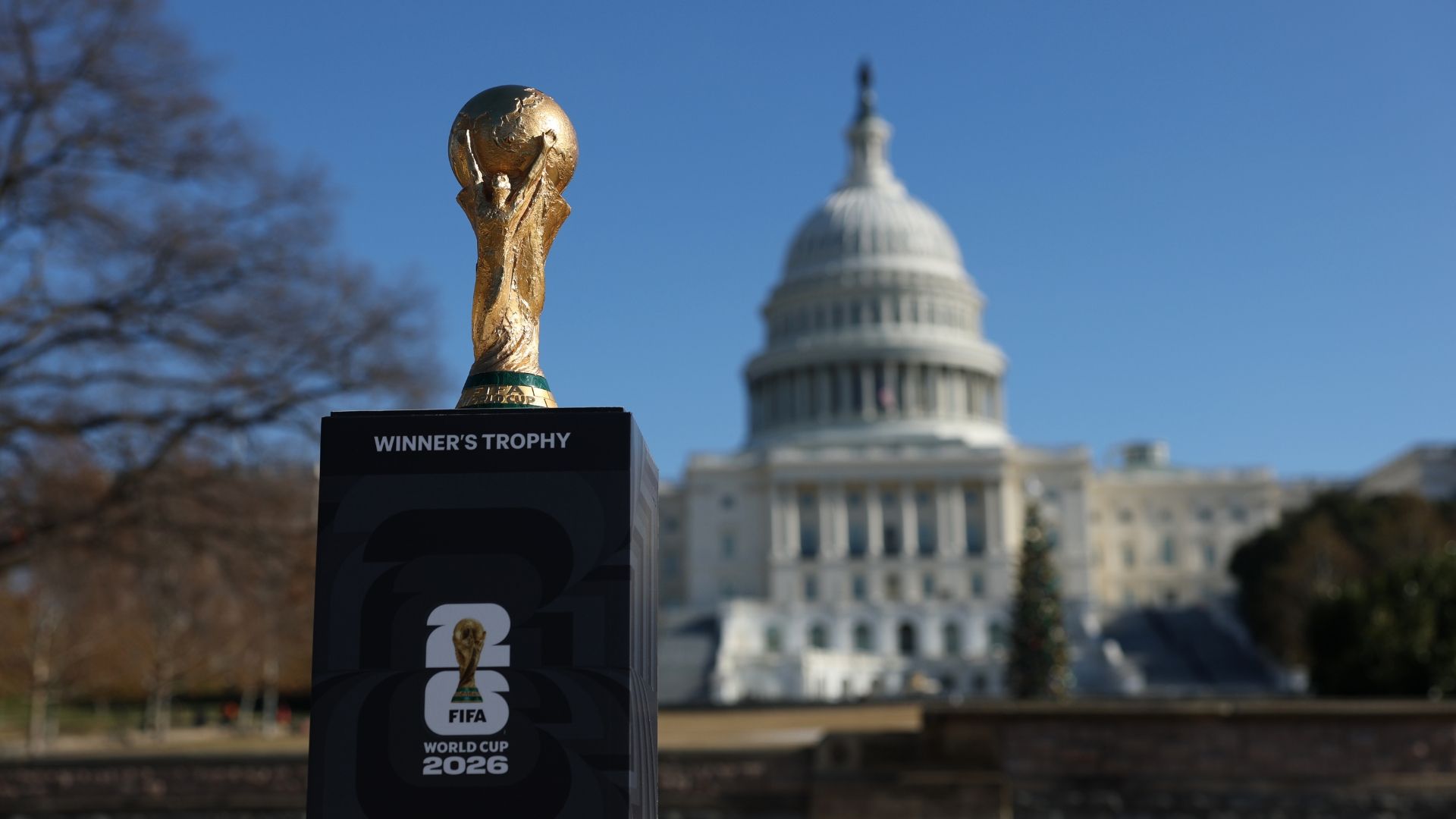
The 2026 World Cup is fast approaching and as the draw for the world’s biggest sporting event approaches, football’s governing body FIFA is very excited.
The controversial World Cup, which takes place amid a turbulent political landscape in Canada, the United States and Mexico, has already been criticized for imposing dynamic pricing on fans, official resale platforms without restrictions on ticket prices and a focus on buying special season tickets to gain early access to seats.
Technology is not always good
VAR (Video Assistant Referee) is one of the most controversial topics in the world of football (from now on I will call it football) because, although it gives the referees information about what is happening on the pitch, it has caused long stoppages in a high-speed sport that depends on its intensity.
Additionally, the video referee is often in the spotlight because human error leads to bad decisions and fans fundamentally wonder, “Is the sport better without a video referee?”
For this reason, the integration of VAR in corner kicks using the new AI ball technology (I will return to this shortly) can only be considered positive if it is executed perfectly during the match so as not to compromise the spectacular nature.
In fact, football fans have lost faith in VAR, so the idea of adding more technology is seen as negative. Corners, fouls, goals, offsides – all of this now falls under VAR, and while it would be nice if it was quick and always accurate, it’s unfortunately not the case.
That’s why BBC Sports“At a meeting in October of the International Football Association Board (Ifab), which sets the rules of the game, it was agreed that VAR could be extended to incorrectly shown second yellow cards leading to a red card.”
“But FIFA’s proposal to reform corner kicks was rejected, meaning football’s world governing body must launch an effective test that could be used in the US, Mexico and Canada next summer.”
This is how football works: once the referees have made a decision and the match restarts, they cannot change the decision. This means that with this new implementation of VAR, every part of the World Cup will need to be scrutinized, and while FIFA believes it has the resources to handle such recording, I haven’t seen enough evidence to believe the FA does.
The fans don’t want it.
After reports emerged of VAR’s involvement in corner kicks, social media was flooded with football fans around the world expressing their disdain for the decision.
One Reddit user said: “This makes no sense,” while another added: “I swear soccer still has stupid rules.”
My favorite comment though is: “At this rate, the midnight games (in Europe) might not end until 5am!” This shows the fans’ lack of trust in the referees to make effective decisions without wasting much time.
Earlier this year, an eight minute VAR decision took place during an FA Cup match between Bournemouth and Wolves… Now imagine the potential chaos if VAR angle analysis wasn’t superbly optimised.
everything is in the ball
To effectively determine the outcome of corner kicks with VAR, FIFA introduced a new AI-powered ball for the World Cup, but not only to track corner kicks.
The new ball, called Trionda, is manufactured by Adidas with an artificial intelligence chip that continuously tracks movements and sends real-time data to the referees. The idea is to help referees make faster decisions, especially in chaotic moments when incidents are often overlooked. Adidas says its “connected ball technology” will help referees make faster decisions as real-time data is sent to VAR along with players’ positional data.
On paper, it seems like a good improvement: with artificial intelligence on the ball, VAR gets more information as bodies fly all over the place. It could also clarify decision-making and prevent attackers from being tackled at every turn in rugby.
But the thing is, if you already hate how much VAR interrupts the flow of the game, this isn’t going to help you.
Football has just come out of the offside era and we are now facing a World Cup where an AI chip in the ball could cause even more delays because something looks suspicious. FIFA says it’s all about fairness, but fans are tired of the sport feeling like a science project.
There’s also the broader question of whether this actually improves the show. Technology is increasingly penetrating football and each level seems to give VAR more control. If the ball automatically sends warning signals to the corners, speed is lost every time someone is hit at the near post.
The Trionda will still look like a regular match ball and Adidas insists it will function in the same way as previous models. This is good news for players who want to avoid this. The 2010 Jabulani debacleFor fans, it feels like another step towards a version of football where every great moment is put through a digital filter before it counts.
The game’s AI can help make some decisions, but it also risks turning the case into a forensic investigation. And if you already think VAR has taken too much out of the game, I have a feeling the 2026 World Cup will make it even more so.