Apple Agent Store: What It Is, What It Could Do to the App Store, and Why Your iPhone Might Work Completely Differently

Apple is reported to be developing a dedicated marketplace for AI agents—software that doesn’t just display information but takes real actions on your behalf. Think booking a restaurant, filing a support ticket, or reorganizing your photo library, all without you touching a single button. If that sounds like science fiction, it isn’t. The infrastructure for it already exists in iOS. The missing piece has always been the storefront.
- Apple is reportedly planning a dedicated marketplace—informally called the “agent store”—for AI agents that can take multi-step actions on your iPhone without manual input.
- This would be structurally separate from the App Store. Agents are not apps; they run autonomously, call APIs, and interact with other apps on your behalf.
- Apple’s existing App Intents and SiriKit frameworks are the likely technical foundation. Third-party developers can already define “actions” their apps expose to Siri.
- Apple has not officially announced an “agent store” by name. What’s circulating is a combination of analyst reports, developer community signals, and confirmed Apple Intelligence roadmap items.
- Competitors are already moving: OpenAI’s GPT Store launched in January 2024; Google’s Gemini agent integrations are deepening across Android and Workspace.
Apple has not confirmed the name, the launch window, or the revenue model for any of this. But the technical groundwork is visible in iOS already, and the competitive pressure from OpenAI and Google is not subtle. An Apple agent store isn’t inevitable—nothing Apple does is until Tim Cook walks onto a stage—but it’s the most coherent direction for Apple Intelligence to go next. Here’s what’s actually known, what’s being inferred, and what it would mean if it happened.
Contents
What Apple Is Reportedly Building
Core Details
The Apple agent store concept, as it’s been described across multiple technology publications, would function as a curated directory of AI agents—autonomous software routines that accept a goal from you and figure out how to achieve it, step by step, without you babysitting each move. You might tell an agent “book me a dinner for two on Friday near Soho under $80” and it would query OpenTable, check your calendar, confirm your card, and send a confirmation without any further prompting from you.
That’s genuinely different from what apps do. Apps wait for you to tap. Agents act.
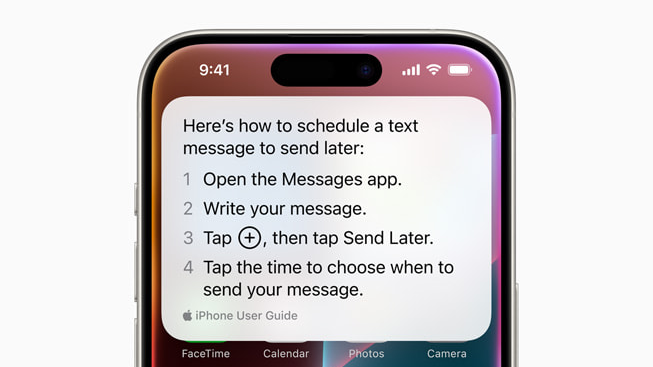
The technical layer Apple would use here already exists in a rudimentary form. App Intents—introduced in iOS 16 and expanded significantly since—allows developers to expose specific actions their apps can perform to Siri and to Shortcuts. A restaurant app can expose a “make reservation” intent; a travel app can expose “search flights.” Right now, Siri chains those intents poorly and unreliably. An agent layer would replace the chain with something more like reasoning: the agent evaluates available actions, decides a sequence, handles failures, and completes the goal.
Pricing and Availability
No official pricing has been announced—because nothing has been officially announced. Based on how Apple has structured other developer ecosystems, the most likely model involves Apple taking a 15–30% cut of any agent subscriptions or in-agent purchases, mirroring App Store commission tiers. Free agents with premium unlocks are the obvious launch strategy for most developers.
Availability signals are similarly indirect. Apple Intelligence features have been rolling out incrementally since iOS 18.1; the agent store, if it materializes, would most plausibly appear as an iOS 19 feature or a mid-cycle iOS 18 update tied to a specific hardware announcement.
What It Would and Wouldn’t Do
Worth being precise here, because the press coverage has been imprecise. An Apple agent store would not replace the App Store. Apps still run the primary user experience; agents sit on top and orchestrate between them. You’d still need the Uber app for the agent to call an Uber. What changes is you wouldn’t need to open Uber yourself.
Apple’s privacy-first architecture also constrains what agents can do. On-device processing means agents would have access to on-device data—contacts, calendar, photos—but cross-app access to sensitive financial or health data would require explicit user permission at each step, likely surfaced as a familiar iOS permission dialog. Whether that makes the experience useful or just annoying depends almost entirely on execution.
Context and Background
Why This Matters
The App Store is 17 years old. It was designed for a world where software meant something you tap and look at. AI agents operate on a fundamentally different premise: they take inputs in natural language and produce outputs in the real world, usually by interacting with multiple apps or APIs in sequence. Forcing them into the App Store model—individual app listings, icon on a home screen, open-to-use—is an awkward fit.
OpenAI figured this out early. The GPT Store, launched in January 2024, is specifically a directory for custom GPT configurations—not traditional software. Google has been building agent capabilities into Gemini at a pace that has surprised some analysts. Both companies are betting that the next dominant interaction paradigm isn’t tapping icons; it’s giving instructions and getting outcomes. Apple, historically late to paradigm shifts and then dominant within them, appears to be watching carefully.
What Led Here
Apple Intelligence was announced at WWDC in June 2024 with a clear message: AI features built into the OS, not bolted on. On-device processing for privacy. ChatGPT integration for tasks requiring more capability than the on-device model can handle. Siri, rebuilt from scratch to actually understand context.
That rebuild of Siri is the critical piece. The old Siri was a voice interface to a lookup database. The new Siri is, at least in intent, a model that can reason about multi-step goals and use available tools to accomplish them. The tools, in Apple’s framework, are App Intents. The agent store would be a curated, discoverable, monetizable layer on top of that infrastructure.
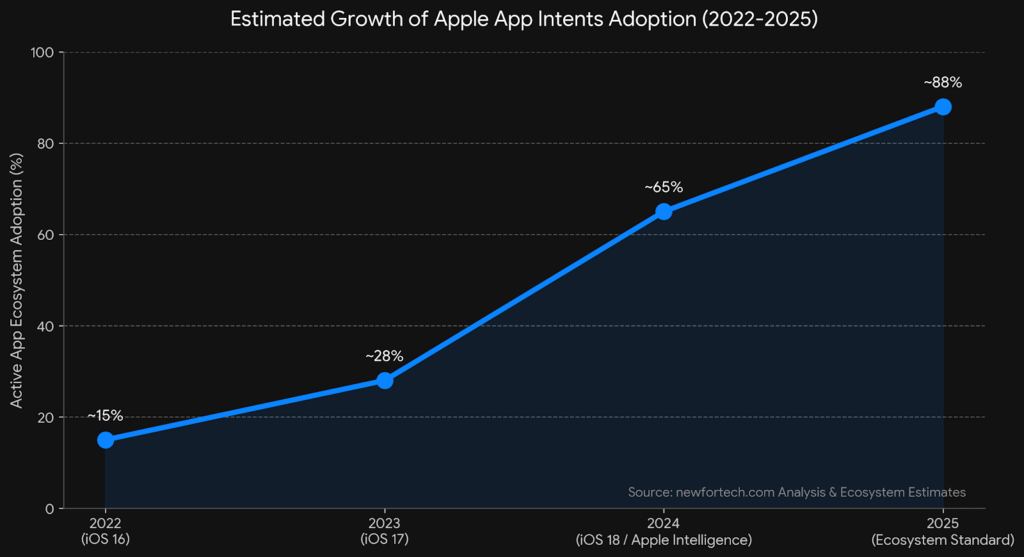
Developers have been seeding this, too. Since the App Intents framework opened up properly in iOS 16, the number of apps exposing Intents has grown substantially with each iOS release. By the time an agent store exists, there may already be a meaningful catalog of actions for agents to use.
Industry and Community Reaction
Analyst Response
The analyst community has been cautiously enthusiastic, which is roughly how analysts respond to anything Apple-adjacent that doesn’t have a confirmed ship date. The core argument for the bull case: Apple has 2.2 billion active devices, a trusted payment infrastructure, the strictest app review process in the industry (which, perversely, makes an agent store safer-seeming than alternatives), and a user base that pays for software at higher rates than any other platform. If Apple builds an agent storefront, developers will build for it.
The bear case is less discussed but worth taking seriously. Agent quality is genuinely hard to evaluate before use, harder than evaluating an app. Apple’s review process caught malicious apps; catching a badly-behaving agent—one that does the right thing 90% of the time and something weird the other 10%—requires a different kind of testing framework. If agents start taking consequential actions on users’ behalf and those actions go wrong, the liability and trust questions get complicated fast.
Developer Community Response
Developers who have been building with App Intents are, understandably, paying close attention. The framework has been useful but limited—it surfaces app actions to Siri and Shortcuts, but Siri’s ability to chain those actions intelligently has been inconsistent. An agent layer would change the value proposition of investing in App Intents significantly: instead of adding a feature that maybe 3% of users discover through Shortcuts, developers would be building actions that any agent in the store could use.
There’s also a real monetization question. If a third-party agent books a restaurant using your restaurant app’s reservation intent, who captures value from that interaction? The agent developer? The restaurant app developer? Apple? The current App Store model doesn’t have a clean answer for multi-party transactions of this kind, and Apple will need to solve it before anyone ships anything meaningful.
What This Means for You
If You’re a Regular iPhone User
The practical difference would be this: you stop managing apps and start managing goals. Instead of opening five apps to plan a weekend trip—flights, hotel, calendar, maps, weather—you describe the trip to an agent and it coordinates across those apps for you. The apps still do the work; you just stop being the coordinator between them.
This is where Apple’s privacy angle becomes genuinely relevant rather than just a marketing angle. Other agent platforms send your instructions to the cloud; Apple’s on-device processing means the agent can see your calendar, contacts, and location without that data leaving your phone. Whether users care about that distinction in practice is another question, but it’s a real technical difference, not a branding claim.
The wrong fit: if you use iPhone primarily as a camera, a social media device, or for games, an agent store probably doesn’t change much about your daily experience, at least not immediately. Agents are most valuable when you’re orchestrating across multiple apps to accomplish something goal-oriented.
If You’re a Developer or Business
The opportunity is real. App Intents adoption would become table stakes in a world where agents are how users discover and use functionality. A restaurant booking app that doesn’t expose a reservation intent would be invisible to any agent trying to help users book restaurants. This is similar to how having a mobile-optimized website became non-negotiable once smartphone traffic overtook desktop—not because Apple mandated it, but because users simply went elsewhere.
The revenue structure, though, needs clarity before businesses can plan for it. A 70/30 split where the agent developer takes the 30 and the app developer gets nothing from the orchestrated transaction would not be a compelling proposition. Watch WWDC for how Apple frames the developer economics here.
What We Still Don’t Know
Quite a lot, as it turns out. The confirmed unknowns:
- Official name. “Agent store” is what journalists and analysts are calling it. Apple may launch this under an entirely different brand, or fold it into Siri settings, or integrate it directly into the App Store as a category filter. The current name is a placeholder.
- Launch timeline. iOS 19, a mid-cycle iOS 18 update, or pushed to 2027 are all plausible. Apple has not committed to anything publicly.
- Third-party agent access to sensitive data. Can a third-party agent read your Health app data? Your banking apps? Your Messages thread? The answer has significant security and trust implications, and Apple has not outlined a permissions framework for agent-level data access.
- Whether older hardware runs it. Apple Intelligence requires an A17 Pro chip or M-series. An agent store would likely carry the same requirement, which immediately excludes a significant portion of the iPhone installed base.
- How Apple prevents abuse. An agent that quietly signs you up for subscriptions, or takes actions you didn’t clearly authorize, is a serious problem. The review and permission model for agents operating autonomously is a genuinely hard design challenge.
Frequently Asked Questions
What is an Apple agent store?
Is the Apple agent store different from the App Store?
Will an Apple agent store be safe and private?
When will Apple release an agent store?
What phones would support the Apple agent store?
How is this different from ChatGPT plugins or Google Gemini agents?
Our Take
The Apple agent store, if it ships in anything like the form being reported, is probably the most structurally significant thing Apple has done to the iPhone since the App Store itself. Not because agents are magic—they’re not, and early versions will almost certainly be inconsistent and occasionally maddening—but because they change the relationship between the user and the device at a fundamental level.
Right now, your iPhone is a panel of apps you manage. You decide when to open them, what to give them, what to do with their output. An agent layer inverts part of that. You describe an outcome; the device figures out the sequence. For certain tasks, that’s genuinely better. For others—especially ones involving money, medical information, or anything irreversible—handing autonomy to software requires a level of reliability that current AI systems don’t consistently deliver.
What I’d watch for at WWDC: how Apple handles the permission model for agents, how it plans to prevent abuse, and whether it offers developers a fair economic structure for exposing their app’s actions to third-party agents. Get those three things right and the agent store could be genuinely transformative. Get them wrong and it becomes the kind of feature that ships quietly and quietly disappears. Apple has done both before. Apple Intelligence has been promising so far—but promising so far and shipping something that works reliably at scale are meaningfully different problems.