E-Bike Chipping Crackdown 2026: Inside the Anti-Tampering War
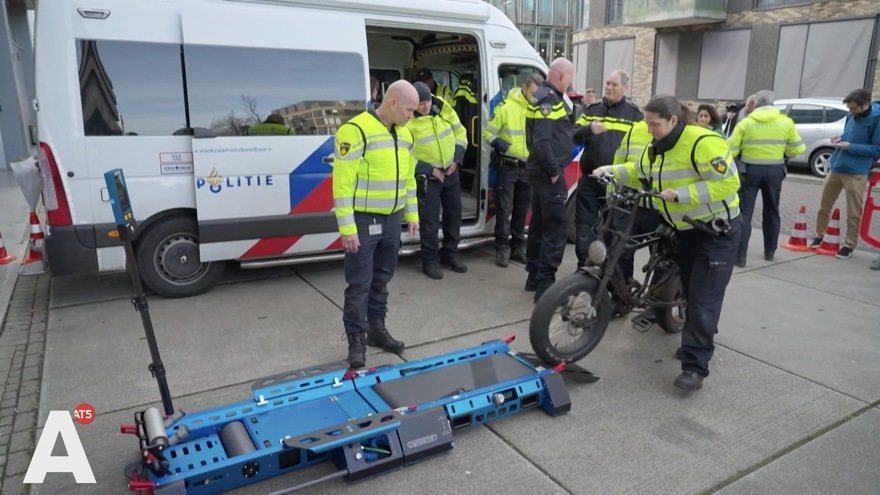
European authorities have moved from warnings to consequences: in 2026, police in the Netherlands are stopping cyclists with portable roller dynamometers, France is enforcing a law that can send a dealer to prison for two years, and Bosch’s own motor firmware is being used as a front line in the fight against speed-limit tampering on e-bikes.
This is not a future story. The checkpoints are already running, the fines are already landing, and the industry coalition that signed an anti-tampering commitment has grown to 15 national bicycle associations and 68 manufacturers. What changed in 2026 is enforcement depth — the rules have existed for years; the teeth are new.
- Dutch police deployed nearly 250 portable Dynostar roller rigs nationwide for roadside e-bike speed compliance testing — a failed check can result in immediate fine and confiscation
- France’s speed-tampering law (Section L317-1 of the highway code) sets penalties of up to €30,000 and one year in prison for riders; dealers face up to two years imprisonment
- Bosch’s motor firmware triggers error code 504 (“limp mode”) when tampering is detected — three detections requires a dealer visit to restore normal function
- Modified fatbikes in the Netherlands have been recorded reaching 40–50 km/h on shared cycle paths designed for 15–20 km/h traffic; Dutch ER visits for young e-bike riders doubled between 2020 and 2024
- An industry coalition of 15 national bicycle associations and 68 manufacturers has committed to anti-tampering measures under an EU-coordinated pledge
Last updated: 2026-04-24 · Sources linked inline
Here is the short version for anyone who just wants the risk picture: if your e-bike provides motor assistance above 25 km/h on a public road anywhere in the EU, it is legally a moped. Riding it without registration, insurance, and a helmet is not a technicality — it is a criminal offense in Germany, a heavily fined violation in France, and in the Netherlands as of 2026, provable in under two minutes at a roadside checkpoint.
Contents
What Was Announced and Enforced
Core Details: What Is Actually Happening
The Dutch enforcement operation is the most technically distinctive element of the 2026 crackdown. Dynostar’s SSD-1 — a compact, portable roller dynamometer approved by Dutch notified body NMi — has been distributed to police forces nationwide. An officer places the bike on the rig, mounts it, and pedals. The readout measures whether motor assistance cuts off at 25 km/h for standard pedelecs, 6 km/h without pedaling (throttle check), or at the 45 km/h ceiling for legal speed pedelecs. What the rig cannot do, notably, is measure peak wattage — it measures cut-off speed only. That distinction matters for technical debates about 250W nominal ratings, but it is irrelevant for the most common tampering method, which fools the speed sensor rather than the power controller.
The Netherlands also moved in March 2024 to close a legal loophole: previously, officers could only act on a tuned e-bike if the tuning was active at the moment of the stop. A physical switch or app that toggled the chip off gave riders a legal escape. The Dutch Cabinet proposed removing that escape, meaning the presence of tampering hardware becomes an offense regardless of its current state.
Penalties and Availability Country by Country
| Country | Standard fine (tampering) | Criminal exposure | Additional measures |
|---|---|---|---|
| France | Up to €30,000 | 1 year (rider) / 2 years (dealer) | License suspension 3 years; confiscation |
| Germany | Variable — treated as driving without insurance | Criminal record possible | Bike banned from cycle paths; classification as Kleinkraftrad |
| Netherlands | €310 per incident (prior baseline) | Not confirmed for riders | Roadside dyno checks; possible seizure; loophole closure proposal |
| UK | Up to £300 + 6 points on licence | Not confirmed | Met Police “Cycle Safety Team” enforcement operations ongoing |
| EU general | Varies by member state | Some member states only | Bike reclassified as moped — insurance invalidated |
How the Technical Threshold Works
The legal architecture has not changed since EN 15194 was established: an EPAC (Electrically Power Assisted Cycle) must have a continuous-rated motor of no more than 250W, and motor assistance must cut off at 25 km/h. Above those limits, the vehicle is a moped. What has changed is how both sides respond to that line.
Tuning chips work by intercepting the speed signal between the wheel sensor and the motor controller, reporting a lower speed than actual — typically half. At 50 km/h, the chip tells the controller the bike is doing 25 km/h, so assistance continues. The technical cat-and-mouse that followed is now in its second decade. Bosch responded with error code 504, triggered when the motor detects implausible sensor readings. Three detections locks the motor into a restricted state that requires a Bosch dealer to clear. Newer Gen5 CX motors use signed firmware with what forum communities describe as digital rights management — a parallel to car ECU tuning — making software-only unlocks substantially harder than on earlier hardware.
Context and Background
Why This Matters Now
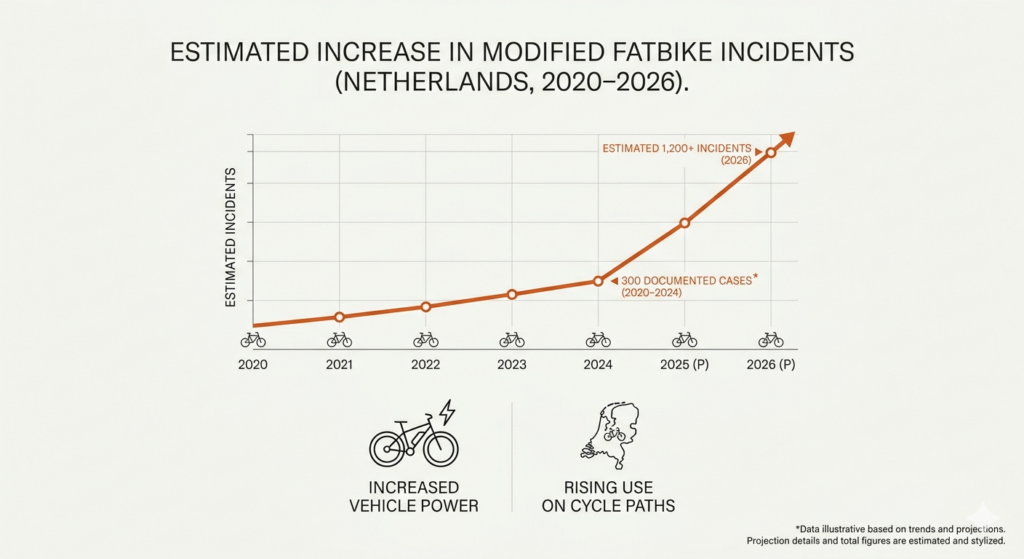
The fatbike is where the political pressure crystallized. In the Netherlands, wide-tire e-bikes marketed at teenagers began arriving in large volumes from Chinese suppliers from 2021 onward. Many shipped without functional speed limiters, or with limiters so easily bypassed that effective removal was an afternoon’s work for a motivated 14-year-old. According to Fietsersbond, the Dutch cycling advocacy group, emergency room admissions for young e-bike riders doubled between 2020 and 2024. Some of the machines causing incidents were doing 40–50 km/h on shared paths designed for mixed pedestrian and cycling traffic at 15–20 km/h.
The political sequence that followed was fast by EU standards. Amsterdam proposed fatbike restrictions in Vondelpark in late 2024. Enschede banned them outright by council motion in July 2024. Utrecht prohibited them on canal paths and parks. Rotterdam intensified police enforcement. None of those municipalities changed national law — the law had not needed changing — but they forced the question of what enforcement of existing law actually looked like in practice.
What Led Here: A Decade of Cat and Mouse
The industry has been aware of this problem since at least 2021, when the Confederation of the European Bicycle Industry coordinated a pledge signed by 15 national associations and 68 companies. The commitment was to make products tamper-resistant and to work with legislators. Bosch published its own anti-tampering position in the same period, noting that its service network could detect historical tampering through battery discharge patterns even after a chip was removed — the motor logs don’t forget.
What the industry could not control was the supply chain. Tuning kits for virtually every major motor platform — Bosch, Shimano, Yamaha, Giant’s SyncDrive, Specialized’s Brose-derived system — remain commercially available and openly marketed. One UK retailer lists compatible products for Bosch motors from 2014 through to 2026 model year. The industry pledge addressed first-party manufacturing; it had no mechanism to remove third-party products from Amazon, eBay, or dedicated tuning retailers.
Amazon drew specific criticism for listing these products, and the CONEBI president’s public statement called on European legislators to “clearly forbid the sale, application and use of tampering equipment.” As of April 2026, no EU-wide marketplace selling ban has been enacted. That gap is one of the unresolved threads in this story.
Industry and Community Reaction
Analyst and Manufacturer Response
Bosch, Giant, and other major system suppliers have been unambiguous in their public positions: tampering voids warranties, damages components, and exposes riders to liability they may not understand until after an accident. The more pointed argument comes from Bosch’s former eBike Systems director, who framed the issue in terms of trail access rather than just individual risk — suggesting that if enough accidents involve modified e-bikes, governments will regulate the entire category more heavily, including compliant bikes. That has not happened yet, but it is the argument that carries most weight with manufacturers who sell into a lightly regulated market.
The technical community’s response has been more divided. Forum discussions around Bosch’s Gen5 anti-tamper firmware often note, correctly, that the 250W nominal limit is a continuous-power ceiling, not a peak power ceiling — and that virtually every premium e-bike motor on the market regularly exceeds 250W in burst conditions. The dyno test, critics note, measures speed cut-off, not wattage, which means a high-torque legally-compliant motor that peaks at 750W in the first second of acceleration passes the same test as a far less powerful bike. That is not a defense of tampering; it is an accurate description of how the regulation is written and enforced.
Community Response: Equity Concerns vs. Safety Concerns
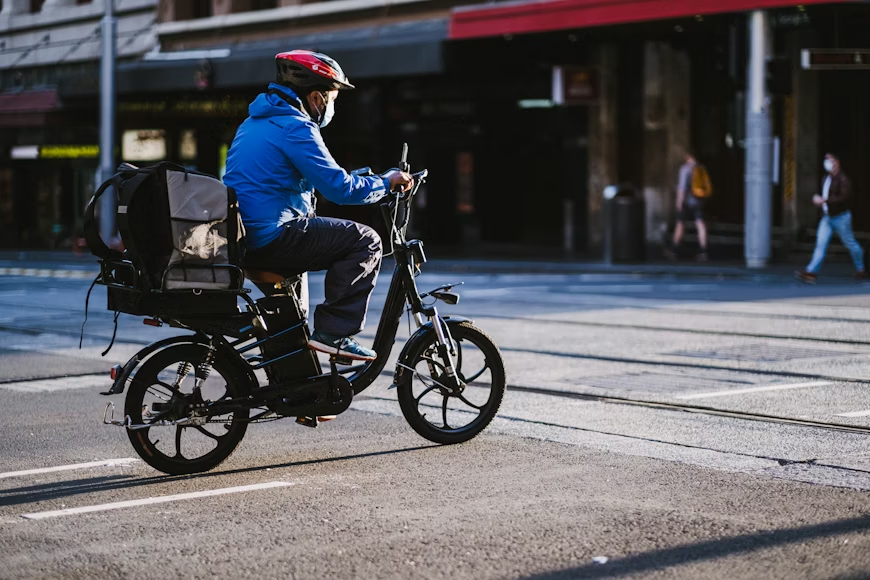
The counter-argument to aggressive enforcement is not a defense of speeding. It centers on who owns the bikes that fail checks. Critics of blanket roadside enforcement point to delivery riders and shift workers who may depend on low-cost imported bikes that arrived without adequate documentation or whose compliance status is genuinely ambiguous. A dyno reading that returns “red” does not explain why — a bike might fail because it was tuned, but also because its firmware was never configured for EU operation, or because documentation of its motor specification was not included at point of sale.
For that group, the enforcement burden lands inequitably. A rider who bought a compliant €2,500 e-bike from a major brand with clear EN 15194 certification has nothing to fear at a checkpoint. A rider who bought an €800 import through a marketplace and has no idea what firmware it’s running faces a different situation entirely. The policy gap — enforcement without adequate point-of-sale labeling and import standards — is something both consumer groups and advocacy organizations have flagged.
What This Means for You
For Riders With Compliant E-Bikes
If your e-bike was purchased from a reputable brand, carries a CE mark, and has never been modified, a roadside check presents no legal risk. The Dynostar rig returns a pass on any bike where motor assistance stops at 25 km/h. That is what a compliant pedelec does by design. The practical implication is that you may be asked to mount a roller at a checkpoint, pedal to speed, and wait for the result. Allow for two to five minutes and cycle on.
Where things become more complicated is firmware. The newest generation of connected e-bikes receive over-the-air firmware updates. Bosch’s MY26 update, available from July 2025, added new ride modes and increased peak output — all within the legal framework. But riders who have not updated their firmware may find their bike behaves differently from factory spec in ways that are not straightforwardly interpretable at a checkpoint. Keeping your motor firmware current is no longer just a performance recommendation; it is a compliance hygiene step.
For Anyone Considering a Tuning Kit
The risk profile has materially changed. Before 2024, the realistic enforcement scenario in most EU countries was an officer who spotted a suspicious bike during a traffic stop and had no reliable way to prove tampering on the spot. The Dutch rollentestbanken remove that uncertainty. An officer who suspects a bike is modified now has an objective measurement tool available. The “I can just remove the chip before I cross the border” logic no longer holds in the Netherlands if the modification loophole bill passes, and the Bosch motor log retains battery consumption data that persists through chip removal regardless.
Beyond legal exposure: the mechanical case against tuning is straightforward. A motor designed for 250W continuous operation running beyond its speed threshold draws higher sustained current. Battery cells cycle harder, shortening their operational life. Brakes, forks, and frame geometry on a 25 km/h-rated bike were not designed for emergency stops from 45 km/h. The component that tends to fail first is the one that was already under the most stress — and which your warranty will not cover once a service center reads the motor logs.
This is the wrong article for anyone who rides exclusively on private land and wants technical information about unrestricted performance. On private land, outside of public roads and paths, the legal framework does not apply. On any shared infrastructure — cycle paths, roads, parks — the legal framework now has operational enforcement behind it in multiple EU markets. Those are distinct situations.
What We Still Don’t Know

Several questions remain genuinely open as of April 2026.
The Netherlands’ proposed loophole closure — making tampering hardware an offense regardless of whether it is active at the moment of a stop — was announced in March 2024 but has not been confirmed as enacted law. Whether it passed the Dutch parliament in its original form, was amended, or stalled is not confirmed in available sources as of this publication date.
There is no confirmed EU-wide regulation banning the sale of tuning kits on online marketplaces. CONEBI has called for it. Whether the European Commission has included it in any product safety or marketplace liability framework currently in development is not confirmed.
The UK’s enforcement trajectory post-2025 is unclear. The Metropolitan Police runs a Cycle Safety Team with e-bike enforcement operations, and a ΰ300 fine plus six licence points is on the books. Whether portable dyno testing has been adopted by UK forces, or whether enforcement remains primarily based on visual identification of suspicious bikes, is not confirmed from official sources.
The industry’s claim that Bosch’s service network can detect historic tampering through battery log analysis — even after a chip has been removed — comes from Bosch spokespeople and has been corroborated by mechanics on forums. An independent technical audit of what the motor logs actually capture, and whether that evidence would hold up in a legal proceeding in each member state, has not been published.
Frequently Asked Questions
Can I legally buy a tuning kit for my e-bike in the EU?
What happens at a Dutch e-bike checkpoint?
Does removing a tuning chip before a service visit protect me?
Is my e-bike insurance invalid if I chip it?
What about fatbikes that came shipped without a compliant limiter?
Are S-Pedelecs (45 km/h speed pedelecs) affected by the crackdown?
Our Take
The argument that the 25 km/h limit is too slow is worth having — and in some quarters it’s a serious policy debate, not a rider grievance. The UK has had persistent advocacy for a 20 mph (32 km/h) limit that would align more closely with urban speed restrictions and reduce the gap between legal e-bike speed and the flow of traffic. That debate should happen through legislatures and standards bodies. What the 2026 enforcement wave makes clear is that it is not happening through speed sensors.
The counterintuitive dimension of this story is that the Bosch error 504 — the dreaded limp-mode trigger — has been reported on unmodified bikes. False positives are rare but documented, typically caused by DIY sensor interference rather than actual tuning. It means a compliant rider whose bike develops a sensor fault can face the same error that flags a chipped bike at a dealer visit. That is an argument for motor manufacturers to publish clearer diagnostic transparency — not an argument for tuning.
What changed in 2026 is not the law but the credibility of its enforcement. For riders who genuinely want to ride faster on public paths in the EU, the honest answer remains: buy or convert to a legal S-Pedelec, register it, insure it, and wear the helmet. The mid-range e-bikes on the market right now offer enough motor response within the 25 km/h limit — particularly with torque sensor systems — that the “brick wall” complaint about assistance cut-off is genuinely less relevant on a well-specified bike than on a cheap cadence-sensor import. Choosing the right bike for your use case matters more than removing a limiter from the wrong one.
Note: This article covers a developing enforcement story. Specific fine amounts, legislative status (particularly the Dutch loophole closure proposal), and enforcement frequency will change. Check your national transport authority for current legal requirements before riding. Sources: Dynostar SSD-1 product documentation; Fietsersbond injury data; Dutch Cabinet announcement March 2024; France Section L317-1 highway code; Bosch eBike Systems anti-tampering documentation; CONEBI coalition pledge.