Musk vs OpenAI Jury Verdict: How a Three-Year Clock Ended a $150 Billion Lawsuit in 90 Minutes

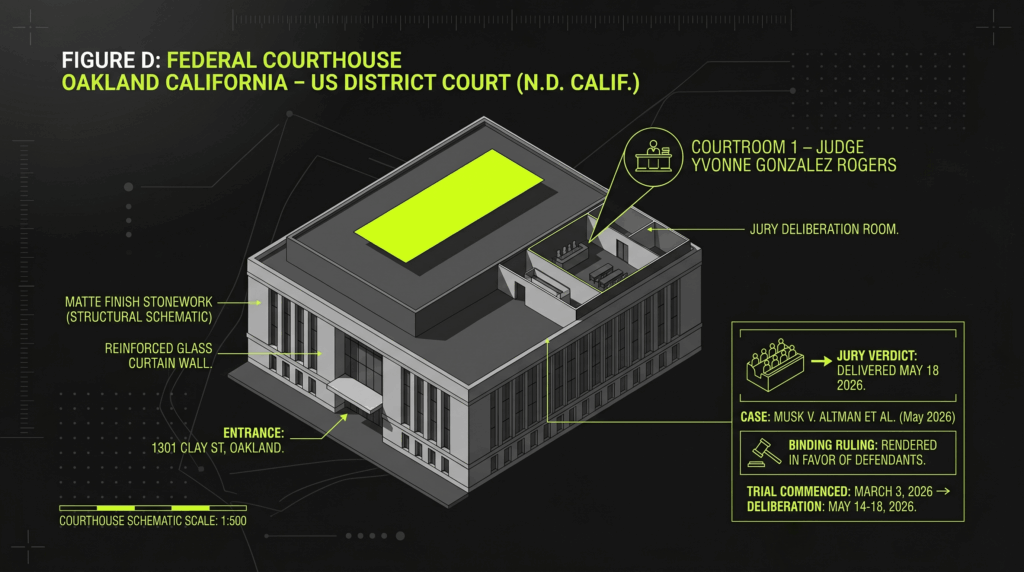
OAKLAND, Calif. — May 18, 2026. A nine-member federal jury took less than two hours Monday morning to decide that Elon Musk simply waited too long. Every claim in his lawsuit against OpenAI, Sam Altman, Greg Brockman, and Microsoft was dismissed as untimely under California’s three-year statute of limitations. Judge Yvonne Gonzalez Rogers, sitting at the U.S. District Court for the Northern District of California in Oakland, accepted the advisory verdict as her own and tossed the case on the spot. The Musk vs OpenAI jury verdict — unanimous, swift, and unambiguous — ends what had become one of the most closely watched corporate governance trials in Silicon Valley history.
The OpenAI statute of limitations ruling didn’t resolve the underlying question Musk put before the court — whether OpenAI’s nonprofit to for-profit AI conversion was lawful. It did something more consequential for the company’s near-term future: it cleared the single biggest legal cloud hanging over a planned public listing that some bankers have privately priced toward a $1 trillion IPO valuation. For the AI industry broadly, the verdict carries a quieter message. Open source commitments, founding-era agreements, and charitable trust obligations have an expiration date — and that date arrives faster than most founders expect.
Contents
What Was Announced
The Statute of Limitations Ruling
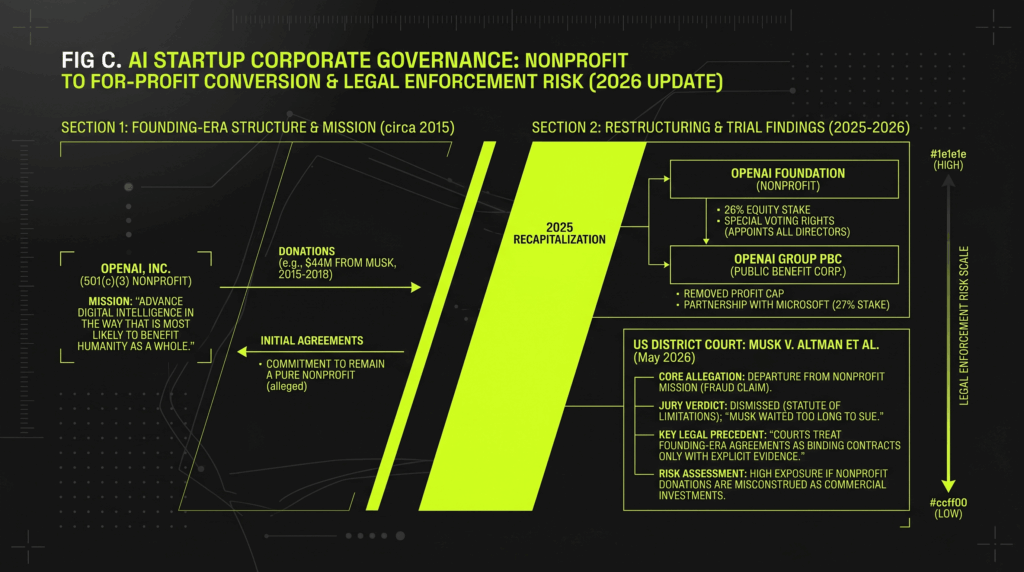
Jury deliberations started at 8:30 a.m. Pacific. At 10:23 a.m., courtroom deputy Edwin Cuenco handed Judge Gonzalez Rogers a note. She read it, set it down, and announced: “We have a verdict.” The nine jurors found unanimously that every claim Musk brought — against OpenAI, against Altman, against Brockman, and against Microsoft — fell outside the applicable statute of limitations window. The three-year statute of limitations had already closed by the time Musk filed his complaint in February 2024.
The jury also ruled that Musk’s breach of charitable trust claims — the core of his case, the argument that Altman and Brockman had effectively stolen a nonprofit — were likewise time-barred. Judge Gonzalez Rogers, who had the discretion to reject the advisory verdict but declined to, said afterward: “I think that there’s a substantial amount of evidence to support the jury’s finding, which is why I was prepared to dismiss on the spot.” That’s a notably candid statement. Judges don’t often volunteer that they were ready to act unilaterally before the jury even finished.
What Musk Actually Asked For
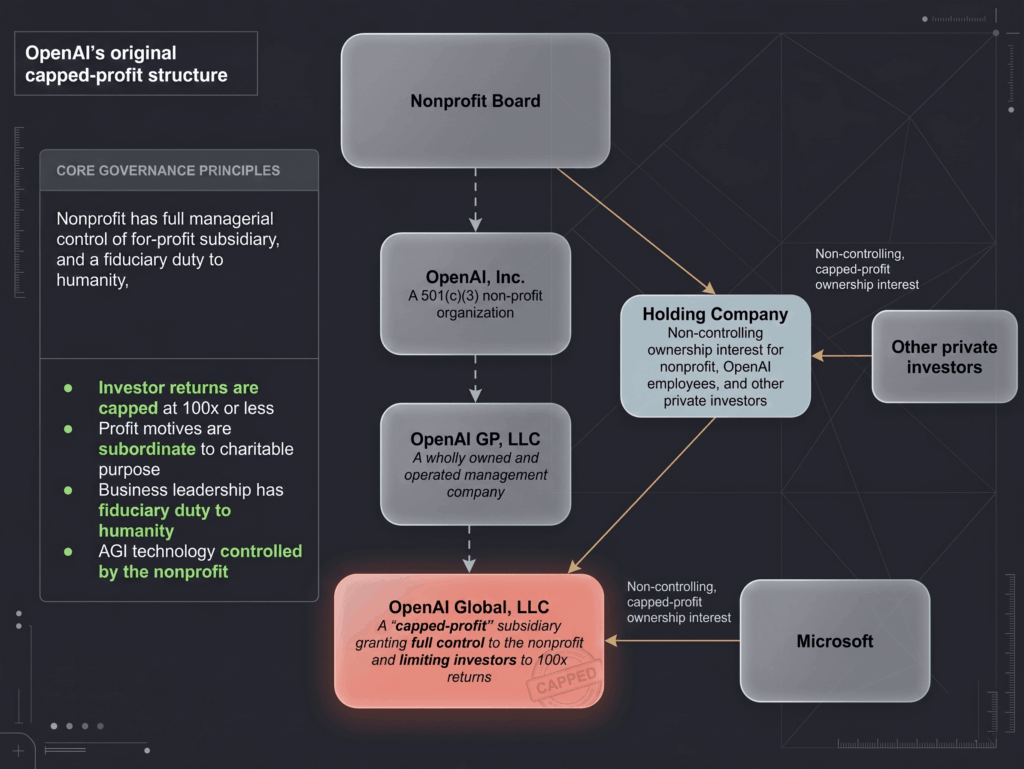
The scope of what Musk sought is worth sitting with for a moment. He asked the court to force OpenAI and Microsoft to “disgorge” as much as $150 billion back into OpenAI’s nonprofit foundation. He wanted Altman and Brockman removed from their posts. He wanted the for-profit entity — the structure that has attracted $122 billion in private funding and underpins the planned OpenAI public benefit corporation restructuring — dismantled entirely. He also named Microsoft as a co-defendant for allegedly aiding and abetting the original breach, pointing to the company’s $13 billion in OpenAI investment between 2019 and 2023.
Had the jury sided with him — and had the judge agreed — the AI industry’s current power structure would have been genuinely at risk. It wasn’t a frivolous lawsuit in terms of stakes. The legal theory was contested, but the potential consequences were real.
How the Verdict Was Structured
This is the part that tends to get lost in the headlines. The jury’s role was advisory — a less common mechanism in civil cases where a judge retains final authority. The jurors found facts; the judge ruled on law. Gonzalez Rogers accepted the findings and issued the binding dismissal. Musk’s lead counsel Marc Toberoff responded to the verdict in the hallway with one word: “Appeal.” A broader legal statement from his team said they were preserving the right to challenge the judge’s rulings and jury instructions related to the statute of limitations framework. The appeal, if filed, will likely center on a legal concept called the continuing violation doctrine — an argument that a long pattern of wrongful conduct can extend the filing clock past what a single discrete event would allow.
Context and Background
Why the Statute of Limitations Is the Whole Case
People keep framing this as Musk losing on the merits. He didn’t — not exactly. The jury never got to weigh whether Altman and Brockman actually breached their duties to OpenAI’s founding mission. They decided the clock had run out before that question could even be addressed. Musk’s own attorney, after the verdict, told reporters he believed “Musk’s side had proved the core of its case” on breach of duty — which is a genuinely unusual thing for losing counsel to say in public. Whether that’s legal spin or a sincere read of the evidence, it’s the argument that will carry into any appeal.
Here’s why the timing question is so hard. Musk left OpenAI’s board in 2018. The for-profit structure he objected to didn’t crystallize overnight — it evolved over several years, with Microsoft’s first investment in 2019, a second in 2021, and the $10 billion tranche in January 2023 that Musk cited in court as the moment he “became fed up.” He testified that he delayed filing because Altman kept reassuring him. “Thinking that someone might steal your car is not the same as someone stealing it,” he told the jury. Counterintuitively, that explanation may have hurt him: if he knew by 2021 what he claimed in 2024, the window likely closed well before he acted.
The Corporate Governance Stakes No One’s Talking About
I keep coming back to one specific detail from the trial: Greg Brockman disclosed in court that his OpenAI stake is worth nearly $30 billion. That number came out during testimony about the corporate governance in artificial intelligence startups — specifically, the question of whether the people who built OpenAI’s for-profit arm enriched themselves at the expense of the mission they’d publicly committed to. Brockman’s $30 billion stake doesn’t answer that question. But it does put a number on what’s at stake for OpenAI’s leadership personally — and that context matters when evaluating whose account of events to believe.
The broader question of breach of charitable trust AI litigation didn’t die with this verdict. California’s attorney general has separately reviewed OpenAI’s restructuring into a public benefit corporation. The Musk case was parallel to that process, not the same thing. The AG’s track is still active.
Industry and Community Reaction
Analyst Response: IPO Clock Starts Now
Before the verdict, Wedbush analyst Dan Ives had already flagged the Musk trial as a structural overhang on OpenAI’s IPO timeline. His earlier note on the Microsoft–OpenAI partnership revision described the renegotiated terms as putting OpenAI “on a strong path forward to going public through IPO given its clearer opportunity in the cloud environment while reducing significant barriers from its original partnership with Microsoft.” With Monday’s ruling, that path is materially cleaner. The for-profit restructuring that Musk sought to unwind survives. The OpenAI public benefit corporation restructuring — completed in October 2025 — is now legally unthreatened, at least at the trial court level.
Some bankers had privately placed the OpenAI $1 trillion IPO valuation target as contingent on a favorable Musk verdict. That contingency is now resolved. OpenAI closed a $122 billion funding round in March 2026 at a $852 billion post-money valuation — with Amazon’s $35 billion tranche reportedly tied in part to an IPO milestone by end of 2028. A 2026 listing would still require a confidential S-1 filing inside Q3; there’s no public evidence of one yet. But the legal blocker is gone.
For Microsoft specifically, the jury’s dismissal of the “aiding and abetting” claims is significant. Microsoft’s $13 billion in OpenAI investment between 2019 and 2023 — part of what became the Microsoft $100 billion AI partnership infrastructure commitment — was directly implicated in Musk’s theory of harm. Microsoft’s statement after the verdict: “The facts and the timeline in this case have long been clear, and we welcome the jury’s decision to dismiss these claims as untimely.” Restrained, as corporate statements go. The hugs and back-pats among Microsoft and OpenAI lawyers during the post-verdict recess told a more candid story.
Community Response: Mixed, Predictably
OpenAI’s attorney William Savitt was less restrained: “The finding of the jury confirms that what this lawsuit was was a hypocritical attempt to sabotage a competitor.” That’s the reading that OpenAI’s team has pushed throughout the trial — that Musk launched xAI in 2023 and filed suit in February 2024, and the timing was not coincidental. Neither Musk nor Altman was in the courtroom to hear the verdict. None of the nine jurors stopped to speak with reporters on the way out.
The tech community’s reaction split roughly along pre-existing lines. Those who had followed the trial closely noted that the verdict doesn’t vindicate OpenAI’s conduct — it only establishes that the lawsuit was filed too late to be adjudicated. That’s a real distinction. The question of whether the open source founding agreement legal enforcement obligations were honored may simply never get a definitive answer in court.
What This Means for You
For AI Founders and Legal Teams
The practical takeaway for anyone building an AI company with a nonprofit or open-source founding structure is uncomfortable: your founding-era commitments have a legal shelf life, and that shelf life is shorter than your runway. California’s three-year statute of limitations is not unique — most states have comparable windows for breach of charitable trust and breach of fiduciary duty claims. If a co-founder, donor, or early stakeholder believes the company has strayed from its original mission, the clock on their ability to sue starts running from the point they could reasonably have known about the change. Not from when it became publicly undeniable. Not from when they finally decided to act.
The “I trusted their reassurances” argument — which Musk made explicitly on the stand — did not extend the window in this case. Whether it could in a different fact pattern is an open question for appeal courts. For founders thinking about AI governance structures right now, the lesson is document everything and don’t rely on verbal reassurances as a reason to delay legal action.
For Investors and the IPO Market
The verdict removes a genuine risk. OpenAI’s planned IPO at a projected $1 trillion valuation would have been structurally complicated by a court order to unwind the for-profit entity — that’s not a scenario any institutional investor models comfortably. With that risk gone, the remaining hurdles are financial: the company is projected to lose $14 billion in 2026 with roughly $17 billion in cash burn, and its most recent S-1-level disclosures show inference costs alone hitting $14.1 billion this year. Impressive revenue growth does not make those numbers easy.
For investors in Microsoft — which holds a 26.79% fully diluted stake in OpenAI currently valued at roughly $228 billion — the verdict is unambiguously good news. The “aiding and abetting” claim would have exposed Microsoft to liability on top of whatever damages OpenAI faced. That exposure is gone. The Microsoft–OpenAI commercial partnership through 2030 and 2032 remains intact and legally uncontested.
What We Still Don’t Know
Whether Musk will actually appeal is unconfirmed as of this writing. His team preserved the right; his lead counsel’s one-word response suggests intention. But appeals are expensive, slow, and the continuing violation doctrine argument is not a straightforward winner — courts apply it narrowly.
What California’s attorney general does next with its parallel review of the OpenAI restructuring is genuinely unclear. The AG’s process is independent of the Musk case and is not affected by Monday’s verdict. OpenAI reached a settlement framework with the AG’s office earlier in 2026, but the details of that arrangement have not been fully disclosed.
Whether the underlying question — did OpenAI’s leadership honor its founding commitments — will ever be definitively answered in court is now genuinely uncertain. The Musk case was the most direct vehicle for that question. It’s closed, procedurally, without a ruling on the merits.
FAQ
Why did Elon Musk lose the lawsuit against OpenAI?
What does the OpenAI verdict mean for its IPO?
Can Elon Musk appeal the OpenAI jury ruling?
What was Musk’s original claim against OpenAI?
What is the significance of the “advisory verdict” in this trial?
Does this verdict mean OpenAI acted ethically?
What happens to the open source founding agreements in AI startups after this ruling?
Our Take
The headline that “Elon Musk loses OpenAI lawsuit 2026” is technically accurate and mostly misleading. He lost on procedure. The substantive question — whether OpenAI’s leadership honored the obligations they took on when they accepted Musk’s $38 million and his public co-founder endorsement — was never decided. A jury of nine people who spent 90 minutes deliberating told us exactly one thing: the lawsuit was late. They told us nothing about whether the company was, in any moral or legal sense, honest with its earliest backers.
That matters less to OpenAI’s immediate future than to the broader pattern it establishes. The Sam Altman OpenAI trial victory is real, but it’s a victory on timing, not on conduct. And timing victories tend to leave questions open rather than closing them. California’s attorney general is still reviewing the nonprofit-to-PBC conversion. State AGs in other jurisdictions have taken note. The question of what happens when a foundationally open, mission-driven AI organization becomes one of the most valuable companies on earth is not going away because one lawsuit ran out the clock.
For everyone else — founders, investors, legal teams, open source advocates — the lesson is precise: founding agreements in AI have expiration dates. Write them like they do.