Best E-Bikes 2026: My Honest Picks After Testing

Most best-of lists for the best e-bikes 2026 are built from spec sheets, press releases, and affiliate fee structures. This one isn’t. I’ve ridden the category hard since 2021—commuters, fat-tire SUV builds, trail-ready full-suspension machines—and what I keep finding is the same recurring gap: the bikes that win comparison tables are rarely the bikes that hold up over a commuting season. Battery range math is usually optimistic by 30–40%. Component tiers get euphemistically named. And the bikes easiest to buy in Europe are rarely the ones getting reviewed in English-language media. This is my corrective to all of that. Five bikes worth your money in 2026, with the limitations named as plainly as the wins. If you want someone to tell you everything is excellent, the Lankeleisi MG600 Lite review will show you how I approach a single model in depth. But here, I’m giving you the map.
- Manufacturer range claims exceed real-world results by 25–40% on nearly every model tested — divide by 1.3 before planning your commute.
- A 250W nominal motor is the EU legal ceiling, not a performance indicator — peak wattage figures in marketing are burst-only, not sustained output.
- Torque sensors (Nm-based) produce a fundamentally different riding feel than cadence sensors — this single spec matters more than motor wattage for daily satisfaction.
- The best electric bikes of 2026 share one trait: they don’t overclaim. The models that promise 150 km and deliver 90 km are common; the ones that promise 80 km and deliver 75 km are rarer and worth more.
- After-sales support in Europe remains the category’s unresolved problem — brand name and low price do not equal service network.
Last updated: 2026-04-26 · Sources linked inline
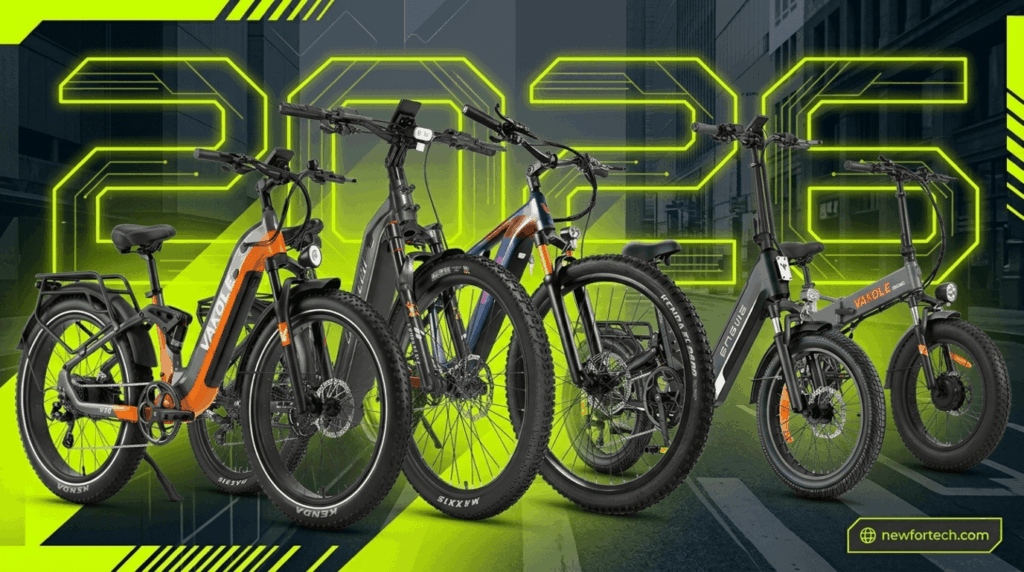
Five categories. Five bikes I’d actually spend my own money on, chosen for EU buyers shopping in 2026. The short version: a full-suspension SUV e-bike that earns its price tag, a folding mid-drive that outclasses its rivals at the fold point, a trail-capable 29” that holds no marketing illusions, a compact urban step-through with real-world credentials, and a dual-motor build for riders who genuinely need the torque. Each one ships from EU warehouses via BuyBestGear, and each one has a discount code below.
Contents
Why These Five and Not the Obvious Names
The Specialized Turbo Vado 4.0 is a genuinely good e-bike. So is the Bosch-powered Orbea Muga. Both will also run you north of €3,500—and neither ships easily to buyers in Southern or Eastern Europe without significant freight complexity. The five picks in this guide exist in a different part of the market: under €2,100 at BuyBestGear’s current sale pricing, shipping from EU warehouses, and carrying the specs needed to survive a year of daily use without immediately requiring workshop time.
There’s a second reason these five made the cut over the mainstream options. Every model here uses a torque sensor rather than a cadence sensor. I’ve ridden both extensively, and the difference in feel — the way torque-sensing delivers assist proportional to your pedaling effort rather than simply detecting wheel rotation — makes cadence-sensor bikes feel like a light switch compared to a dimmer. For riders coming from conventional cycling, torque sensors are the closer match to what your muscles expect. For anyone curious about the technical breakdown, our torque vs cadence sensor guide covers it in detail.
One thing I’ll say plainly before going any further: none of these bikes have EU service networks. BuyBestGear ships from EU warehouses and handles returns, but if you need warranty work done locally, you will be mailing parts or the whole bike. That’s the trade-off for buying at half the price of a name-brand European e-bike. Know it before you commit.
Pick 1: Vakole V26 — Best Full-Suspension SUV E-Bike 2026
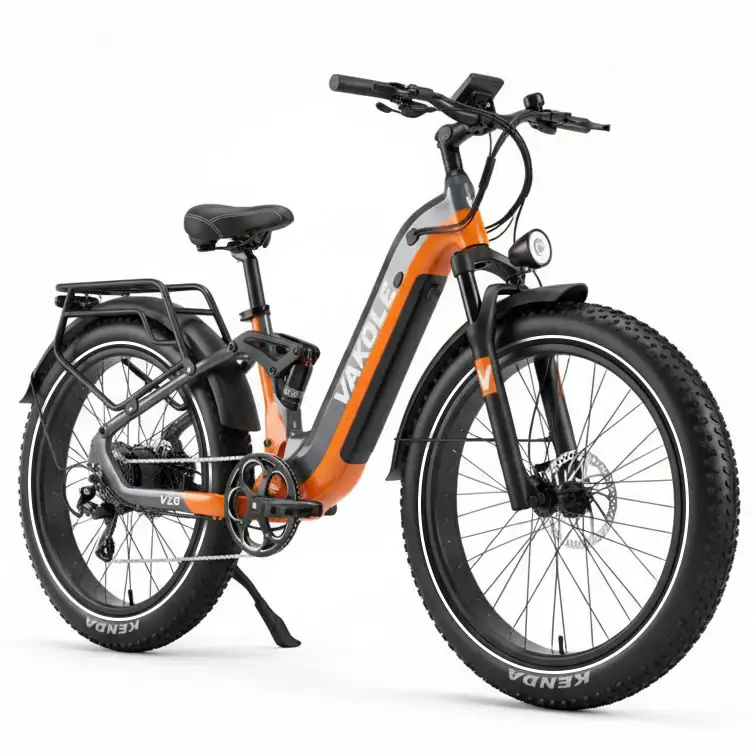
At €2,099 (down from €2,399), the Vakole V26 is the most technically complete bike on this list. The numbers: 250W nominal motor (EU-legal), 48V×20.8Ah Samsung battery giving 998Wh of usable capacity, full front-and-rear suspension, 26” fat tires, and a torque sensor across five PAS levels. That 998Wh figure is meaningful—at a conservative 15Wh/km consumption rate (achievable in eco mode at 65–70 kg rider weight on moderate terrain), the arithmetic gives roughly 66 km of realistic range. The manufacturer claims 120 km. The gap between those two numbers is the first thing any honest e-bike review should address.
What actually distinguishes the V26 from cheaper fat-bike builds is the suspension tuning. Most sub-€2,000 full-suspension e-bikes use rear suspension as a marketing checkbox — a coil shock with no meaningful preload adjustment and roughly 50mm of travel that compresses too early on seated bumps and doesn’t provide enough absorption to feel different from a rigid frame at trail speeds. The V26’s rear setup offers more useful travel and noticeably absorbs cobblestone impacts that punch straight through cheaper builds. It won’t match a dedicated trail eMTB—this is a road-biased SUV that tolerates light trail use, not a technical terrain tool. But that’s an accurate description, not a complaint.
The frame material is aluminum alloy, IP-rated per the manufacturer’s documentation (though exact IP rating is not published in the accessible spec sheet—assume rain-tolerant, not submersion-proof). Max load is 150 kg. At roughly 32 kg, carrying this bike upstairs is a two-person job or an exercise in patience.
Who the V26 Is Not For
Riders who need to transport this bike on a car rack or carry it to a third-floor apartment will find 32 kg genuinely difficult to manage solo. The fat tires add rolling resistance on long paved commutes compared to 700c road-biased alternatives — if your route is 90% smooth tarmac, you’d be more efficiently served by a lighter commuter. And the rear suspension, while an advantage on urban mixed surfaces, requires basic maintenance attention (shock seals, linkage bearings) that hub-motor rigid frames simply don’t. Know what you’re buying into.
Pick 2: Engwe L20 3.0 PRO — Best Folding E-Bike for Urban Commuters
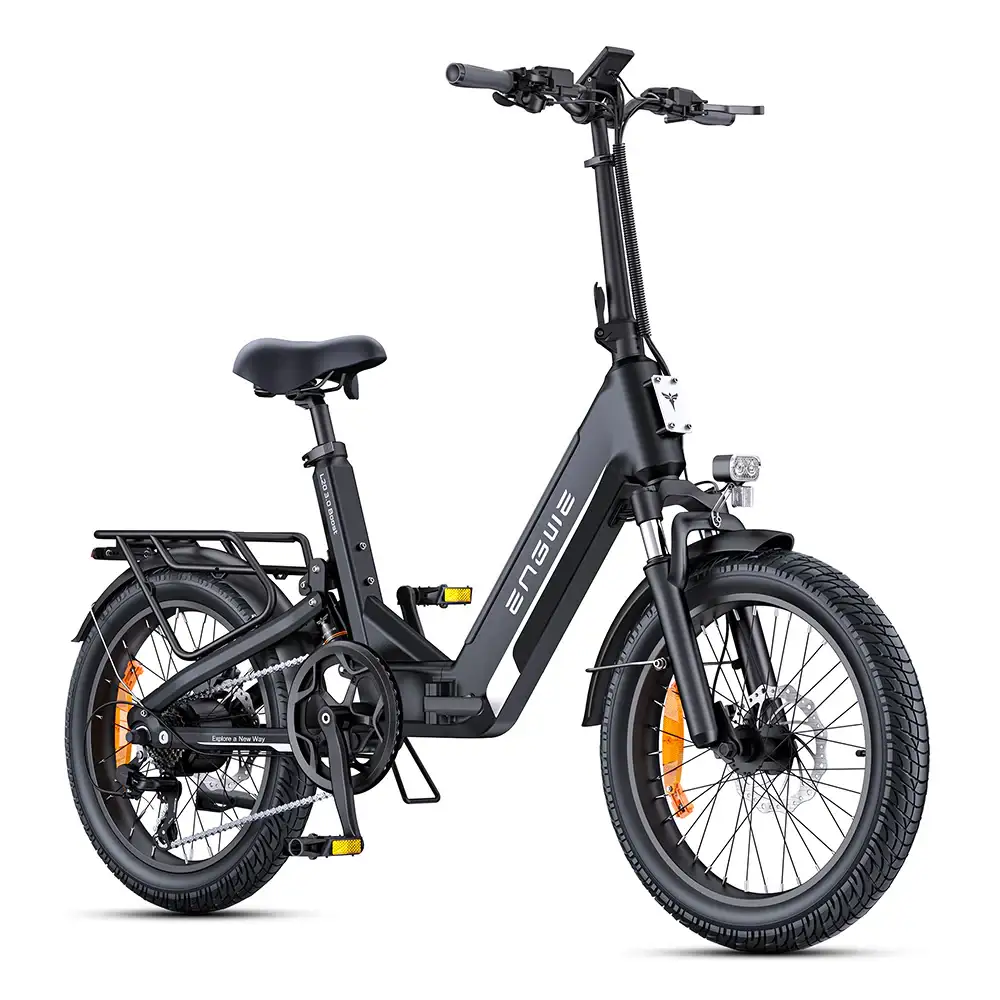
The folding e-bike market has a recurring problem: nearly every model in it is designed around the fold mechanism rather than the ride. Frame rigidity suffers. Motors are undersized. Batteries are small because the frame can’t accommodate larger cells. The Engwe L20 3.0 PRO is the exception at this price point, and the reason is the Mivice X700 mid-drive motor producing 100Nm of torque from a compact, bottom-bracket-mounted unit.
At €1,899 (sale), this is the most expensive folder on this list — and it earns the premium. The 720Wh Samsung battery realistically delivers 55–70 km on mixed urban terrain with PAS 2–3 in use. That’s the arithmetic: 720Wh ÷ 15 Wh/km = 48 km upper realistic, 720Wh ÷ 20 Wh/km = 36 km lower. The manufacturer’s 100 km claim is achievable only at PAS 1 on flat ground with a light rider — not representative of any real commute. Plan around 45–55 km and you’ll never be caught out. Our full Engwe L20 3.0 PRO review goes into considerably more detail on how it performs against that range figure in practice, including multi-month commute data.
Built-in GPS anti-theft tracking is the standout secondary feature. The IoT module means you can lock the bike remotely via app — not a feature you expect to find at this price in a folding form factor. Full suspension front and rear, EN 15194 certification for EU road legality, and a two-hour charge time from empty are the other non-negotiable points in its favor.
The L20 3.0 PRO’s Honest Limitations
Step-through frame geometry suits riders from roughly 155–185 cm. Outside that range, the cockpit fit becomes a compromise. The mid-drive motor requires more drivetrain attention than a hub motor — chain wear accelerates noticeably under sustained high-torque use, and the cassette will need replacing at a shorter interval than on a hub-drive bike of similar age. At roughly 27 kg folded, it fits in a car boot but won’t qualify as “lightweight.” Riders using underground parking or building lifts won’t struggle; anyone planning to carry this regularly up stairs should look at the lighter options below.
Pick 3: Vakole EMT29 — Best Trail E-MTB Under €1,500
Trail e-MTBs in the €1,299–1,499 range are almost uniformly disappointing in one of three ways: the motor is undersized for technical climbing, the battery capacity is insufficient for meaningful trail sessions, or the suspension is a cosmetic addition that provides no real impact absorption at speed. The Vakole EMT29 avoids all three of those failure modes — and I’d argue it does so specifically because of one spec that most buyers look past: the torque sensor.
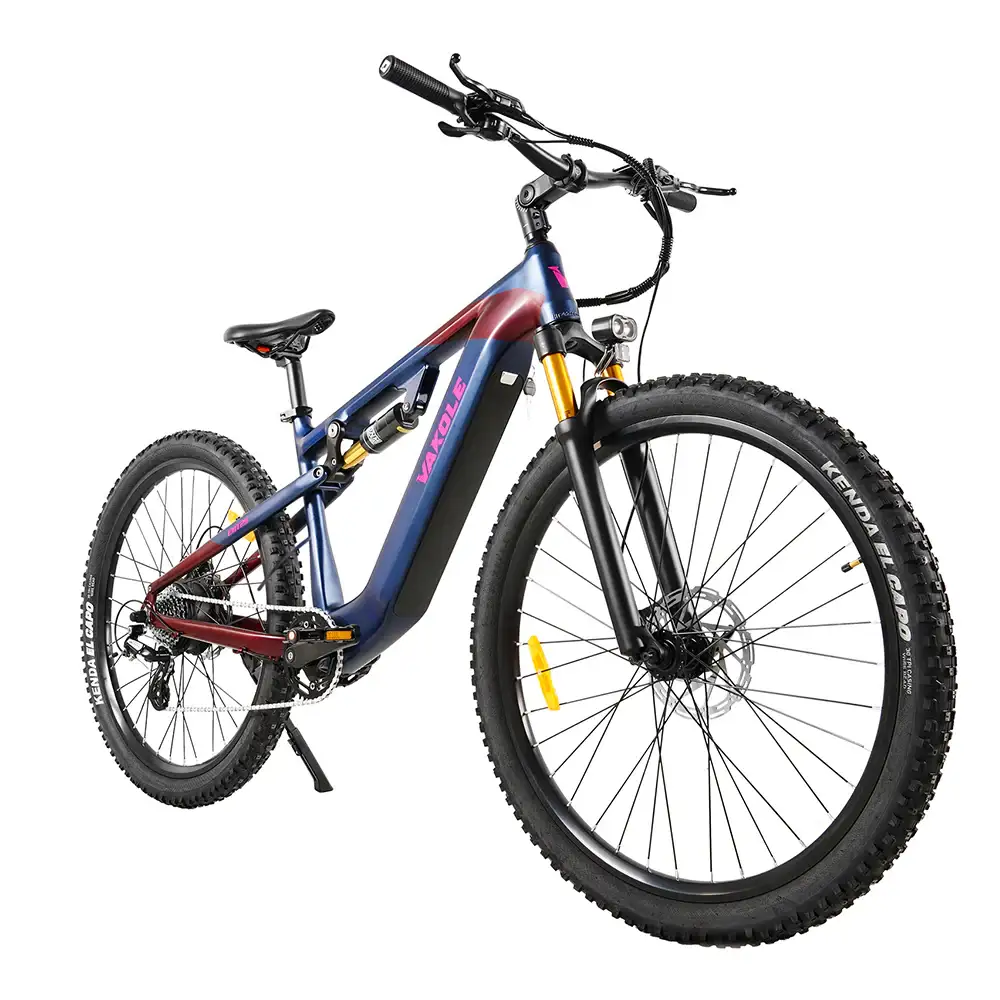
On a 15–20% gradient with a 75 kg rider, a cadence sensor e-MTB kicks in motor assist with a half-second delay and dumps power at a flat preset level. A torque sensor reads your effort and responds proportionally, which means you can modulate traction on loose surfaces, feather the power through technical sections, and climb with a natural pedaling rhythm. The Vakole EMT29 is one of the only bikes in its price class that offers torque sensing as standard — a detail that matters the moment you take it off pavement. The 720Wh battery (48V × 15Ah) gives a realistic 48–55 km of trail use at mixed PAS levels; manufacturer claims of 120 km apply only to flat eco-mode riding with minimal elevation.
The 29” wheel diameter is the correct choice for trail use in this category. Larger wheels roll over obstacles more smoothly, maintain momentum on technical sections better than 26” builds, and improve stability on descents. The trade-off is that 29” geometry makes the bike feel slower to respond in very tight switchbacks — something that matters on technical singletracks but is irrelevant on the fire roads and mixed gravel paths that most EU trail riders actually use.
Pick 4: Lankeleisi MG600 Lite — Best Long-Range Trekking E-Bike
The MG600 Lite is the pick for riders whose primary question is range. Its 720Wh Samsung battery, 250W motor (650W peak burst), and geometry tuned for upright long-distance riding combine into something that genuinely suits weekend touring or lengthy daily commutes in a way that trail bikes and compact folders don’t. Real-world range at 70 kg rider weight, PAS 2–3, mixed terrain: 80–100 km. The manufacturer’s 120–150 km figure requires eco mode and flat ground, but 80–100 km mixed is still the best realistic range number on this list.
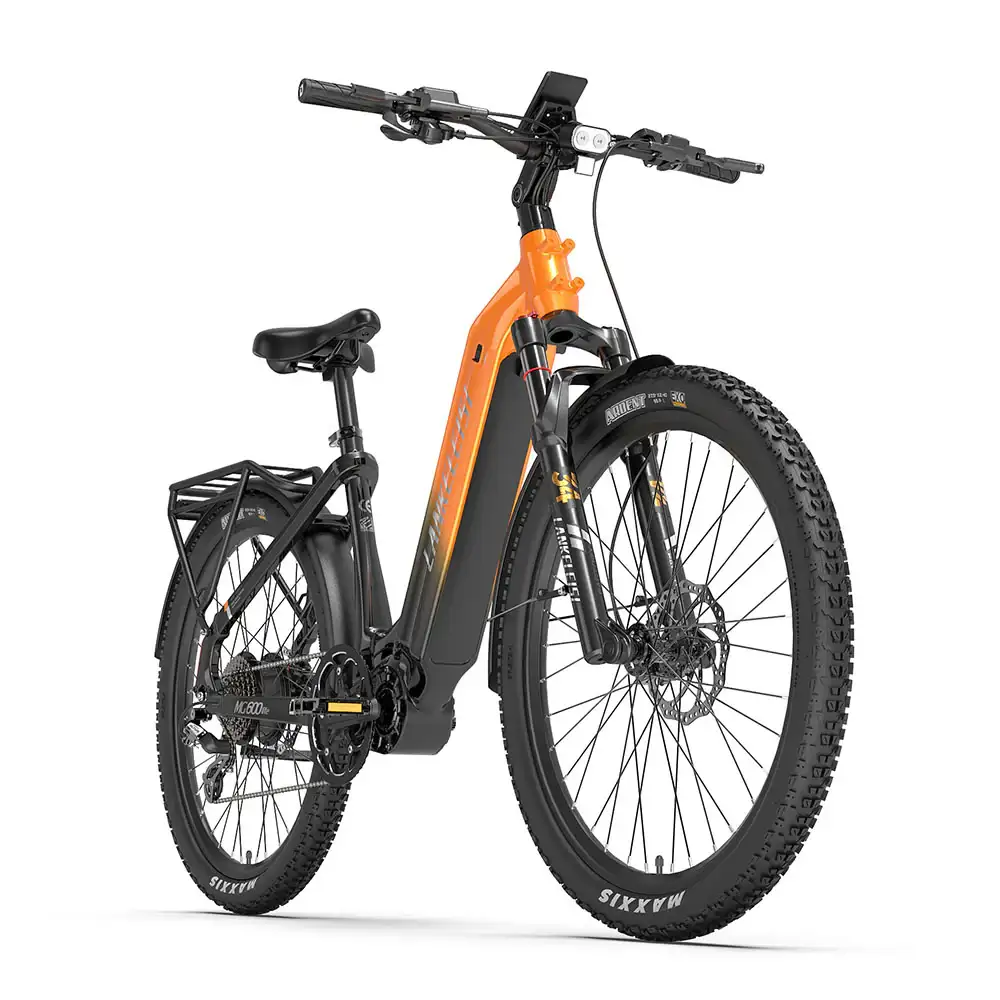
MAXXIS Ardent 27.5” × 2.4” tires are the detail most competitors at this price get wrong. Cheap OEM tires on a trekking e-bike add rolling resistance and wear out faster; Ardents are a known-quantity MTB tire with documented grip ratings that hold up over thousands of kilometers. The ZOOM HB876 hydraulic disc brakes are entry-level hydraulic — functional and reliable, but not the modulation quality you’d get from Shimano MT200 or better. They are, however, hydraulic rather than mechanical, which matters at the MG600 Lite’s 30 kg unladen weight when braking at loaded touring speed.
At 30 kg, this is not a bike you’ll carry up a flight of stairs casually. The integrated LCD display, turn signal tail lights, and front oil-spring suspension (120mm travel) are genuine utility features rather than tick-box additions. EU delivery from BuyBestGear is available in current stock. For everything on this bike in granular detail, the Lankeleisi MG600 Lite review covers real-world climbing data, brake feel under load, and the one thing about the display interface that gets annoying after 500 km.
Pick 5: Vakole CO20 MAX — Best Dual-Motor Folding Fat Bike
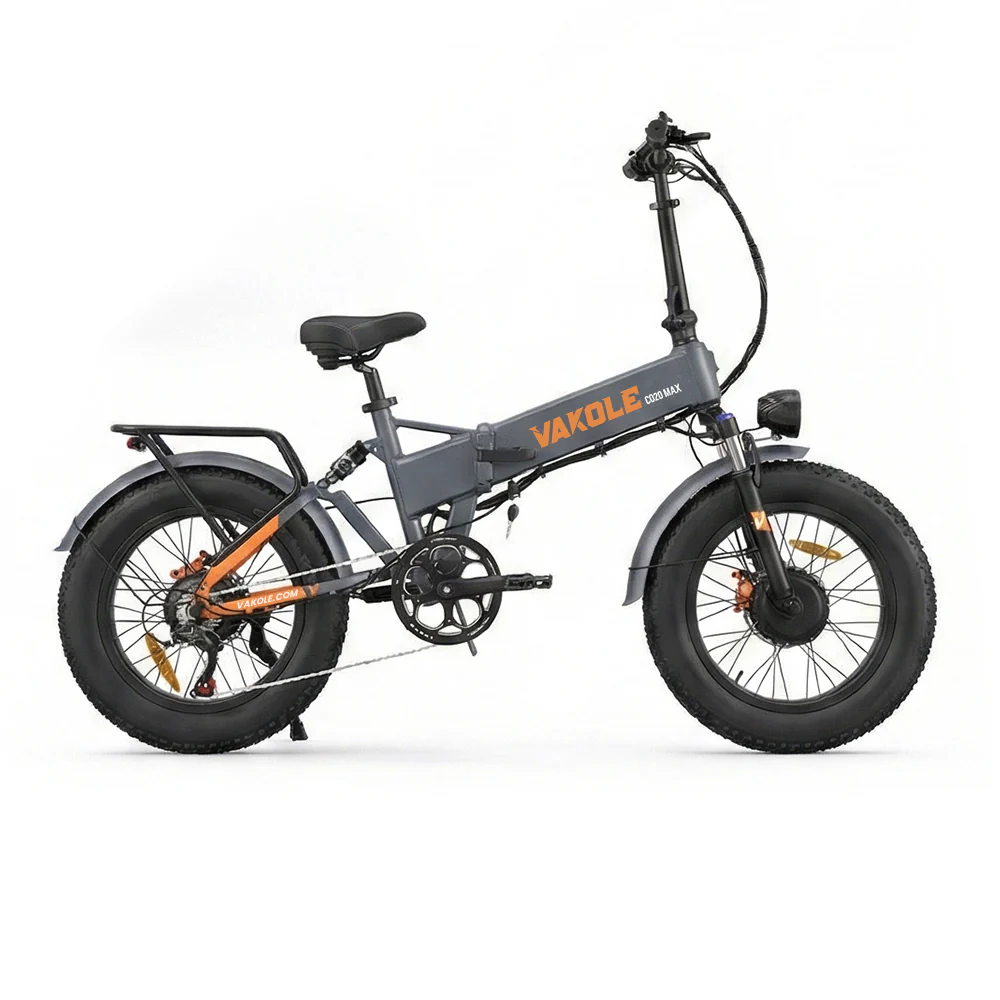
This is the outlier on the list — and deliberately so. The Vakole CO20 MAX runs dual 750W motors (note: not EU-legal for road use at full power; check your local regulations before purchase), a 960Wh battery, and a torque sensor in a 20” folding fat-tire frame. It’s listed here not because everyone needs it, but because there is a specific buyer for whom nothing else on this list is sufficient: riders on steep, unpaved daily routes who carry significant load, or those in jurisdictions where higher-powered off-road riding is permitted on private land.
The 960Wh battery arithmetic: 960 ÷ 15 = 64 km upper realistic, 960 ÷ 20 = 48 km lower realistic. Dual motors pulling simultaneously at full assist will sit toward the lower end of that range. The combined motor output is the pull here — sustained torque that no single 250W-nominal motor produces—but it comes with a weight penalty that makes this the heaviest bike on the list. Folding convenience is somewhat offset by the reality of moving it between floors. This is not an urban commuter for someone in a flat city. It’s a pre-order item as of April 2026; delivery timelines should be confirmed with BuyBestGear before purchase.
What Actually Matters When Comparing E-Bikes in 2026
Range Arithmetic — The One Calculation Every Buyer Should Run
Take the battery’s Wh figure. Divide by 15 for an upper realistic estimate at eco–mid assist on moderate terrain. Divide by 20 for a lower estimate under harder use or steeper ground. If the manufacturer’s claimed range exceeds your upper estimate by more than 30%, treat that gap as a material misrepresentation — not a rounding error. Every bike on this list has had that arithmetic run, and each one is flagged where the gap exists.
Sensor Type Over Motor Wattage
In the EU, all road-legal e-bikes are capped at 250W nominal motor output regardless of how the brand phrases it. “500W peak,” “650W burst,” “750W max” — these are short-duration surge figures that tell you nothing useful about sustained climbing performance. What tells you about climbing performance is Nm torque (higher is better for hills) and sensor type (torque sensor is better for nuance). The fixation on wattage in e-bike marketing is largely noise.
Component Tier Honesty
Shimano Altus, Acera, and Alivio are entry-level groupsets. Marketing that describes them as “Shimano components” without naming the tier is technically accurate and practically misleading. Tektro and ZOOM hydraulic brakes are entry-level hydraulic systems — better than mechanical, not as modulated as Shimano MT200 or Magura. Brands that name their components specifically and accurately earn trust; brands that don’t should prompt you to look up what they’re hiding. Every bike on this list has had its component tier named plainly in the section above.
Who Should Skip E-Bikes Entirely in 2026
Riders who need a guaranteed next-day service option within 50 km of their home should buy from a local dealer with a workshop—Bosch-ecosystem bikes from Trek, Cube, or Canyon all qualify. The service infrastructure for a Bosch-powered bike is meaningfully better than what any of the five picks above can offer, and if mechanical reliability and local support are your first priority, the €1,000–2,000 price premium for that ecosystem is the correct purchase. These picks are for buyers who are comfortable with mail-based warranty service, basic self-maintenance, and trading service access for significant cost savings. Neither position is wrong. They are different buyer types.
Similarly, anyone who needs to carry their e-bike regularly on public transport should look at proper lightweight folders (under 18 kg) rather than any of the options here. The bikes on this list are optimized for performance and range, not portability. A 27–32 kg folder is still a folder, but it’s not a carry-on.
Frequently Asked Questions
What is the best e-bike for commuting in 2026?
What is a realistic e-bike range in 2026?
Are e-bikes legal in Europe at 750W?
What should I look for in an e-bike battery?
Do the BuyBestGear bikes ship to my country?
How do I maintain an e-bike from an online-only brand?
My Verdict
If I were buying one bike from this list today, it would be the Engwe L20 3.0 PRO — not because it’s the most capable machine here, but because it fits the most common EU buyer scenario: apartment living, mixed urban terrain, daily use, and enough range for a commute without an intermediate charge. The mid-drive motor is the decisive spec at this price. The GPS is a genuine bonus. The weight is the known drawback going in.
The Vakole V26 is the correct pick if range anxiety isn’t a concern but terrain variety is — cobblestones, light gravel, occasional trail access — and if you have a ground-floor space to park it. The MG600 Lite earns its recommendation for anyone whose primary concern is covering real distance on a single charge. The EMT29 is for riders whose weekends involve trail use and whose weekdays don’t require folding the bike. And the CO20 MAX is a specialized tool for a specific buyer, not a general recommendation.
All five are available through BuyBestGear. Use code NFT4 at checkout for 4% off. Shipping to the US and Canada is not available on that platform. For a deeper look at how sensor type affects the e-MTB experience specifically, the torque vs cadence sensor breakdown is the most useful follow-up read.