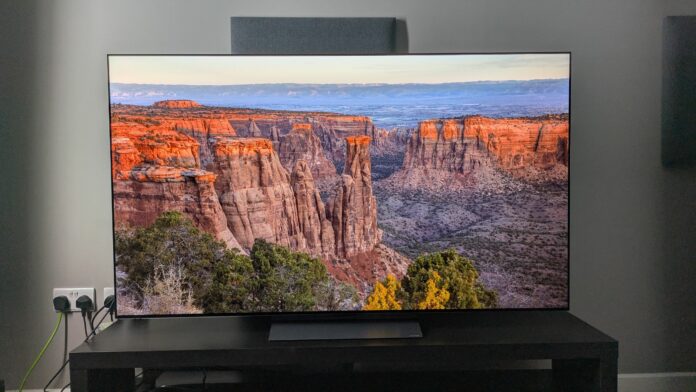
2025 is a big year for TVs, with revolutionary new OLED and Mini-LED TVs looking brighter than ever. Competition for flagship OLED TVs is particularly fierce this year, with main rivals Samsung, LG, Sony and Panasonic competing fiercely.
I was lucky enough to try out some of the best TVs of 2025 and I’m already looking forward to 2026. When CES 2026 kicks off the first week of January, we expect to see some big news from the world of TV and I’ll be keeping an eye out for announcements from each brand.
In preparation for CES, we’ve put together a list of what to expect in 2026 from each TV brand. Some of these questions will be answered in January, but other details will not be known until this year.
(Quick note: I haven’t reviewed Philips TVs because I don’t have hands-on experience with the 2025 models.)
LG: OLED is brighter
All three of LG’s 2025 OLED TVs (G5, C5, and B5) received high scores in our reviews, with the G5 and C5 scoring 5 stars overall and the B5 scoring 4.5 stars. I have no complaints about these TVs, but there is one change I would like to see in the successors to the B5 and C5 from 2026. This is an improvement in brightness.
In our tests, the LG B5 measured a maximum HDR brightness of 688 nits (Filmmaker mode) and a full-screen HDR brightness of 172 nits (Standard mode). Both results are average in terms of brightness for an entry-level OLED display. We expect to see the new B-series models even brighter, which will improve HDR capabilities and make them easier to see in bright rooms.
In our tests, the C5’s maximum brightness remained stable at 1180 nits, but full-screen HDR brightness dropped below 200 nits. The LG C Series’ full-screen brightness is expected to improve in 2026, with flagship OLED displays now exceeding 350 nits. We’ll have to wait and see if it features a new panel design (as we expected to see on the LG C5).
Samsung: Neo QLED price reduction
It’s been a big year for Samsung OLED TVs, and its flagship TV, the Samsung S95F, was named the best TV of 2025 by NewForTech. Samsung’s flagship QN90F Neo QLED (Mini LED) TV has proven to be an excellent TV and earned 5 stars in our review.
One area where Samsung needs to improve in 2026 is the pricing of small entry-level and mid-range LED TVs. The Samsung QN80F, which I gave four stars in my review, cost $1,299 / £1,399 (about AU$1,990) for the 55-inch model at launch. By comparison, the TCL QM7K/C7K is the more powerful TV of the two, priced at $999 / £799 / AU$1,699 just weeks after launch.
Samsung TVs come with more smart and gaming features, but they’re usually not enough to justify the huge price differences between Samsung, TCL and Hisense devices.
TCL: gaming support
TCL TVs have continued to improve over the years. The TCL 2025 TVs are some of the best I’ve tested, especially the mid-range C7K (QM7K in the US), but there is one area where they could improve. This is a feature of the game.
Don’t get me wrong. TCL’s Mini LED TVs already have excellent gaming capabilities, with all TVs supporting at least 4K 144Hz gaming, FreeSync Premium Pro, and Dolby Vision.
However, input lag appears to be stuck at 13.5 milliseconds, and while Hisense TVs have offered similar performance in the past, 2025 models like the Hisense U8QG have been tested with sub-10 millisecond lag. The TCL TV’s HDMI 2.1 ports are also limited to two, so it’s best to increase that number to four.
The TCL TV can still compete with the best gaming TVs and has great features for its price, but with a few improvements, it could become an ideal budget gaming TV.
Hisense also has a great TV in 2025. The Hisense U8QG and Hisense U75QG particularly impressed us with their incredible brightness and advanced local dimming.
But there is one area where Hisense can learn from the experience of TCL and Samsung. This is the perspective.
The maximum brightness of the Hisense U75QG is 3372 nits (standard mode) and the brightness in full screen mode is 887 nits. Its high brightness makes it an ideal TV for watching sporting events and more during the day. However, in our testing, we found that the U75QG’s image quality degraded when viewed off-axis.
This applies to all Hisense products. Unfortunately, a TV with all these features suffers from viewing angles.
Viewing angles used to be an issue with most small LED TVs, but over the years, brands like TCL, Hisense’s main rival, have found ways to solve the problem. This is an area I’d like to see Hisense improve in 2026. We tested the 116-inch RGB Mini-LED display and found it had better viewing angles, so expect it to surpass the standard Mini-LED range.
Sony: The cheapest QD-OLED
Sony Bravia 8 II with QD-OLED display won multiple awards in 2025. It earned four and a half stars in NewForTech’s Al Griffin review and also performed well in our 4-way OLED TV comparison. Sony implements a six-month cycle for its TVs and I believe this is the era of low-cost QD-OLED.
Sony’s previous mid-range OLED was the Sony Bravia 8. It’s a great TV, but it launched in 2024 and will struggle to compete with LG’s C series.
In 2025, Samsung made a breakthrough by integrating QD-OLED into the 65-inch Samsung S90F integrated model. This model has brighter images than its rival, the LG C5, but costs the same.
Mid-range QD-OLED with integrated Sony audio? This is amazing.
Panasonic: high brightness
After comparing it to other models equipped with quad-band OLED displays, I chose the Panasonic Z95B as my favorite flagship OLED display of 2025. We love the contrasting graphics, powerful built-in audio, and sleek design. However, what seems like a missed opportunity to me is the shine.
Specifically, we’re talking about the Z95B’s default brightness setting in Movie and Movie Maker modes. Although it is possible to increase the brightness, during testing we found that this affected the Z95B’s image accuracy. It turns out that this was intentional on the part of Panasonic, who decided to prioritize resolution over brightness on the Z95B.
The Z95B uses the same basic tandem RGB OLED panel as the LG G5, and in testing, it reached a maximum brightness of 2,268 nits in the default Filmmaker mode. Z95B maximum brightness in the same mode: 992 nits.
At this level, the Z95B’s contrast is not as impressive as we expected. Even with a slight increase in brightness, Panasonic’s next flagship will be even better.
