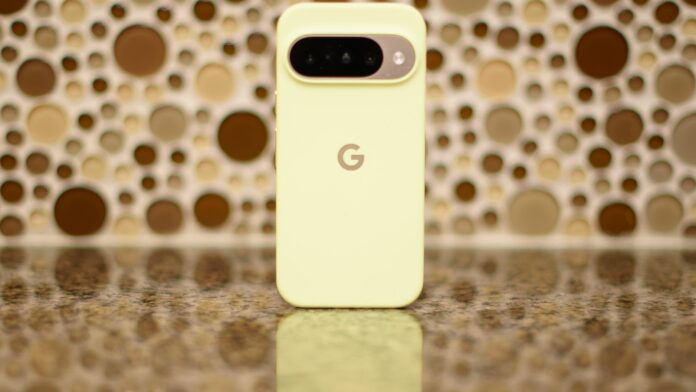
By the end of 2025, Google will achieve a unique position in the smartphone industry. While Apple and Samsung are debating over who can pack their latest flagship devices with the fastest processor or best camera, Google is focusing on user experience, meaningful upgrades, and versatility.
First and foremost, the Google Pixel 10 is a flagship smartphone for software enthusiasts. The tech giant’s latest lineup of flagship smartphones includes a standard model, the Pixel 10, the more powerful Pixel 10 Pro, the larger Pixel 10 Pro XL, and the foldable Pixel 10 Pro Fold.
All four phones run on a lightweight, universal version of Android with rich AI features. Google Pixel smartphones use the Google Tensor chipset, which is not as powerful as Apple’s A-series mobile chipsets or the Qualcomm Snapdragon chipsets used in Galaxy smartphones, so Google relies on its software expertise to add value to its smartphones.
For the most part it worked well. Google Pixel 10 is currently considered to be the best Android smartphone for everyone. This means that the user interface is user-friendly and easy to use for both new and experienced users.
In our 4.5-star review of the high-end Google Pixel 10 Pro XL, we praised the phone’s software and AI capabilities, calling it discreet, powerful, and in line with the mainstream Pixel line.
However, the software isn’t exactly the same as the standard Google Pixel 10. In fact, there are some cool and exciting features that are only available on the Pro model (as seen in our Google Pixel 10 review). I always thought it was an odd choice for a major release that relies so heavily on software.
Specifically, the Google Pixel 10 Pro, Pixel 10 Pro XL, and Pixel 10 Pro Fold add new call verification and recording features to help identify spammers and take notes during calls.
And Google is disabling some camera controls on the standard Pixel 10 for some reason. Despite having a 50MP primary sensor, you cannot enable 50MP selfies or access advanced camera options to change ISO sensitivity etc. The Pixel 10 Pro allows you to do just that.
This is despite the fact that the entire Google Pixel 10 lineup uses the same Google Tensor G5 chipset. Sure, the Pro model has 16GB of RAM compared to the standard model’s 12GB, but we can’t say why Google has turned off advanced camera controls for the standard model. Apple Intelligence doesn’t exactly agree with Google’s service as it manages call filtering and aggregation even on phones with at least 8 GB of RAM. I can’t do this Use the 12GB of Pixel 10 storage to keep it running.
So what can Google do to fix this messed up product strategy in 2026?
I think there’s a very simple answer here. It brings the unique software features of the Google Pixel Pro to the regular Google Pixel.
We know that phone makers need to differentiate somehow between the different models in their lineup. A Pro or Ultra phone must earn this title with some unique features, and many entry-level phones can’t afford a reasonable price even if they have one. All This is the latest and greatest technology.
However, if you look at the iPhone 17 and iPhone 17 Pro or the Samsung Galaxy S25 and Samsung Galaxy S25 Ultra, what separates them is not a software issue, but a hardware issue.
There is a reason for this habit. It’s good to know that if you go with the iPhone 17, you’ll have access to everything the iPhone 17 Pro has on the software side, but at the same time, hardware upgrade features like the iPhone 17 Pro’s telephoto camera make it smarter to pay more for a Pro phone rather than mess around with a few extra tweaks.
To be honest, the hardware differences between the Pixel 10 and Pixel 10 Pro are already enough to warrant a higher price. The Pixel 10 Pro has a far more powerful camera system than its little brother, a more advanced LTPO display, and a sleek design with a shiny aluminum partition.
If Google really wants to increase the base model’s RAM from 12GB to 16GB, I think it should do so. A side effect of this is that users rely on the hardware performance of the standard model, given the lower performance of the Tensor G5 chipset compared to competing flagship models.
In this context, the use of caste programs appears unnecessary and confusing. This is especially true for phone brands that focus more on software. Let’s hope the rumored Pixel 11 series next year improves the situation.
