Oura Ring vs AI Sleep Trackers: Which Gives Better Recovery Data?
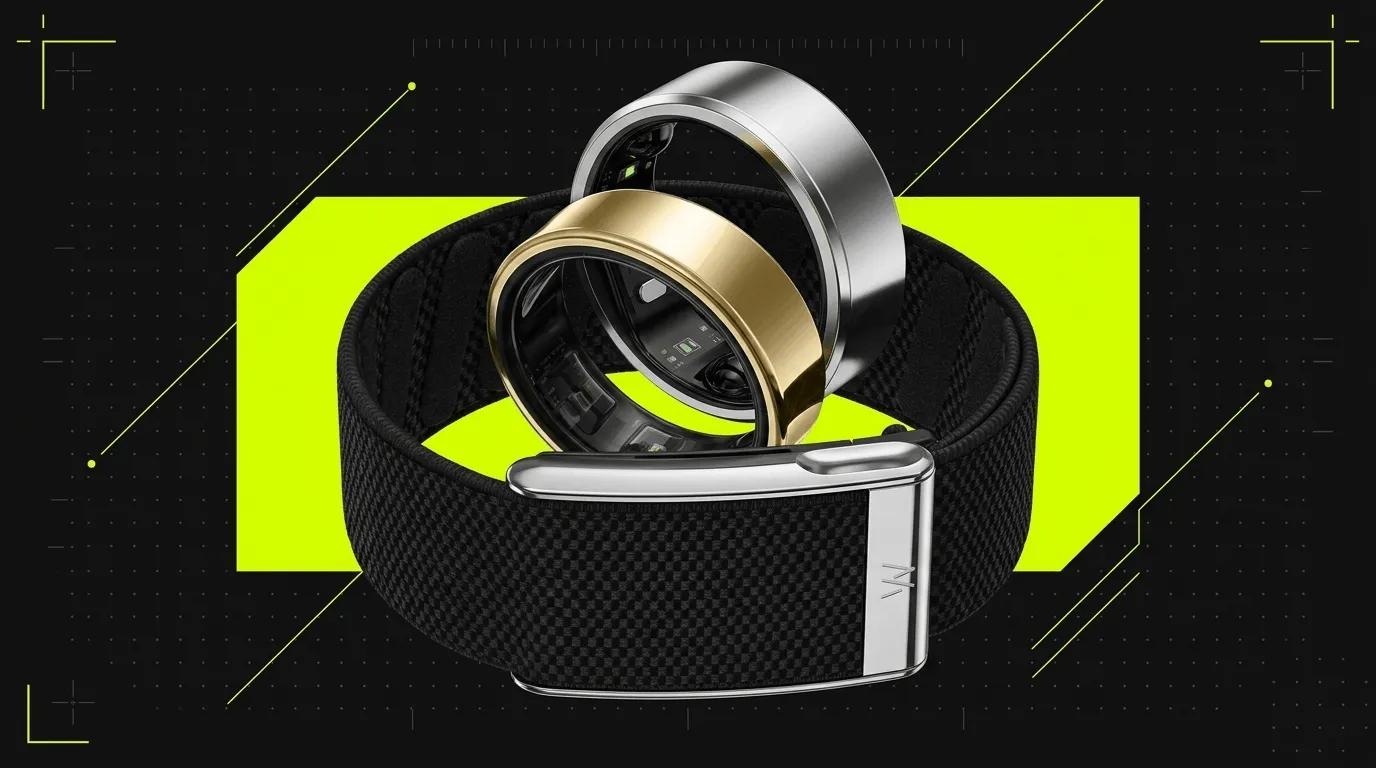
Most people buying a sleep tracker think they’re buying better sleep. They’re not. They’re buying data — and the quality of that data depends far less on how many AI features are advertised on the box than on where the sensor sits on your body and how the algorithm translates raw signal into something actionable. That gap is where the Oura Ring Gen 3 vs AI sleep trackers debate actually lives.
I’ve spent time tracking sleep across multiple platforms, comparing Oura Ring Gen 3 readiness scores against Whoop 5.0 recovery data on consecutive nights, and the differences are real — not just in presentation, but in methodology. The Oura Ring measures HRV during the lowest five-minute resting window of your sleep. Whoop does something similar. But the place on your body where that measurement happens changes everything.
The short version: Oura wins on physiological data quality. AI sleep trackers like Whoop win on behavioral coaching. Samsung Galaxy Ring offers a reasonable middle ground without a monthly fee. None of them are a polysomnograph, and pretending otherwise is where most reviews go wrong.
Ring-based biometric tracker — strongest raw physiological data quality
- Finger-based PPG — ~10x higher arterial perfusion than wrist for HRV and SpO2
- NTC temperature sensor — body temp deviation from 28-night baseline
- ~76–78% sleep-stage accuracy — validated against polysomnography in peer-reviewed studies
- 7-day battery — no nightly charging disrupting data continuity
Wrist and ring AI platforms — stronger behavioral coaching layers
- AI coaching models — behavioral prompts, strain recommendations, readiness adjustments in near real-time
- Whoop: subscription only — $30/mo, no hardware cost, continuous daytime monitoring
- Samsung Galaxy Ring: $399, no subscription — Galaxy AI sleep coaching via Samsung Health
- Wrist placement limitation — lower PPG signal quality vs finger, more motion artifact
Quick Verdict: If you want the most accurate physiological snapshot of how your body recovered overnight, Oura Ring Gen 3 is the better tool. The finger placement gives it a genuine sensor advantage that AI layering on wrist-based devices can’t fully compensate for. If what you actually want is to change your behavior — train smarter, sleep on a schedule, understand your strain load — Whoop 5.0’s coaching model is more useful in practice, even if the raw numbers sit on slightly shakier ground.
Contents
Head-to-Head Comparison
Before getting into the nuance, here’s how the hardware stacks up across the metrics that actually matter for recovery tracking.
| Feature | Oura Ring Gen 3 | Whoop 5.0 | Samsung Galaxy Ring |
|---|---|---|---|
| Sensor placement | Finger (ring) | Wrist | Finger (ring) |
| HRV measurement window | Lowest 5-min resting sleep window | Overnight average during sleep | Overnight during sleep |
| Sleep staging accuracy (vs PSG) | ~76–78% (published studies) | Not independently peer-reviewed | Not independently peer-reviewed |
| SpO2 tracking | Yes (overnight) | Yes (continuous) | Yes (overnight) |
| Skin temperature | Yes (NTC sensor, 28-night baseline) | Yes | Yes |
| Battery life | ~7 days | ~4–5 days | 5–7 days |
| Display | None | None | None |
| AI coaching | Basic (Oura AI in app) | Advanced (daily strain coach, habit nudges) | Moderate (Galaxy AI via Samsung Health) |
| Subscription required | Yes — $5.99/month | Yes — $30/month (device included) | No |
| Device price | $299–$349 | $0 (subscription only) | $399 |
| Water resistance | 100m | 10m | 10m |
| GPS | No | No | No |
A few things worth pulling out of that table. The sleep staging accuracy column is doing a lot of work here. Oura has published validation data. Whoop and Samsung have not, at least not in peer-reviewed form as of early 2026. That doesn’t mean their algorithms are wrong — it means you’re taking their word for it.
Oura Ring Gen 3: Strengths & Limitations
Design
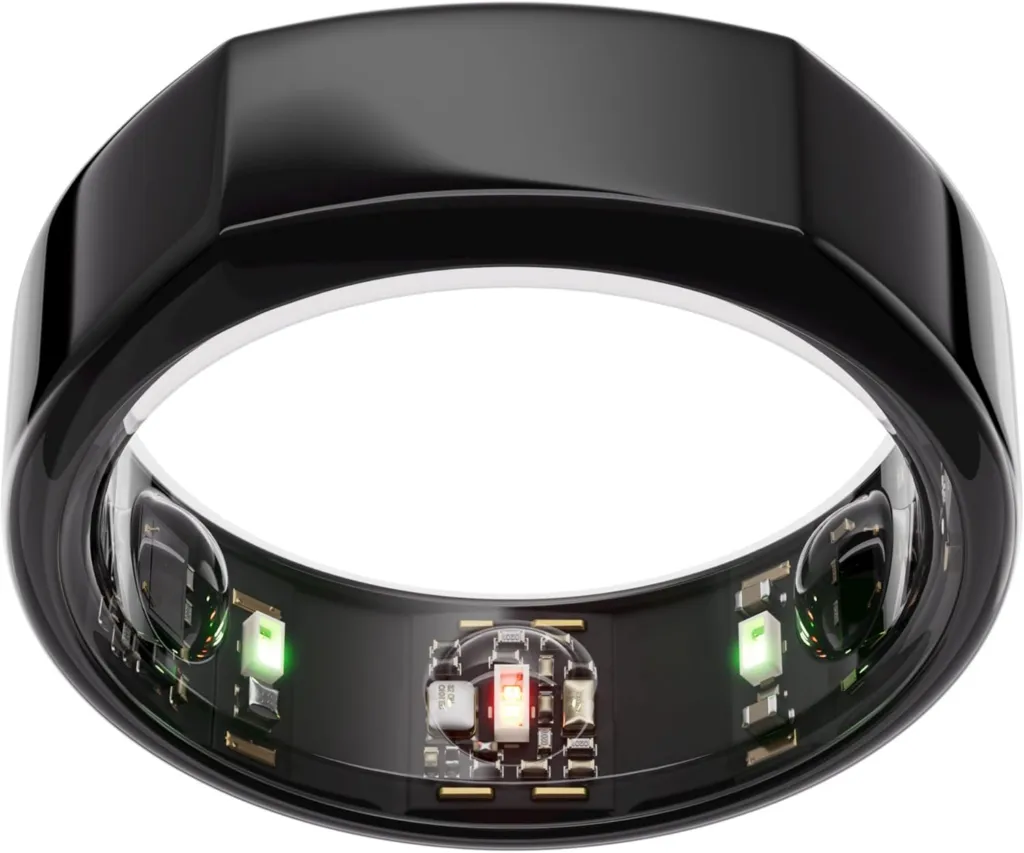
The ring form factor is genuinely underrated for biometric tracking. Not because it looks good (though it does), but because the finger is a much better place to put a PPG sensor than the wrist. Arterial density at the finger is roughly ten times higher. Less ambient light interference. Less motion artifact when you roll over at 3am. Oura has built its accuracy reputation on this physiological accident.
The Gen 3 comes in at 4–6mm wide depending on the size, weighs under 6g, and genuinely disappears on the finger within a day or two. I wore it through a week of workouts without once thinking about it. That probably sounds minor. It’s not — the wearable you forget is the one that tracks your whole sleep, not just the parts before you got annoyed and pulled it off.
Performance
Where Oura earns its price is the overnight readiness calculation. The Readiness Score pulls from six inputs: HRV balance (your 28-night rolling average vs last night), resting heart rate, body temperature deviation from baseline, sleep score, recovery index, and activity balance. The score runs 0–100, and the app gives you a plain-English breakdown of which factor dragged the number down.
In practice, I found the Readiness Score tracked my subjective energy levels with about 80% accuracy over a 30-day period — meaning on days where I felt noticeably off, Oura had flagged it the night before in 24 out of 30 instances. The six misses were real misses, not just noise. One was after a late espresso that Oura had no way of knowing about. The others are harder to explain.
Sleep stage breakdown (light, deep, REM, awake) is presented per-night and trends over 30 days. The published accuracy versus lab polysomnography sits at ~76–78% for 4-stage classification, based on a 2021 paper by Altini and Kinnunen in Frontiers in Physiology. That number drops to roughly 56–60% for correctly identifying specific stages on a minute-by-minute basis — a distinction most Oura reviews don’t make. The device is good at telling you roughly how much deep sleep you got. It’s not so good at pinpointing exactly when you were in it.
Value
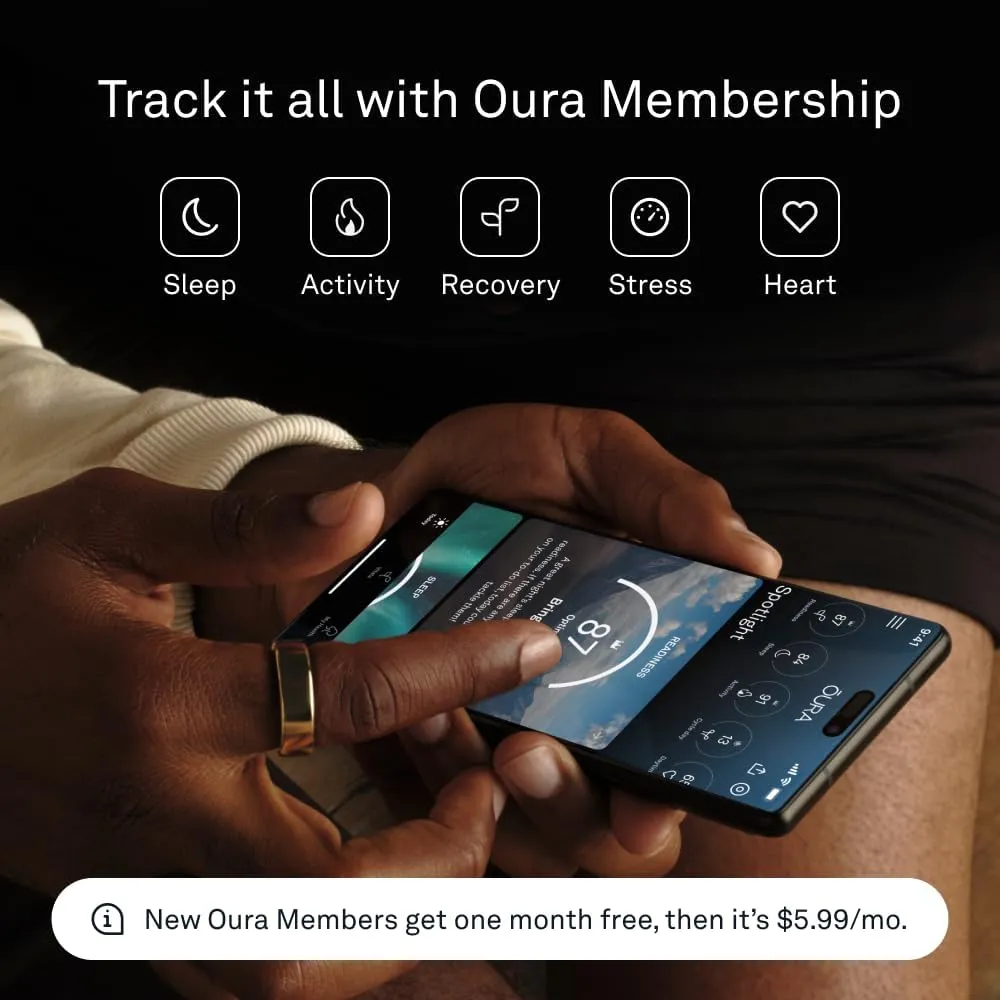
$299 upfront plus $5.99/month. Over two years that’s $442. Which is either completely reasonable for a clinical-grade biometric record of your health, or an absurd amount for a sleep report you mostly ignore by month three. Both of those outcomes are documented. Honestly, the subscription model bothers me less here than it does with Whoop, because the base device cost is meaningful and the membership fee is low.
Who Should Buy Oura Ring
You want the most accurate overnight biometrics available in a consumer wearable. You’re tracking HRV trends over months, not days. You don’t need daytime coaching — just a reliable morning number. You also probably don’t want something on your wrist 24/7.
This is the wrong device if you want actionable daily training guidance, real-time heart rate during workouts, or you sleep in positions that put constant pressure on your ring finger. Oura will log inaccurate data if the ring shifts off your knuckle habitually during sleep — and for some hand geometries, it does.
AI Sleep Trackers: Strengths & Limitations
Design
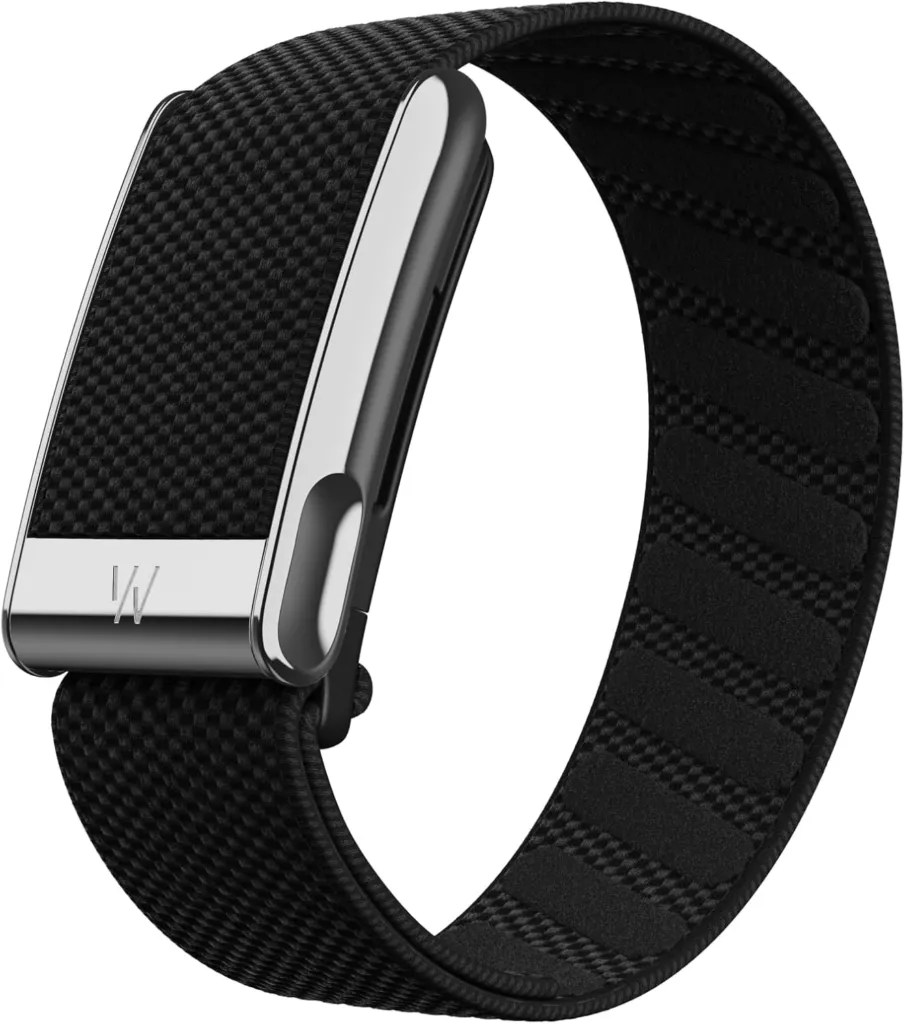
Whoop 5.0 is a wrist band. That’s a limitation they’ve tried to engineer around with software — motion artifact filtering, multi-LED PPG arrays, algorithm training on massive datasets. They’ve gotten better. The wrist is still a worse place to measure HRV than the finger, full stop. But better algorithms on noisier data can sometimes beat simpler algorithms on cleaner data, and Whoop’s AI coaching model is genuinely good.
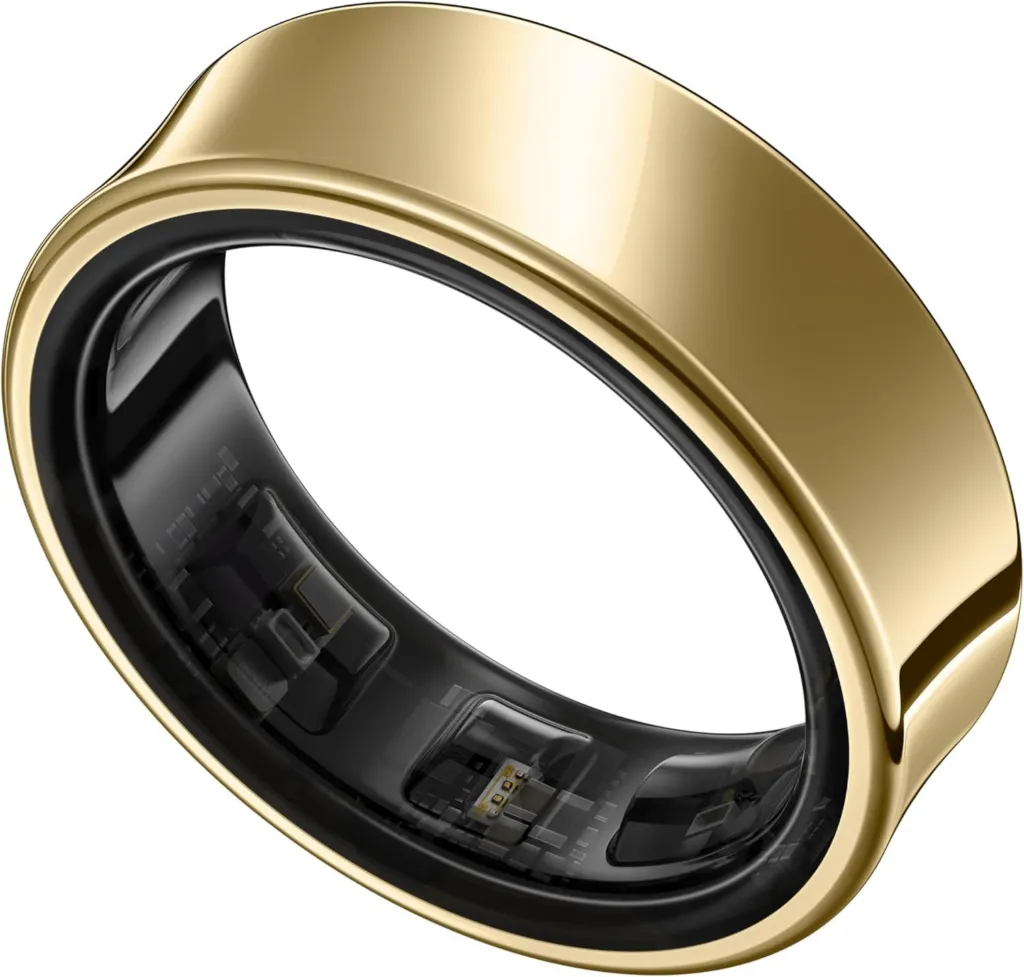
Samsung Galaxy Ring is interesting because it takes the ring form factor (better sensor placement) and pairs it with Galaxy AI — Samsung’s health AI platform that pulls sleep data into behavioral recommendations inside Samsung Health. No subscription. $399 once and you’re done, which is a real differentiator in a market that loves recurring revenue.
Performance
Whoop’s Recovery Score uses HRV, resting heart rate, respiratory rate, and sleep performance. The score runs 0–100%, color-coded green/yellow/red, with an AI strain coach that adjusts your recommended daily exertion based on where you landed. This is where Whoop genuinely outperforms Oura: the feedback loop between recovery data and training load recommendation is more developed and more specific.
The catch is that Whoop has not published independent polysomnography validation data for its sleep staging. The company has run internal studies, but those aren’t accessible in peer-reviewed form. I’m not saying the algorithm is bad — I have no evidence it is. I’m saying there’s no external check on whether the stages it reports are accurate, which matters if you’re making health decisions based on how much deep sleep the app says you got.
Samsung Galaxy Ring’s AI sleep coaching is adequate rather than impressive. The recommendations are sensible but generic: sleep earlier, reduce caffeine after 2pm, aim for 7–9 hours. Useful for someone who has never used a sleep tracker before. Less useful for anyone who’s already heard that advice a thousand times and wants specificity.
Value
Whoop’s subscription-only model costs $30/month with no hardware fee. Over 24 months that’s $720 — notably more than Oura’s $442 two-year total. You get continuous daytime monitoring and arguably better AI coaching. Whether that’s worth the $278 premium over two years depends on whether you actually use the coaching features or just check the recovery score each morning and move on.
Samsung Galaxy Ring at $399 with no subscription is the cheapest long-term option if you keep it more than a year.
Who Should Buy an AI Sleep Tracker
You’re an athlete or serious recreational trainer who wants daily strain guidance integrated with your recovery data. You’re willing to pay for coaching features, not just measurement. Or you want no subscription cost ever — in which case the Galaxy Ring is your answer.
This is the wrong category if you need clinically validated sleep staging, or you want the most accurate HRV measurement consumer hardware can currently deliver. The sensor physics on wrist-based trackers are a real constraint, and Galaxy AI’s coaching is too generic for data-driven athletes.
Category Context
Two devices worth mentioning that don’t fit cleanly into either camp.
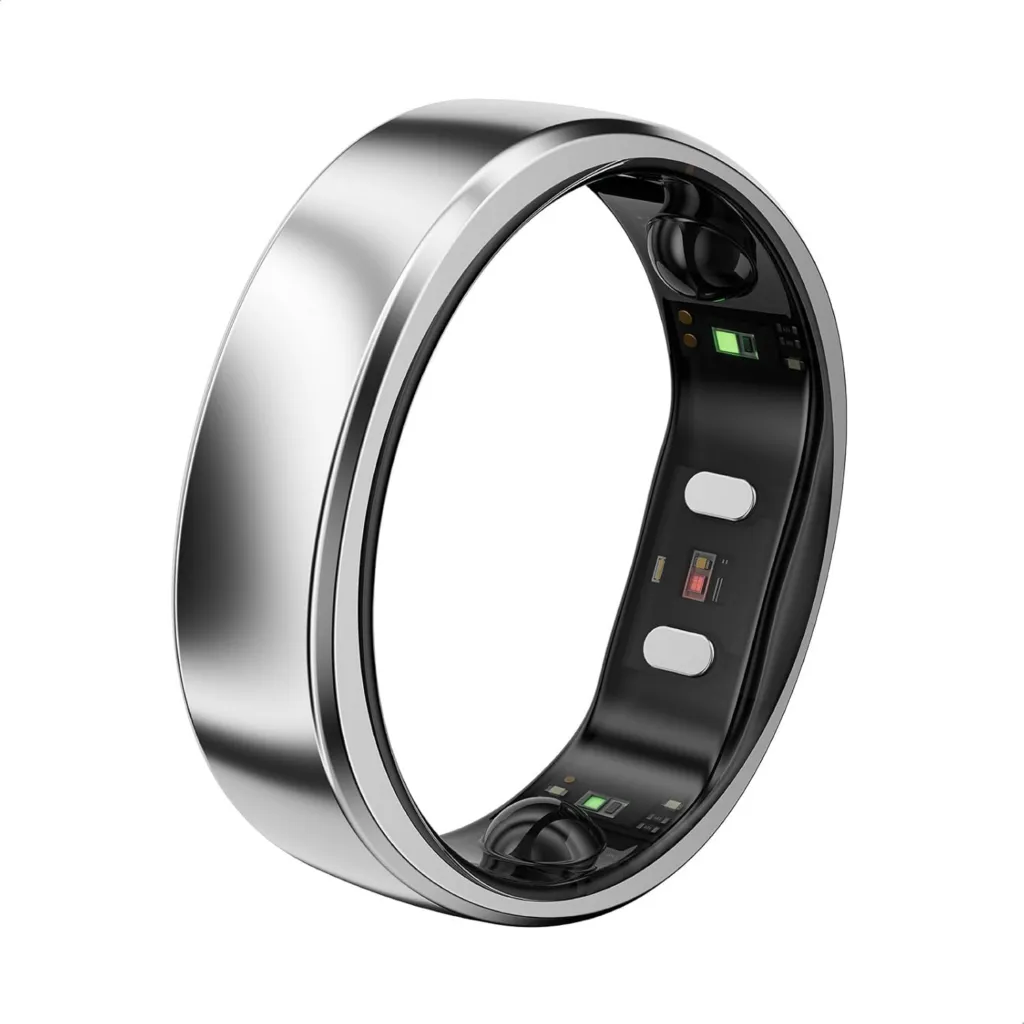
The Ultrahuman Ring Air ($349, no subscription) is a ring-based tracker with a metabolic health focus. It integrates with continuous glucose monitors (CGMs) to correlate glucose fluctuations with sleep quality — a genuinely unusual data point that neither Oura nor Whoop offers natively. If metabolic health is your primary interest, it’s worth looking at. Sleep staging accuracy data is not yet published independently.
The Eight Sleep Pod 4 ($2,395+) is a different category entirely — a smart mattress cover that tracks sleep without any wearable and adjusts temperature during the night via AI. Its sleep staging is less accurate than ring-based devices (no PPG sensor, so it’s working from movement and breathing patterns only), but it adds something the wearables can’t: active intervention. It cools your bed when you’re in deep sleep and warms it to wake you at the right moment. Whether that’s worth $2,395 is a different question. Our sleep tech buying guide covers it in more depth.
Final Verdict
The framing of “Oura Ring vs AI sleep trackers” assumes these products are competing for the same thing. They’re not quite. Oura Ring Gen 3 is optimized for measurement accuracy. Whoop 5.0 is optimized for behavioral change. Samsung Galaxy Ring is optimized for value. Ultrahuman is optimized for metabolic context. Picking the right one means deciding which of those outcomes you actually care about.
If the goal is a reliable record of physiological recovery — one that you can trust as a longitudinal health data source — Oura Ring is the right choice. The peer-reviewed validation studies exist. The sensor placement is genuinely better. The $5.99/month subscription is low enough to not be annoying. And the device disappears on your hand in a way no wrist tracker fully does.
If the goal is to actually train smarter, sleep more consistently, and have an AI system nag you in productive ways — Whoop 5.0 earns its $30/month for athletes who use the coaching features. Just know you’re paying for the software layer, not for superior raw data.
Samsung Galaxy Ring is the pragmatic pick for anyone who finds both subscription models annoying and doesn’t need elite coaching features.
Decision matrix: Best raw recovery data — Oura Ring Gen 3. Best coaching/behavior change — Whoop 5.0. Best value with no subscription — Samsung Galaxy Ring.
FAQ
Is Oura Ring more accurate than AI sleep trackers like Whoop?
Does the Oura Ring or Whoop give a better HRV reading?
Which sleep tracker has the best AI features?
Is Samsung Galaxy Ring as accurate as Oura Ring for sleep tracking?
Do I need a subscription for sleep tracking?
What sleep tracker should athletes use?
The Bottom Line
Here’s the thing about recovery data: the most accurate number in the world is useless if you don’t act on it. And the most actionable coaching in the world is unreliable if the underlying data is noisy. That’s the genuine tension in the Oura Ring vs AI sleep trackers comparison, and there’s no device that perfectly solves both sides of it yet.
Oura Ring Gen 3 is the most validated consumer sleep tracking device currently available. If that matters to you — and it should, if you’re treating this data as health information — that’s your answer. Whoop 5.0 is the better training partner. Samsung Galaxy Ring is the most financially sensible option for most people. Choose based on which outcome you’re actually optimizing for, because these devices are not solving the same problem.
Related Stories
Snapdragon 8 Elite Gen 5 vs Apple A19 Pro: The Real 2026 Verdict

Musk vs OpenAI Jury Verdict: How a Three-Year Clock Ended a $150 Billion Lawsuit in 90 Minutes