Lankeleisi MG600 Lite vs MG600 Plus: Which SUV E-Bike Should You Buy?

Two bikes. Same brand, same family name, nearly opposite audience. The Lankeleisi MG600 Lite arrives as a road-legal 250W trekking e-bike designed to commute without attracting a fine. The Lankeleisi MG600 Plus is a 1000W-peak fat-tire SUV built for mixed terrain at the cost of 7 extra kilograms and €250 on the price tag. This comparison covers both in full specs, real-world range arithmetic, confirmed tester findings, who gains from the upgrade and who overpays for power they will never legally use.
Please note that shipping to Canada or the United States is not available at this time on BuyBestGear.
Lightweight, legal, ready to ride
- 30.2 kg — 6.8 kg lighter, easy to carry upstairs and on car racks
- 250W EU-legal — no registration, licence, or insurance needed
- Complete package — mudguards, rack, lock, pump, lights included
- 120 mm suspension on 27.5″ trekking frame
- No throttle — completely road-legal, zero ambiguity
Powerful, capable, all-terrain ready
- 85 Nm torque, 1000W peak — crushes steep hills and heavy loads
- 960 Wh Samsung battery — 240 Wh more range than Lite
- 26 × 4.0″ fat tires — grip on sand, snow, mud, gravel
- Detachable throttle — for off-road and private land adventures
- 2025 upgrades — internal cables, turn signals, refined finish
The Lankeleisi MG600 Lite and MG600 Plus share a family name, a Samsung battery, switchable torque-and-cadence sensor electronics, and ZOOM four-piston hydraulic brakes. Beyond that, they are built for different riders, different use cases, and different legal contexts. The Lite is a fully road-legal 250W trekking bike at 30.2 kg. The Plus is a 37 kg fat-tire machine with a 1000W-peak motor that is technically classified as a moped in most EU member states at its unlocked speed. Choosing incorrectly costs either €250 or 6.8 kilograms every time you lift the bike.
Contents
Lankeleisi MG600 Lite vs MG600 Plus: Design and Build Quality
Frame and Construction
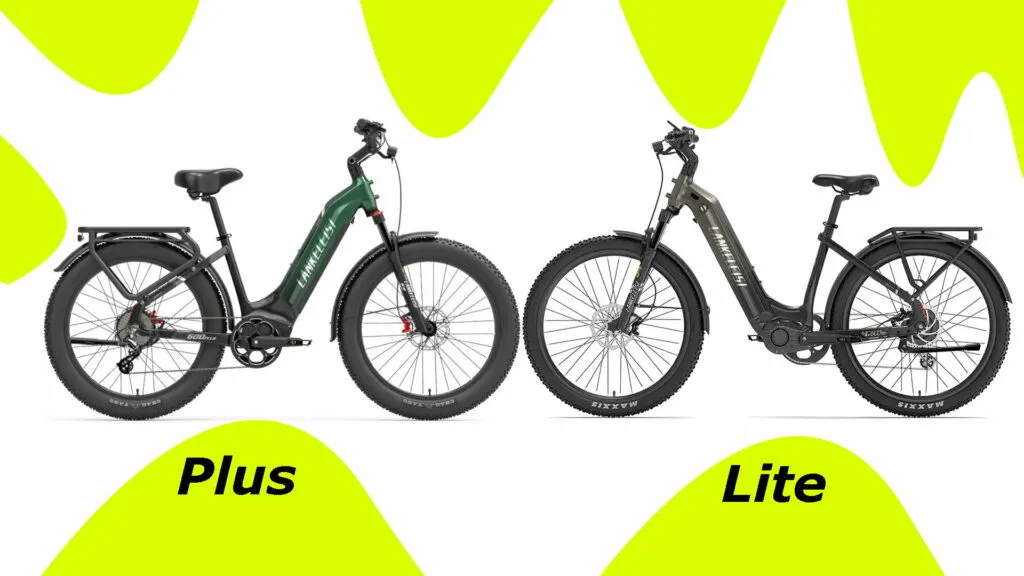
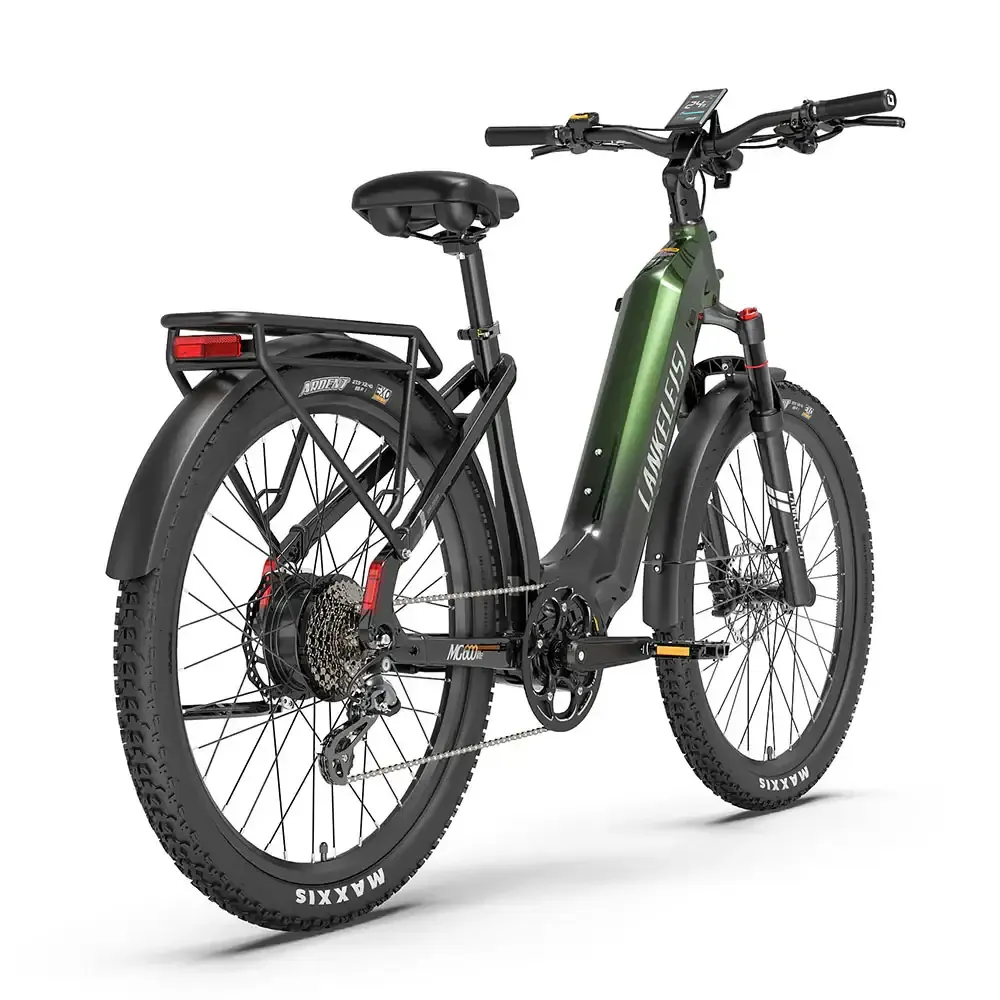
Both frames are 6061 aluminium alloy with T4/T6 heat treatment and an IP54 waterproof rating — the same basic material, the same protection standard. The visual and geometric gap between them, though, is considerable. The MG600 Lite is a 27.5-inch trekking platform: narrower tires, longer chainstays, upright geometry, and a silhouette that blends into a bike lane without drawing attention. Stand it next to the MG600 Plus and the Plus reads as something different entirely — a 26 × 4.0-inch fat-tire SUV with the visual bulk those dimensions imply. Both use a low-standover step-through frame suitable for riders from 160 cm to 195 cm (Lite) or 160–200 cm (Plus).
The 2025 MG600 Plus introduced internal cable routing throughout the frame and stem — a refinement the previous generation lacked. The Lite ships with the same clean cable management from launch. In both cases, the welds are functional; a German tester noted on the earlier Plus that weld seams were on the rougher side, though the 2025 update received a better assessment for finish quality from both ElektroRad and the Scooterhelden review team.
Battery Integration
The Lite houses its 36V 20Ah (720 Wh) Samsung pack fully within the down tube — there is no external battery protrusion, and the frame line remains clean. On the standard version, the battery is integrated and charged in place. A removable-battery variant is also available for riders who need to charge away from the bike. The Plus holds its larger 48V 20Ah (960 Wh) pack underneath the frame, locked by key — visually larger and adding weight lower in the chassis. Both configurations protect the cells from direct impact and route charge ports to accessible frame positions. Neither bike exposes the battery on a rear rack or seat tube downtube in an afterthought configuration, which is worth noting at this price bracket.
Suspension System
The Lite uses a front oil-spring fork with a confirmed 120 mm of travel — a meaningful amount for a trekking platform, sufficient to take the edge off kerbs, root crossings, and unpaved tracks without transforming the bike into an off-road tool. The Plus uses a front oil-spring fork as well; Lankeleisi has not published travel figures for the 2025 version specifically, so the suspension stroke must be verified with BuyBestGear before ordering if travel matters to your decision. What the Plus does add in lieu of published travel data is tire volume: a 26 × 4.0-inch casing running at low pressure provides damping that a narrower tire simply cannot. On smooth packed gravel the two approaches feel similar. On loose sand or snow, the Plus’s fat volume wins without question. Neither bike has rear suspension.
Safety Features
Both bikes include motor cut-off integrated into the brake levers — squeeze the brake and the motor stops before the pads engage. The Plus’s 2025 update added an integrated three-light turn-signal system to the tail assembly, bringing it into alignment with what the Lite offered from launch. The headlight on the Plus delivers 120 lumens — adequate for low-speed suburban use but not enough for sustained dark-trail riding at any meaningful pace, a finding Marcel Hutfilz at Scooterhelden noted explicitly in October 2025: the lighting is usable, not generous. The Lite’s headlight specification is not broken out in lumens by Lankeleisi, though the integrated rear turn-signal system functions identically to the Plus.
Lankeleisi MG600 Lite vs MG600 Plus: Technical Specifications
BuyBestGear is the sole authorised retailer of both the MG600 Lite and MG600 Plus in Europe and the UK — neither model is available through any other channel. All specifications below are sourced from BuyBestGear’s official product listings and confirmed against independent tester documentation where noted. Verify current pricing and dispatch timelines at checkout before ordering.
| Specification | MG600 Lite | MG600 Plus (2025) |
|---|---|---|
| Motor (nominal / peak) | 250W / 650W brushless rear hub | 250W / 1000W brushless rear hub |
| Torque | 65 Nm | 85 Nm |
| Sensor | Switchable cadence / torque | Switchable cadence / torque |
| PAS levels | 5 | 5 |
| Battery | 36V 20Ah Samsung 21700 — 720 Wh | 48V 20Ah Samsung 21700 — 960 Wh |
| Range (manufacturer claim) | Up to 150 km PAS / 60 km pure electric | Up to 150 km PAS / 60–70 km pure electric |
| Max speed (EU) | 25 km/h | 25 km/h (menu unlock raises above 25 km/h — illegal for road use in most EU jurisdictions) |
| Charge time | 5–6 h | 6–7 h |
| Wheel size / tires | 27.5″ × 2.4″ MAXXIS Ardent | 26″ × 4.0″ Chaoyang fat tires |
| Suspension (front) | Oil-spring fork, 120 mm travel | Oil-spring fork (travel not published for 2025 version) |
| Drivetrain | Shimano Altus 8-speed, 48T crankset | Shimano Altus 8-speed |
| Brakes | ZOOM HB-876 hydraulic 4-piston, 180/180 mm | ZOOM HB-876 hydraulic 4-piston, 180 mm |
| Frame material | 6061 aluminium alloy, IP54 | 6061 aluminium alloy, IP54 |
| Weight (with battery) | 30.2 kg (ElektroRad confirmed) | 37 kg (multiple independent sources) |
| Max load | 200 kg | 200 kg |
| Throttle | None | Detachable electronic throttle included |
| Rider height | 160–195 cm | 160–200 cm |
| Price (verify at checkout) | €1,649 | €1,899 (from €2,099) |
Both motors are 250W nominal — the EU legal ceiling for road-legal pedelecs under EN 15194. That is not a performance advantage for either bike; it is the regulatory baseline. The 250W figure controls what you can ride on public roads. The peak figures — 650W for the Lite, 1000W for the Plus — represent short-burst output available during hard acceleration or steep climbs, not sustained street-legal operation. Lankeleisi rates the Plus at 85 Nm of torque, the Lite at 65 Nm. For reference, the 2025 MG600 Plus product documentation confirms both the torque figure and the Shimano Altus 8-speed drivetrain upgrade from the previous 7-speed.
Lankeleisi MG600 Lite vs MG600 Plus: Performance
Motor and Power Delivery
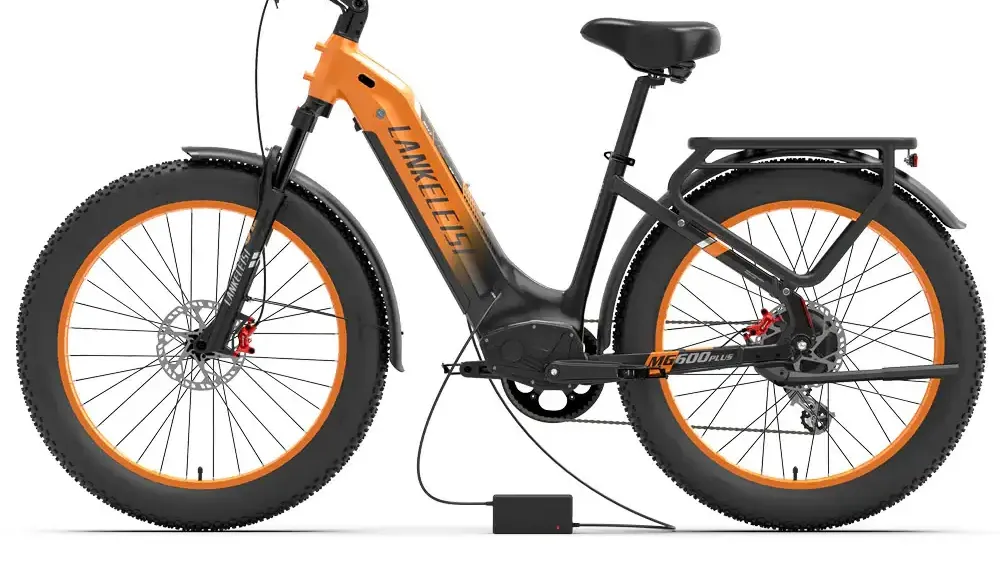
The 20 Nm gap between the two motors — 65 Nm on the Lite, 85 Nm on the Plus — matters most at low cadence on steep gradients. At 65 Nm, the Lite handles mixed urban terrain and moderate inclines without drama. Lankeleisi rates its climbing capability at up to 30 degrees. The Plus at 85 Nm pushes into steeper territory more confidently and under heavier loads — useful if you regularly carry cargo near the 200 kg combined limit, or if your commute includes gradients above 20 percent. Marcel Hutfilz, who tested the MG600 Plus in October 2025 on Berlin’s roads and rougher outer paths, described the torque mapping on the 2025 version as meaningfully refined over the previous generation: the switchable sensor feels natural in torque mode, though it could be marginally more sensitive at very low speed on broken surfaces — a fine-tuning note rather than a functional shortcoming.
The Lite has no throttle. The Plus ships with a detachable electronic throttle. On public roads within the EU, the throttle is not legal to use — it bypasses the pedelec requirement that the motor only assist when pedalling. Using it on a public road reclassifies the bike as a moped. That is not a reason to avoid the Plus; it is a reason to understand what the throttle is for: private land, off-road use, and contexts where legal classification is not the relevant concern. Riders who plan to use only public roads and want to stay unambiguously within the pedelec framework should note that the Lite removes the question entirely by omitting the throttle.
Battery Life and Range
Lankeleisi rates both models at up to 150 km in pedal-assist mode. The arithmetic does not support that figure as a realistic expectation for either bike. At the industry-standard 15–20 Wh/km consumption band for e-bikes in mixed use, the MG600 Plus’s 960 Wh battery yields a realistic range of 48–64 km. The Lite’s 720 Wh, on a lighter 30.2 kg platform at 36V, may achieve 12–15 Wh/km with active pedalling and low assist, which works out to 48–60 km in realistic conditions. Both figures represent sustained mixed-terrain riding at moderate assist levels. The 150 km claim requires best-case conditions: flat terrain, light rider, minimum assist, maximum pedalling input — a combination that the average buyer will not replicate in daily use.
Independent testers confirm this gap for the Plus. Generation-NT, testing across multiple outings in April 2024, recorded approximately 50 km in pure-electric mode at a 35 km/h average and over 120 km with consistent pedal assist at 25 km/h. A second French tester at lesveloselectriques.fr measured approximately 80 km from a single charge using maximum assist for the first half and intermediate assist for the remainder. A third source recorded 60 km with sustained intensive electric use. The 150 km figure from Lankeleisi is aspirational. A rider who plans their day around it will be stranded.
Climbing and Terrain Handling
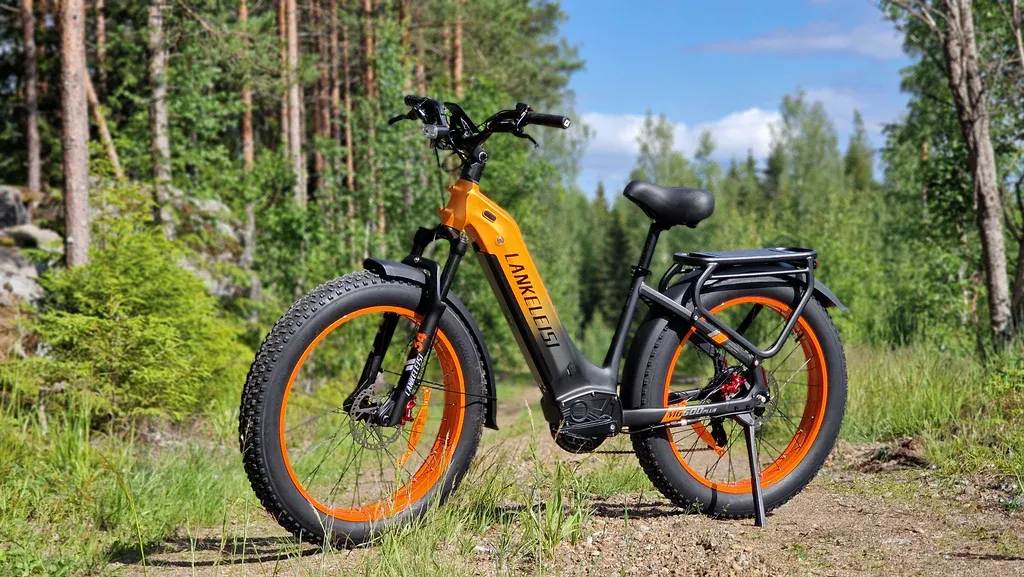
The Plus’s fat tires change the performance equation on loose surfaces in a way that torque alone cannot replicate. Sand, snow, light mud, and compacted gravel — the extra contact patch from a 4.0-inch casing running at 1.5–2 bar holds traction that a 2.4-inch trekking tire loses. The Lite’s MAXXIS Ardent is a legitimate mixed-terrain tire: it handles light gravel, packed dirt, and the occasional unpaved shortcut without drama. Polish cycling magazine Bike Magazine tested the Lite in July 2025 and found its off-road limit clearly at terrain with potholes, heavy sand, or exposed roots — conditions where the Altus drivetrain’s standard chainring allows the chain to drop off the front sprocket. The fix involves a narrow-wide chainring and ideally a derailleur with a vibration damper — equipment that adds cost and confirms the Lite’s intended use is trekking, not off-road cycling.
The Plus handles that same terrain without the chain management issue, but brings a new problem: 37 kg of rotational inertia in 4.0-inch rubber. Hutfilz noted in October 2025 that the bike rides best at a constant cruising pace — repeated stop-start cycling in urban traffic amplifies the mass in a way that becomes noticeable over a 45-minute commute.
Lankeleisi MG600 Lite vs MG600 Plus: Comfort and Handling
Ride Quality
The Lite’s 120 mm oil-spring fork is generous for a trekking platform. Most trekking forks in this category offer 60–80 mm; the extra travel means the Lite handles rough tarmac, cobbled streets, and light trail crossings without transmitting shock through the handlebars in a way that fatigues the wrists over distance. The MAXXIS Ardent tires add additional compliance at trail pressures. The combined result is a bike that feels planted and unhurried — appropriate for its intended use. It is not a mountain bike, and attempting to treat it as one by repeatedly dropping it into heavy sand or root-heavy singletrack will surface the drivetrain limitations Bike Magazine documented.
The Plus’s fat tires absorb the kind of surface variation that a fork alone cannot address: wide cracks, road edges, rough bridleway surfaces. Hutfilz’s assessment from October 2025 described riding on rough surfaces as “like on rails” — the tire volume smooths inputs continuously rather than episodically. The trade-off is road noise: generation-nt.com noted the fat tires produce a low hum on asphalt that is absent on the Lite’s narrower setup.
Ergonomics
Both bikes use upright step-through geometry with a low standover height — accessible for a wide rider population. The Scooterhelden team notes the Lite’s saddle-to-handlebar distance as feeling compact at 195 cm rider height; anyone above that should ideally test the fit before committing. The Plus accommodates up to 200 cm per Lankeleisi’s published range, though the frame is a single size. Neither bike is adjustable beyond saddle height and handlebar angle.
One practical ergonomic difference worth naming: the Lite’s brake lever assignment is reversed from convention out of the box — right lever controls the front brake, left the rear. This can be swapped in minutes but will catch riders arriving from conventional setups if they don’t check. The Plus uses standard lever assignment.
Weight and Maneuverability
The 6.8 kg difference between these bikes — 30.2 kg versus 37 kg — is not abstract. Carry the Lite up one flight of stairs and it is awkward but manageable for most adults. The Plus at 37 kg is a two-person job on stairs, a genuine problem for anyone who parks in a basement, and a bike that will exceed the capacity of most standard rear car racks rated to 35 kg. Before buying the Plus, map the physical obstacles between your front door and the road. If the route involves a lift with a tight door, a steep ramp, or a rack with a 35 kg limit, the weight difference is the deciding factor regardless of what the motor specifications say.
Lankeleisi MG600 Lite vs MG600 Plus: Braking and Safety Systems
Hydraulic Braking
Both bikes use ZOOM HB-876 four-piston hydraulic disc brakes with 180 mm rotors front and rear, plus motor cut-off integrated into the levers. For the Lite’s 30.2 kg, this is a well-matched specification: four pistons provide stopping force well beyond what two-piston entry-level hydraulics offer, and 180 mm rotors have sufficient heat dissipation for sustained descents at the bike’s speed range. ZOOM is a Taiwanese manufacturer in the functional entry-level bracket — not a Shimano Deore XT or TRP equivalent, but a legitimate hydraulic system that outperforms mechanical discs and cable-pull rim brakes.
For the Plus at 37 kg with a potential 200 kg gross weight, the same ZOOM specification is working harder. One French review (meilleur-velo-electrique.com, 2025) listed braking as a weak point relative to the bike’s weight, noting the discs lack the power margin that the mass demands. A bed-in period — typically 15–20 full stops from moderate speed before the pads have seated properly — is important on both bikes and will be more noticeable on the heavier Plus where under-bedded brakes create a meaningful stopping distance gap versus a fully bedded system.
Integrated Lighting
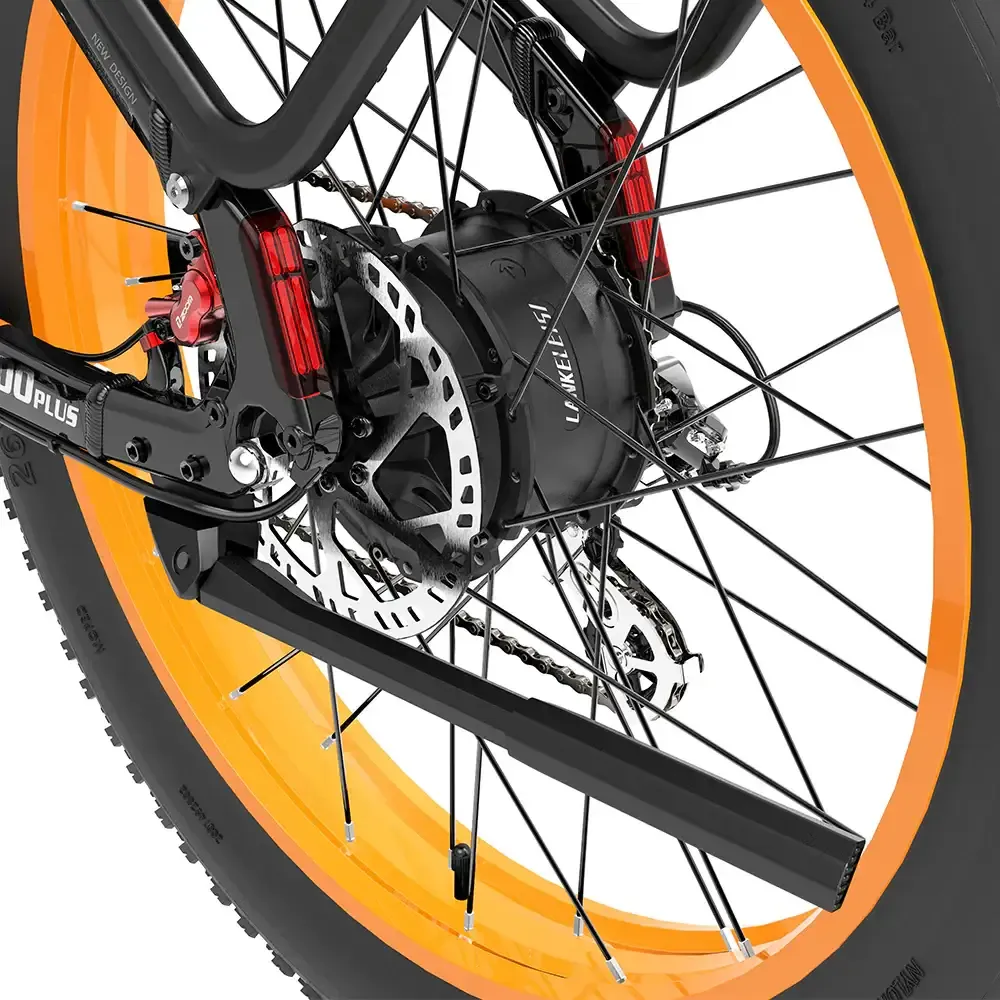
The MG600 Plus 2025 version updated its rear lighting to a three-function integrated system: constant running light, brake light, and turn signals. The Lite launched with this configuration already in place. Both bikes integrate the rear light assembly into the frame rather than bolting a separate unit to the seat stay — a detail that prevents losing the light to vibration and keeps the profile cleaner. The front headlight on the Plus outputs 120 lumens per Lankeleisi’s specification. For comparison, a dedicated cycling headlight for night riding typically starts at 400–600 lumens. The 120 lm figure is suitable for being seen in dim urban environments; it is not suitable for illuminating an unlit trail at 25 km/h. Riders who commute before sunrise in winter should plan to supplement both bikes’ headlights.
Lankeleisi MG600 Lite vs MG600 Plus: User Interface and Controls
Display and Controls
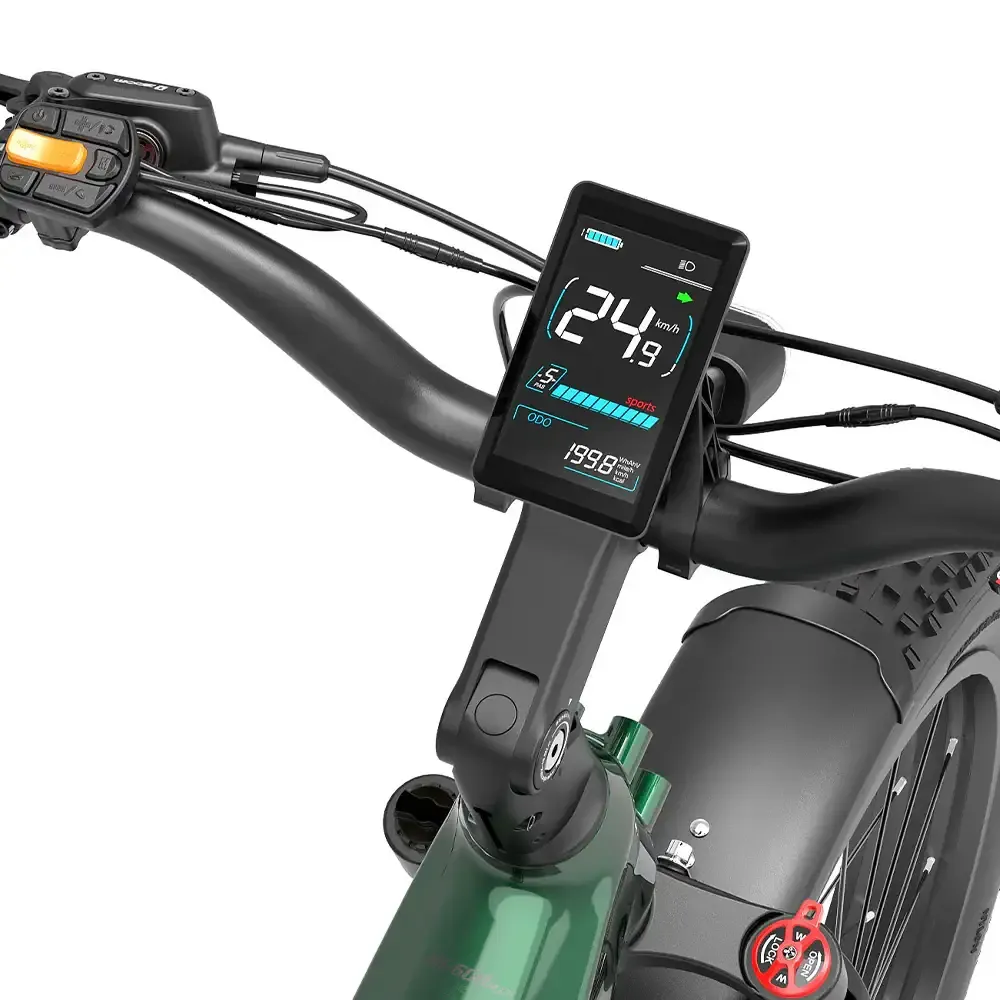
The MG600 Plus 2025 ships with a colour display showing speed, battery percentage, PAS level, trip distance, and total odometer. The sensor mode toggle — switching between cadence and torque assist — is accessible from the handlebar controls. BuyBestGear’s accessory listing for a “multifunctional colourful display” designed for both the Plus 2025 and the Lite confirms that the display hardware is shared across both models, though the exact firmware menus differ between them. Scooterhelden noted one practical irritation on the Lite: the display screen reflects badly in direct sunlight, making readings difficult on bright days. This is a structural limitation of the display type rather than an assembly fault.
Sensor Modes
The switchable sensor system is the single most important shared feature between these two bikes, and it is genuinely useful rather than a marketing feature. In cadence mode the motor reacts to pedal rotation — steady, predictable, and battery-efficient. In torque mode it reacts to pedal force — harder push, stronger assist — which mimics the feel of a quality mid-drive system without the mid-drive price. The power electronics that manage this switch are located at the bottom bracket area on both bikes, which Hutfilz described as one of the cleaner implementations in the sub-€2,000 category. For commuters who want consistent speed on flat roads, cadence mode handles it without demanding constant force variation. For riders who want the motor to follow their effort on climbs, torque mode delivers proportional assist.
Lankeleisi MG600 Lite vs MG600 Plus: Accessories and Compatibility
Included Equipment
The Lite ships as a complete trekking package: mudguards front and rear, rear rack, integrated lights, anti-theft lock, pump, and hex tool kit. It is ready to commute from the box. The Plus arrives without mudguards or rack in the standard configuration — these must be added separately. BuyBestGear stocks a front basket compatible with the Plus frame, and third-party rear rack and mudguard kits are available. If you want the Plus configured for commuting, add approximately €60–100 to the purchase cost for mudguards and rack. The Lite’s out-of-box completeness is a material advantage for riders who need the bike operational on day one without additional sourcing.
Compatible Upgrades
BuyBestGear maintains a direct spare parts and accessories line for both models: replacement batteries, brake calipers, tyres, inner tubes, display units, motors, and chargers. The availability of model-specific spare parts through the same retailer that sold the bike matters for a brand with no dedicated EU service network — when a component fails, the supply chain for replacement is BuyBestGear, full stop. Both models share Shimano Altus drivetrain components, which are widely available through any standard bicycle workshop. ZOOM HB-876 brake pads are stocked by BuyBestGear directly and are also available from specialist hydraulic brake suppliers in the EU. For a review of compatible cycling accessories applicable to both models, see our bike accessories combo guide.
Lankeleisi MG600 Lite vs MG600 Plus: Model Comparisons
MG600 Lite vs MG600 Plus
| Category | MG600 Lite | MG600 Plus (2025) |
|---|---|---|
| Motor (nominal / peak) | 250W / 650W | 250W / 1000W |
| Torque | 65 Nm | 85 Nm |
| Battery | 36V 720 Wh Samsung | 48V 960 Wh Samsung |
| Realistic range (arithmetic) | 36–60 km | 48–64 km |
| Tires | 27.5″ × 2.4″ MAXXIS Ardent | 26″ × 4.0″ fat tire |
| Suspension travel (front) | 120 mm confirmed | Not published (2025) |
| Weight | 30.2 kg | 37 kg |
| Throttle | None | Detachable (included) |
| Road-legal (EU pedelec) | Yes | Yes (25 km/h mode only) |
| Included mudguards + rack | Yes | No |
| Price | €1,649 | €1,899 |
Key Differences: The MG600 Plus delivers 20 Nm more torque, a 240 Wh larger battery, and fat-tire grip on loose terrain — at the cost of 6.8 kg, €250, and a bike that does not include mudguards or a rack. The Lite wins on total weight, legal clarity (no throttle, no menu-unlock temptation), and out-of-box commuting utility. Riders who face stairs, narrow lift doors, or tight car-rack weight limits should choose the Lite. Riders who regularly cross sand, snow, or heavy gravel and can accept the weight and the additional accessory cost should consider the Plus. The Lite is not the wrong choice by virtue of having less power; the Plus is not the better choice by virtue of having more. They solve different problems.
MG600 Plus vs MG600 Pro
For the full Lankeleisi MG600 Pro review, see our dedicated article. The comparison table below covers the key decision points between the Plus and the Pro.
| Category | MG600 Plus (2025) | MG600 Pro |
|---|---|---|
| Motor (nominal / peak) | 250W / 1000W | 250W / 650W |
| Torque | 85 Nm | 65 Nm |
| Battery | 48V 960 Wh Samsung | 48V 960 Wh Samsung |
| Wheel size / tires | 26″ × 4.0″ fat | 29″ × 2.4″ MAXXIS Rekon |
| Suspension | Front fork only (hardtail) | Full suspension (front + rear) |
| Suspension travel | Not published | Not published |
| Brakes | ZOOM HB-876 4-piston | ZOOM HB-890E 4-piston |
| Weight | 37 kg | Not published |
| Off-road geometry | SUV / all-terrain | Trail / XC MTB |
| Price | €1,899 | Verify at BuyBestGear |
Key Differences: The Pro’s full suspension and 29-inch trail geometry handles singletrack and forest paths more capably than the Plus’s hardtail fat-tire setup. The Plus has the higher peak output (1000W vs 650W) and 20 Nm more torque — an advantage on steep open terrain where raw power matters more than suspension compliance. If your riding is primarily road-to-trail SUV use with occasional rough ground, the Plus is the right choice. If you are specifically buying a bike for singletrack, root-crossings, and technical descents, the Pro’s full suspension is the relevant upgrade. The Plus is the wrong bike for sustained technical trail riding; the Pro is the wrong bike if off-road terrain is occasional rather than primary.
Final Verdict
The Lankeleisi MG600 Lite vs MG600 Plus decision comes down to a question that has nothing to do with marketing: where will you physically take this bike? The Lite at 30.2 kg, with its 27.5-inch trekking geometry, integrated commuter accessories, and unambiguous road-legal status, is the better answer for riders whose terrain is tarmac, packed gravel, and urban streets. ElektroRad rated it positively in their January 2026 test, and the confirmed tester findings — Shimano Altus drivetrain performing well on trekking surfaces, four-piston ZOOM brakes matched to its weight class, 720 Wh Samsung pack delivering a realistic 48–60 km on active PAS — all align with a bike that does its intended job without drama. For a dedicated review of the MG600 Lite, see our full single-model article. The MG600 Plus earns its €250 premium only if loose-surface terrain is a regular part of your route and you have solved the weight problem. Three independent testers confirmed 60–80 km in realistic use from the 960 Wh pack, which is materially more useful than the Lite’s battery on longer mixed routes. The 1000W-peak motor, 85 Nm torque, and fat-tire traction open access to terrain the Lite’s narrower setup declines.
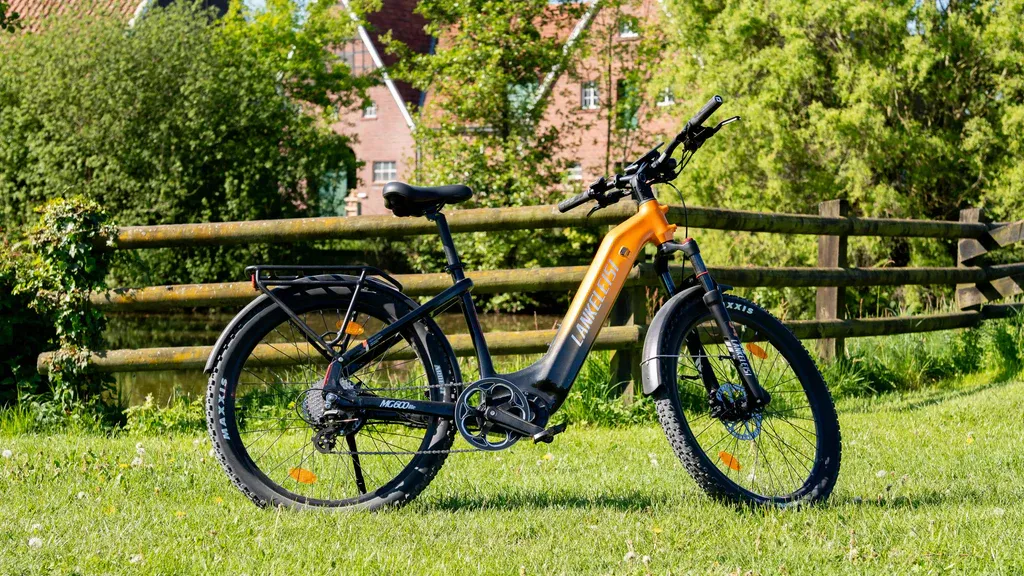
The wrong buyer for the MG600 Plus is the apartment-dweller with a basement-level bike store accessed by a narrow staircase who mostly rides tarmac. At 37 kg, the Plus will be abandoned in the lift lobby within a week. The wrong buyer for the MG600 Lite is the rider who wants to cross wet beach sand, soft mud, or deep snow regularly — the 2.4-inch Ardent will sink where the 4.0-inch fat tire floats. Both bikes are available exclusively through BuyBestGear, the sole authorised retailer for both models in Europe and the UK. See the full MG600 Plus review or the MG600 Pro review if a trail-specific 29-inch full-suspension option is within scope. Check current pricing, dispatch timeline, and availability for the Lankeleisi MG600 Lite and the Lankeleisi MG600 Plus directly at BuyBestGear before ordering.
Related Stories
CMACEWHEEL HQ20 Review: A €1,199 Longtail Cargo Ebike That Almost Gets Everything Right
Fafrees F700 Review: A 250W City E-Bike With a Torque Sensor for €1,099