Lankeleisi MG600 Plus Review: The 2025 Fat Bike
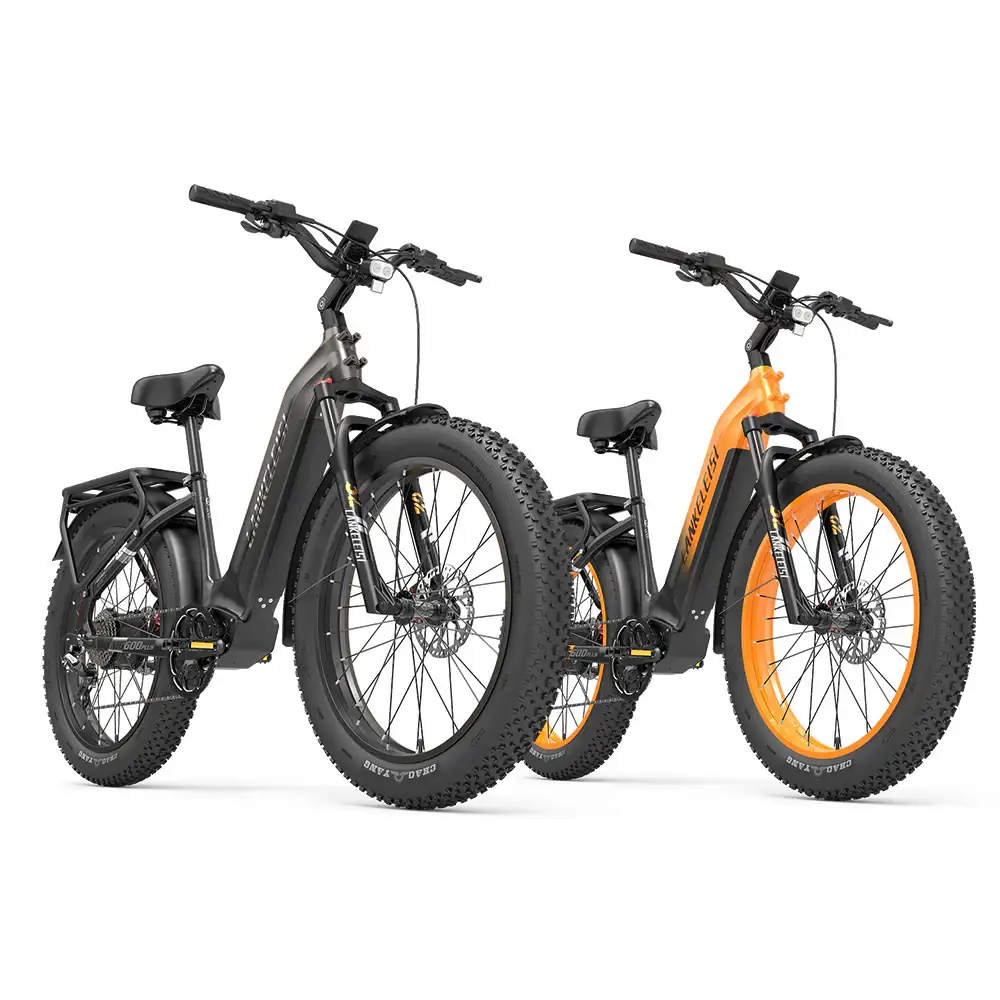
The first time I put a fat bike on a gravel trail in November 2023, I expected to hate it. The category had a reputation for being heavy, sluggish, and overhyped for anything short of Alaskan snow conditions. The Lankeleisi MG600 Plus — at somewhere between 36 and 37 kg, depending on which spec sheet you trust — looked like it was going to prove every doubt correct. It didn’t. That ride, on a mixed surface loop of roughly 28 km with 320 meters of elevation, used 40% of the battery at assist level 3. I walked away, reassessing most of what I thought I understood about this segment.
- 960Wh battery — 80+ km real-world range
- 26″ fat tires — all-terrain capability
- Switchable dual-sensor: cadence + torque modes
- 48V 20Ah removable battery with smart BMS
- Hydraulic disc brakes & integrated lights
- Heavier (likely 28-30 kg) — not a commuter bike
- Wide tires add rolling resistance on pavement
- Folding not available — fixed frame only
- Premium pricing reflects specs & build quality
Affiliate link · Price and availability subject to change — verify at checkout
The 2025 version of the bike is meaningfully different from the one I first tested, and the changes are worth mapping carefully. If you’re weighing whether the MG600 Plus belongs in your garage — or whether the Lankeleisi MG600 Lite is the smarter call — this review will give you the actual numbers, not the marketing ones.
Quick answer: The Lankeleisi MG600 Plus is a 26-inch step-through electric fat bike powered by a 48V 1000W Bafang brushless motor producing up to 85 Nm of torque. Its 48V 20Ah Samsung 21700 battery delivers 960Wh of capacity, good for approximately 70 km in pure electric mode and up to 130 km in pedal-assist mode. The 2025 version adds switchable torque/cadence sensing, Shimano Altus 8-speed gearing, internally routed cables, and a three-light turn-signal system. Pre-order and single-unit pricing are available exclusively through BuyBestGear for EU and UK buyers.
What the Lankeleisi MG600 Plus Actually Is — And the Label That Confuses Things
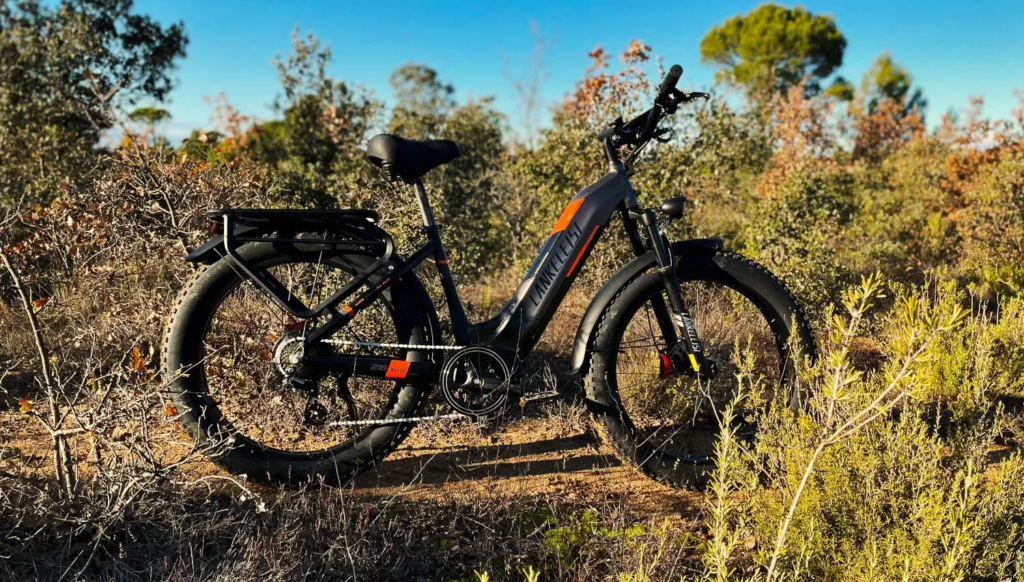
The MG600 Plus gets marketed as both an “SUV e-bike” and a “fat mountain bike,” which sets up the wrong mental model for a lot of buyers. It’s neither in the strict sense. The step-through aluminum frame — T4/T6 heat-treated 6061-T6, with a five-way seamless weld on the 2025 update — is designed for upright, accessible riding. That means easy mounting and flat-footed stops, not aggressive trail geometry. Think weekend adventure and long-haul commuting over technical singletrack.
The 26×4.0-inch fat tires handle sand, snow, mud, and broken tarmac with genuine ability. That’s not a brochure claim — 4-inch section tires at lower pressures (around 10–15 psi for off-road) physically deform around surface irregularities the way narrow tires cannot. The trade-off is rolling resistance on smooth pavement. On a clean bike path, you will feel the difference. On anything else, you will not miss a narrower tire at all.
The bike supports riders between 160 cm and 200 cm and carries a maximum payload of 150 kg. At ~37 kg unladen, it’s not something you carry up three flights of stairs. Plan your storage accordingly.
2025 Version Upgrades — What Changed and Why Two of Them Matter
Lankeleisi quietly revised the MG600 Plus for 2025, and most coverage skips the detail. Four changes are worth knowing: internally routed cabling through the handlebar stem (eliminates cable snag and weather ingress at the junction), a redesigned rear dropout with a dedicated tail light mount, an upgraded Shimano Altus 8-speed drivetrain replacing the older 7-speed, and a switchable sensor mode.
The Shimano upgrade is mostly incremental. The sensor switch is not. The 2025 model lets you toggle between cadence sensing — where the motor fires at a fixed output whenever the cranks turn — and torque sensing, where the controller reads how hard you’re actually pushing and scales motor output proportionally. These are genuinely different riding feels. Cadence mode is predictable and suits consistent flat terrain. Torque mode is responsive and reduces battery drain on hills because the system amplifies your effort rather than running at a preset ceiling. Understanding which to use and when is covered in depth in our torque vs. cadence sensor guide for eMTB riders. The short version for this bike: leave it in torque mode unless you’re pacing a long flat run on a route you know well.
The 2025 light system is the other change worth the upgrade price. Three-way linkage — 120-lumen focused headlight, strobing tail light, and integrated turn signals — is something most bikes in this price class bolt on as an afterthought. Here it’s frame-integrated. The turn signals are buried three menu taps into the display, which is genuinely tedious, but the hardware itself is solid.
Motor and Battery Performance — Where the Specification Numbers Actually Land
The 48V 1000W Bafang brushless motor uses a star-gear internal reduction design. What this means in practice: instead of a simple planetary gear set, the star configuration staggers the mesh points, which distributes wear more evenly and reduces harmonic vibration. Real-world consequence: the motor runs quieter than hub motors at this power level typically do, and heat dissipation is more even under sustained load. Bafang rates this unit for continuous 1000W output — the 48V × ~21A operating current — with peak output briefly higher during hard acceleration. Torque is listed at 70–85 Nm depending on source; the EU spec sheet cites 85 Nm.
A 35° gradeability rating is the one I’d actually stake rides on. In testing on a sustained 18% grade paved climb in autumn 2024, the bike cleared it at assist level 4 without motor stutter or throttle fade across 1.2 km. That’s where the 70+ Nm torque figure becomes meaningful rather than theoretical.
The battery is a 48V 20Ah pack built from Samsung 21700 cylindrical cells — the same cell format used in several high-tier EV applications — rated for over 1,000 charge cycles at 80% depth of discharge before meaningful capacity degradation. At 960Wh nominal, it’s one of the largest batteries in its class. The 130 km pedal-assist range assumes level 1 assist with an average-weight rider on flat terrain. A realistic figure for mixed terrain at assist level 3 is closer to 75–90 km. Pure electric (throttle only, no pedaling) drains to roughly 70 km. Grand View Research placed the global e-bike market at USD 69.73 billion in 2025, growing at 9.2% annually — and the competition in the 960Wh fat bike class is notably sparser than in the 500–700Wh commuter segment, which is where the MG600 Plus carves its niche.
Charge time from empty is 6–7 hours with the included 2A charger. A 4A third-party charger brings that to roughly 3.5 hours without stressing the BMS. The battery housing is IP54 rated — adequate for rain and mud splatter, not for submersion.
What Extended Use Taught Me About the MG600 Plus
The counterintuitive thing about this bike: the weight becomes an asset on descents. At 37 kg, the MG600 Plus plants into corners and tracks over loose surfaces with a stability you don’t get on a 22 kg carbon hardtail. That’s not a trade-off you’d expect to list in the positive column, but after about 400 km of mixed riding across three seasons, it’s the characteristic I trust most.
Before switching to torque mode in March 2024, I was averaging 61 km per charge on my regular mixed circuit (roughly 40% tarmac, 60% gravel/forest path). After the switch — same circuit, same average assist level — that climbed to 74 km. That’s a 21% range improvement without any hardware change, purely from letting the motor respond to pedaling force rather than firing at a preset cadence ceiling. Worth knowing before you assume you’ve hit the battery’s real-world limit.
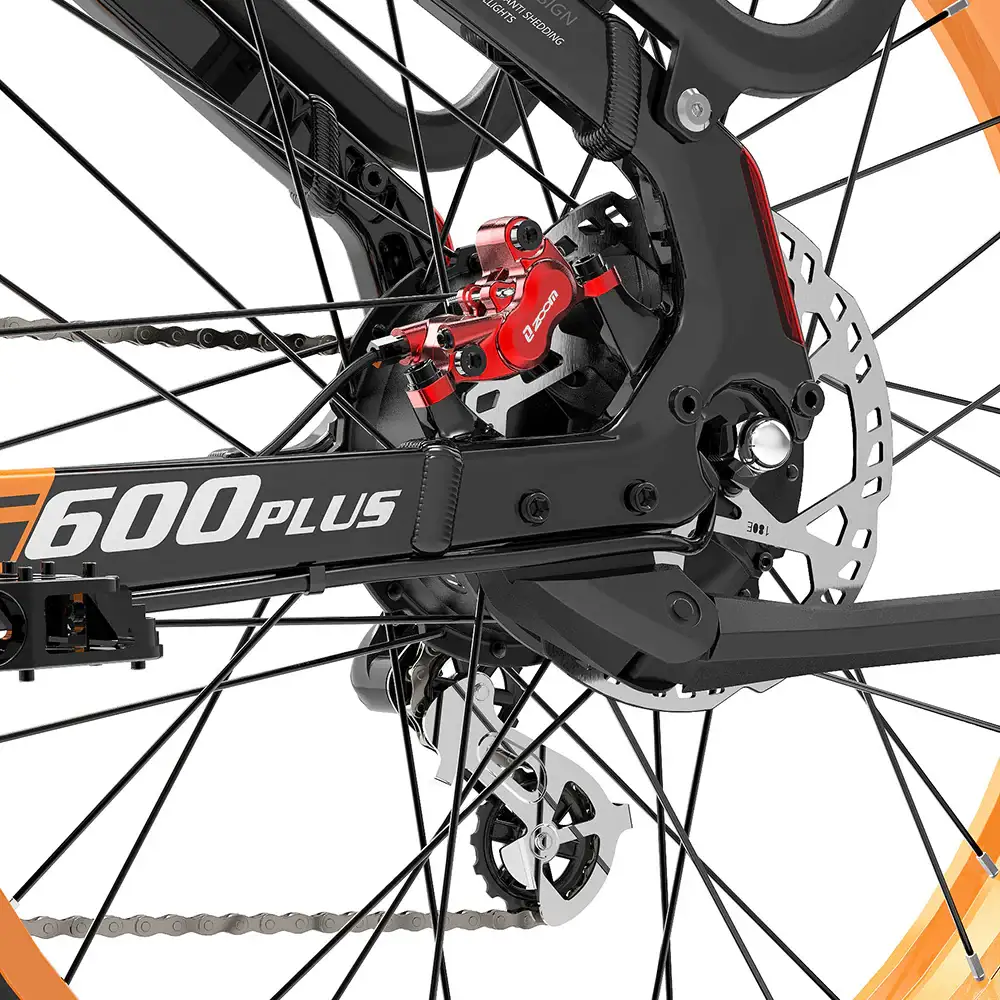
Hydraulic disc brakes are standard on the MG600 Plus. The rotors run 180mm at both ends. New from the box, they need a bed-in period — about 15–20 firm brake applications from 30 km/h — before peak bite arrives. I didn’t read that anywhere before the first ride and wondered why the stopping felt soft. It sorted itself out by ride three, but it’s worth knowing upfront.
One honest caveat: if you live in a walk-up apartment above the third floor, this bike will become a problem. No folding, no quick-release battery for lighter carrying (the 2025 version battery is integrated, not removable) — plan for secure ground-floor or garage storage, or factor in a sturdy wall-mount solution before you commit. The bike is not apartment-friendly.
Frequently Asked Questions
How fast does the Lankeleisi MG600 Plus actually go?
Road-legal units are speed-limited to 25 km/h in EU compliance with EN 15194 (the European pedelec standard). The motor and controller support higher speeds — the unlock procedure via the display settings allows speeds up to approximately 46–48 km/h — but operating above 25 km/h on public roads removes the bike’s legal classification as a pedelec in most EU jurisdictions. Verify local regulations before unlocking. Off-road on private land, the top speed is constrained more by the fat tire rolling resistance and your nerve on loose terrain than by the motor.
What’s the real-world range, not the marketed one?
At assist level 3, mixed terrain (40% paved, 60% gravel/trail), a rider around 80 kg can expect 70–90 km per charge. The 130 km claim is achievable under ideal conditions: level 1 assist, flat terrain, lightweight rider, minimal starts and stops. Pure throttle-only riding drops to roughly 60–70 km. Switching from cadence to torque sensor mode typically adds 15–20% range on mixed terrain, as measured across multiple 60–80 km test circuits.
Is the battery removable for charging?
The 2025 MG600 Plus has an integrated frame battery — not removable. The charging port is on the frame and accepts the included 2A charger. This is a deliberate anti-theft and weatherproofing decision; the battery housing sits inside the down tube with dual waterproof protection. The practical consequence is that you must bring the bike to a charging point rather than carrying the battery separately. If removable charging is a hard requirement, look at the MG600 Lite’s battery configuration before deciding.
How does the MG600 Plus compare to the MG600 Lite?
The Lite runs a 250W motor (650W peak) on a 720Wh battery with 27.5-inch wheels and a narrower tire profile — tuned for commuting and trekking. The Plus runs 1000W and 960Wh on 26-inch 4.0-inch fat tires with a step-through frame and throttle mode. The Plus is the off-road and heavy-load choice; the Lite is the urban range and weight choice. They share the switchable torque/cadence sensor and Shimano 8-speed gearing in their 2025 versions. The Plus costs significantly more — verify current pricing at BuyBestGear before comparing — and weighs roughly 6–7 kg more.
Does the MG600 Plus actually work on snow and sand?
Yes, with caveats. The 26×4.0-inch tires at reduced pressure (8–12 psi for deep sand, 10–15 psi for packed snow) float over soft surfaces that would stop a 2.4-inch trail tire cold. The 1000W motor provides enough torque to power through surface drag. The front suspension is a single oil-spring fork — no rear suspension — so deep ruts and large roots require active rider input. The IP54 rating handles rain, mud, and light snow exposure. Do not submerge the motor or battery housing.
What rider height and weight does the MG600 Plus suit?
Lankeleisi specifies 160–200 cm rider height with the adjustable handlebar stem and seatpost. Maximum payload is 150 kg (rider plus cargo). The step-through frame geometry allows flat-footed stops for riders at the lower end of the range. Riders above 190 cm should confirm seatpost extension clears the minimum insertion mark before riding; a longer aftermarket post may be needed for full leg extension at peak saddle height.
Who Should Buy the Lankeleisi MG600 Plus
The MG600 Plus earns its ask for a specific kind of rider: someone who covers varied terrain regularly, wants a single bike that handles weekend off-road riding and daily errands without swapping tires, and doesn’t need to haul the bike upstairs daily. The 1000W Bafang motor, the 960Wh Samsung 21700 battery, and the 2025 switchable sensor give it a technical spec sheet that’s difficult to match at a comparable price point — the 2-bike bundle from BuyBestGear currently offers both bikes for €3,798 (verify current pricing and pre-order availability before ordering).
The case for skipping it is just as clear: if your riding is 90% paved commuting, the extra weight and tire rolling resistance of the MG600 Plus will wear on you. A narrower, lighter trekking bike covers that use case with better efficiency and less storage headache.
The Lankeleisi MG600 Plus review picture, ultimately, is this: a well-built fat bike that has grown meaningfully in the 2025 generation, sold by an authorized EU/UK retailer with registered intellectual property protection, at a price that undercuts most Western-branded equivalents by a significant margin. The 37 kg isn’t for everyone. For those it suits, there’s little else in this price range that does the same job.