Samsung Galaxy S26 Ultra Full Review

The Samsung Galaxy S26 Ultra has arrived with a lot to prove. As the flagship of Samsung’s third-generation Galaxy AI phone lineup, it carries expectations built on the strengths of the S25 Ultra and amplified by everything Samsung promised at Galaxy Unpacked 2026. After spending substantial time with the device — testing its cameras across lighting conditions, pushing its Snapdragon 8 Elite Gen 5 chip through sustained workloads, and living with Galaxy AI features day-to-day — the picture that emerges is one of a device that earns its price tag in most areas and exceeds it in a few. Here is the full breakdown.
Design and Build: Refined Without Being Reinvented
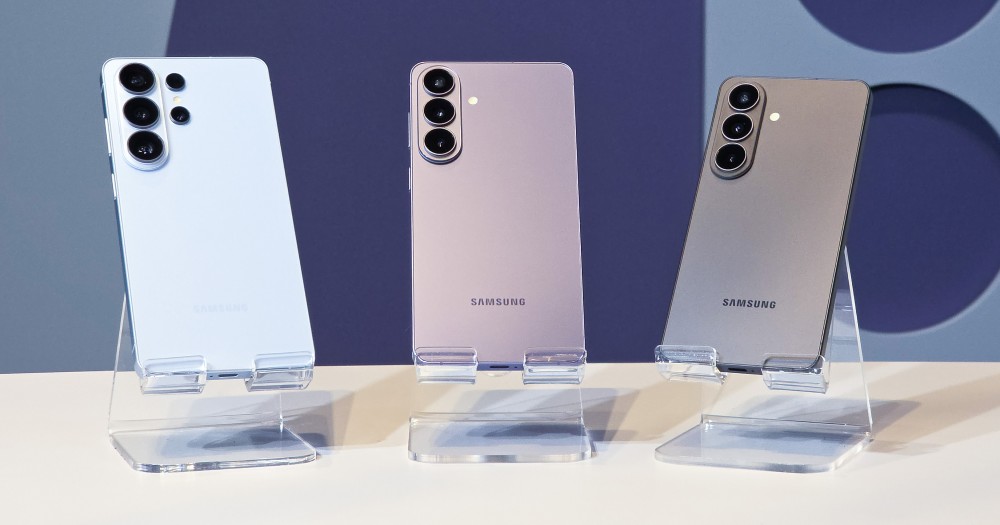
Samsung made a deliberate choice with the S26 Ultra’s design: refine rather than reimagine. The result is a device that feels immediately familiar to anyone who owned an S25 Ultra, but noticeably more comfortable in extended use. The chassis is 0.3mm thinner than its predecessor at 7.9mm, and the weight sits at 214 grams — a number that sounds heavy on paper but distributes well thanks to the flat display and squared-off Armor Aluminum frame.
The corner curvature has been updated with a slightly rounder profile, which addresses one of the quieter criticisms of the S25 Ultra: the corners felt sharp in long portrait sessions. Here, they do not. The back glass carries a matte texture that resists fingerprints reasonably well and feels deliberately premium rather than accidentally slippery.
The S Pen remains in its integrated silo at the bottom of the device, extracted with the familiar downward press. It still lacks Bluetooth, meaning Air Actions are not available — a continuation of the decision Samsung made with the S25 Ultra. For note-taking, document annotation, and illustration, the stylus experience is unchanged and still the best in class for a built-in smartphone stylus. The pressure sensitivity and tilt recognition hold up to extended writing sessions without fatigue-inducing input lag.
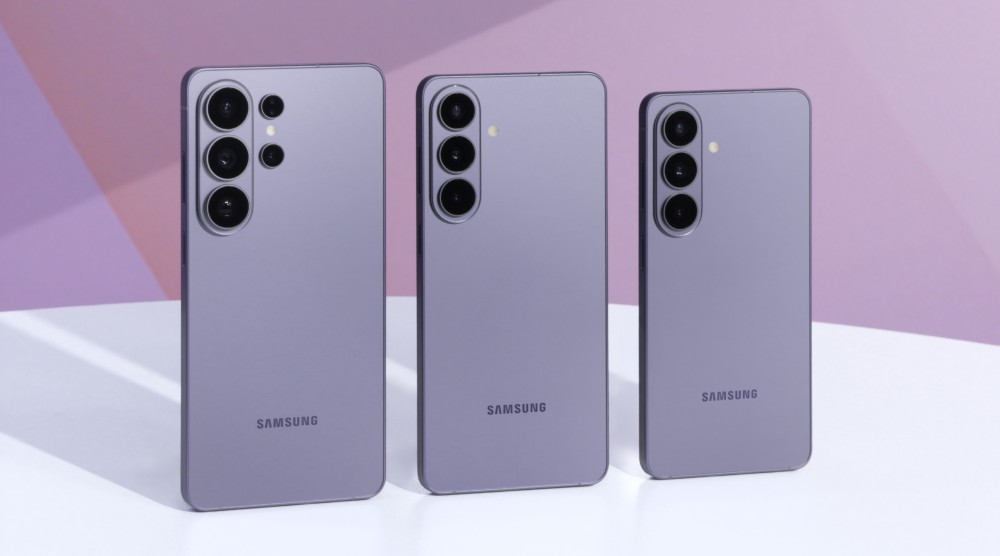
Color options at launch are Black, Cobalt Violet, Sky Blue, and White — with Silver Shadow and Pink Gold available exclusively through Samsung’s online store. The Cobalt Violet is the standout choice visually. It reads differently under different light sources, shifting from a deep blue-purple indoors to a warmer violet in direct sunlight.
Display: The Best Screen on Any Smartphone Right Now
The 6.9-inch QHD+ Dynamic AMOLED 2X panel (3120 x 1440 pixels) is simply the best display currently available on a production smartphone. The adaptive refresh rate runs between 1Hz and 120Hz, managing the transition intelligently based on content type. Video playback is smooth. Still images are sharp. Text is crisp at every font size.
Peak brightness reaches levels that make outdoor use genuinely comfortable even in direct afternoon sunlight — a real-world test that many flagship panels fail to pass convincingly. Samsung’s ProScaler technology, embedded at the processor level, improves image scaling so that upscaled content looks richer rather than merely stretched. Combined with the updated mDNIe engine — now delivering four times the image processing precision compared to the S25 Ultra — colors are more nuanced and shadow detail in HDR content is notably better rendered.
The headline new display feature is Privacy Display, debuting on a Galaxy device for the first time. It limits side-angle viewing using a built-in display layer, without requiring a physical privacy screen protector. You can toggle it from the Quick Panel, assign it to a double-press of the side button, or configure it to activate automatically for specific apps or when a PIN entry screen appears. In practice, it works. Tested in a crowded coffee shop, a neighbor seated at roughly 60 degrees could not read the screen clearly. Content remained sharp and color-accurate from the front. The feature is the result of more than five years of internal R&D at Samsung, and it shows in the execution.
Corning Gorilla Armor 2 provides the outermost protection. It is durable by smartphone standards, but not scratch-proof. A quality screen protector is still advisable for those who carry the device alongside keys or in bags without dedicated pockets.
Performance and Battery: No Ceilings in Daily Use
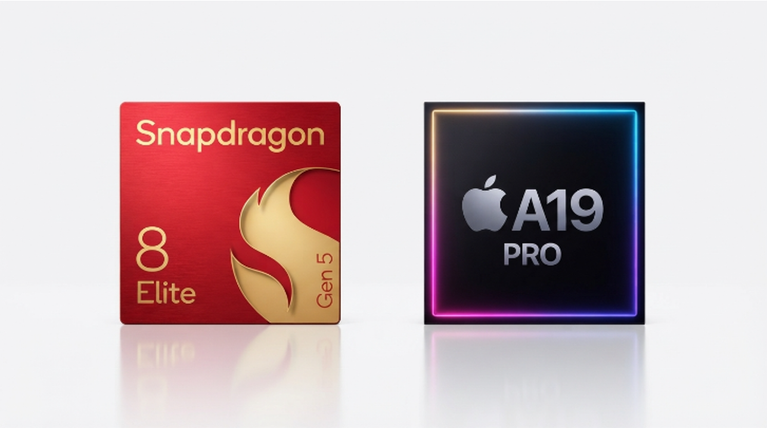
The Snapdragon 8 Elite Gen 5 chip inside the S26 Ultra was co-developed between Samsung and Qualcomm, and the collaboration shows. Samsung claims a 39 percent more powerful NPU compared to the previous generation, a 19 percent faster CPU, and improved GPU performance for sustained graphics workloads. In day-to-day use, the device simply does not slow down. App switching is instantaneous. Multi-window operations with demanding applications run without visible frame drops. Gaming at maximum settings — tested with Genshin Impact and Call of Duty Mobile at peak visual configurations — produced no noticeable throttling over extended 45-minute sessions, aided by what Samsung calls its largest vapor chamber yet.
RAM options are 12GB and 16GB. For most users, 12GB is sufficient. The 16GB configuration is relevant primarily for those who multitask heavily between large applications or use the device professionally for video editing and AI workloads on-device.
Battery life with the 5,000mAh cell has been a genuine strength. In mixed-use testing — a combination of social media, camera use, navigation, streaming, and office productivity — the device consistently reaches end of day with 20 to 30 percent remaining. Heavy users pushing gaming and video recording will land closer to 15 percent. Light-to-moderate users will see the device stretch comfortably past a full day.
Super Fast Charging 3.0 reaches 75 percent charge in 30 minutes via the 60W wired standard. Wireless charging tops out at 25W with a compatible Samsung charger, and reverse wireless charging is available at 4.5W for accessories. No charger is included in the box — a cost-saving decision that remains frustrating at a $1,299 price point.
Samsung Galaxy S26 Ultra Camera System: Real-World Performance
The camera system on the S26 Ultra is the most versatile quad-camera configuration on any current smartphone, and the real-world results support that assessment in most shooting scenarios.
The 200MP main sensor with its F1.4 aperture — wider than the S25 Ultra — captures images with exceptional low-light performance. The F1.4 aperture allows measurably more light to reach the sensor, and the effect is visible in evening and indoor photography. Shadow lifting is natural rather than aggressive. Noise is well-controlled. Colors under artificial light are accurate without the overprocessed warmth that plagues some competitors’ night modes.
The 5x periscope telephoto at 50MP is the standout lens for portrait and medium-distance work. Subject separation is clean, background rendering is smooth, and the overall sharpness at pixel-level inspection is impressive. The 10x optical quality zoom — Samsung’s term for a lossless-quality digital output from the 5x periscope — performs better than expected for a camera that does not use a dedicated 10x optic. At 30x and beyond, digital zoom degradation becomes visible, but Samsung’s AI zoom processing partially recovers texture in good lighting.
The 50MP ultrawide at 120 degrees now includes autofocus, making it capable of genuine macro photography at 1.5cm minimum focus distance. Edge sharpness is the best seen on an S series ultrawide, with significantly reduced barrel distortion compared to previous generations. For architecture, landscapes, and tight interior spaces, this is the lens that gets used most.
Video recording receives meaningful upgrades. The S26 Ultra is the first mobile device to support APV codec, a professional-grade format designed for efficient compression without visual quality loss across repeated editing cycles. At 8K resolution, footage is detailed and color graded cleanly. The upgraded Super Steady mode now includes a horizontal lock option, keeping horizon lines stable during activities where lateral motion is frequent. For content creators who have been frustrated by uneven horizon drift in action footage, this is a practical fix. For more on how the S26 Ultra compares in a content creation context against dedicated action cameras, the DJI Osmo 360 Review offers a useful reference point on what dedicated hardware still offers that smartphones cannot fully replicate.

Galaxy AI Features: Third Generation, Real Progress
Samsung introduced Galaxy AI with the S24 series. This is the third iteration, and it is noticeably more useful than its predecessors — not because the features are more numerous, but because they are better integrated into the moments when they are actually needed.
Now Nudge is the new feature that best represents Samsung’s evolving AI philosophy. Rather than requiring you to open an app or trigger a command, it surfaces relevant information contextually. When a contact asks about evening plans in a messaging thread, Galaxy AI reads the context, checks your calendar, and presents a nudge overlay with conflict information — without you asking for it. In practice, this is genuinely useful rather than intrusive, because the triggers are well-calibrated. It does not nudge on every message. It nudges when the context clearly warrants it.
Now Brief delivers personalized morning summaries built from on-device data — booking confirmations, upcoming birthdays saved in contacts, calendar events within 48 hours. This runs locally on device, which matters for privacy-conscious users. The summaries are concise and actionable rather than padded.
Photo Assist now accepts written prompts for editing. You can type “remove the person in the background” or “replace the sky with a sunset” and the system executes it. Results vary by complexity. Simple removals with clean backgrounds are reliable. Complex scene replacement still produces occasional artifacts at object edges. The upgraded Circle to Search supports multi-element queries — circling an outfit in a photo and getting individual shopping results for each piece is the use case Samsung demonstrated, and it works.
Note Assist has been rebuilt with a longer context window, summarizing recordings up to several hours in length. For students and journalists, this alone justifies daily use. Bixby has been updated to understand natural language device control — telling it “my eyes feel tired” activates Eye Comfort Shield without requiring navigation through Settings menus.
Live Translate now supports 41 languages as of launch, and the accuracy in conversational contexts has improved substantially over previous generations. Galaxy AI, Photo Assist and Creative Studio language support extends to 41 languages as of March 2026.
What We Like and What We Do Not
What works well: The main camera’s F1.4 aperture is a genuine low-light improvement. Privacy Display is a novel feature that actually delivers. The Snapdragon 8 Elite Gen 5 chip produces no throttling in sustained workloads. Battery life is reliable across varied usage profiles. Now Nudge is the best Galaxy AI feature yet — unobtrusive and contextually accurate. The APV codec support positions the S26 Ultra as a credible professional video tool. The S Pen continues to be unmatched as a built-in precision input device.
What falls short: No charger in the box at $1,299 is difficult to justify. The removal of Bluetooth from the S Pen continues to limit its remote functionality for users who used Air Actions professionally. AI zoom beyond 30x still degrades visibly in motion. The AI Video Zoom feature produces occasional artifacts in fast-moving scenes. One UI 8.5, while improved, still ships with more pre-installed applications than most users want. And the upgrade case from an S25 Ultra is incremental rather than compelling — the camera improvements are real, but not transformative if you are already on the latest generation.
If you are comparing Samsung’s current lineup choices before committing, the Samsung Galaxy S25 Edge vs. Apple iPhone 16 comparison provides useful context on how Samsung positions its devices against Apple’s ecosystem. For those torn between the S26 Ultra and Apple’s current flagship, the iPhone 17 Pro Review gives a direct reference for where each platform currently leads.
Frequently Asked Questions: Samsung Galaxy S26 Ultra
What is the price of the Samsung Galaxy S26 Ultra in 2026?
The Galaxy S26 Ultra starts at $1,299.99 for the 256GB model. The 512GB version is priced at $1,499.99, and the 1TB configuration tops out at $1,799.99. Samsung is offering up to $900 in trade-in credit through its direct store and participating carrier partners, which can significantly reduce the effective cost — particularly for owners of Galaxy S22 Ultra and newer devices.
Does the Samsung Galaxy S26 Ultra have expandable storage?
No. The S26 Ultra does not include a microSD card slot. Storage options are fixed at 256GB, 512GB, and 1TB. For users who shoot 8K video regularly or store large local media libraries, the 512GB or 1TB configurations are worth the premium. Cloud storage integration via Samsung Cloud and Google One provides overflow capacity for those who prefer to stream or sync rather than store locally.
How long will the Galaxy S26 Ultra receive software updates?
Samsung has committed to seven years of security updates and four major Android OS version upgrades for the Galaxy S26 Ultra. The device ships with Android 16 and One UI 8.5. This update commitment matches the standard set by Google’s Pixel 9 series and puts Samsung ahead of most Android manufacturers on long-term software support.
Is the Samsung Galaxy S26 Ultra worth upgrading from the S25 Ultra?
If you own an S25 Ultra, the upgrade case is real but not urgent. The most meaningful improvements are the F1.4 main camera aperture, the Privacy Display, the APV video codec, and the Now Nudge AI feature. Performance gains are measurable but not perceptible in daily use. Battery life is comparable. If low-light photography or professional video is central to how you use your phone, the camera upgrade alone may justify the switch. For everyone else, the S27 Ultra cycle is likely the more compelling moment to move.
Which Galaxy S26 Ultra color is best?
All four standard colors — Black, Cobalt Violet, Sky Blue, and White — are available through major carriers. Cobalt Violet is the most distinctive option and photographs well in both indoor and outdoor light. Black is the most neutral choice for professional environments. Sky Blue is a softer alternative to the Violet for those who want color without the boldness. Silver Shadow, exclusive to Samsung’s online store, is the most understated premium option and the one most comparable to a polished metal finish.
Does the Galaxy S26 Ultra support satellite connectivity?
Yes. Samsung confirmed satellite communication support for the Galaxy S26 series, including emergency messaging via satellite. Availability is rolling out by region and carrier, so the feature may not be active in all markets at launch. Users in supported regions can check availability through Samsung’s settings or their carrier’s service portal. It is not a feature you will use daily, but it provides meaningful peace of mind for users who travel to remote areas or work in environments with unreliable cellular coverage.
Final Verdict: Samsung Galaxy S26 Ultra Review Score
The Samsung Galaxy S26 Ultra earns its position as the best Android phone available in 2026. No single competitor matches its combination of camera versatility, AI integration, display quality, S Pen precision, and sustained performance. The F1.4 aperture improvement on the main camera is the most impactful hardware upgrade in this generation. Privacy Display is a genuinely useful feature that no other mainstream flagship currently offers. Galaxy AI 3.0 — particularly Now Nudge — represents the clearest evidence yet that Samsung’s AI features are maturing from demonstrations into daily infrastructure.
The criticisms are real but manageable. The absent charger is a cost-cutting decision that should not exist at this price. The lack of Bluetooth in the S Pen is a continued limitation for power users. And S25 Ultra owners will find the upgrade incremental rather than essential. But for anyone entering the Ultra lineup for the first time, moving up from an older generation, or switching from a competing platform, the Samsung Galaxy S26 Ultra offers the most complete Android experience built to date — and the most compelling argument yet that Samsung’s AI investment is paying off in ways that matter during actual use.
Overall Score: 9.2 / 10
- Design & Build: 9.0 / 10 — Refined, comfortable, premium. The S Pen silo and Privacy Display set it apart.
- Display: 9.8 / 10 — The best production smartphone panel available. Privacy Display is a genuine innovation.
- Performance: 9.5 / 10 — No ceiling encountered in daily or demanding use. Thermal management is excellent.
- Camera: 9.4 / 10 — F1.4 main aperture, APV codec support, and reliable multi-focal versatility lead the category.
- Battery & Charging: 8.8 / 10 — Solid all-day life. No bundled charger at $1,299 is a meaningful deduction.
- Software & AI: 9.0 / 10 — Now Nudge and Photo Assist mark real progress. One UI 8.5 still bloats the experience slightly.
- Value: 8.5 / 10 — Expensive. Justified for the right buyer. Incremental for S25 Ultra owners.