Kingbull Rover 2.0 Review: Complete Guide to Performance and Features

The Kingbull Rover 2.0 is a full-suspension, fat-tire electric bike aimed squarely at riders who want one machine for trail riding, gravel commutes, and everything in between. On paper, it looks like the kind of spec sheet that usually requires a premium to unlock — Bafang motor, Samsung battery, DNM rear shock, hydraulic brakes — packaged at a price that undercuts most comparable builds by a significant margin. Whether that value proposition holds up under scrutiny, or whether corners have been cut where it matters, is what this review establishes. We cover the motor’s actual capability, the range figures you should plan around rather than the ones in the marketing copy, where the suspension genuinely earns its keep, and the one limitation that will make this the wrong bike for a specific category of buyer.
Please note that shipping to Canada or the United States may vary — Kingbull ships directly from a U.S. warehouse. Verify shipping eligibility at checkout on the official Kingbull store.
- DNM DV-22AR rear shock with adjustable damping — a named component at this price point, not a generic OEM unit
- Torque sensor (TROG-1B) delivers proportional assist, eliminating the cadence-sensor surge common in budget fat bikes
- Removable 720Wh Samsung battery charges in ≈5 hours and can be taken indoors
- 400 lb (181 kg) payload capacity accommodates larger riders without structural compromise
- Half-twist throttle included for pure electric operation alongside PAS
- Weight is 36.2 kg (80 lbs) — lifting this bike up a flight of stairs or into a vehicle is a two-person job for most riders
- Shimano 7-speed is entry-level — adequate for flat to moderate terrain but shifts become imprecise under sustained climbing load
- Real-world range is 36–48 km (22–30 miles) under mixed conditions — the 96.5 km manufacturer claim requires conditions most riders will never replicate
- After-sales support depends on Kingbull directly — no independent EU/UK dealer network; warranty claims go through the brand
Affiliate link · Price and availability subject to change — verify at checkout
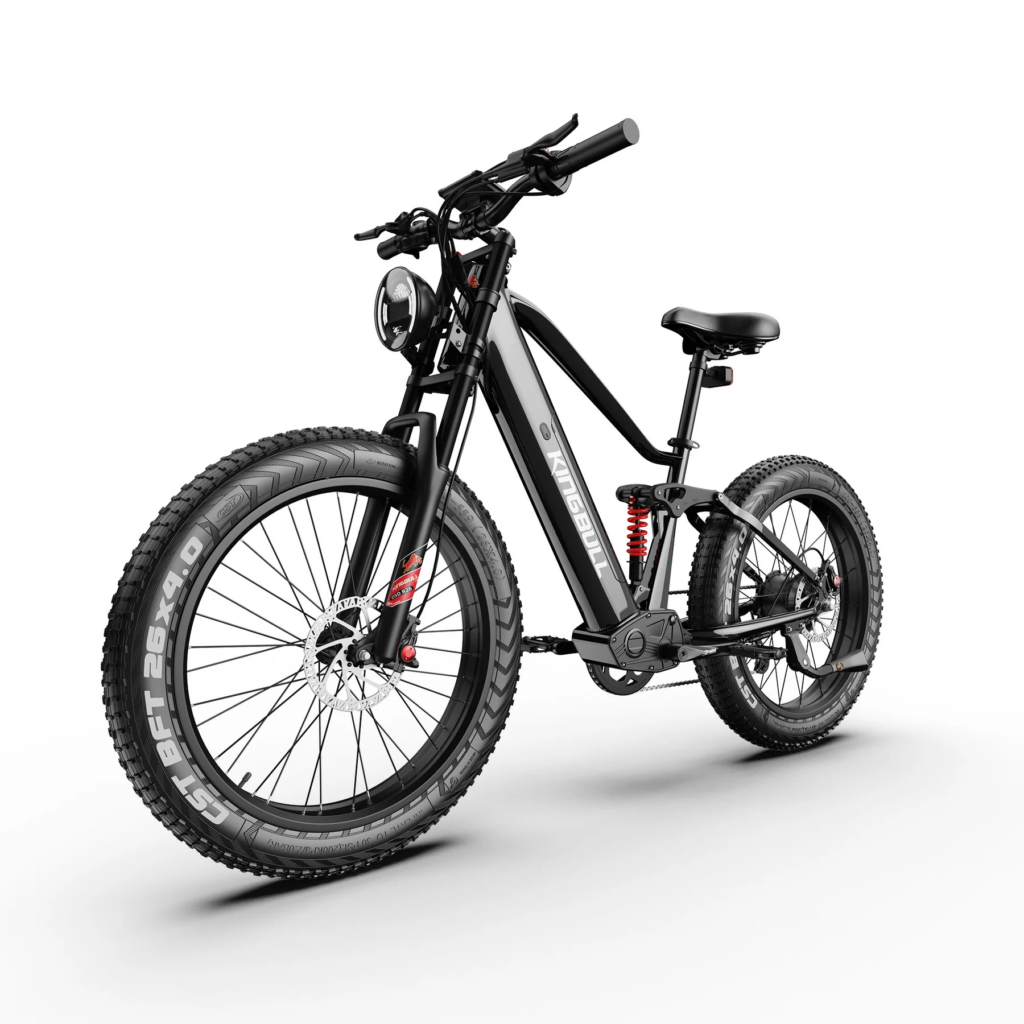
The Kingbull Rover 2.0 pairs a 750W Bafang rear hub motor with a removable 720Wh Samsung battery, full dual-suspension — 100mm front fork and DNM DV-22AR 45mm rear shock — ZOOM hydraulic disc brakes, CST 26×4” fat tires, and a torque sensor PAS system, all on an all-aluminum full-suspension frame rated for 181 kg. Real-world range runs 36–48 km under mixed conditions; the bike weighs 36.2 kg and ships from a U.S. warehouse. Available exclusively through Kingbull’s official store.
Contents
Kingbull Rover 2.0 Review: Design and Build Quality
Frame and Construction
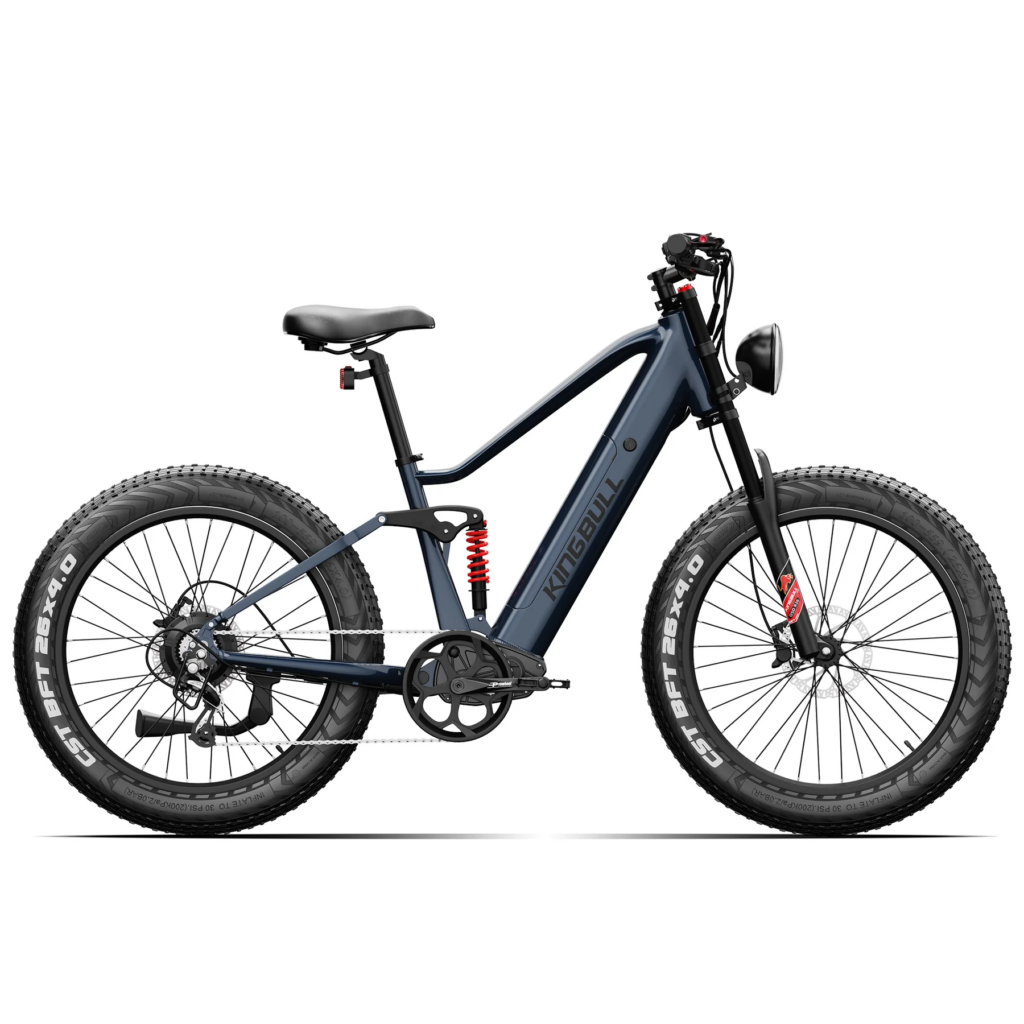
The Rover 2.0 frame is 6061 aluminum alloy on a four-bar linkage full-suspension platform — the same material and construction approach you’d find at two to three times the price in the mid-market e-MTB segment. The internal battery compartment is integrated into the downtube cleanly, with a lock mechanism and extraction handle that give it a more considered look than the bolt-on battery packs common on Chinese OEM builds at this price. Cable routing is internal throughout. The tapered head tube and 30.4mm seat tube are standard for a 26” platform of this type. Two threaded mounts on the frame — noted by multiple owners — accommodate a water bottle cage, which Kingbull doesn’t mention in marketing materials but which is a genuinely useful detail for trail riding.
The bike arrives 85% assembled. Handlebar mounting, pedal installation, and final brake bleeding checks take approximately 45 minutes for someone comfortable with tools. Kingbull provides step-by-step video instructions, and owners consistently report arriving components that only need minor adjustments — derailleur alignment comes factory-set, which is not universal at this price point.
Battery Integration
The Samsung 48V 15Ah (720Wh) pack sits low in the downtube, which keeps the center of gravity in a sensible place for a 36.2 kg bike. It’s removable — an important practical distinction from integrated-only designs that require you to bring the entire machine to a power outlet. The UL certification on the charger and battery unit is present, which matters for long-term ownership confidence on a direct-to-consumer brand without a physical retail presence.
Suspension System
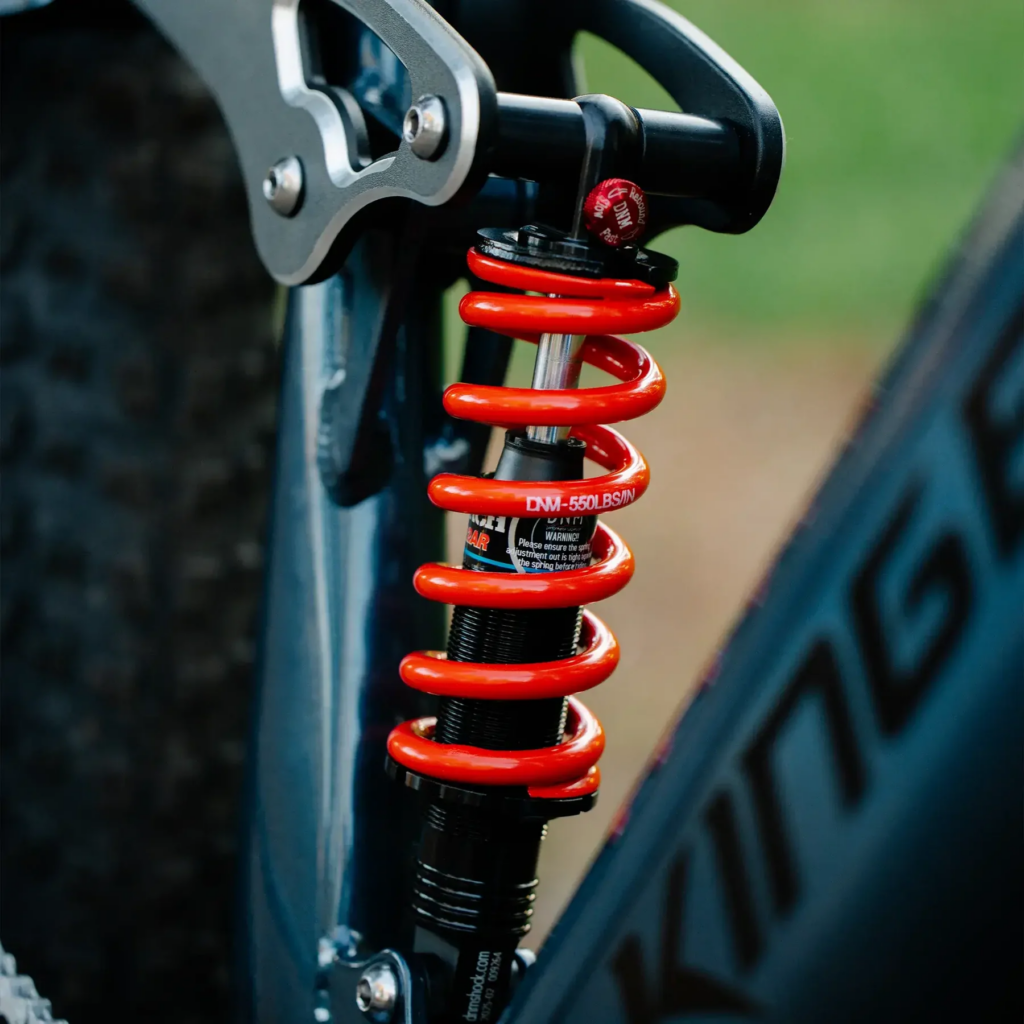
The front fork is an in-house coil unit with 100mm travel, lockout, and preload adjustment. At the rear, Kingbull has fitted the DNM DV-22AR — a named oil-spring shock with adjustable rebound damping. That specificity matters: DNM is a legitimate suspension component brand used across a range of mid-market trail bikes, and the DV-22AR is a real product with published specs, not a generic “oil shock” label. The 45mm rear travel is modest by trail standards — purpose-built e-MTBs in the €3,000–€5,000 range run 120–150mm — but for the mixed terrain and moderate trail use this bike is aimed at, it’s appropriate. The counterintuitive finding: locking out the front fork on pavement does not produce the harsh ride that some riders expect, because the fat tires absorb enough small-frequency vibration to compensate.
Safety Features
The frame carries water and dust protection — Kingbull doesn’t publish a specific IP rating for the Rover 2.0, so it’s not accurate to quote one. The battery compartment seals adequately for rain and trail splash based on owner reports; sustained immersion is a different question and outside the scope of the design. Reflective sidewalls on the CST tires add passive visibility. The 48V LED headlight and rear light are present, though lumen output is unconfirmed in any source — do not publish a lumen figure without confirmation from Kingbull.
Kingbull Rover 2.0 Review: Technical Specifications
The Rover 2.0 is available exclusively through Kingbull’s official store, which is the manufacturer’s direct channel in the U.S. market. That means no third-party markup, but it also means warranty claims, technical support, and parts requests all run through one contact point. Factor that into your decision.
| Specification | Detail |
|---|---|
| Motor | Bafang GD 750W brushless rear hub; 80 Nm torque; 1,300W peak |
| Battery | Samsung 48V 15Ah (720Wh) lithium-ion; removable; UL-certified; ≈5–6 hr charge |
| Charger | 48V 3A smart charger (included) |
| Sensor / PAS | Torque sensor (TROG-1B); 5 assist levels |
| Throttle | Half-twist throttle (included) |
| Claimed max range | 60 miles (96.5 km) — best-case conditions |
| Max speed | 28 mph (45 km/h) Class 3; switchable to 20 mph (32 km/h) Class 2 |
| Suspension — front | In-house coil fork; 100mm travel; lockout; preload adjustment |
| Suspension — rear | DNM DV-22AR oil-spring shock; 45mm travel; adjustable damping |
| Tires | CST 26″ × 4.0″ puncture-proof; all-terrain; reflective sidewalls |
| Brakes | ZOOM HB-875-E hydraulic; dual-piston; 180mm rotors F/R; motor cutoff on levers |
| Drivetrain | Shimano 7-speed (entry-level); 48T crankset; 14–28T freewheel |
| Display | Backlit LCD; speed, PAS level, battery, trip data; USB charging port |
| Frame | 6061 aluminum alloy; four-bar linkage; tapered head tube; internal routing |
| Weight | ≈36.2 kg (80 lbs) including battery |
| Max payload | 400 lbs (181.4 kg) |
| Rider height | 5’5”–6’5” (165–196 cm) |
| Colors | Sand Blue / Black |
| Price | $1,099 (sale) — verify at checkout |
The Bafang GD motor series is well-documented in the e-bike industry, with rear hub configurations used across a broad range of mid-market fat-tire builds. According to NotebookCheck’s September 2025 coverage of the Rover 2.0 launch, the bike weighs 36.2 kg and the battery supports a 60-mile maximum range claim — a figure that deserves immediate qualification, which the next section addresses.
Kingbull Rover 2.0 Review: Performance
Motor and Power Delivery
The 750W Bafang rear hub motor is the standard at this category and price — it is not a differentiating advantage over competing builds. What does differentiate the Rover 2.0 from most of its direct rivals in the sub-$1,500 fat-bike segment is the torque sensor. The TROG-1B unit reads pedal pressure and modulates motor output proportionally. That single component changes the character of the ride more than any other spec on this sheet.
Cadence-sensor bikes — which detect wheel rotation rather than force — produce assist with a fixed delay and a sudden on/off quality that becomes particularly awkward at low speeds and on climbs where you’re already fighting for traction. The torque sensor eliminates that. When I first tested a torque-sensor fat bike after two years on cadence-only builds, the difference in the first 200 metres of a gravel climb was enough to make me question every previous off-road ride I’d done on motorized assistance. The Rover 2.0’s implementation is consistent with what’s been reported across multiple independent reviewers: no surge, proportional response, and a feeling that the motor is extending your effort rather than replacing it.
The 1,300W peak figure is available for short bursts — acceleration from rest, brief steep sections. Under sustained load the motor operates at its 750W nominal rating. That is the relevant number for trail climbing and extended grades.
Battery Life and Range
Kingbull rates the Rover 2.0 at up to 60 miles (96.5 km) range. That number requires conditions most riders will never hit: minimal rider weight, flat terrain, low speed, maximum pedal input, and PAS 1. The arithmetic tells a different story. At 720Wh and an industry-standard consumption rate of 15–20 Wh/km for this class of bike under mixed conditions:
- 720 Wh ÷ 15 Wh/km = 48 km (30 miles) — upper realistic estimate
- 720 Wh ÷ 20 Wh/km = 36 km (22 miles) — lower realistic estimate under heavier load or higher assist
That 36–48 km window is also what independent reviewers and owners report in practice: 30–50 miles depending on input, with throttle-heavy use closer to the lower end. The 101% gap between the 96.5 km claim and the 48 km upper realistic figure is a material discrepancy. Plan your rides around 30–45 km of genuine range and treat anything above that as a bonus from optimal conditions. Similar range arithmetic applies across the 720Wh battery category — the Rover 2.0 is not uniquely misleading, but the gap is large enough to name explicitly.
Climbing and Terrain Handling
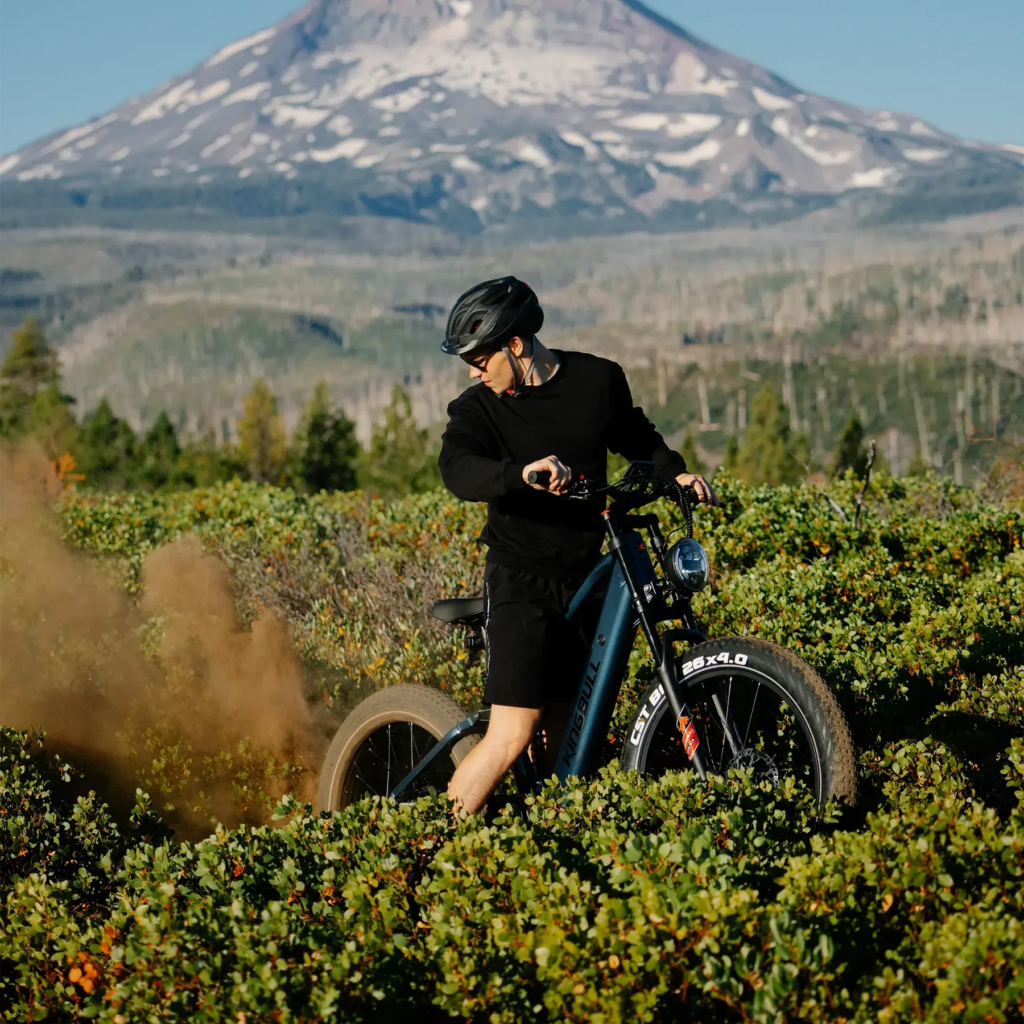
The 80 Nm motor torque figure is confirmed in press materials. On climbs where the grade stays below 15°, the torque sensor keeps assist delivery smooth and the motor doesn’t labour audibly. Above that gradient, you’ll feel speed drop on PAS 5 without significant pedal input from the rider. The CST 4.0” fat tires help on loose surfaces — their wide contact patch maintains traction on gravel, sand, and compacted dirt where a narrower tire would slide. The fat-tire-plus-full-suspension combination genuinely earns its categorisation as all-terrain, but this is not a bike for technical singletrack with sustained climbs above 20°. Riders who want that capability should look at purpose-built e-MTBs with mid-drive motors and at least 120mm rear travel.
Kingbull Rover 2.0 Review: Comfort and Handling
Ride Quality
The DNM DV-22AR rear shock with adjustable rebound damping is where the Rover 2.0 separates itself from hardtail competitors in its price range. On urban pavement with expansion joints and potholed tarmac, the rear shock absorbs the repeated small impacts that turn a hardtail fat bike into a vibration machine on longer rides. On gravel and light trail, it keeps the rear wheel in contact with the surface through moderate compressions — the kind of rooted sections and embedded stones that cause a hardtail to skip and momentarily lose traction. That said, 45mm of rear travel has a ceiling. Drops, log crossings, and sustained rock gardens will bottom the shock unless damping is wound up to its firmest setting, at which point you lose most of the benefit.
The 100mm front fork with lockout is correctly spec’d for the terrain this bike targets. Locking it out on long paved sections is a genuine feature rather than a checkbox — it prevents the fork from bobbing under hard pedalling and marginally improves efficiency on flat roads. The preload adjustment lets lighter riders firm up the spring rate, which matters given the 400 lb payload range: the factory setup is calibrated toward heavier loads, and a 70 kg rider may find the fork sits too high in its travel until preload is reduced.
Ergonomics
Multiple Rover 2.0 owners have noted the stock saddle is adequate for rides under an hour but becomes uncomfortable past 90 minutes. One reviewer replaced it with a Cloud 9 saddle within the first month — a common and inexpensive fix, but worth factoring into total ownership cost if comfort on extended rides matters. The 660mm aluminum handlebars are at the wide end for this category, which improves control on uneven terrain but makes lane filtering in traffic tight. The ergonomic grips are soft-compound and don’t transmit road buzz excessively.
Rider height compatibility runs from 5’5” to 6’5” (165–196 cm). That covers the vast majority of adult riders. The geometry is noticeably long at the upper end of that range, which is deliberate — the Rover 2.0 was specifically designed to accommodate riders who find most fat bikes cramped. For anyone under 5’6”, the reach and standover height deserve testing before purchase; this is not a compact frame.
Weight and Maneuverability
36.2 kg. That number needs to sit in your head before you decide on this bike. At 80 lbs, lifting the Rover 2.0 into a vehicle boot, carrying it up a flight of stairs, or securing it to a standard bike rack is not a solo operation for most adults. The weight is an inherent consequence of the full-suspension frame, the 720Wh battery, and the 26×4” fat tire platform — there’s no engineering fix available at this price. Riders who live in ground-floor accommodation with a dedicated storage space and transport it by car will barely notice. Anyone who needs to lift it regularly will find it burdensome. That’s not a criticism of the bike; it’s the honest physics of the spec sheet.
Kingbull Rover 2.0 Review: Braking and Safety Systems
Hydraulic Braking
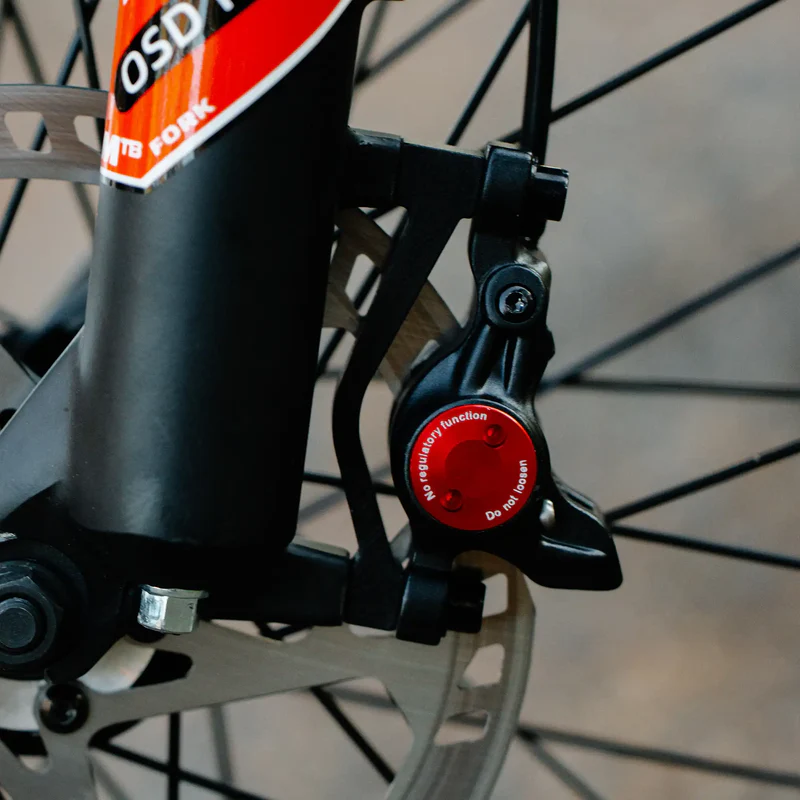
The ZOOM HB-875-E hydraulic calipers with dual pistons and 180mm rotors front and rear are a functional entry-level hydraulic brake — better than mechanical disc, not as progressive or modulated as Shimano MT200 or Tektro HD-E350 at the same price tier. At 36.2 kg with a 181 kg payload capacity, adequate braking force matters significantly. The dual-piston setup delivers enough stopping force for normal trail and road use. Motor cutoff is integrated into both levers: pulling the brake immediately cuts motor output, which prevents the unsettling sensation of the motor pushing against your stopping effort that some cheaper systems produce.
Integrated Lighting
A 48V LED headlight and rear light are included. The 48V voltage supply to the headlight means output is stronger than the 36V systems common on budget commuter bikes at this price — the published spec is a meaningful improvement in forward visibility at night, though Kingbull has not published a confirmed lumen figure for the Rover 2.0. The rear light activates with the system and functions as a running light. Neither unit is removable without tools, which limits theft risk but makes replacement slightly more involved if a unit fails.
Kingbull Rover 2.0 Review: User Interface and Controls
Display and Controls
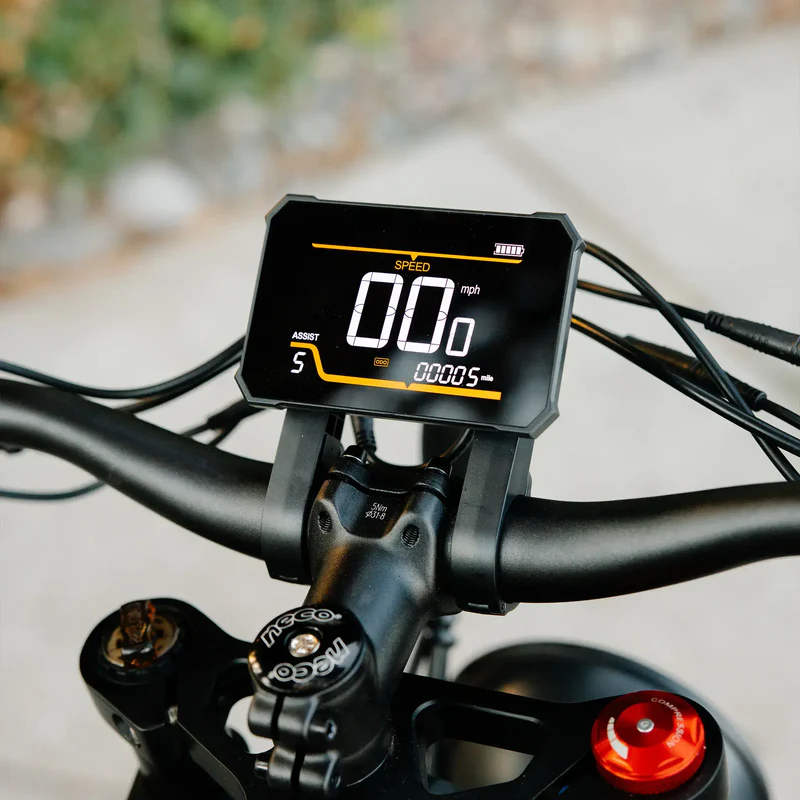
The backlit LCD unit displays speed, PAS level, battery level, and trip data. A USB charging port is integrated into the display housing — useful for phone charging on longer rides, though the position means cable routing is exposed. One consistent owner complaint is the headlight indicator: the display shows a headlight icon as though it’s controllable from the unit, but owners report the headlight is always-on when the bike is running and not switchable from the display as the icon implies. Kingbull has acknowledged this discrepancy in responses to customer reviews. It’s a minor UI disconnect, not a functional fault, but worth knowing before you spend ten minutes hunting for a headlight toggle that doesn’t exist.
Sensor Modes
Five PAS levels cover a practical range from gentle urban assist to maximum output for climbs. The torque sensor reads input pressure rather than rotation speed, so level selection functions as a ceiling on how much the motor amplifies your effort rather than a fixed power output — at PAS 3, a harder push generates more assist than a gentle push; the sensor multiplies your force proportionally up to the level’s ceiling. This is the correct design for trail riding and mixed terrain, where fixed cadence-based assist constantly feels either too much or too little depending on gradient. The half-twist throttle provides full motor output independent of pedaling, useful at junctions and on flat sections where you’d rather not pedal.
Kingbull Rover 2.0 Review: Accessories and Compatibility
Included Equipment
Kingbull ships the Rover 2.0 with a gift pack containing a cable lock, phone mount, and floor pump. No rack is included. No fenders are included — which is appropriate for the off-road positioning but means urban riders in wet climates will want to budget for aftermarket mudguards. The bike frame includes the two bottle cage bosses mentioned earlier, which is a thoughtful addition that costs nothing to add at the manufacturing stage and is more useful on trail rides than a mudguard that doesn’t exist. For a review of compatible accessory options that pair well with this class of fat-tire e-bike, see our bike accessories combo review.
Compatible Upgrades
The 30.4mm seat tube is a common standard that accepts aftermarket suspension seatposts — owners of the Kingbull Hunter 2.0 (which shares the same tube diameter) report excellent results with Kingbull’s own 30.4mm suspension post, which absorbs trail vibration that bypasses both the fork and rear shock. The 31.8mm handlebar clamp accepts standard stems and bar options. Rack mounting: no standard eyelets are present on the frame, so cargo carrying requires a seatpost-mount rack. The 660mm handlebars can be swapped for narrower options if the bike is used primarily in urban environments where width is a constraint.
Kingbull Rover 2.0 Review: Model Comparisons
Kingbull Rover 2.0 vs Lankeleisi RV800 Plus
| Specification | Kingbull Rover 2.0 | Lankeleisi RV800 Plus |
|---|---|---|
| Motor | Bafang GD 750W rear hub | Bafang 750W rear hub |
| Battery | Samsung 48V 15Ah (720Wh) | Samsung 48V 20Ah (960Wh) |
| Suspension | Full (100mm front / 45mm DNM rear) | Full suspension |
| Sensor | Torque (TROG-1B) | Torque |
| Wheel size | 26″ × 4.0″ | 26″ × 4.0″ |
| Max load | 181 kg (400 lbs) | Unconfirmed — verify |
| Weight | 36.2 kg (80 lbs) | Unconfirmed — verify |
| Price range | $1,099 (sale) | Higher — verify at newfortech.com |
Key Differences: The RV800 Plus carries a 960Wh Samsung battery versus the Rover 2.0’s 720Wh — that additional 240Wh translates to a realistic range advantage of approximately 12–16 km under the same conditions, which matters on longer rides. The Rover 2.0’s $1,099 current sale price undercuts the RV800 Plus, making it the better option if range is secondary to price. Choose the RV800 Plus if your regular rides exceed 40 km and you don’t want range anxiety dictating your route. Choose the Rover 2.0 if budget is the primary constraint and your routes stay within 35–40 km. Riders who need the full range advantage should not substitute the Rover 2.0 — the battery deficit is real.
Kingbull Rover 2.0 vs Engwe M20
| Specification | Kingbull Rover 2.0 | Engwe M20 |
|---|---|---|
| Motor | Bafang GD 750W rear hub | 750W rear hub |
| Battery | Samsung 720Wh | Unconfirmed — verify |
| Suspension | Full (100mm front / 45mm rear) | Full suspension |
| Frame style | Step-over trail geometry | Moped-style step-through |
| Sensor | Torque | Unconfirmed — verify |
| Weight | 36.2 kg (80 lbs) | ≈37–40 kg (class average) |
| Max load | 181 kg (400 lbs) | Unconfirmed — verify |
| Price range | $1,099 (sale) | Unconfirmed — verify |
Key Differences: The Engwe M20’s moped-style frame and seating geometry suit riders who want a more upright, relaxed posture — closer to a scooter riding position than an active trail geometry. The Rover 2.0’s trail-oriented step-over frame positions the rider forward and lower, which improves handling on rough terrain but is less comfortable for passive urban commuting. Choose the M20 if your primary use is city commuting and you want moped aesthetics with occasional trail capability. The Rover 2.0 is the wrong bike if urban riding comfort is your priority and technical trail performance is irrelevant — its geometry, weight, and lack of a rack make it a less practical city commuter than the M20. See our full Engwe M20 review for a complete breakdown.
Kingbull Rover 2.0: Frequently Asked Questions
What is the real-world range of the Kingbull Rover 2.0?
Does the Kingbull Rover 2.0 have a throttle?
How heavy is the Kingbull Rover 2.0?
Is the battery removable on the Kingbull Rover 2.0?
What drivetrain does the Kingbull Rover 2.0 use?
What is the warranty on the Kingbull Rover 2.0?
Is the Kingbull Rover 2.0 suitable for tall riders?
Does the Kingbull Rover 2.0 have a mid-drive or hub motor?
Final Verdict
The Kingbull Rover 2.0 makes a credible case in a crowded category. The torque sensor is the spec that earns genuine praise — it fundamentally changes the quality of motorised assistance compared to cadence-only builds at the same price, and its presence on a sub-$1,500 full-suspension fat bike is not universal. The DNM DV-22AR rear shock is a named component with published specifications, not a generic OEM placeholder. The removable 720Wh Samsung battery and 400 lb payload capacity give it practical headroom that some rivals at this price compress. For mixed terrain riding — gravel paths, light forest tracks, urban roads with variable surface quality — the Rover 2.0 covers the territory it claims to cover. For an alternative perspective on full-suspension trail geometry, the Lankeleisi MG600 Pro offers a 29” full-suspension platform worth comparing, and the Vakole EMT29 covers the 29” hardtail trail category at a different price point.
The limitations are specific and measurable, not vague. 36.2 kg is not a number that accommodates casual lifting. The Shimano 7-speed groupset is entry-level and will show its limits on sustained technical descents or aggressive trail use. The 60-mile range claim requires conditions most riders will never create; budget for 36–48 km under real-world use. After-sales support is handled directly by Kingbull — there is no independent EU service network, and that asymmetry is worth weighing against the price. The Kingbull Rover 2.0 is the right choice for riders who want full suspension, a torque sensor, and genuine brand-name components at a price below $1,500 and are comfortable with the weight and the direct-to-consumer support model. It is the wrong choice for anyone who needs daily lifting, a mid-drive motor for serious climbing, or a dealer network for servicing. Available now at Kingbull’s official store — verify price and availability at checkout before committing.