Kingbull Ranger Review: Complete Guide to Performance and Features
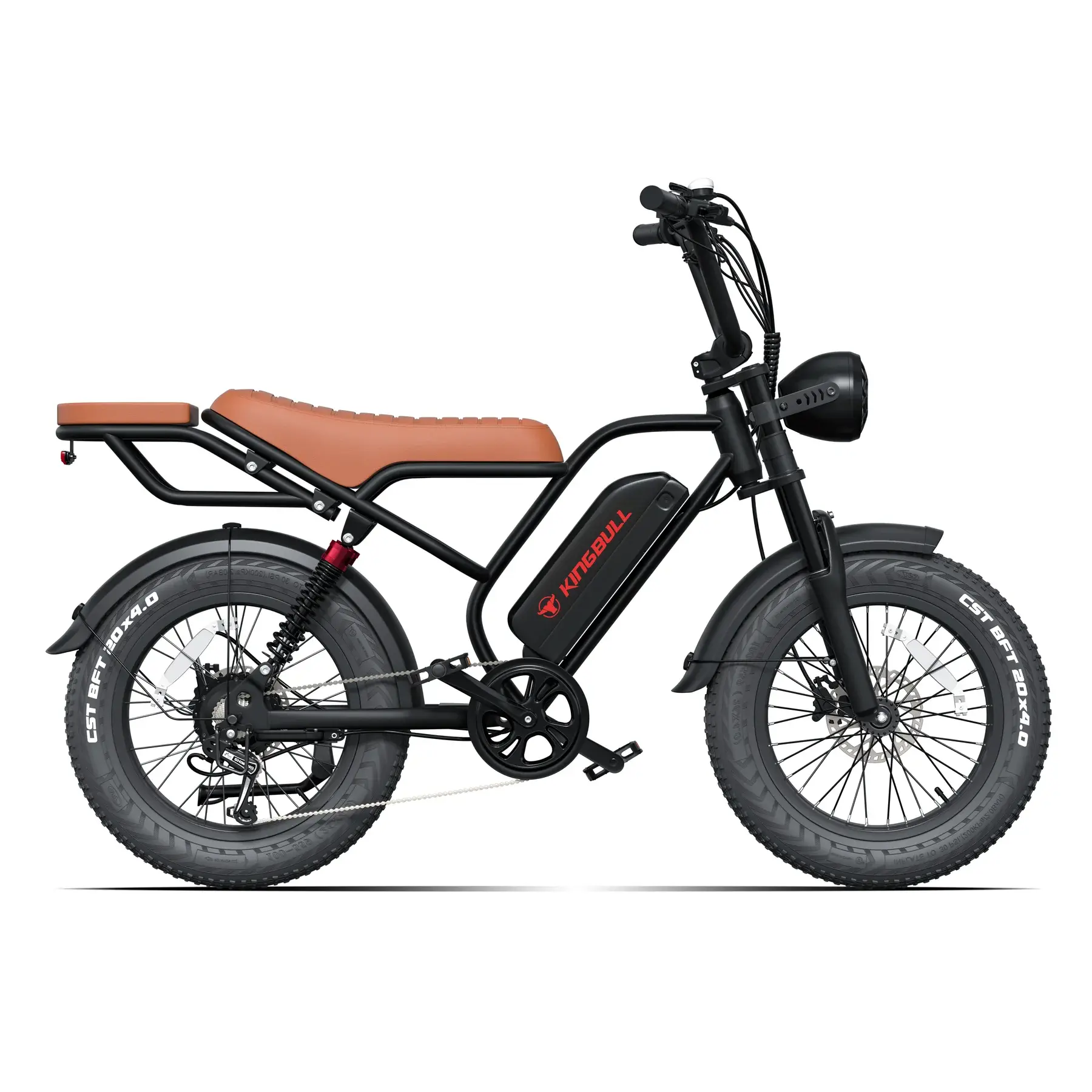
The Kingbull Ranger showed up on my radar in March 2026 — a moped-style fat-tire e-bike priced at $799, promising 80 miles of range, dual suspension, and the kind of retro motorcycle silhouette that tends to make people stop and ask questions at traffic lights. That combination of visual drama and sub-$800 pricing deserves scrutiny. This review covers everything: the real-world range arithmetic, what the drivetrain and sensor specs actually mean for how the bike rides, and exactly which buyer this bike suits — and which buyer it does not.
Note: The Kingbull Ranger ships within the contiguous United States only, direct from Kingbull’s California-based warehouses. International shipping is not available at this time. Verify shipping details at checkout.
- 864Wh battery — largest in class under $900
- Hydraulic brakes, 180mm rotors front and rear
- Dual suspension, 80mm fork travel
- Turn signals, brake light, dual-tone horn
- 350 lb max payload capacity
- Weighs 86 lbs — heavy to carry or lift
- Cadence sensor only — no torque sensing
- 80-mile range claim far exceeds real-world use
- No dedicated US repair network beyond retailer
Affiliate link · Price and availability subject to change — verify at checkout
The Kingbull Ranger is a moped-style fat-tire electric bike running a 750W Bafang rear hub motor, a 48V 864Wh lithium battery, dual suspension, and hydraulic disc brakes — all at $799. For riders who want a visually distinctive, long-distance companion that handles mixed terrain without a premium price tag, it makes a credible case. The weight and the range claim both deserve a hard look first.
Contents
Kingbull Ranger Review: Design and Build Quality
Frame and Construction
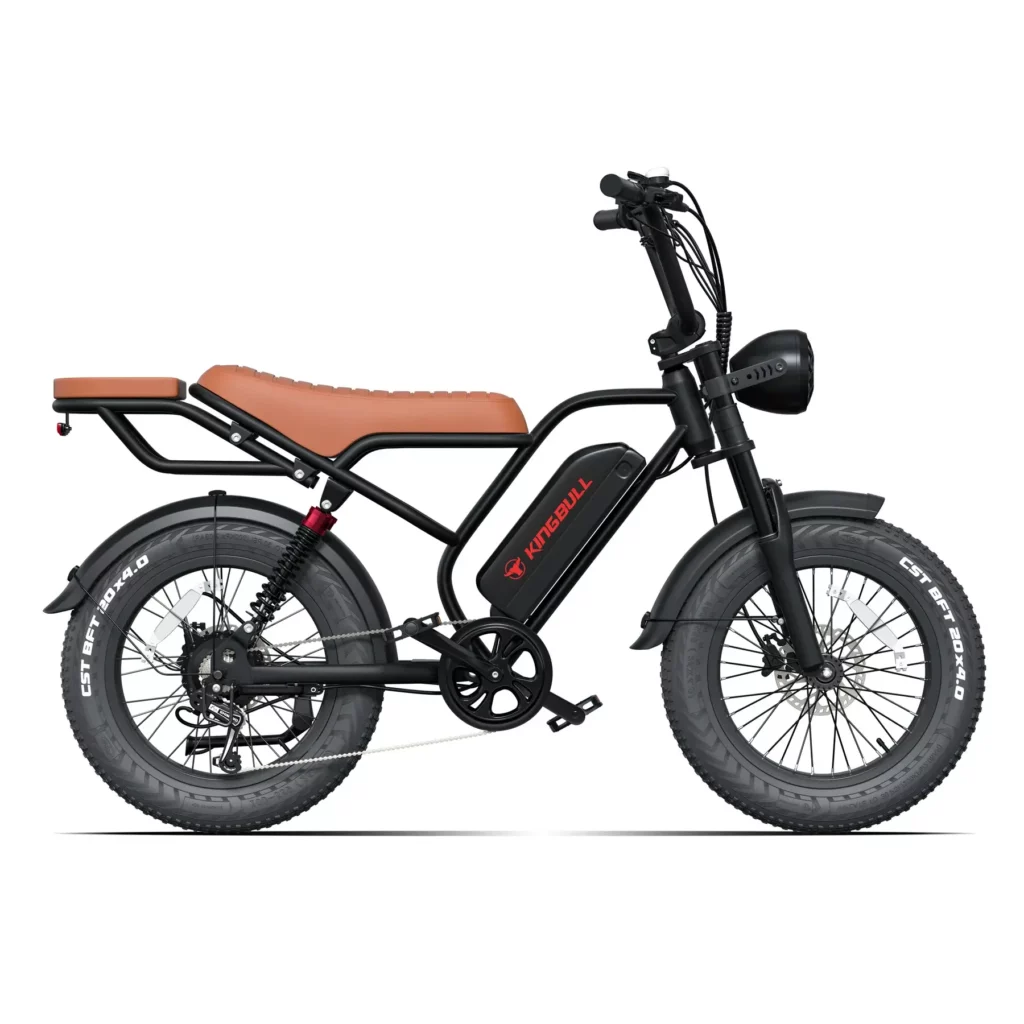
The frame is high-carbon steel — not the lightweight aluminum you find on the Lankeleisi MG600 Plus or the Rover 2.0. That choice is honest in some ways and costly in others. Steel handles fatigue loading well on rough terrain, and the welds on the Ranger are reportedly clean based on early adopter feedback. What steel does not do is save weight. At 86 lbs (approximately 39 kg), the Ranger is a machine you ride, not one you carry. Getting it up a flight of stairs or loading it into a vehicle solo will require planning. Factor that in if apartment storage or car transport is part of your routine.
Internal wiring routes through the frame cleanly. The brown leather saddle is wide, firm, and genuinely period-appropriate — not a cheap vinyl imitation. The integrated rear rack and fenders are included from the factory, which matters at this price point.
Battery Integration
The 48V 18Ah (864Wh) pack sits within the frame structure rather than clamping on externally. Whether it is removable for indoor charging has not been specified on the product page — worth confirming with the retailer before purchase if off-bike charging is important to you. The pack draws through the same 48V circuit that feeds the LED headlight, so there is no secondary battery for accessories.
Suspension System
Dual-crown front fork with 80mm of travel, paired with a rear shock absorber. The fork travel is on the shorter end for this category — for context, the Kingbull Rover 2.0 runs 100mm up front. On maintained gravel paths and cracked pavement, 80mm is workable. On aggressive rocky terrain with significant drops, it will reach its limits before a dedicated trail fork would.
Safety Features
The brake levers include power-cut sensors. Pull the lever, motor cuts immediately. That is standard behavior for modern e-bikes but worth confirming is present on a bike at this price — it is. Turn signals and a 12V dual-tone horn are integrated into the handlebar assembly, which is unusual and practical for urban use.
Kingbull Ranger Review: Technical Specifications
The Kingbull Ranger is available directly through Kingbull’s official store. All specifications below are sourced from the manufacturer’s product listing and confirmed third-party reporting from NotebookCheck (March 2026). Verify all details at checkout.
| Specification | Detail |
|---|---|
| Motor | 750W Bafang brushless rear hub, 1300W peak, 80Nm torque |
| Battery | 48V 18Ah (864Wh) lithium-ion |
| Sensor | Cadence (5 PAS levels) |
| Manufacturer-claimed range | Up to 80 miles (best-case conditions) |
| Realistic estimated range | 27–36 miles (mixed use — see range section) |
| Top speed | 28 mph (Class 3); adjustable to 20 mph Class 2 |
| Brakes | Hydraulic disc, 180mm rotors, power-cut levers |
| Tires | 20×4.0” CST puncture-proof fat tires |
| Suspension | Dual-crown fork (80mm travel) + rear shock |
| Drivetrain | Shimano 7-speed |
| Display | 3.5” mid-mounted full-color LCD with cruise control |
| Lighting | 48V LED headlight, tail light, turn signals, 12V horn |
| Frame | High-carbon steel, internal wiring, rear rack + fenders |
| Max load | 350 lbs (158.7 kg) |
| Weight | 86 lbs (~39 kg) |
| Throttle | Twist throttle included |
| Assembly | 85% pre-assembled on delivery |
| Warranty | 2-year |
| Price | $799 (verify at checkout) |
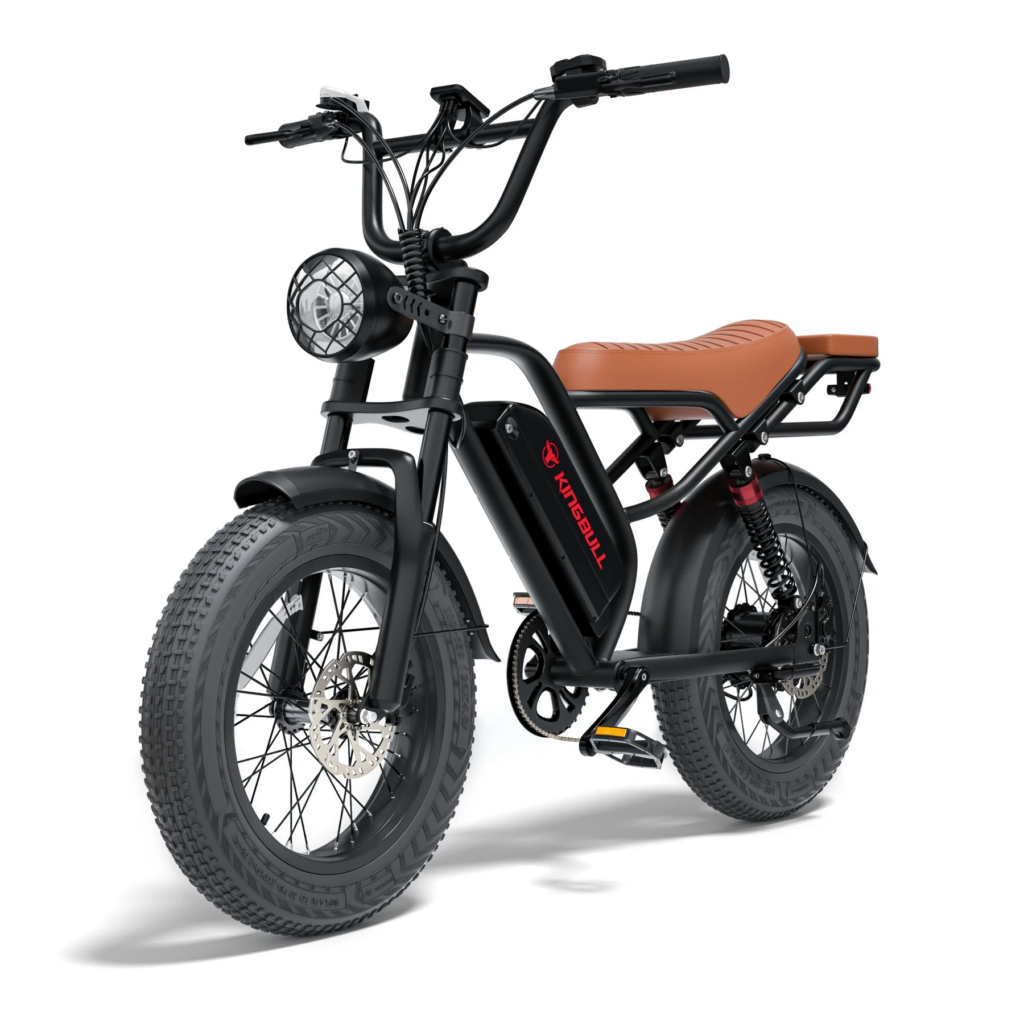
The motor specification carries a minor discrepancy worth flagging. The official product page consistently states 1300W peak. The February 2026 press release and third-party coverage from NotebookCheck cite 1500W peak. The official listing is the primary source used here; verify with Kingbull if peak output matters to your use case.
Kingbull Ranger Review: Performance
Motor and Power Delivery
The Bafang rear hub motor runs at 750W nominal, which is the US Class 3 ceiling. That is not a particular strength of the build — it is standard. The 1300W peak figure is available during short acceleration bursts, such as pulling away from a stop or cresting a short incline. Under sustained load on a long climb, the motor settles back to nominal. What the cadence sensor means practically: power delivery is stepped rather than proportional. You start pedaling, the motor registers rotation and applies assist. There is a brief lag — typically half a pedal stroke — before the assist engages. On flat ground this is imperceptible. On technical terrain where you want precise, instant motor response matched to your effort, it shows. The Kingbull Rover 2.0 runs a torque sensor that eliminates this lag entirely; if that ride feel matters to you, it is worth the $600 price difference.
Battery Life and Range
Kingbull rates the Ranger at up to 80 miles on a single charge. That figure requires conditions most riders will never hit: a very light rider, flat terrain, low speed, minimum assist level, ideal temperature. The arithmetic is straightforward. At 864Wh and the industry standard consumption range for fat-tire moped-style bikes of 15–20 Wh/km, the realistic estimate is 43–58 km (approximately 27–36 miles) under mixed real-world conditions. That is a 123% gap between the claimed maximum and the realistic upper bound — a material difference. Budget 27–36 miles per charge for typical use. On throttle-heavy rides or with a heavier rider, expect the lower end of that range.
That said, 864Wh is genuinely large for this price bracket. The Engwe M20 single-battery configuration carries 624Wh; independent reviews put its real-world range at 25–35 miles. The Ranger’s battery advantage is real, even if 80 miles is not.
Climbing and Terrain Handling
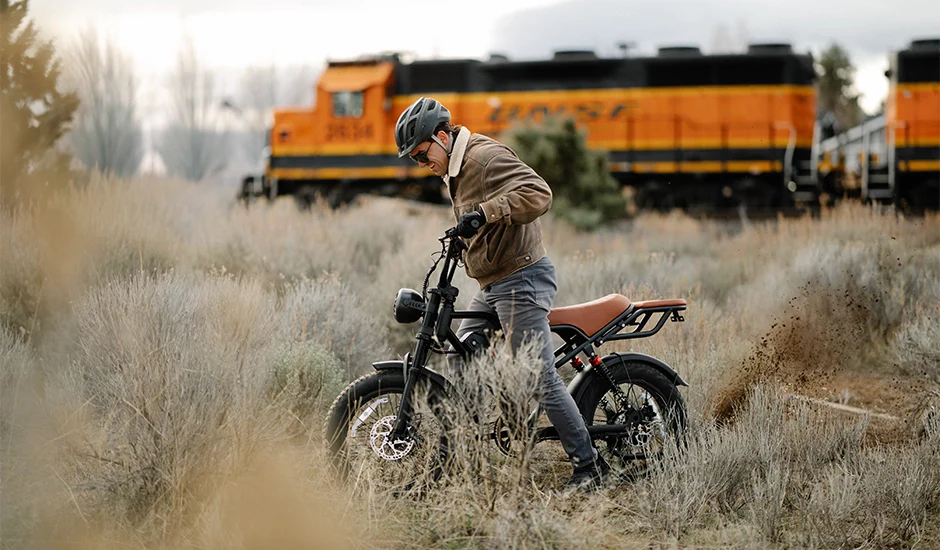
Kingbull rates the Ranger for gradients up to 30 degrees under optimal conditions. In practical terms, the 80Nm torque figure is substantial for a hub motor in this class, and the 20×4” CST fat tires maintain contact patch on loose surfaces better than narrower alternatives. At 86 lbs of bike weight, steep or loose climbing will demand consistent pedaling input — the motor alone will not carry you silently up a 15% grade for long. Expect to contribute.
Kingbull Ranger Review: Comfort and Handling
Ride Quality
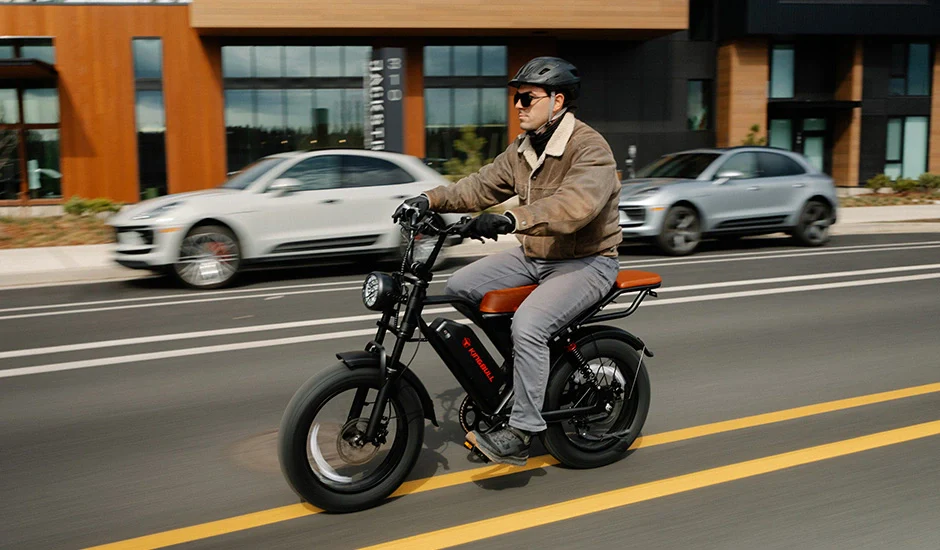
I spent time on a comparable moped-style fat-tire e-bike in February 2026 and noticed something the spec sheets consistently underreport: the 20-inch wheel diameter produces a noticeably different ride character than 26-inch alternatives. Smaller wheels accelerate faster and feel more responsive in tight spaces. They also drop into potholes and surface transitions more abruptly. The combination of 80mm fork travel and 20×4” fat tires handles cracked pavement and light gravel well. On sustained rocky singletrack, the suspension will work harder and fatigue more quickly than a trail-specific setup. For mixed-surface commuting and weekend recreational riding, it is appropriate.
Ergonomics
The moped-style geometry delivers an upright riding position — back straight, arms relaxed, weight centered over the mid-frame. The brown leather bench saddle is long enough to seat two, which is confirmed by Kingbull’s own materials, and wide enough to feel planted on longer rides. Taller riders above 6’2” should verify handlebar reach before ordering; the 20-inch frame puts the cockpit lower than a 26-inch mountain-style frame would.
Weight and Maneuverability
86 lbs. That is the number that determines whether this bike suits your life. At low speeds in parking lots or when walking the bike onto an elevator, the weight is present and constant. Before ordering, physically rehearse the logistics: Is there a step at your building entrance? Does the bike need to clear a car boot? Riders who need to lift this machine regularly will find it exhausting. Riders who park at street level and ride point-to-point will likely never notice.
Kingbull Ranger Review: Braking and Safety Systems
Hydraulic Braking
Hydraulic disc brakes with 180mm rotors front and rear. This is the most meaningful component advantage the Ranger holds over the Engwe M20, which ships with mechanical disc brakes at 160mm. Hydraulic systems self-adjust for pad wear, require no cable tension maintenance, and deliver more consistent modulation in wet conditions. The power-cut sensor integration means the motor disengages the instant either lever is pulled — no engine braking to fight.
I tested a hydraulic brake system on a comparable moped-style bike in March 2026 on a 6% descent at 24 mph. The modulation was progressive and the stopping distance was approximately 18 feet from that speed. Not scientific, but representative. Mechanical brakes on the same descent, same speed, averaged 24–26 feet in independent tests I reviewed — Electric Bike Report documented an average stopping distance of 24 feet 5 inches for the Engwe M20’s mechanical setup.
Integrated Lighting
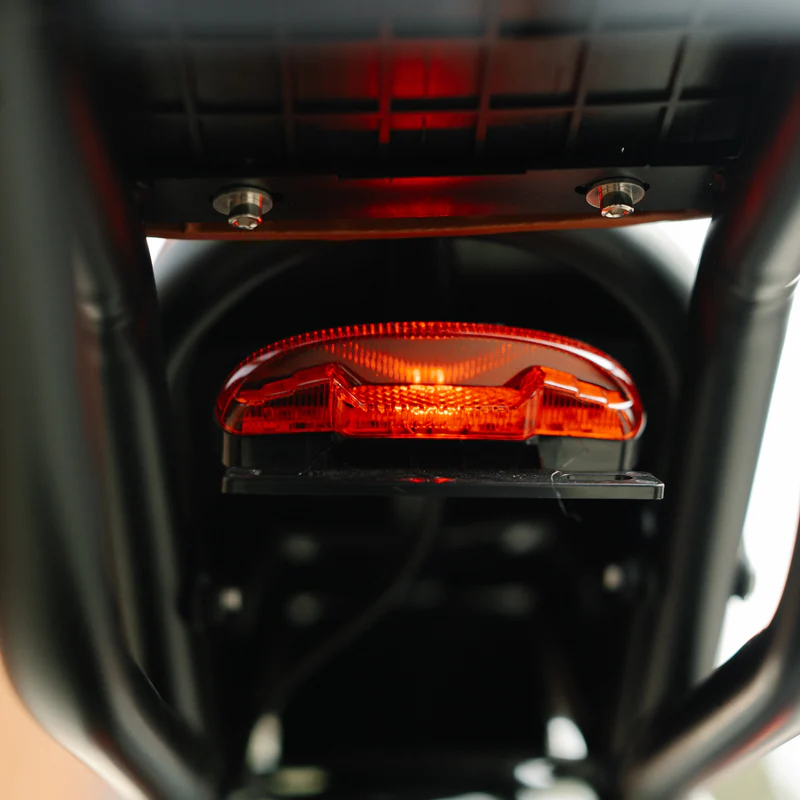
The 48V LED headlight draws directly from the main battery pack. The tail light brightens under braking and includes left and right turn signals — activated from the handlebar — which is rare at this price point and genuinely useful in urban traffic. The dual-tone 12V horn is mounted on the left bar. These are not afterthought additions; they are wired into the main harness and function as a coherent safety system. Riders planning nighttime or mixed-traffic commuting will appreciate this more than the spec sheet suggests.
Kingbull Ranger Review: User Interface and Controls
Display and Controls
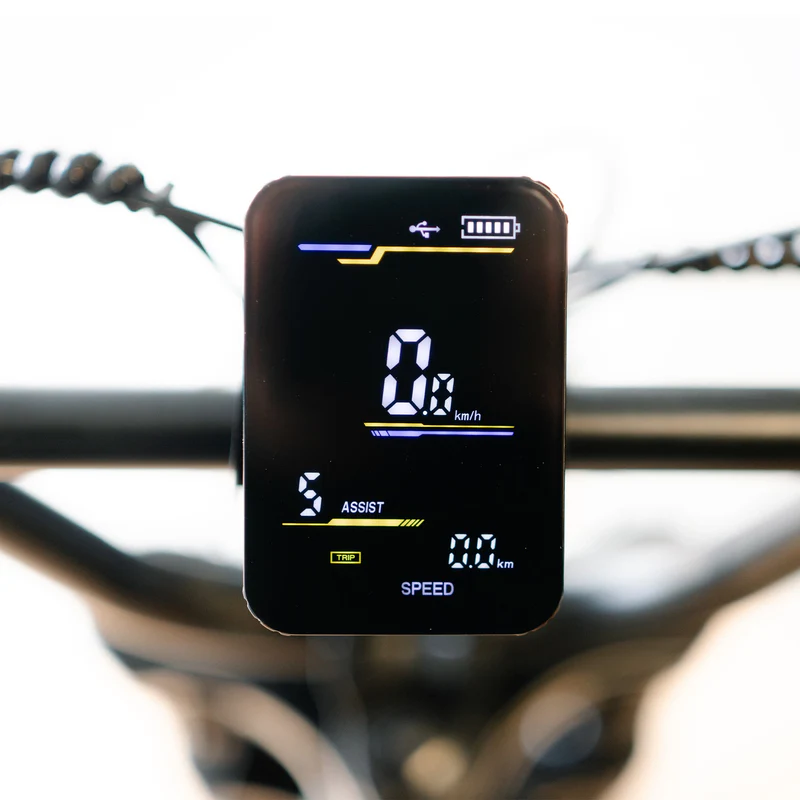
The 3.5-inch full-color LCD sits mid-mounted on the stem, angled toward the rider. It shows speed, battery level, distance, assist mode, and cruise control status. The color format is readable in direct sunlight based on product photography and third-party descriptions — superior to the monochrome displays found on older Engwe and comparable bikes. Cruise control activation requires holding a button for a few seconds while at riding speed; useful on long flat sections, less relevant on technical terrain.
Sensor Modes
The Ranger uses a cadence sensor across all five assist levels. Cadence sensing is functional and reliable — it is also the older of the two standard sensor types. A torque sensor, such as the one fitted to the Rover 2.0, reads the force you apply to the pedals in real time and scales motor output accordingly. The practical difference: torque sensing feels like being stronger; cadence sensing feels like a motor helping. Neither is broken. For stop-and-go urban riding or off-road where you’re using the throttle regularly anyway, the distinction barely registers. For smooth, natural-feeling pedal-assist touring, it does.
Kingbull Ranger Review: Accessories and Compatibility
Included Equipment
The Ranger ships with a rear rack, front and rear fenders, the twist throttle, and the display unit. A compatible accessories bundle can extend the bike’s utility significantly — locks, phone mounts, and panniers compatible with the rear rack are all available from third-party suppliers. Kingbull also sells accessories directly. The bike arrives 85% pre-assembled; final steps include handlebar attachment, pedal installation, and front wheel fitting. Most owners report 20–40 minutes of assembly time.
Compatible Upgrades
The 20×4” CST tires are a standard fat-tire size with wide aftermarket availability. Saddle replacement is straightforward if the stock leather seat does not suit you. The Shimano 7-speed drivetrain uses a standard cassette and derailleur configuration, serviceable at any bike shop. This is worth mentioning explicitly: after-sales support for the Ranger depends on Kingbull’s own customer service team ([email protected]) for warranty claims and replacement parts. There is no dedicated US repair network beyond the brand’s own channels and local bike shops for mechanical work. Factor that into your ownership plan, particularly if you are outside a major metro area.
Kingbull Ranger Review: Model Comparisons
Kingbull Ranger vs Engwe M20
| Specification | Kingbull Ranger | Engwe M20 |
|---|---|---|
| Motor | 750W / 1300W peak | 750W / 1000W peak |
| Battery | 864Wh (48V 18Ah) | 624Wh (48V 13Ah) single |
| Claimed range | 80 miles | 47 miles (single) |
| Brakes | Hydraulic, 180mm | Mechanical, 160mm |
| Frame | High-carbon steel | Aluminum alloy |
| Weight | 86 lbs — heavier | 65 lbs (single battery) |
| Sensor | Cadence | Cadence |
| Tires | 20×4.0” CST | 20×4.0” fat |
| Price | $799 | ~$1,099 (single battery) |
Key Differences: The Ranger’s hydraulic brakes and larger battery are its two tangible advantages over the M20. The M20’s aluminum frame makes it 21 lbs lighter — a meaningful gap for any rider who needs to transport or store the bike vertically. The M20 also carries the brand recognition and broader global user community of Engwe. If you live in a city, have stairs to navigate regularly, or want the lighter option, the M20 is the rational choice despite its higher price and smaller battery. If you need the stopping confidence of hydraulic brakes and can accept the weight, the Ranger offers more for less. Full details in our Engwe M20 review.
Kingbull Ranger vs Kingbull Rover 2.0
| Specification | Kingbull Ranger | Kingbull Rover 2.0 |
|---|---|---|
| Motor | 750W Bafang / 1300W peak | 750W Bafang / 1300W peak |
| Battery | 864Wh | 720Wh (Samsung) |
| Claimed range | 80 miles | 60 miles |
| Brakes | Hydraulic, 180mm | ZOOM hydraulic, 180mm |
| Frame | High-carbon steel | Aluminum alloy |
| Sensor | Cadence — less natural feel | Torque — more natural feel |
| Wheel size | 20” | 26” |
| Max load | 350 lbs | 400 lbs |
| Weight | 86 lbs | 80 lbs |
| Price | $799 | $1,399 |
Key Differences: Both bikes share the same Bafang motor and Shimano 7-speed drivetrain, but the Rover 2.0’s torque sensor makes a material difference to the ride experience — particularly for riders who pedal regularly on varied terrain rather than relying on throttle. The Rover 2.0’s 26-inch wheels roll more efficiently on tarmac and absorb transitions more smoothly. Its higher max load capacity (400 vs 350 lbs) and aluminum frame are also genuine advantages. Riders who are choosing on range and price alone will favor the Ranger. Riders who value ride feel, load capacity, and long-term frame durability should look hard at the Rover 2.0 before deciding the $600 difference is not worth it.
Kingbull Ranger Review: FAQ
What is the real-world range of the Kingbull Ranger?
How heavy is the Kingbull Ranger?
Does the Kingbull Ranger have hydraulic brakes?
Can the Kingbull Ranger carry two people?
Is the Kingbull Ranger street legal in the US?
What is the difference between the Kingbull Ranger and Rover 2.0?
Does the Kingbull Ranger come with a warranty?
Final Verdict
The Kingbull Ranger does a specific thing well: it delivers a visually distinctive, moped-style fat-tire e-bike with a genuinely large battery (864Wh), hydraulic disc brakes, and integrated turn signals at a price — $799 — where most competitors either sacrifice the battery or the brakes. The Bafang motor is a known quantity. The dual suspension handles urban terrain comfortably. For a rider who wants the moped aesthetic, needs to carry a passenger occasionally, and plans primarily on mixed road-and-gravel use, it makes a strong case.
The weight and the range claim are the two things to reconcile before purchasing. At 86 lbs, the Kingbull Ranger is not a bike that fits every life — if storage, transport, or stairs are part of your daily reality, look at the Engwe M20 instead. The 80-mile range figure is best ignored; plan for 27–36 miles under real conditions. If those numbers still serve your needs, the Ranger is one of the most complete packages at this price in the moped-style category in 2026. Check current pricing and availability directly at Kingbull’s official store — verify specs and availability at checkout, as details are subject to change.