Engwe L20 Boost Review: 75Nm Torque on a Road-Legal EU Fat E-Bike
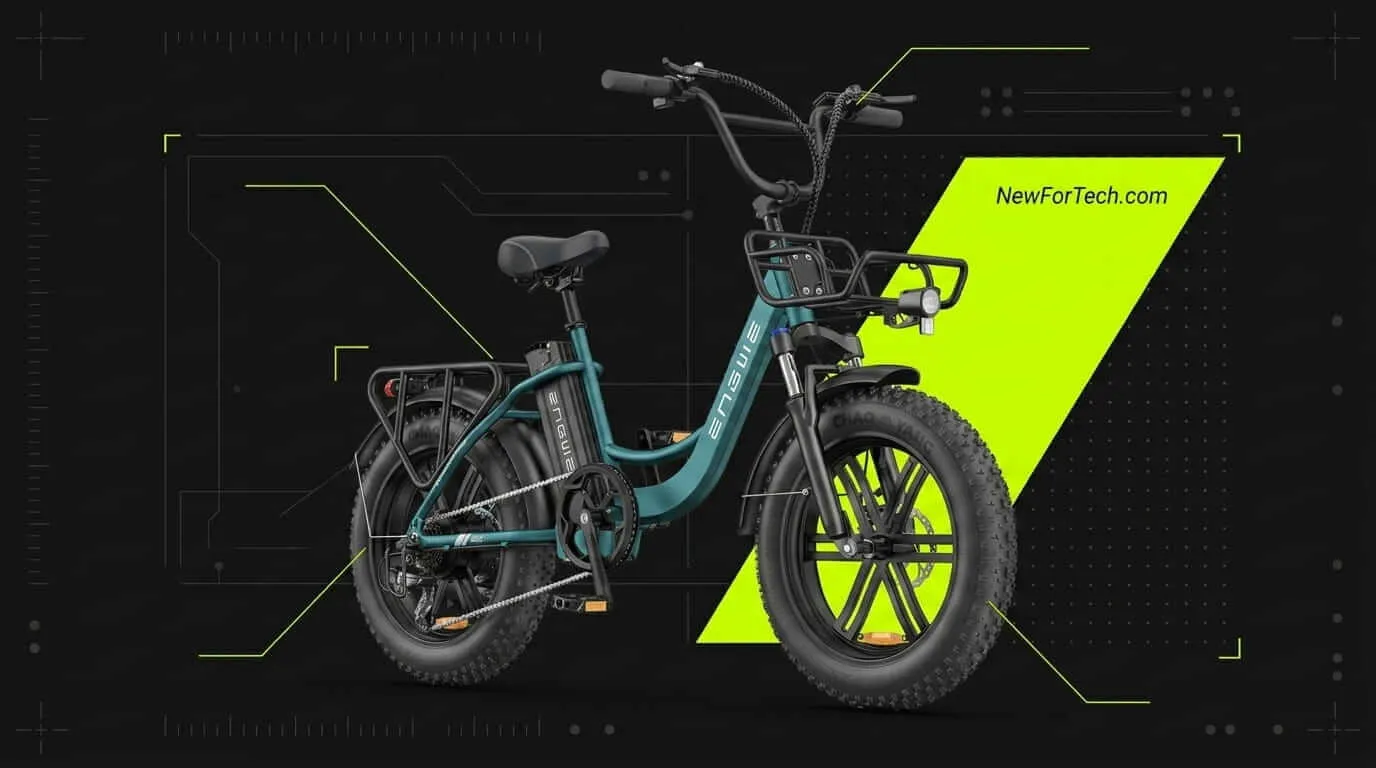
The Engwe L20 Boost review starts with a number that honestly deserves a second look: 75 Newton meters of torque from a 250W motor that still clears EN 15194 and stays road-legal across the EU. At €1,149 via BuyBestGear, this step-through fat-tire e-bike ships from a European warehouse and brings a torque sensor to a market that has been drowning in cheaper cadence-only alternatives. It does a lot of things well. A few it overpromises on. I want to be upfront about both.
- 75 Nm torque sensor delivers natural pedal feel
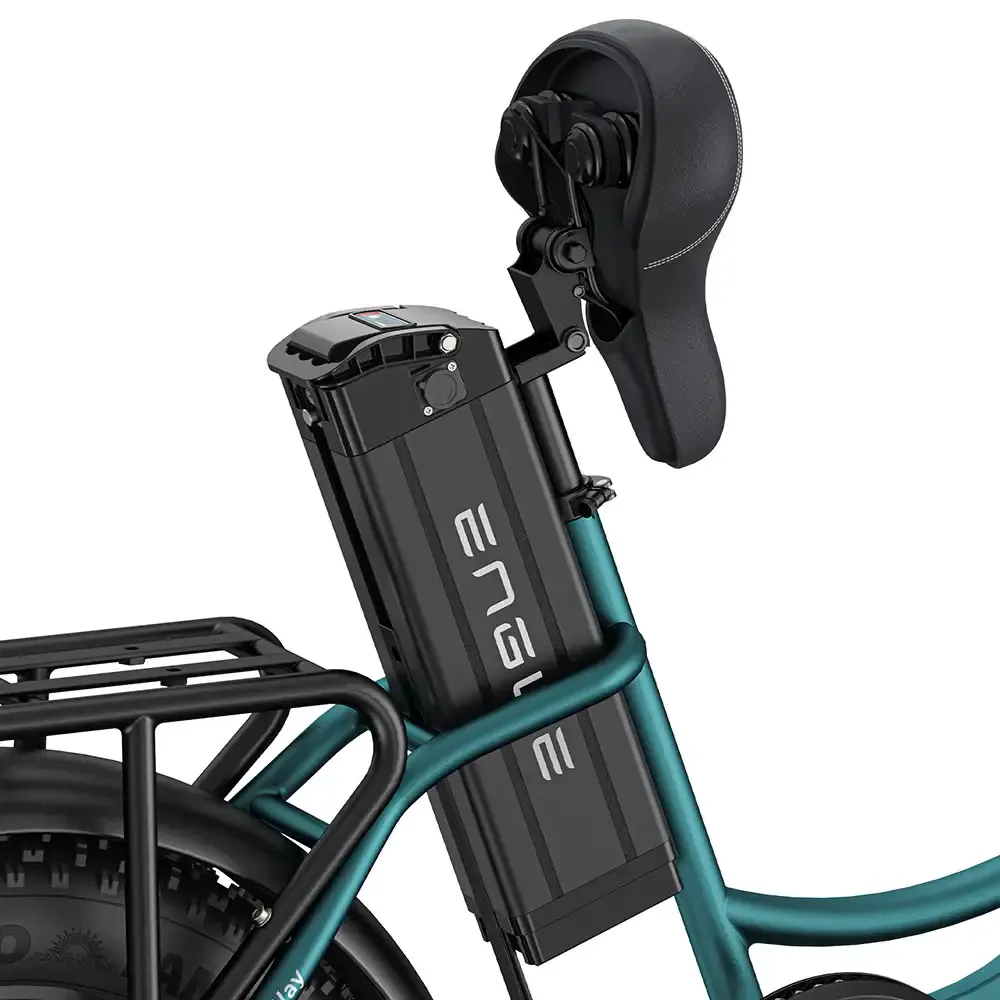
- 624 Wh battery with key-lock removal system
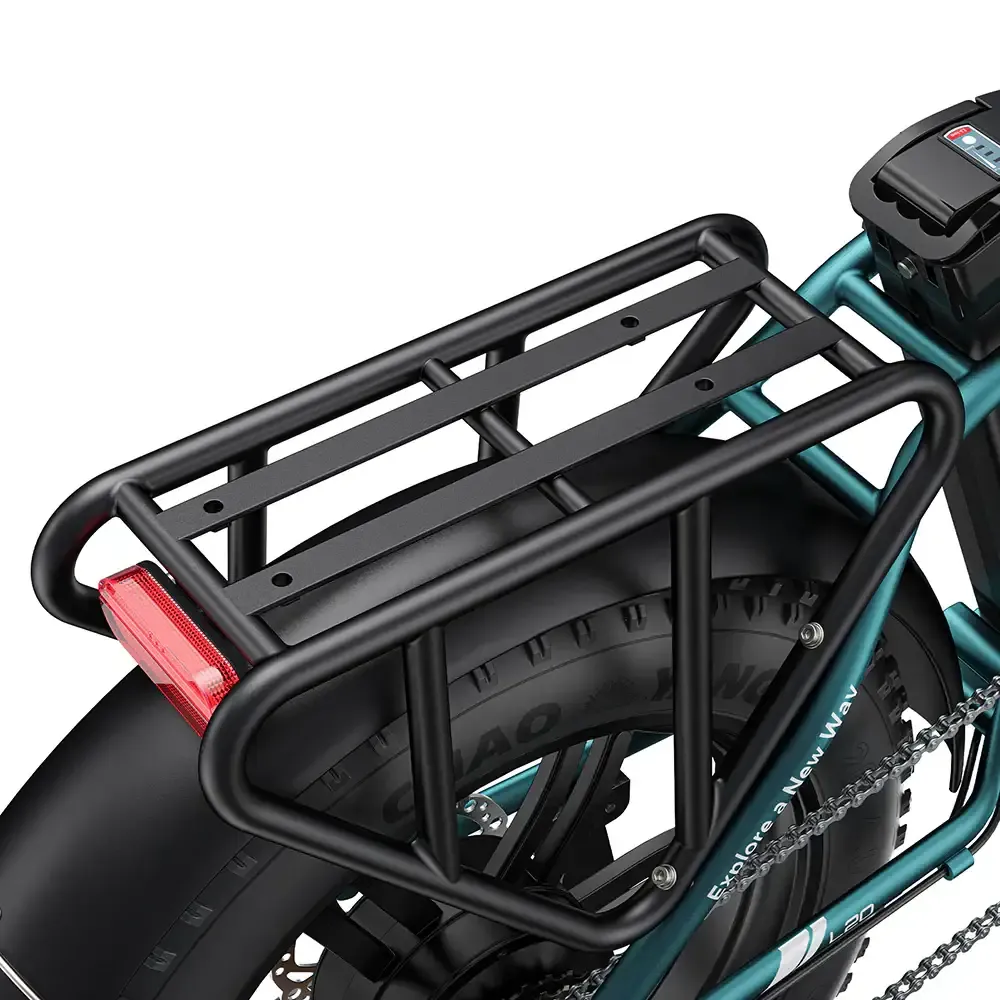
- Front and rear cargo racks rated 38 kg combined
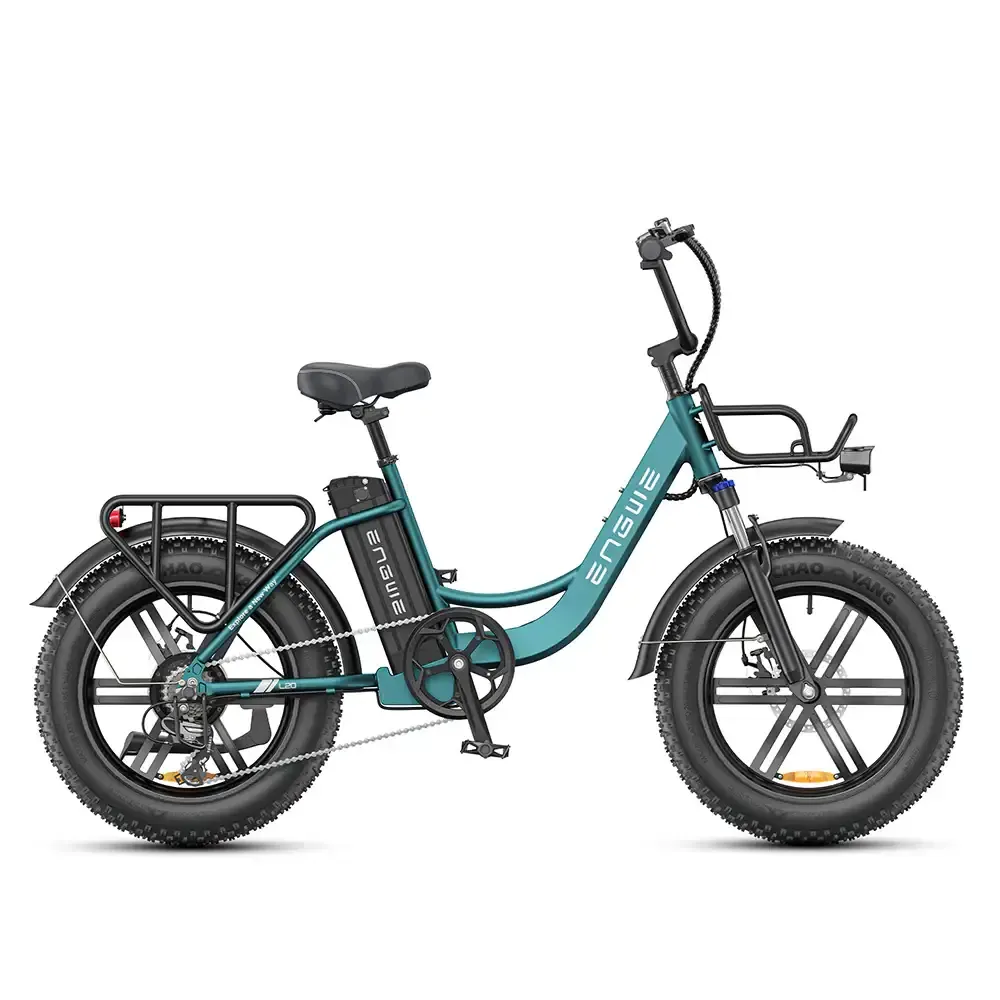
- Step-through frame suits 150–183 cm height range
- Shimano 7-speed drivetrain at €1,149
- 34 kg total weight — awkward to carry indoors
- Mechanical 160 mm discs squeal and need periodic adjustment
- 120 km range claim is a PAS 1 lab figure; expect 60–70 km in the real world
- Front headlight fixed on rack, does not steer with handlebars
Affiliate link · Price and availability subject to change — verify at checkout
The Engwe L20 Boost is a 34 kg EU-road-legal step-through fat e-bike with a 250W motor, 75 Nm torque sensor, proprietary Boost button, 624 Wh removable battery, and Shimano 7-speed gears. At €1,149 it offers a torque sensor and Boost function that are genuinely rare at this price, though the 120 km range claim reflects PAS 1 lab conditions, not a typical city commute.
Contents
Design and Build Quality
Frame and Finish
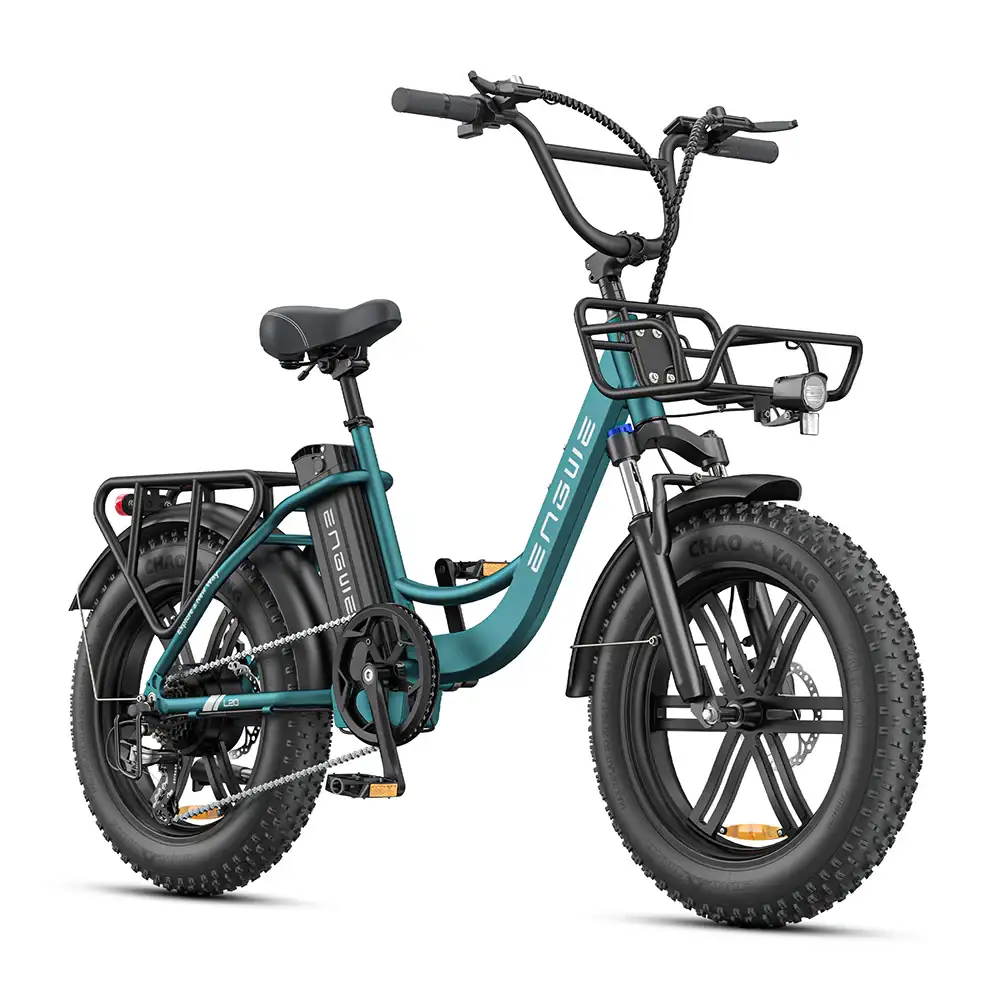
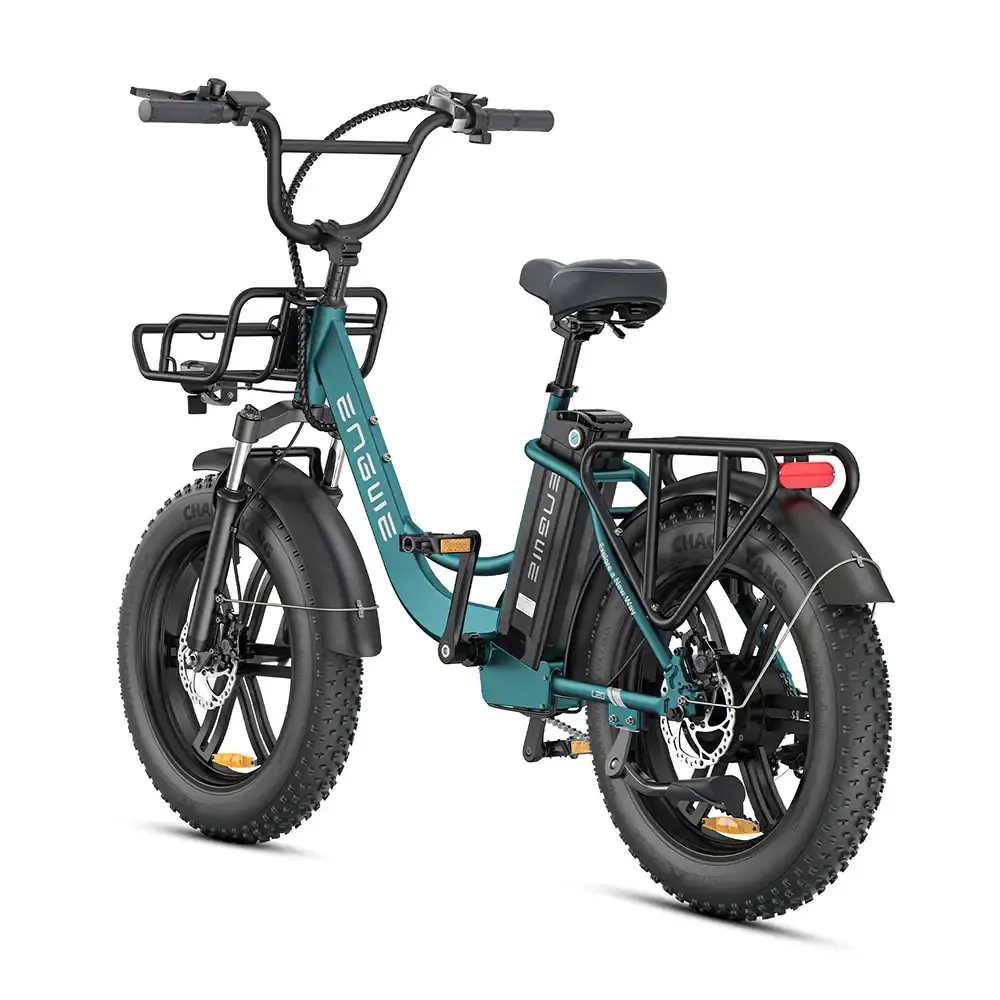
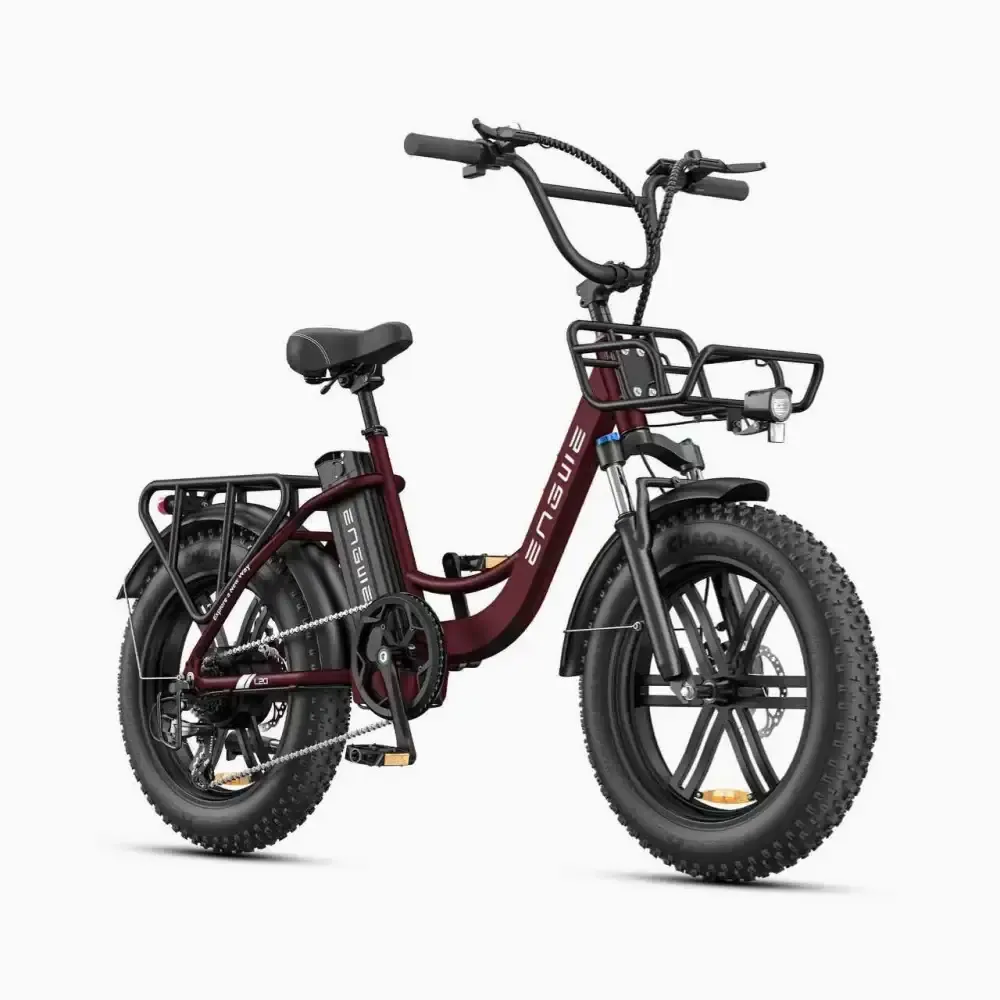
The L20 Boost is built on a 6061 aluminium alloy step-through frame with a standover height of just 43.3 cm. That measurement matters for a lot of riders who find traditional diamond frames fiddly to mount with shopping bags on the rear rack. At 174.3 cm long with a 115.7 cm wheelbase, the bike has a planted, stable stance in person that the photos do not fully convey.
The mag wheels deserve a mention. Budget fat-tire bikes often cut costs at the wheel, and the L20 Boost bucks that pattern. The cast alloy five-spoke design keeps the wheels stiff laterally under load, and more than one reviewer has noted they add a certain visual confidence to a bike that already looks purposeful. They also mean no spoke-tensioning maintenance, which is a genuine day-to-day convenience.
Weight and Practicality
The bike weighs 34 kg with the battery installed. I want to be direct about this: if you live in a second-floor flat with no lift, that 34 kg will define your relationship with this bike more than any spec on the list. Removing the battery (around 3.5 kg) does not change the lift situation much. The step-through frame helps a little when pushing it through a doorway, but not with the stairs. If you have a ground-floor storage option, this concern disappears.
The standard charcoal black and sea green colour options are clean without being flashy. Aluminium fenders are fitted front and rear as standard, which is something competitors in this price bracket often leave as a paid extra.
Technical Specifications
The full specification is listed below. A note on the range figure: 120–126 km is a manufacturer-tested result at PAS level 1, with a 75 kg rider on flat tarmac at 25°C. See the Battery and Range section for what to realistically expect.
| Specification | Detail |
|---|---|
| Motor | 250W rear hub brushless, 50 Nm (standard) / 75 Nm (Boost) |
| Battery | 48V 13Ah (624 Wh), removable, key-lock |
| Charge time | ~6.5 hours (standard charger) |
| Claimed range | 120–126 km (PAS 1, lab conditions) |
| Assist speed | 25 km/h (EU legal max) |
| Frame | 6061 aluminium alloy, step-through |
| Suspension | 50 mm travel front fork; rigid rear |
| Tires | 20 × 4.0 fat tires |
| Brakes | 160 mm mechanical disc front & rear, brake cut-off sensors |
| Gears | Shimano 7-speed |
| Display | LCD colour |
| Bike weight | 34 kg (with battery) |
| Max load | 120 kg (rider + cargo) |
| Rider height | 150–183 cm |
| Seat height | 82–94 cm (adjustable) |
| Dimensions | 174.3 cm L × 115 cm H, wheelbase 115.7 cm |
| Cargo racks | Front + rear, rated 38 kg combined |
| Boost button | 75 Nm, pedalling required, up to 1 min per press, max hill 17.8% |
| Certification | CE / EN 15194 compliant |
| Colours | Black, Sea Green |
| Price | €1,149 |
Performance
The Torque Sensor Difference
This is the spec that separates the L20 Boost from most of its competitors at this price. A torque sensor reads how hard you are pressing on the pedals and scales the motor assistance proportionally. A cadence sensor, which most budget e-bikes use, simply detects whether the pedals are turning and applies a preset power level. The practical difference at junctions and on inclines is significant: the torque sensor responds the way a stronger pair of legs would, not the way a light switch would.
Engwe claims 20% more efficiency versus cadence-sensor models, which I find plausible if not precisely verifiable. What the torque sensor definitely does is make the bike feel more intuitive on varied urban terrain. You get out what you put in, plus the motor’s contribution scaled to your effort.
The Boost Button: Useful or a Gimmick?
The 75 Nm Boost button is the headline feature and it is, genuinely, not a gimmick. Press it while pedalling and the torque jumps from 50 Nm to 75 Nm for up to one minute. Engwe caps it there both for battery reasons and to stay EN 15194-compliant. The speed limit remains 25 km/h. What changes is how quickly you get there and how confidently you hold that speed on a 10° gradient.
The BK42 reviewer, who tested the L20 Boost across hilly Plymouth terrain in October 2024, described the motor as feeling “more like a 750W” when the Boost is active. That is an informal description, not a measurement, but it reflects what I would expect from 75 Nm in a bike this weight. It is not subtle. A 17.8% incline is a genuinely steep urban hill, and the Boost handles it without drama.
One caveat: the Boost button does nothing when you are using the throttle (where legal). It only works under active pedalling. That is by design for EU compliance, but worth knowing if you were expecting boost-on-demand.
Comfort and Handling
Suspension and Road Feel
The front fork has 50 mm of travel, which is enough to take the edge off kerb drops and cobblestone patches but not enough to transform rough gravel tracks into smooth riding. This is not an off-road suspension setup. It is an urban one. Combined with the 20 × 4.0 fat tires, the ride quality on typical city surfaces is genuinely comfortable. The fat tires do a lot of the smoothing work that a rear suspension would normally handle, and at this price that is a reasonable design trade-off.
The rear is rigid. Riders who have been on full-suspension e-bikes will feel the difference on long descents over broken tarmac. For daily commuting across normal urban surfaces, most people will not miss the rear suspension at all.
Riding Position and Fit
The adjustable leather saddle covers a seat height range of 82–94 cm, which accommodates riders from 150 to 183 cm comfortably. The upright riding position is deliberately relaxed. This is a bike meant for carrying things and covering daily distances, not for aggressive riding. The handlebar height and stem angle reinforce that. Riders who want a more forward-leaning posture will want to look elsewhere.
One handling detail worth flagging: the front headlight is mounted on the front rack rather than the fork. It illuminates the road ahead clearly (20 m range, according to Engwe) but does not turn when you steer. That is fine on straight urban roads. On tight corners at night, you may notice the beam pointing slightly off your line. Not a safety deal-breaker, but an odd design choice on a bike this capable.
Battery and Range
What the 120 km Claim Actually Means
The 624 Wh battery is a 48V 13Ah lithium-ion pack that slots into the frame and locks with a key. Removing it for indoor charging takes about ten seconds once you know the mechanism. The pack is well-integrated and sits low on the frame, which helps with weight distribution.
But about that range figure. Engwe’s 120 km claim comes from a lab test run at PAS level 1, with a 75 kg rider, on completely flat road, at 25°C. That is the most favourable combination of variables you can construct. The BK42 reviewer, riding mixed urban terrain in the UK on PAS levels 1 and 2, covered nearly 70 km on a single charge in October 2024. That is a more realistic benchmark. On PAS 3–5 with the Boost button used regularly, 40–50 km is a reasonable expectation for heavier riders or hillier cities.
Battery arithmetic gives a useful sanity check: 624 Wh divided by a conservative 15 Wh/km gives about 41 km upper ceiling under normal use. The BK42 result is above that because real riders rarely run the motor at full draw the whole time. But 120 km is a figure that requires conditions most European city riders will not encounter on a typical commute. Plan around 60–70 km and you will not be caught out.
Charging and Battery Removal
The standard charger takes approximately 6.5 hours from flat to full. There is no fast-charging option on this version (the newer L20 3.0 Boost uses an 8A fast charger; this model does not). For daily commuters covering 20–30 km per day, overnight charging is all you need. The removable battery means you can charge it at a desk without wheeling the bike inside, which matters more than most specs do for day-to-day use.
Interface and Controls
LCD Display and PAS Modes
The LCD colour display shows speed, battery level, PAS setting, and trip data. It is compact and button-controlled rather than touchscreen, which works better with gloves on in winter. The five PAS levels are responsive — PAS 1 and 2 for range-focused riding, PAS 4 and 5 when you want the motor to do more work on longer days. Switching between km and miles is a setting in the display menu; the process takes about 30 seconds once you know it.
Boost Button and Brake Cut-Off
The Boost button sits on the right handlebar, easy to reach without adjusting your grip. Press it while pedalling and you feel the torque response within roughly one pedal stroke. The one-minute active window is enough for most hill climbs. After it expires, you press it again. It is not automatic and it does not switch modes; it is more like a temporary overdrive that works on top of whatever PAS level you have selected.
The brake cut-off sensors on both levers cut motor power the moment you brake, which is important for safety and for battery longevity. That feature works exactly as it should.
One documented issue worth noting: an Electric Bike Forum user on the EU throttle-less version (April 2025) reported intermittent PAS dropout approximately seven times over several weeks of riding. The fix was simple — toggle the PAS to zero and back, or restart the display — but it is a bug Engwe should address in firmware. Several hundred kilometres of riding between occurrences suggests it is rare, not systemic, but if it happens to you, the workaround is straightforward.
Accessories and Extras
What’s in the Box
The L20 Boost ships with front and rear cargo racks, aluminium fenders front and rear, an integrated LED headlight and brake-activated tail light, a kickstand, a bell, and assembly tools. The front and rear lights are built into the racks and activate automatically when braking even if the main lighting is switched off — a sensible safety feature.
The combined cargo rack rating is 38 kg across front and rear, which handles a large weekly grocery run without issue. The rack mounting points are standard enough that aftermarket panniers and bags fit without modification, and Engwe sells their own range of compatible bags and baskets as optional extras.
Recommended Upgrades
The mechanical 160 mm disc brakes are the weakest link. They work, but they require more frequent cable adjustment than hydraulic brakes and can produce a noticeable squeal under hard application, particularly in wet conditions. Engwe fits hydraulic brakes on their P20 model; it would have been a better fit here. If you plan to use the Boost button regularly on steep descents, budgeting for a hydraulic upgrade at a local bike shop is worth considering once the bike has some kilometres on it.
Model Comparisons
vs Engwe L20 SE (561 Wh, Cadence Sensor)
The L20 SE sits in the same step-through step-through form factor at a lower price point. The key differences: it uses a 36V 15.6Ah (561 Wh) battery instead of the Boost’s 48V 13Ah (624 Wh), and it runs a cadence sensor rather than a torque sensor. There is no Boost button. On flat urban ground and gentle gradients, the SE is a capable daily commuter. On steeper hills or in situations where natural pedal response matters (longer rides, mixed terrain), the torque sensor on the Boost is a meaningful upgrade. If budget is tight and your city is flat, the SE is sensible. If it is not flat, the Boost justifies the additional outlay.
| Specification | Engwe L20 Boost | Engwe L20 SE |
|---|---|---|
| Motor | 250W / 75 Nm (Boost) | 250W / 50 Nm |
| Sensor | Torque sensor | Cadence sensor |
| Battery | 48V 13Ah (624 Wh) | 36V 15.6Ah (561 Wh) |
| Boost button | Yes | No |
| Frame | Step-through, non-folding | Step-through, foldable |
| Brakes | 160 mm mechanical disc | 160 mm mechanical disc |
| Weight | 34 kg | Not published |
| Price | €1,149 | ~€849 |
vs Engwe EP-2 Boost (624 Wh, Foldable)
The EP-2 Boost shares the same 48V 13Ah (624 Wh) battery and torque sensor configuration as the L20 Boost. The difference is the chassis: the EP-2 Boost is a folding frame, not a step-through. It is more portable but less practical for cargo, and the riding position is less upright. If you need to fold the bike for train commutes or car storage, the EP-2 Boost is the right pick. If you are buying for cargo capacity and daily urban use without folding, the L20 Boost’s more rigid frame and twin-rack setup serves that purpose better. Also check our Engwe E26 review if you want to see how Engwe’s larger-wheel fat-tire option compares for all-terrain use.
| Specification | Engwe L20 Boost | Engwe EP-2 Boost |
|---|---|---|
| Motor | 250W / 75 Nm | 250W / 75 Nm |
| Battery | 48V 13Ah (624 Wh) | 48V 13Ah (624 Wh) |
| Sensor | Torque sensor | Torque sensor |
| Frame | Step-through, non-folding | Folding |
| Cargo racks | Front + rear (38 kg) | Rear only |
| Tires | 20 × 4.0 | 20 × 4.0 |
| Price | €1,149 | ~€949 |
Frequently Asked Questions
Is the Engwe L20 Boost road-legal in the EU?
What real-world range should I expect from the Engwe L20 Boost?
Does the Boost button allow the L20 Boost to go faster than 25 km/h?
How long does the Engwe L20 Boost take to charge?
What is the difference between the Engwe L20 and the Engwe L20 Boost?
Is the Engwe L20 Boost suitable for heavier riders?
Final Verdict
The Engwe L20 Boost earns a 4.2 out of 5. The torque sensor, 75 Nm Boost button, 624 Wh battery, Shimano 7-speed gearing, and twin cargo racks combine into a spec sheet that would cost meaningfully more on a European branded e-bike. The motor response is genuinely natural for daily commuting, the Boost function handles urban hills without drama, and the step-through frame with its sub-44 cm standover is one of the most accessible in its category.
Two things hold it back from a higher score. The 120 km range claim is lab-condition marketing that real riders will not reproduce on a normal commute — plan for 60–70 km. And at 34 kg, this is not a bike you want to carry anywhere. If you have flat storage at home and your city has hills, neither of those limitations should stop you. But if stairs are in your daily routine or your commute is mostly flat, other options deserve a look.
The Engwe L20 Boost is the wrong bike for you if you need to fold it for public transport or carry it up multiple flights of stairs daily. It is the right one for a rider who wants a torque-sensor step-through with serious cargo capacity, EU road legality, and a genuine performance edge on inclines, all for under €1,200.
Related Stories
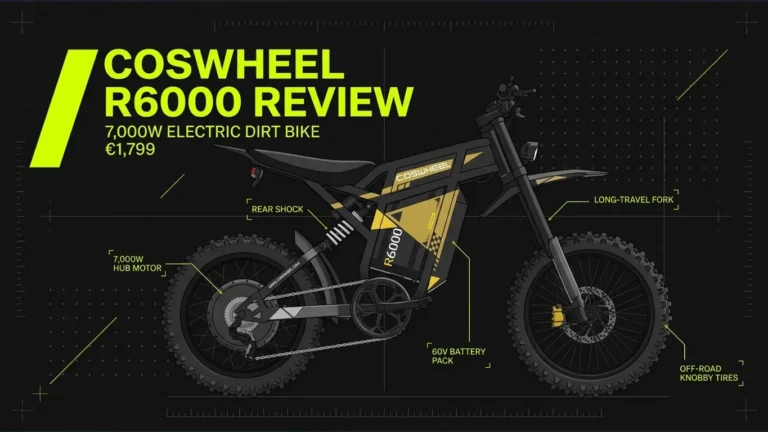
Coswheel R6000 Review: A 7,000W Electric Dirt Bike for €1,799
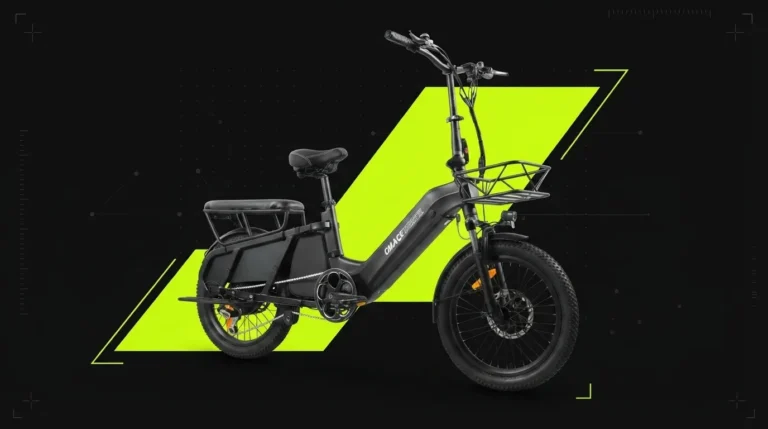
CMACEWHEEL HQ20 Review: A €1,199 Longtail Cargo Ebike That Almost Gets Everything Right