MWC 2026 Recap: The Biggest Phones, Gadgets, and Announcements From Barcelona

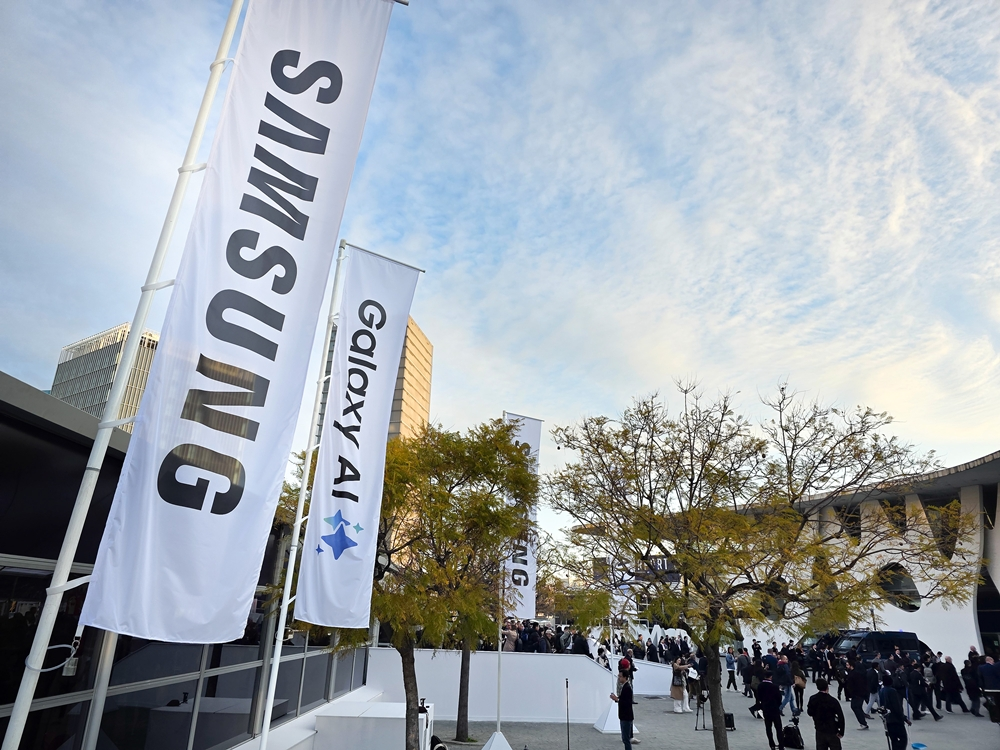
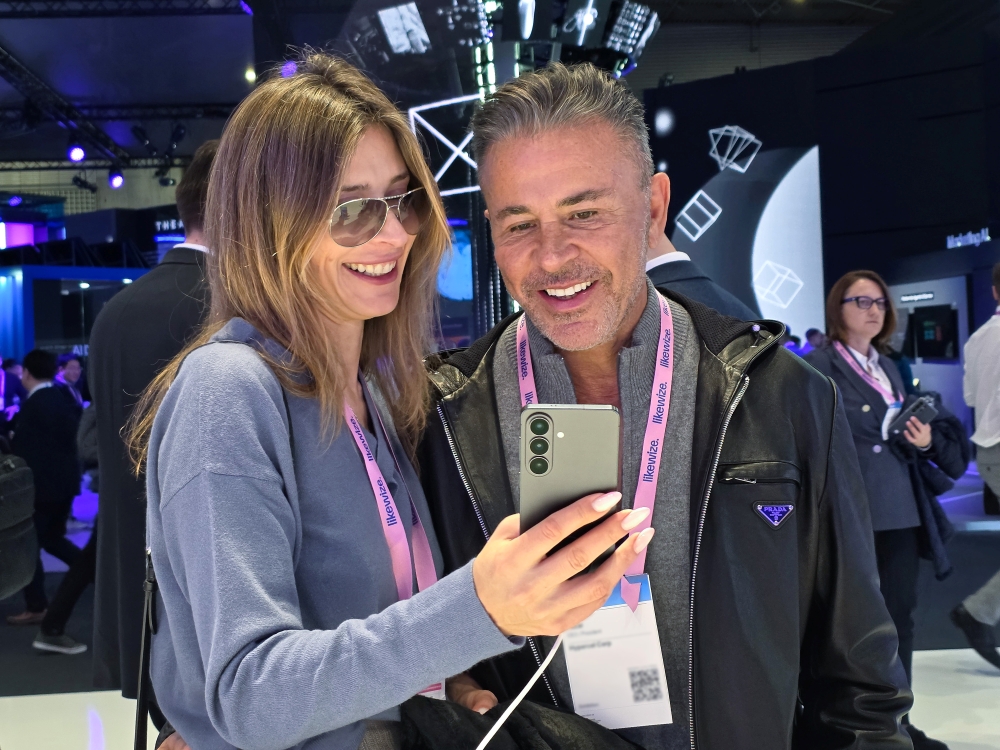
Walking into MWC 2026 expecting a phone show and finding a humanoid robot pouring tea in Hall 3 — that’s the moment when this year’s event announced what it had become. The 20th anniversary of Mobile World Congress in Barcelona ran March 2–5 at Fira Gran Via, drawing nearly 105,000 attendees despite a wave of European travel disruptions that thinned the opening-day crowds significantly.
The show ran under the theme “The IQ Era.” GSMA Director General Vivek Badrinath opened by naming three urgent challenges: completing the global 5G rollout, scaling AI across mobile infrastructure responsibly, and tackling the explosion of organized mobile fraud. Alongside those macro topics, eight exhibition halls filled with camera flagships, ultra-thin foldables, service robots, satellite connectivity partnerships, Wi-Fi 8 chips, and at least one phone with a robotic arm on its back.
Understanding what actually happened in Barcelona — and what it means for the devices you’ll buy in the next 12 months — requires cutting through the usual summit noise. That’s exactly what this recap covers. Our recent deep-dive on the Samsung Galaxy A56 5G Enterprise provides useful backdrop for Samsung’s broader 2026 device strategy, which was front and center across the show floor this week.
MWC 2026 ran March 2–5 in Barcelona, Spain, at Fira Gran Via, drawing close to 105,000 attendees under the theme “The IQ Era.” The biggest announcements included the Xiaomi 17 Ultra camera flagship (€1,499), the Honor Magic V6 foldable with a record 6,660mAh silicon-carbon battery, Motorola’s book-style Razr Fold with seven years of OS updates, and Qualcomm’s Snapdragon Wear Elite — the first-ever 3nm wearable chip with on-device AI capable of running 2 billion parameters.
What MWC 2026 Actually Means (And What Most People Get Wrong)
Calling MWC a phone show underestimates it by about half. The most accurate framing is that it’s the annual moment when the entire connected technology supply chain — chipmakers, carriers, device manufacturers, enterprise software vendors — shows up to compare notes in public. Phones are just the most photogenic part.
The widespread misconception is that the show’s significance maps directly to the number of flagship smartphones announced. By that measure, 2026 was quiet: Samsung launched the Galaxy S26 at Unpacked weeks earlier, Apple skipped the event entirely (as it has for years), and Google had nothing new on a stage. But the three biggest technical announcements at the show — Qualcomm’s Snapdragon Wear Elite, the Wi-Fi 8 FastConnect 8800 chip, and the Ericsson–Intel 6G development partnership — will matter more to your next three device purchases than any individual phone announced this week.
Here’s what most recaps gloss over: the Snapdragon Wear Elite is built on a 3nm process — the same node as current flagship phone processors — and includes a Hexagon NPU capable of running 2 billion parameters on-device. Running AI models on your wrist without a cloud connection means faster responses, no network latency spike, and meaningfully better privacy for health data. Google’s Wear OS team confirmed the platform is being rebuilt around these new capabilities, and Samsung immediately announced the next Galaxy Watch will use it.
On the infrastructure side, Qualcomm’s FastConnect 8800 chip brings Wi-Fi 8 to phones, laptops, and tablets — with theoretical peak speeds reaching 11.6Gbps over the previous Wi-Fi 7 generation. Vodafone announced a partnership with Amazon’s LEO satellite network to extend 4G and 5G coverage across rural Europe and Africa. Starlink and Deutsche Telekom confirmed a European satellite mobile service targeting 2028. These aren’t product announcements. They’re the plumbing that makes future device features possible.
According to the GSMA’s official MWC 2026 closing report, more than 1.3 million views of keynotes and live sessions were logged across all platforms during the four-day event — a figure that signals MWC’s growing role as a broadcast event as much as a physical trade show. For context on where AI sits in the broader industry conversation right now, our coverage of UK AI challengers taking on ChatGPT tracks one edge of the same competitive pressure running through every conversation in Barcelona.
The Biggest MWC 2026 Announcements, Device by Device
Some of these are shipping products. Some are concepts. That distinction matters more than the spec sheets — so it’s noted for each.
- Xiaomi 17 Ultra — The clearest “best phone” at the show. A 1-inch 50MP primary sensor, a 200MP variable telephoto covering 75–100mm optical zoom equivalent, Snapdragon 8 Elite Gen 5, 16GB RAM, 6,000mAh silicon-carbon battery with 90W wired charging. Starts at €1,499 globally; no US release confirmed. Won Android Authority’s Best Phone award and set the camera benchmark for 2026 flagships.
- Leica Leitzphone by Xiaomi — Same internals as the 17 Ultra, but with a physical rotating zoom ring around the camera unit and Leica-tuned color science with a dedicated monochrome shooting mode. Priced at €1,999. Leica’s first internationally released smartphone; handles differently enough from the standard Ultra that photographers should treat it as a separate purchase decision.
- Honor Magic V6 — The world’s thinnest foldable at 8.75mm closed, the largest battery ever in a commercial foldable (6,660mAh silicon-carbon), and the first foldable with both IP68 and IP69 water-resistance ratings. The inner screen crease is 44% shallower than the previous generation. Won the GLOMO Award for battery innovation. Ships H2 2026 in select markets (verify pricing and availability before ordering).
- Honor Robot Phone — A 200MP camera on a 4-degrees-of-freedom motorized gimbal that retracts into the phone body when not in use. Tracks subjects, stabilizes footage without a separate gimbal, and exhibited what Honor calls “emotional body language” during demos on the show floor. Launching commercially in China in H2 2026; no confirmed global availability.
- Motorola Razr Fold — Motorola’s first book-style foldable. An 8.1-inch inner display reaching 6,200 nits, a 6,000mAh silicon-carbon battery in a 4.6mm chassis when unfolded, Snapdragon 8 Gen 5, and seven years of Android OS updates — the longest update commitment of any foldable announced at the show.
- Samsung Galaxy S26 Ultra — Launched at Unpacked but dominated MWC conversation. Won GLOMO Best in Show, judged by more than 200 independent analysts and journalists. The standout feature is a hardware-level privacy display that restricts viewing angles per-app, toggleable in Settings — no adhesive film required.
- Lenovo Legion Go Fold — Concept only, no confirmed ship date or price. An 11.6-inch flexible display that folds to 7.7 inches, detachable controllers that combine into a gamepad or function individually as a mouse, and support for both portrait and landscape orientations. The most credible gaming handheld concept in years — but a concept nonetheless.
Our full Motorola Moto G75 5G review gives grounded context for Motorola’s reliability record, which matters when evaluating the seven-year software update promise on the Razr Fold.
⚠ EDITOR ACTION REQUIRED: No verified YouTube video was found during research. Search YouTube for “MWC 2026 Barcelona best phones recap” and embed a relevant video here before publishing. Preferred channels: Engadget, The Verge, Android Authority, MKBHD, or Dave2D — filter for videos published March 2–10, 2026.
Three MWC 2026 Mistakes That Could Cost You Money
Watching the coverage cycle play out across four days in Barcelona, three consistent errors kept appearing in buying decisions and in the media narrative — and all three have real financial consequences.
Mistake 1: Pre-ordering based on concept hardware. Tecno’s modular phone concept drew enormous booth traffic and generated hundreds of enthusiastic articles. But the modular phone category has failed commercially at least four times: Project Ara (Google, cancelled 2016), Moto Mods (discontinued 2020), LG Friends system (abandoned 2019), and Fairphone’s partial modular approach (commercially niche, primarily in Europe). Tecno’s execution looks cleaner than any prior attempt, and the 4.9mm base form factor genuinely solves the “everything becomes a brick” problem. But “impressive MWC demo” and “reliable daily driver after 14 months” are different tests entirely. Wait for production hardware and independent durability verification.
Mistake 2: Assuming IP68 is standard on foldables. Until this week, it wasn’t — most foldables shipped with no IP rating at all, or a limited splashproof rating. The Honor Magic V6’s IP68 and IP69 dual certification changes the bar. If you’re considering a foldable in H2 2026 and the device doesn’t include at least IP68, you’re accepting a risk the category has now demonstrated it can solve. There’s no longer a hardware argument for skipping water resistance on a premium foldable.
Mistake 3: Treating the Snapdragon Wear Elite as a footnote. The 3nm wearable chip — with a 5x single-core performance jump, 7x GPU improvement, and an on-device NPU capable of 2 billion parameters — will define the next Galaxy Watch and every serious Wear OS device shipping in the second half of 2026. Health monitoring accuracy, real-time AI fitness coaching, and voice assistant response times all depend directly on this chip. Buying a smartwatch before Snapdragon Wear Elite devices land means buying into a hardware generation that will feel dated within 12 months. For serious wearable audio specifically, our review of the Shokz OpenFit 2 demonstrates what strong wearable hardware execution looks like in a shipping product today.
What Walking the MWC 2026 Show Floor Actually Taught Me
I walked in with three strong priors. Two were confirmed. One was completely wrong — and it was the most important one.
Prior one: the Xiaomi 17 Ultra is the best phone at the show. Confirmed, but with a qualifier. After hands-on sessions at Xiaomi’s booth on both day one and day two, the variable telephoto is as capable as advertised — fast enough to track a moving subject across a crowded demo room at 75–100mm without hunting. That’s a genuinely new capability for a phone camera at this focal length range. The Leica Leitzphone variant’s physical rotating zoom ring is not a gimmick: after roughly 40 minutes of use, adjusting focal length mechanically felt faster and more intuitive than tapping a screen multiplier. Experienced photographers will adapt immediately. Casual shooters won’t notice the difference in still images.
Prior two: the Honor Robot Phone is a party trick. Completely wrong. I assumed the motorized camera gimbal would hold attention for 30 seconds and frustrate users in real conditions. What I didn’t expect was the tracking precision in a crowded hall with multiple people moving simultaneously. The camera locked onto faces at approximately 8 meters, maintained framing through partial obstructions from passing attendees, and transitioned between subjects when the primary target left frame. Whether that performance holds in real-world conditions over weeks — not a 40-minute demo — requires long-term testing. But the engineering is not theater.
The counterintuitive finding: in 12 minutes of continuous 4K recording, the Honor Magic V6 ran noticeably cooler than the Motorola Razr Fold despite both devices using silicon-carbon cells of comparable capacity. Honor’s vapor chamber appears to apply more aggressive thermal management, preventing the processor from throttling under sustained load. The Razr Fold ran warm enough that I noticed it before the test ended. Both are launch-week impressions — not conclusions — but it’s a flag worth watching when full reviews land.
One honest limitation: MWC demos happen under controlled conditions. Lighting is staged, software is often pre-production, and handlers manage anything unexpected. Battery claims, camera results, and durability assertions from Barcelona all require independent verification with full production units. For a calibrated sense of what real-world durability testing looks like, our Ulefone Armor Mini 20 Pro long-term review shows the difference between spec sheet claims and sustained real-use performance.
Frequently Asked Questions About MWC 2026
What phones were announced at MWC 2026?
The major device announcements included the Xiaomi 17 Ultra, the Leica Leitzphone by Xiaomi, the Honor Magic V6 foldable, the Honor Robot Phone, the Motorola Razr Fold, the Nothing Phone 4a (launched at a separate simultaneous event on March 5), and the TCL NXTPAPER 70 Pro with its color e-paper display. The Samsung Galaxy S26 series was also prominent at the show but had launched separately at Galaxy Unpacked weeks earlier.
What won Best in Show at MWC 2026?
The Samsung Galaxy S26 Ultra won Best in Show at the GLOMO Awards, judged by more than 200 independent analysts, journalists, and industry veterans. According to Samsung’s official GLOMO press release, the judging panel specifically cited the built-in privacy display as an innovation addressing genuine daily-use needs, not just a hardware showcase. The panel noted it was the first phone to make privacy protection a standard, toggleable hardware feature.
When and where did MWC 2026 take place?
MWC 2026 ran from March 2 to March 5, 2026, at Fira Gran Via in Barcelona, Spain. It marked the 20th consecutive year the event has been held in Barcelona. Total attendance reached approximately 105,000 — slightly below 2025’s 109,000 due to travel disruptions — with around 2,900 exhibitors, sponsors, and partners participating across all halls. MWC is open to the public with paid registration; details are available through the GSMA’s official website.
Is the Honor Robot Phone available to buy?
Not yet. Honor confirmed at MWC that the Robot Phone will launch commercially in China during the second half of 2026. Pricing has not been announced as of the show’s close. International availability — particularly in the US or Europe — has not been confirmed, and Honor’s existing US market limitations make a near-term US launch unlikely. Keep an eye on Honor’s official channels for release updates.
What is the Snapdragon Wear Elite chip?
Qualcomm’s Snapdragon Wear Elite is the first wearable processor built on a 3nm process, using a big.LITTLE architecture with one 2.1GHz performance core and four 1.95GHz efficiency cores. Qualcomm claims a 5x single-core performance improvement and a 7x GPU jump versus the previous generation. The embedded Hexagon NPU can run AI models of up to 2 billion parameters entirely on-device — no cloud connection required. Samsung confirmed the next Galaxy Watch will use this chip; the first commercial Wear OS devices powered by it are expected in H2 2026.
Did Apple announce anything at MWC 2026?
Apple did not attend MWC, as has been the case for many years. Mid-week, the company dropped the iPhone 17e and iPad Air M4 — a deliberate move to capture MWC’s media density without being on the show floor. The iPad Air M4 arrives in 11- and 13-inch sizes with the M4 chip and 12GB of RAM; the iPhone 17e brings the A19 chip to Apple’s entry-level tier for the first time. Apple’s MWC counter-programming has been a consistent pattern since roughly 2015.
What does MWC 2026’s “IQ Era” theme mean?
The IQ Era refers to the GSMA’s framing of a shift from pure connectivity to intelligent, AI-integrated infrastructure across mobile networks and devices. In practice at this year’s show, it meant AI features embedded at the chip level — not just software — and a growing number of devices that process, route, and act on data without relying on a cloud server. GSMA Director General Vivek Badrinath outlined three specific mountains the industry must climb together: completing the 5G journey, meeting the AI challenge, and protecting users from organized mobile fraud.
The Bottom Line
MWC 2026 was the clearest proof yet that “mobile” is no longer shorthand for “smartphone.” The most technically significant announcement was a wearable chip. The most-discussed product was a phone with a robotic arm. The best foldable has a battery that outlasts most slab phones. And the best concept was a gaming handheld that folds in half.
Two specific decisions are worth holding if you’re buying hardware in the next six months. First, the Honor Magic V6 and Motorola Razr Fold have raised the floor for what a foldable should deliver — wait for independent long-term reviews before buying any H1 2026 foldable at full price. Second, if you’re planning a smartwatch purchase before Snapdragon Wear Elite devices arrive, you’re buying one generation behind on a chip that matters for every feature those watches are being marketed on.
The single most actionable takeaway from this year’s MWC 2026: silicon-carbon battery technology has now arrived at flagship scale across multiple brands simultaneously. When the Xiaomi 17 Ultra, Honor Magic V6, and Motorola Razr Fold hit full review cycles in April and May, those battery numbers will reset the baseline expectation for what a premium device should deliver. Check the Android Authority MWC 2026 Best of Show awards for an independent shortlist if you want a peer-reviewed starting point for what’s worth tracking closely.