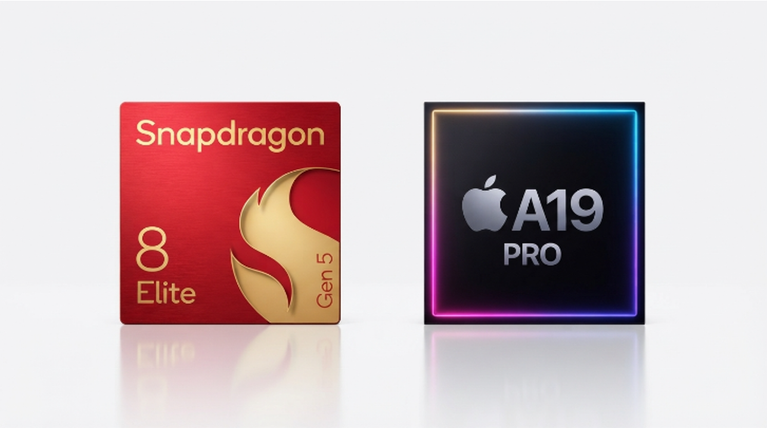
Snapdragon 8 Elite Gen 5 Is Official: What It Means for Galaxy S26 Performance

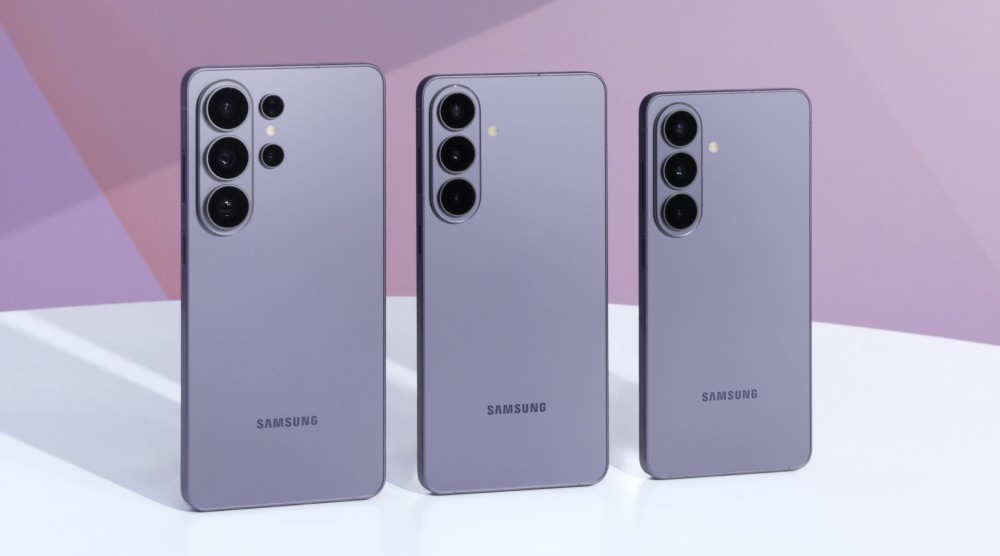
- Qualcomm’s Snapdragon 8 Elite Gen 5 for Galaxy was officially announced in February 2026 alongside the Galaxy S26 series at Galaxy Unpacked.
- The chip delivers 19% faster CPU, 24% stronger GPU, and a 39% jump in NPU throughput versus the prior Snapdragon 8 Elite, according to Qualcomm.
- Only the Galaxy S26 Ultra uses the Snapdragon 8 Elite Gen 5 globally; S26 and S26+ get Exynos 2600 outside the US, Canada, Japan, and China.
- Independent testing by Techmo (March 2026) found the Snapdragon S26 averaged 2.21W power draw vs. 2.34W for the Exynos variant — translating to roughly 17 extra minutes of screen-on time per charge.
- The Snapdragon 8 Elite Gen 5 is the first mobile platform with hardware acceleration for the APV (Advanced Professional Video) codec — a feature relevant only to creators doing post-production work.
Last updated: 2026-03-26 · Sources linked inline
San Francisco, February 2026: Qualcomm has officially confirmed the Snapdragon 8 Elite Gen 5 for Galaxy — the custom chip variant powering Samsung’s Galaxy S26 series — and for once, the numbers behind the headline are worth examining carefully. The “for Galaxy” branding is not just a sticker; benchmarks published by independent testers within weeks of launch show it produces measurably different results depending on which S26 model you actually buy and in which country. That detail matters, and most coverage has glossed over it. Our full Galaxy Unpacked 2026 recap covers the broader announcement; this piece focuses exclusively on the silicon.
Qualcomm’s Snapdragon 8 Elite Gen 5 is built on TSMC’s 3nm N3P process node and features an 8-core Oryon Gen 3 CPU configuration — two Prime cores clocking at 4,610 MHz and six Performance cores at 3,630 MHz — paired with a revised Adreno GPU and a significantly upgraded Hexagon NPU. Announced at Snapdragon Summit in Maui, Hawaii on September 24–25, 2025, the chip began shipping in Xiaomi 17 devices before reaching Samsung’s hands for the Galaxy S26 launch in early 2026.
Contents
What Was Announced
Core Announcement Details
The Snapdragon 8 Elite Gen 5 is Qualcomm’s fifth-generation flagship mobile platform. The company confirmed it on September 24, 2025 at Snapdragon Summit and later announced a custom “for Galaxy” variant co-engineered with Samsung in February 2026, timed to the Galaxy S26 series launch. According to Qualcomm, the chip delivers a 19% CPU performance gain, a 24% GPU gain, and a 39% increase in NPU throughput versus the original Snapdragon 8 Elite. The Hexagon NPU now reaches 100 TOPS — up from roughly 45 TOPS in the prior generation, per Jon Peddie Research’s November 2025 analysis.
The “for Galaxy” designation is not cosmetic. Qualcomm and Samsung co-tune the chip’s frequencies and power profiles specifically for Samsung’s Galaxy AI software stack. The Prime cores in the Galaxy variant reportedly clock at 4,740 MHz — versus the standard chip’s 4,610 MHz — according to Android Authority’s September 2025 coverage, though Qualcomm itself has not published Galaxy-specific frequency figures separately. The company’s claim of “fastest mobile CPU in the world” is unverified against all competitors in controlled conditions, and the Apple A19 Pro leads in single-core Geekbench scores, according to independent benchmark aggregators.
Pricing and Availability
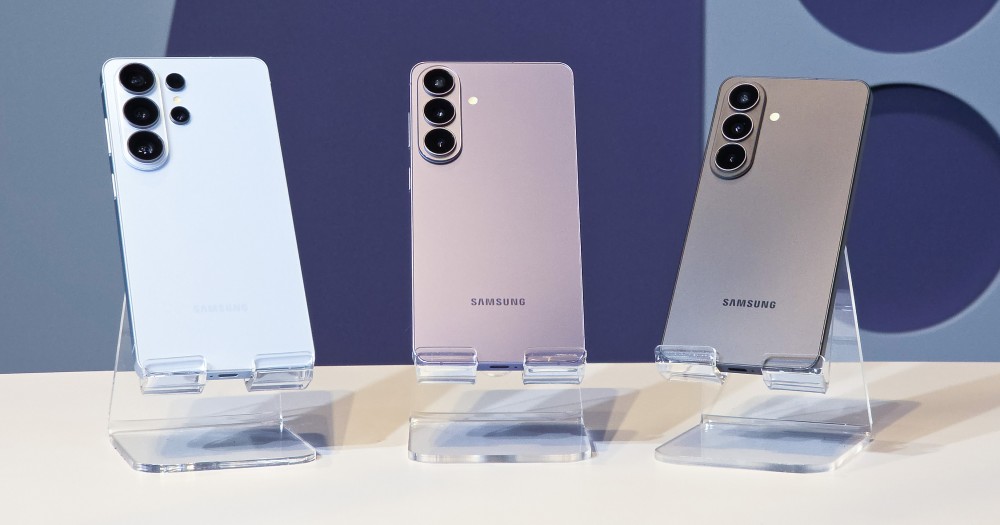
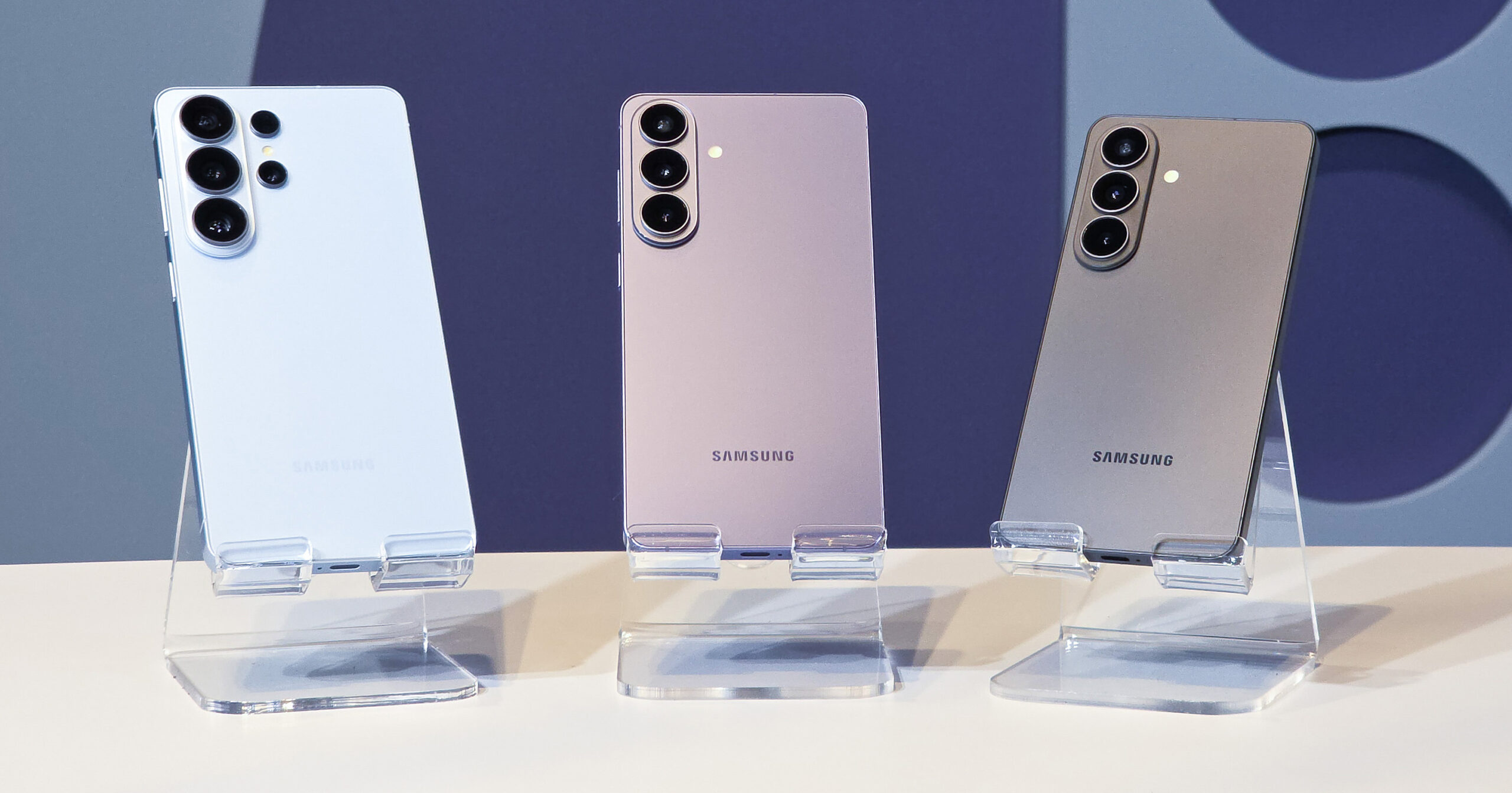
The chip itself is not sold to consumers. It ships inside the Galaxy S26 (starting at $899.99), Galaxy S26+ (starting at $1,099.99), and Galaxy S26 Ultra (starting at $1,299.99) — but only buyers in the US, Canada, Japan, and China are guaranteed to receive Snapdragon 8 Elite Gen 5 hardware in the S26 and S26+ models. All other regions receive the Samsung Exynos 2600 in those two phones. The Galaxy S26 Ultra ships with Snapdragon everywhere, globally, with no exceptions confirmed as of February 2026.
Technical Specifications
The confirmed specification profile, drawn from Qualcomm’s September 2025 Snapdragon Summit materials and Jon Peddie Research’s November 2025 platform analysis, is as follows. Process node: TSMC 3nm N3P. CPU: 8 cores total — 2 Oryon Gen 3 Prime at 4,610 MHz, 6 Oryon Gen 3 Performance at 3,630 MHz. GPU: Adreno, clocked at 1.2 GHz, with 18MB of dedicated High Performance Memory (HPM) cache, hardware-accelerated ray tracing, mesh shading, Unreal Engine 5 support, Vulkan 1.4, and DirectX 12 compatibility. NPU: Hexagon, rated at 100 TOPS. Display: supports up to three 4K displays at 144Hz or two 5K displays at 60Hz. Connectivity: Snapdragon X85 modem with Wi-Fi 7 and FastConnect 7900 with integrated Ultra Wideband on S26 Ultra and S26+. New codec support: hardware APV (Advanced Professional Video) decoder and encoder — the first mobile platform to include this, according to Qualcomm.
Context and Background
Why This Matters
The naming deserves a brief explanation because it genuinely confused the industry for weeks after the announcement. Qualcomm’s prior chip was simply called “Snapdragon 8 Elite,” making the “Gen 5” suffix feel like several generations had been skipped. Gizmochina’s January 2026 analysis clarified Qualcomm’s own reasoning: the company considers the Snapdragon 8 Elite to have been the fourth-generation flagship platform in the 8-series lineage (following 8 Gen 1, 8 Gen 2, and 8 Gen 3), making this new chip the fifth. The Elite branding is now permanent for the top tier. This is not just a naming technicality — it explains why Qualcomm compared the 8 Elite Gen 5 to its predecessor rather than to the 8 Gen 3 in its launch materials.
What Led to This Announcement
The co-engineering relationship between Qualcomm and Samsung deepened significantly with this generation. At Snapdragon Summit 2025, Samsung’s Won-joon Choi, Executive Vice President of Hardware at the MX Division, appeared on stage to signal the partnership’s direction. He did not confirm the chip for the S26 at that event, but said the two companies were “only deepening our collaboration further,” per Tom’s Guide’s September 2025 reporting. The Galaxy S25 series used Snapdragon hardware globally across all three models for the first time. The S26 generation reverses that in most markets for the base and Plus models, re-introducing Exynos 2600 outside a handful of regions.
That regression is Samsung’s own long-term play. At Galaxy Unpacked 2026 briefings in San Francisco, Moon Sung-hoon, Samsung’s EVP of Hardware at the MX Division, stated the company’s goal of eventually shipping Exynos chips across the entire Galaxy lineup, according to Sammy Fans’ February 2026 coverage. The Exynos 2600 is Samsung’s first 2nm chipset — built on Samsung Foundry’s 2nm process, which theoretically offers higher transistor density than TSMC’s N3P node used in the Snapdragon 8 Elite Gen 5. Whether that theoretical advantage translates in practice is a separate matter.
Industry and Community Reaction
What Analysts and Experts Are Saying
Jon Peddie Research noted in November 2025 that Qualcomm has positioned the Snapdragon 8 Elite Gen 5 explicitly as an AI processor, putting it in competition with over 137 companies in the on-device AI space. The firm highlighted the 100 TOPS Hexagon NPU as the headline figure, calling it a significant uplift from the prior generation’s 40 to 45 TOPS — a claim independently corroborated by Qualcomm’s own Summit materials. What the analyst firm noted, though, is subtler: the new Vulkan 1.4 extension (VK_QCOM_data_graph_model) embedded in the platform positions Qualcomm to run ML model inference directly through GPU-driven data-graph execution — a path that bypasses the NPU entirely for specific workloads. That flexibility matters when you consider that Galaxy AI tasks vary enormously in computational profile.
Where criticism has surfaced is not in the chip’s raw specifications but in Qualcomm’s benchmark framing. The company chose to compare the standard Snapdragon 8 Elite Gen 5 against the 8 Gen 3 — skipping a direct comparison to the Snapdragon 8 Elite — a move Gizmochina’s January 2026 benchmark teardown called “deliberate,” noting that the original 8 Elite actually outperforms the 8 Elite Gen 5 in single-core Geekbench 6 tests, with the newer chip’s advantage showing up primarily in multi-core and NPU-heavy workloads. The 8 Elite Gen 5 for Galaxy closes much of that single-core gap with its higher Prime core clocks, but the underlying architecture trade-off remains.

Early User and Community Response
The community conversation — concentrated in hardware forums and tech YouTube comment sections — split predictably along two lines: excitement about the NPU leap and frustration about the regional chipset lottery returning for S26 base and Plus models. The efficiency cores debate also resurfaced. Unlike MediaTek’s competing Dimensity 9500, which uses a more conventional 1+3+4 big/medium/small core configuration with explicit efficiency cores, the Snapdragon 8 Elite Gen 5 retains the two-cluster approach (2 Prime + 6 Performance) with no dedicated low-power cores. Critics argue this hurts standby battery life; defenders point to the efficiency profile of the N3P node and the 20% lower GPU power draw. The full-battery drain data from Techmo’s March 2026 testing — showing 5 hours 48 minutes of screen-on time for the Snapdragon S26 versus 5 hours 31 minutes for the Exynos model, as reported by Geeky-Gadgets — does not resolve that debate one way or another, since it measures active use rather than standby.
What This Means for Galaxy S26 Buyers
For Everyday Users
The honest answer is: less than the spec sheet implies, and more than the naysayers claim. Day-to-day tasks — browsing, messaging, streaming — ran smoothly on last generation’s Snapdragon 8 Elite too. The 19% CPU gain does not translate into 19% faster app launches or 19% smoother scrolling in casual use. Where the difference registers is in the compounding effects: faster background processing means Galaxy AI features like Live Translate, Photo Assist, and contextual suggestions respond with less noticeable latency. Whether you’ll feel that difference depends on how heavily you use those features.
The battery efficiency story is real, but modest. Independent testing by Techmo, published via Geeky-Gadgets in March 2026, found the Snapdragon-powered Galaxy S26 consumed an average of 2.21W during use — compared to 2.34W for the Exynos 2600 variant. Over a full drain cycle, that translated to roughly 17 extra minutes of screen-on time. That is not a reason to change continents, but it is a measurable advantage for a chip on the same 3nm node class.
For Gamers
The Adreno GPU upgrade is where performance claims become tangible. The 24% performance increase and 20% lower power draw come from a combination of the 1.2 GHz clock, 18MB HPM cache, and hardware-accelerated ray tracing support — the latter a first for mobile Snapdragon. Qualcomm has confirmed full Unreal Engine 5 support including Nanite, Lumen, and Global Illumination, which matters for the small but growing number of UE5-native mobile titles. The 18MB HPM cache specifically targets latency: the GPU no longer needs to reach out to system RAM as frequently during asset streaming, which shows up as smoother frame pacing in sustained sessions rather than higher peak frame rates on a benchmark graph.
The Galaxy S26 Ultra’s redesigned vapor chamber is the part most gaming-focused coverage has undercovered. Samsung switched from a titanium chassis to aluminum on the S26 Ultra — primarily a cost and weight decision — but simultaneously added thermal cooling material on the sides of the processor, allowing heat to spread across a larger surface area. MakeUseOf’s March 2026 benchmark testing found the Galaxy S26 Ultra ran 5% more stable in sustained stress tests than the base Galaxy S26, despite both phones carrying identical chips. The Ultra scored nearly 1,000 points higher on the Geekbench AI test as well. The chip did not change. The cooling system did. That distinction matters more for gaming than the GPU clock speed delta.
For Creators
The APV codec is the most technically specific claim Qualcomm made about this platform, and the one that requires the most careful reading. APV — Advanced Professional Video — is a near-lossless codec developed by Samsung and standardized as a production format, not a distribution format. It is designed for capturing footage that will be processed in post-production, not for streaming to YouTube. Files recorded in APV are large. Very large. The trade-off is that they preserve far more latitude for color grading, noise reduction, and reframing than H.264 or H.265 ever could. If you do not edit your phone footage in DaVinci Resolve or Adobe Premiere, APV does nothing for you. That is not a criticism of the feature — it is a genuine advancement for mobile videographers working on professional projects. It is also firmly in the “wrong fit” category for anyone who just wants good-looking Instagram reels.
The FastConnect 7900 modem with integrated UWB support ships only in the S26 Ultra and S26+, not in the base S26. Check our full Galaxy S26 Ultra review for how that connectivity package performs in practice.
What We Still Don’t Know
Qualcomm has described the Hexagon NPU’s “Personal Knowledge Graph” and “Personal Scribe” agentic AI features extensively, but no independent researchers have published a technical assessment of how these systems behave over time, what data they retain locally versus cache to the cloud, or whether “continuous learning from your usage” is persistent across factory resets. These are Qualcomm’s own characterizations as of the Snapdragon Summit materials, and they have not been confirmed by Samsung in relation to One UI 8.5’s specific implementation.
LPDDR6 memory support has been a persistent community question. Forum discussions from late 2025 cite JEDEC’s publication of the LPDDR6 specification (July 2025) and note that both Qualcomm and MediaTek formally registered readiness for the standard. Whether the Galaxy S26 ships with LPDDR6 or LPDDR5X has not been confirmed in Qualcomm’s published platform materials as of March 2026. Samsung is separately reported to be preparing LPDDR6 production ramp for mid-2026, per community analysis of JEDEC adoption timelines — but the S26 launch predates that window. Treat any claim that the S26 ships with LPDDR6 as unconfirmed at time of writing.
Frequently Asked Questions
What is the Snapdragon 8 Elite Gen 5?
The Snapdragon 8 Elite Gen 5 is Qualcomm’s fifth-generation flagship mobile platform, announced at Snapdragon Summit on September 24–25, 2025 in Maui, Hawaii. It is built on TSMC’s 3nm N3P process node and features an 8-core Oryon Gen 3 CPU, an Adreno GPU with 18MB of dedicated HPM cache, and a Hexagon NPU rated at 100 TOPS. The “for Galaxy” variant, co-engineered with Samsung and announced in February 2026, powers the Galaxy S26 series with slightly higher Prime core clock speeds and Galaxy AI-specific tuning.
How much faster is the Snapdragon 8 Elite Gen 5 than the original Snapdragon 8 Elite?
Qualcomm claims 19% faster CPU performance, 24% faster GPU performance, and 39% faster NPU performance compared to the original Snapdragon 8 Elite. Those figures are vendor-stated and based on Qualcomm’s own benchmark methodology. Independent testing tells a more nuanced story: Gizmochina’s January 2026 benchmark comparison found that the original Snapdragon 8 Elite still leads in single-core Geekbench 6, while the Gen 5 chip’s advantage concentrates in multi-core and AI workloads. The “for Galaxy” variant’s higher Prime core clocks narrow but do not eliminate that single-core gap.
Does the Galaxy S26 have Snapdragon 8 Elite Gen 5 in every country?
No. The Galaxy S26 Ultra uses the Snapdragon 8 Elite Gen 5 for Galaxy globally, with no exceptions. The standard Galaxy S26 and Galaxy S26+ use Snapdragon 8 Elite Gen 5 only in the US, Canada, Japan, and China. All other markets — including India, much of Europe, and most of Southeast Asia — receive the Samsung Exynos 2600 in those two models. This regional split was confirmed by Gizmochina in March 2026 and is consistent with Samsung’s stated long-term goal of expanding Exynos adoption across the Galaxy lineup.
What is the difference between Snapdragon 8 Elite Gen 5 and Exynos 2600?
Both chips are manufactured on a 3nm class process, but on different foundries and nodes: Snapdragon 8 Elite Gen 5 on TSMC N3P, Exynos 2600 on Samsung Foundry’s 2nm process. In benchmark testing by Techmo (March 2026, reported by Geeky-Gadgets), Snapdragon delivered an 8 to 17% performance advantage and ran 1–2°C cooler under sustained load. The Exynos 2600 showed competitive graphics results and, in some specific tests, outperformed the Snapdragon in the standard Galaxy S26 — a result Tom’s Guide attributed to implementation differences rather than raw chip capability. The Snapdragon variant consistently consumed less power (2.21W vs 2.34W average) and offered longer sustained performance during gaming.
Is the Snapdragon 8 Elite Gen 5 better than the Apple A19 Pro?
It depends on the metric. Independent benchmark aggregator data shows the Apple A19 Pro leads in single-core CPU performance and thermal management — running around 28°C under load compared to 32–34°C for Snapdragon 8 Elite Gen 5 devices, per Geeky-Gadgets’ March 2026 multi-chip comparison. The Snapdragon 8 Elite Gen 5 competes more directly in multi-core workloads and its 100 TOPS NPU reflects a different design philosophy — optimized for on-device Android AI inference rather than Apple’s Neural Engine architecture. Qualcomm’s claim of “fastest mobile CPU in the world” is the company’s own characterization, not independently verified against the A19 Pro in a controlled environment.
What does 100 TOPS mean in practice?
TOPS stands for tera-operations per second — a measure of how many mathematical operations a chip’s dedicated AI engine can execute every second. The Hexagon NPU in the Snapdragon 8 Elite Gen 5 is rated at 100 TOPS, compared to roughly 45 TOPS in the original Snapdragon 8 Elite. In practical terms, higher TOPS means Galaxy AI features like real-time translation, Photo Assist edits, and on-device language model inference run with lower latency and without needing to route data to the cloud. What 100 TOPS does not tell you is anything about the quality of the AI outputs — that is a software and model training question entirely separate from raw processing throughput.
Our Take
The Snapdragon 8 Elite Gen 5 for Galaxy is a meaningful generational step, but not uniformly so across every buying decision. The NPU leap from 45 to 100 TOPS is the most significant architectural change in this platform — it is what makes Galaxy AI features feel like local intelligence rather than cloud latency. The GPU upgrade is real and will matter to gaming, though the Galaxy S26 Ultra’s improved vapor chamber contributes as much to sustained gaming performance as the chip’s raw GPU clock increase. The APV codec is a genuine professional tool and also completely irrelevant to the majority of buyers. Read our Galaxy S26 Ultra hardware deep-dive for a broader view of what that phone delivers beyond the chip.
The regional chipset split is the story that deserves the most attention before purchase. If you are outside the US, Canada, Japan, and China and considering the base Galaxy S26 or S26+, you are not buying a Snapdragon 8 Elite Gen 5 phone. The Exynos 2600 is a credible chip with a 2nm process advantage that shows in some specific workloads — but the independent benchmark data consistently places it behind Snapdragon in sustained CPU performance, power efficiency, and thermal management. If that distinction matters to you, the Galaxy S26 Ultra is the only S26 model that eliminates the uncertainty entirely. For the Snapdragon 8 Elite Gen 5’s next chapter — including what the unannounced Snapdragon 8 Elite Gen 6 may fix — check our coverage of MWC 2026 and our Google Pixel 10 chip analysis for a view of where the competition stands.