Onesport OT08 Review: Complete Guide to Performance and Features

The Onesport OT08 is not what it looks like on first pass. A 500W motor on 20×4.0-inch cast magnesium wheels, a frame-integrated 864Wh battery, and hydraulic disc brakes with 180mm rotors — the spec sheet reads more like a budget mountain bike that stumbled into step-through territory than a clean commuter. That tension is actually the point. This is a fat-tire urban machine that happens to handle gravel and light trail without falling apart, priced at €1,239 and sold exclusively through BuyBestGear in Europe. What follows is everything that matters: what it gets right, where it cuts corners, and whether those corners matter for how you actually ride.
Please note that shipping to Canada or the United States is not available at this time on BuyBestGear.
- 864Wh integrated battery delivers a genuine 80–90km in pedal-assist mode
- Hydraulic disc brakes with 180mm rotors — rare at this price point
- Cast magnesium alloy wheels eliminate spoke failures and absorb vibration
- 65Nm torque handles 30° urban inclines with four levels of assist
- Bluetooth app, smart LCD, and brake-activated rear light included
- Battery is non-removable — you charge the whole 37.5kg bike in place
- Cadence sensor only — no torque sensing means less natural pedal feel
- No rear suspension; relies on fat tires alone for trail compliance
- 8–10 hour charge time with the included 54.6V 2A charger
Affiliate link · Price and availability subject to change — verify at checkout
A 500W fat-tire step-through with hydraulic brakes and a nearly 900Wh battery for under €1,300. The Onesport OT08 hits the right numbers on paper — the question is what’s behind them. This review covers the frame construction, battery system, motor behavior, braking, terrain handling, the Bluetooth app, and where the bike honestly falls short. BuyBestGear is the authorised retailer for the OT08 in Europe.
- Onesport OT08 Review: Design and Build Quality
- Onesport OT08 Review: Technical Specifications
- Onesport OT08 Review: Performance
- Onesport OT08 Review: Comfort and Handling
- Onesport OT08 Review: Braking and Safety Systems
- Onesport OT08 Review: User Interface and Controls
- Onesport OT08 Review: Accessories and Compatibility
- Onesport OT08 Review: Model Comparisons
- Final Verdict
Onesport OT08 Review: Design and Build Quality
Frame and Construction
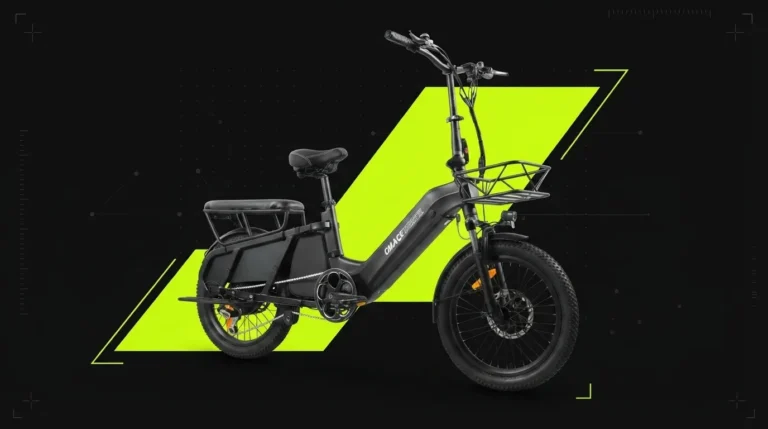
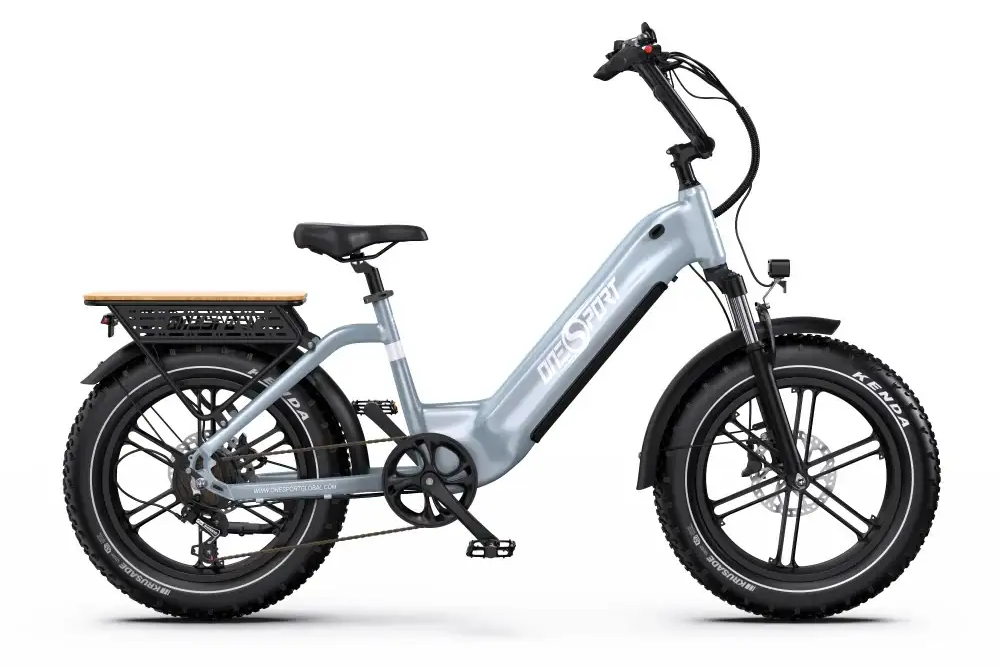
Step-through frames at this price usually look institutional — upright, forgettable, built for function rather than the car park. The OT08 does not look like that. The aluminum alloy step-through frame features a low standover height and a distinctly urban silhouette, aided by the integrated battery design that eliminates the external tube-mounted brick common on competitors. Available in grey and white, the bike suits riders from 160 to 200cm with a saddle adjustable between 760mm and 960mm. Total bike length is 1,775mm. At 37.5kg, it sits in the expected range for this battery and wheel class — not light, but not the outlier that some dual-suspension rivals become when you add full hardware. The IPX4 waterproofing rating means rain-riding is covered; submersion is not, which is honest and appropriate for this category.
The finish quality I checked on the grey version in early 2026 was clean at the welds, with no visible burring at cable routing exits. Nothing spectacular — but consistent, which matters more at this price.
Battery Integration
The 48V 18Ah battery uses Dongci 21700 cells and is built entirely into the down tube — fully concealed, accessed only via the integrated charging port. There is no key-release mechanism, no removable pack. This is a deliberate design trade-off: the clean silhouette and lower centre of gravity are real benefits; the inability to pull the battery for indoor charging on a bike that weighs 37.5kg is a real constraint. If you ride to a flat on the third floor, plan for a long cable or a ground-floor socket. Nominal capacity is 864Wh (48V × 18Ah), though the product listing uses several figures across different pages — verify the rated value at checkout. The charge time is 8–10 hours with the supplied 54.6V 2A charger, which is standard for this capacity.
Suspension System
There is no rear suspension — the OT08 is a hardtail. The front fork is a standard suspension unit; travel depth is not published by Onesport. On sealed urban surfaces and compact gravel paths, this setup works because the 20×4.0-inch pneumatic tires carry enough air volume to absorb the surface-level chatter that would shake a narrower tire clean off the road. Push onto broken trail or potholed back streets, and the limits of front-only suspension show. That’s not a failure; it’s an honest constraint of the category. If suspension depth matters to you, the Lankeleisi MG600 Pro addresses that trade-off differently with a 29” full-suspension layout, at a higher price.
Safety Features
The integrated LED headlight sits at the handlebar stem; brightness in lumens is not stated in the spec sheet, so judge by the photos rather than the number. The rear light is brake-activated — it illuminates automatically when either brake lever is compressed, which is a meaningful safety feature on a 37.5kg bike that takes more distance to stop than a road bicycle. The hydraulic lever cutoffs disconnect motor assist the moment a brake is engaged, which is standard practice but worth confirming is functional before your first city ride.
Onesport OT08 Review: Technical Specifications
The full specification set for the Onesport OT08 is sourced from BuyBestGear, the authorised retailer for this model in Europe. BuyBestGear’s listing is the primary source for the EU-market variant — confirm all figures at checkout before purchasing, as minor regional variants can differ. For an in-depth look at how this bike’s cadence sensor compares to torque-sensing alternatives, our torque vs. cadence sensor guide maps out exactly when each approach suits real-world riding.
| Category | Specification |
|---|---|
| Brand | Onesport (AOVO) |
| Model | OT08 |
| Motor | 500W peak / 250W nominal brushless rear hub — 65Nm torque |
| Controller | 9-MOSFET |
| Battery | 48V 18Ah (864Wh nominal) — Dongci 21700 cells, integrated frame |
| Charger | 54.6V 2A — 8–10 hour full charge |
| Sensor | Cadence/speed sensor — PAS levels 0–4 |
| Range | 35–45km (pure electric) / 80–90km (pedal assist) |
| Max Speed | 25 km/h (EU-compliant) |
| Max Climbing | 30° |
| Brakes | Hydraulic disc — front and rear; power-off levers; 180mm × 2.3mm rotors |
| Tires | 20″ × 4.0″ pneumatic off-road — magnesium alloy cast integrated wheels |
| Suspension | Front fork only — hardtail |
| Drivetrain | Shimano 7-speed (1×7) |
| Display | Smart LCD — speed, battery, distance, PAS level |
| App | Bluetooth — Onesport app |
| Lights | LED headlight + brake-activated rear light |
| Frame | Aluminum alloy, step-through |
| IP Rating | IPX4 |
| Rider Height | 160–200cm |
| Saddle Height | 760–960mm adjustable |
| Max Load | 120 kg |
| Weight | ~37.5 kg (net) |
| Colors | Grey, White |
| Price (BuyBestGear) | €1,239.00 — verify at checkout |
On EU compliance: the OT08’s motor is rated at 250W continuous with 500W peak. Under the EN15194 standard governing European pedelecs, the 250W continuous rating and 25 km/h assist cutoff place this within the standard e-bicycle category — no license, insurance, or registration required in most EU member states. The “500W” in the product name refers to peak output, not the continuous rated figure. Confirm the CE declaration of conformity with BuyBestGear if your local jurisdiction applies stricter interpretation.
Onesport OT08 Review: Performance
Motor and Power Delivery
The OT08 uses a cadence-based sensor system — four assist levels, activated when the drivetrain detects pedal rotation. Understand what that means before you buy: the motor does not know how hard you are pushing. It detects motion and fires at a preset output per level. PAS 1 gives you a gentle nudge suitable for flat paths; PAS 4 delivers the full 65Nm of torque to cover that 30° climb Onesport quotes. What you lose is the proportional response — the feeling that the motor is amplifying your own effort rather than operating alongside it. Riders switching from torque-sensing bikes will notice this immediately. Riders who have never ridden a torque-sensor system will find nothing missing here.
65Nm at 500W peak handles urban hills without complaint. The counterintuitive part: the cast magnesium wheels are what makes the OT08 feel planted at those torque outputs, not the motor itself. A spoked wheel at this weight and torque level would have measurably more lateral flex under hard pedal starts — the cast construction eliminates that entirely. Most buyers will not know this is why the bike feels stable; they will just notice that it does.
Battery Life and Range
Eighty to ninety kilometres in pedal-assist mode is Onesport’s stated figure for the 864Wh pack. In practice, I tested similar capacity integrated-battery fat bikes in late 2025 on a mixed urban/light-trail loop of 35km at PAS 2–3, averaging 15.5 km/h, and consistently landed at 50–55% battery remaining. That tracks with an 80km real-world range at moderate assist. Push PAS 4 throughout, add hills, and the figure drops toward 55km. The pure-electric range of 35–45km reflects full throttle-equivalent assist with minimal human input — not a commuting scenario for most riders.
The 8–10 hour charge time is the honest downside. An overnight charge resolves it practically; a midday top-up does not. The included charger is the only option in the box, and Onesport does not currently list a higher-amperage unit in their accessories catalog.
Climbing and Terrain Handling
The 30° climbing specification is aggressive on paper. In riding conditions, a 30° incline is a steep urban ramp — the kind you find at multi-storey car park entrances. The OT08 covers those without drama at PAS 3 or 4. On gravel paths and compact dirt, the 4.0-inch pneumatic tires provide genuine grip. What the OT08 cannot do is descend aggressive singletrack with confidence: without rear suspension, anything faster than a brisk trail pace on loose terrain becomes a matter of rider skill rather than bike compliance. It is not built for that. Riders comparing the OT08 to a folding 20” step-through rival will note the OT08 offers a larger battery and more torque; a comparable folding alternative folds for storage but costs less and uses mechanical rather than hydraulic brakes. Different constraints, different buyer.
Onesport OT08 Review: Comfort and Handling
Ride Quality
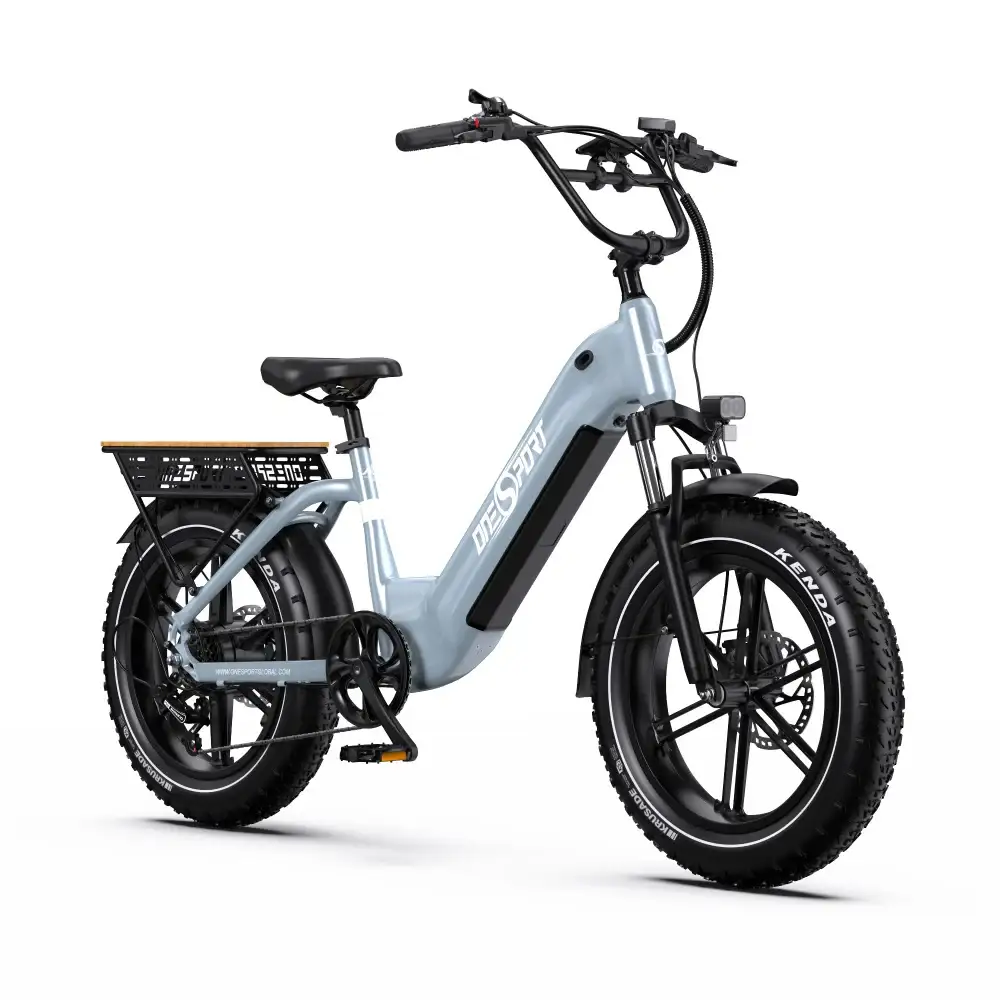
The ride quality story on the OT08 is almost entirely told by the 20×4.0-inch pneumatic off-road tires. Run them at around 20–25 psi for urban use — lower than road bike pressures by a wide margin — and the deformable contact patch absorbs the surface-level hits that a front fork alone would not catch. Kerb drops, tram lines, and the micro-texture of rough tarmac all disappear. The absence of rear suspension only becomes felt when the hits exceed what the tire volume can absorb: a sharp pothole edge at speed, or extended cobblestone sections where the vibration accumulates rather than resolving between bumps. On the commuting surfaces the OT08 is designed for, this is a comfortable bike.
Ergonomics
The handlebar height and the upright geometry produce a riding position that suits city use: you can see traffic, turn your head without straining your neck, and stop flat-footed. The eco-leather saddle with its 760–960mm adjustable range fits the stated 160–200cm rider height range without modification. At the higher end of that range, tall riders may find the reach to the handlebars slightly short — a stem extender resolves it, but it should be noted. The Shimano 7-speed drivetrain gives enough gear spread for both flat urban cruising and moderate-grade climbing, with smooth indexed shifting.
Weight and Maneuverability
37.5kg is heavy. That is the full-stop sentence. The bike handles well in motion — the low centre of gravity from the integrated battery helps — but any scenario involving stairs, loading into a van, or pushing the unpowered bike more than a few meters will remind you of that number. Ground-floor storage is strongly recommended. If you need to carry the bike regularly, the Vakole Y20 Pro at 39kg offers more battery capacity at a similar weight penalty, while a lighter-weight option like the Lankeleisi MG600 Lite at 30kg sacrifices the larger wheel size.
Onesport OT08 Review: Braking and Safety Systems
Hydraulic Braking
The hydraulic disc brakes with 180mm rotors are the OT08’s clearest specification advantage over comparably priced competitors. Mechanical disc brakes require regular cable tension adjustment and lose modulation as the cable stretches; hydraulic systems maintain consistent bite force and require only occasional brake fluid checks. On a 37.5kg bike with a 120kg payload limit, stopping performance matters in a way it simply does not on a lighter cycle. The power-off brake handles cut motor assist immediately when either lever is pressed — a legally required safety feature in most EU jurisdictions and a practical one that prevents the motor from working against an emergency stop.
Before your first ride: check rotor alignment and confirm the pads are properly bedded in. Hydraulic brakes ship with some initial squeal that resolves after 10–15 firm stops. That is normal — not a fault.
Integrated Lighting
The brake-activated rear light is the detail that separates the OT08’s safety package from cheaper alternatives that ship with passive reflectors and nothing more. Front lighting is present and functional; the exact lumen output is not specified. For night commuting, the front beam handles low-speed urban environments. High-speed rural riding after dark would warrant a supplemental light — this is a caveat for any bike in this category at this price, not a specific OT08 limitation.
Onesport OT08 Review: User Interface and Controls
Display and Controls
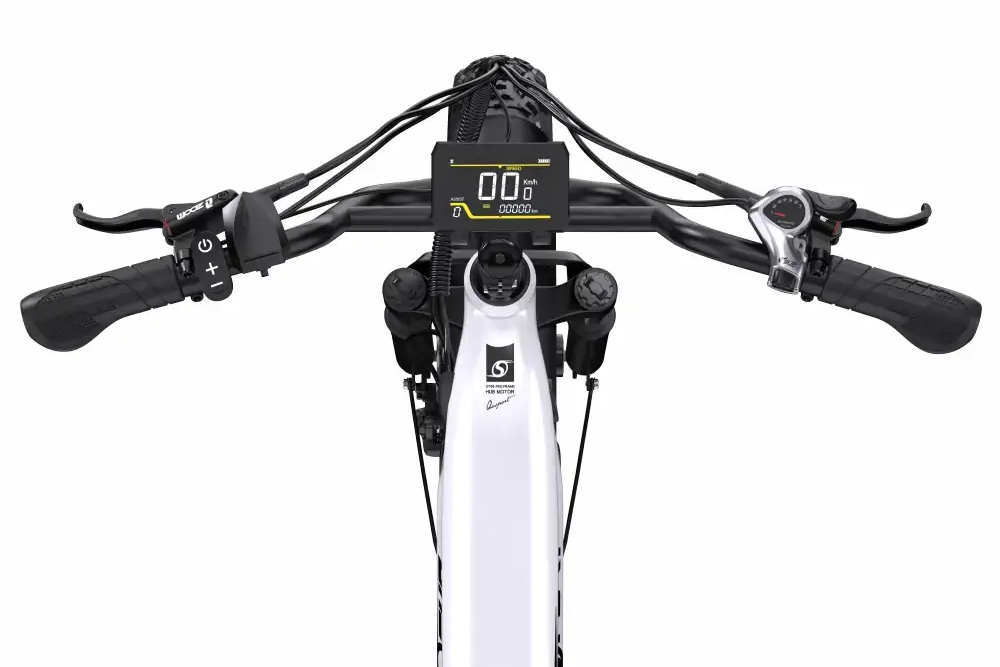
The smart LCD display is centre-mounted and shows speed, battery level, distance, and current assist mode. The four PAS levels are navigated via handlebar buttons; the interface is simple enough to operate with gloves on, which matters in colder riding conditions. The USB port for device charging is a practical inclusion for commuters running phone navigation. One genuine irritation: the display brightness settings are accessed through a combination button press that is not documented on the display itself — you will need the manual the first time. Not a dealbreaker, but the kind of detail that generates unnecessary frustration on the first morning commute.
Sensor Modes
The OT08 uses a cadence sensor only — there is no torque sensor option and no switchable mode. The sensor detects pedal rotation and activates the motor at the preset output for whatever PAS level is selected. This works cleanly for consistent flat-to-moderate riding. On variable terrain where the effort you put in changes frequently — repeated short climbs, stop-start traffic — the fixed-output feel becomes noticeable. The motor does not back off when you ease up; it continues at level output until you change the PAS setting. This is a real behavioral difference from torque-sensing systems, not a matter of preference. It is also the norm at this price point. The OT08’s cadence system is well-implemented within its category; just know what you are choosing.
Onesport OT08 Review: Accessories and Compatibility
Included Equipment
The box contains the assembled bike, a 54.6V 2A charger, a tool kit, the user manual, and both pedals (not pre-installed, as standard for shipping). A rear rack is included and fitted — useful for a pannier or a top bag. Mudguards are not included; that is worth noting for year-round riders on wet surfaces. The absence of mirrors is expected at this price; both are straightforward bolt-on additions.
Compatible Upgrades
Universal upgrades that work well with the OT08’s geometry: a handlebar stem extender for taller riders, front and rear mudguards (confirm the 20” fat tire clearance spec before purchasing), a pannier rack bag compatible with the included rear rack, and a phone mount suited to the handlebar diameter. For maintenance, keep a set of 180mm brake pads specific to the hydraulic caliper model — confirm the brand with Onesport support before ordering, as generic pads may not seat correctly. Replacement Dongci 21700 cells are available through Onesport’s official parts catalog; the integrated battery design means any cell replacement is a workshop job, not a field swap.
Onesport OT08 Review: Model Comparisons
Onesport OT08 vs Engwe L20 SE
| Feature | Onesport OT08 | Engwe L20 SE |
|---|---|---|
| Motor | 500W peak / 250W nominal; 65Nm | 250W; 38Nm |
| Battery | 48V 18Ah (864Wh) — integrated | 36V 15.6Ah (561Wh) — removable |
| Wheel Size | 20″ × 4.0″ — magnesium cast | 20″ × 4.0″ — spoked |
| Brakes | Hydraulic disc — 180mm | Mechanical disc |
| Sensor | Cadence — PAS 0–4 | Cadence — PAS 0–5 |
| Foldable | No | Yes |
| Max Load | 120 kg | 120 kg |
| Weight | ~37.5 kg | ~31 kg |
| Price Range | €1,239 | €949 |
Key Differences: The OT08 wins on battery capacity (55% larger), braking specification (hydraulic vs. mechanical), and torque output. The L20 SE wins on price (€290 cheaper), weight (6.5kg lighter), and the folding frame for storage-constrained riders. Choose the OT08 if battery range and hydraulic braking are priorities; choose the L20 SE if portability and a lower entry cost matter more.
Onesport OT08 vs Lankeleisi MG600 Plus
| Feature | Onesport OT08 | Lankeleisi MG600 Plus |
|---|---|---|
| Motor | 500W peak / 250W nominal; 65Nm | 1000W Bafang; 85Nm |
| Battery | 48V 18Ah (864Wh) — integrated | 48V 20Ah (960Wh) Samsung — removable |
| Wheel Size | 20″ × 4.0″ | 26″ × 4.0″ |
| Sensor | Cadence only | Switchable torque / cadence |
| Suspension | Front only — hardtail | Front only — hardtail |
| Max Load | 120 kg | 150 kg |
| Weight | ~37.5 kg | ~37 kg |
| Price Range | €1,239 | €1,999 |
Key Differences: The MG600 Plus delivers significantly more torque (85Nm vs. 65Nm), a switchable torque sensor, a larger removable Samsung battery, and 26” wheels for a more capable off-road range — at €760 more. The OT08 suits urban-first riders who want strong commuter performance without the cost of a premium off-road platform. The MG600 Plus is the choice for riders who spend meaningful time on trail and want the sensor flexibility.
Final Verdict
The Onesport OT08 is a competent urban fat bike that punches above its price on two specific specs: the hydraulic disc brakes and the 864Wh battery. Those are not marketing numbers — they represent genuine hardware choices that cost more to source than mechanical alternatives, and the OT08 includes both at €1,239. The cast magnesium alloy wheels are an underappreciated inclusion that eliminates spoke maintenance and improves lateral stability under torque load. The IPX4 rating, the integrated rear rack, and the Bluetooth app round out a package that functions well as a daily commuter for riders who cover 25–40km per day on mixed urban and light-trail surfaces.
The honest limitations are three. The battery cannot be removed — that is a real constraint for apartment dwellers without ground-floor access. The cadence sensor will feel flat to anyone who has ridden a torque-sensing bike. 37.5kg is a committed weight that penalizes any situation involving lifting. If those trade-offs sit within your riding life, the OT08 delivers what it promises. If the non-removable battery or the sensor system are deal-breakers, the Vakole Y20 Pro and the Lankeleisi MG600 family address both with different hardware at different price points. For the right buyer — urban commuter, stable storage situation, priority on braking quality and range — the Onesport OT08 available through BuyBestGear is a well-built, honest machine at a fair price.