GPT-6.1 Sol vs Claude 5.5: API Cost Matrix for Agents
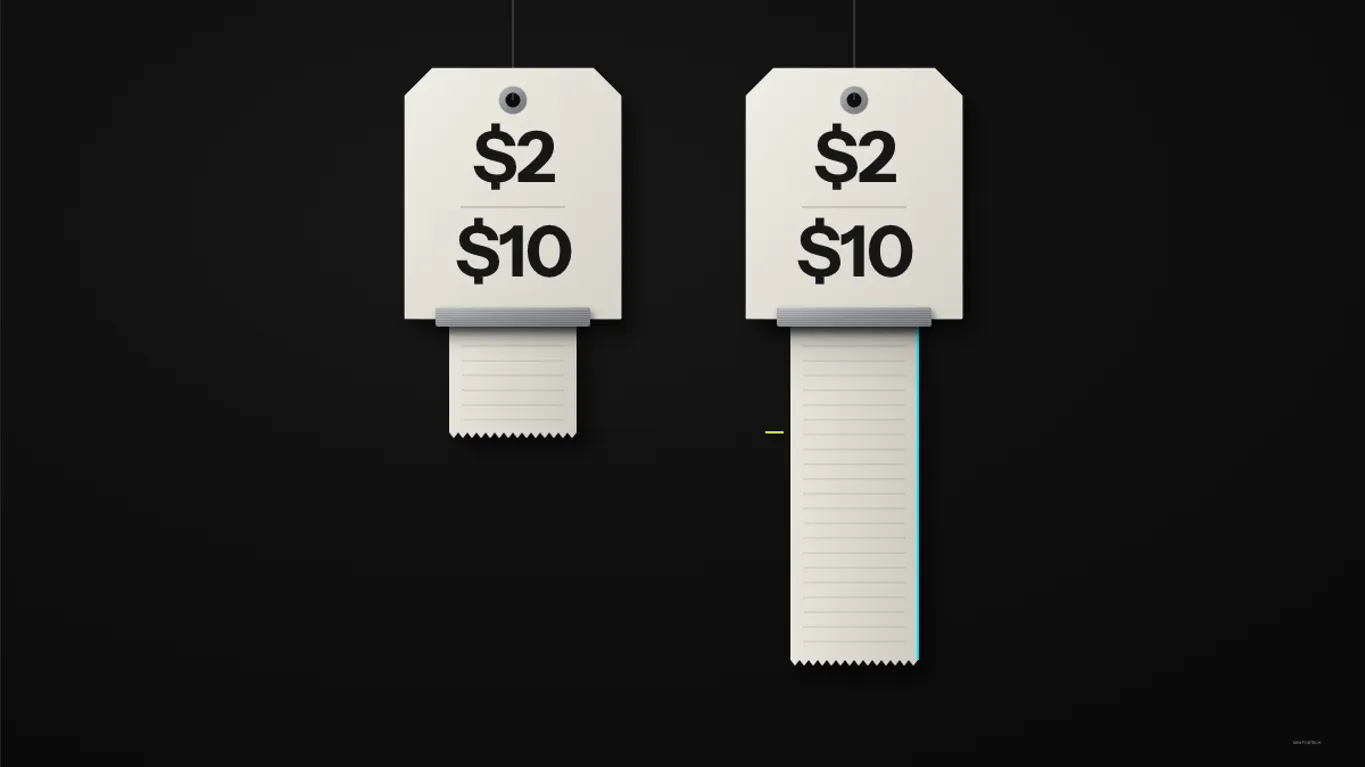
GPT-6.1 Sol vs Claude 5.5 looks like a tie on paper. OpenAI lists GPT-6.1 Sol at $2 per million input tokens and $10 per million output tokens. Anthropic lists Claude Sonnet 5.5 at the same $2 and $10. Cached reads also match, at $0.10 per million tokens on both.
Developers still report widely different bills per agent task. The reason is that the sticker covers only part of the cost. Cache writes, long-prompt surcharges, default reasoning effort and cache hit rates decide the rest. This article puts those levers into one matrix, built from each vendor’s own documentation on 10 October 2026.
- Same $2/$10 sticker and $0.10 cached read: Sol and Sonnet 5.5 tie on list price.
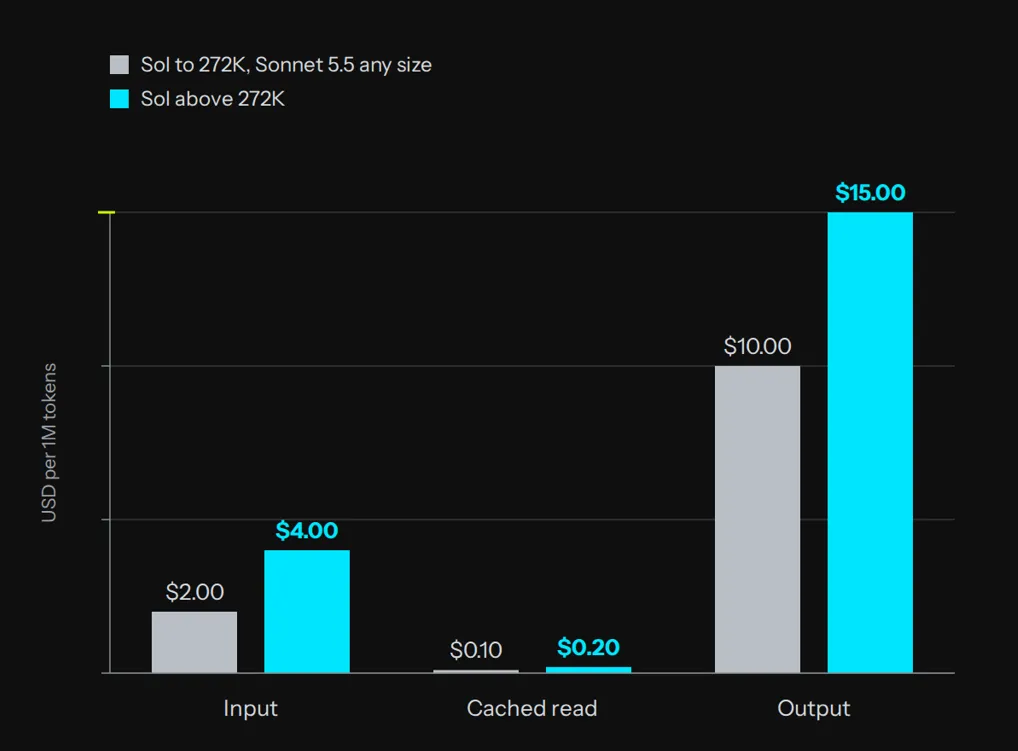
- Sol charges 2x input and 1.5x output on prompts above 272K tokens.
- Sonnet 5.5 keeps flat per-token rates across its whole 1M context window.
- A prefix rewritten on every call costs roughly 5x a cached one.
- Neither vendor publishes a token-burn multiplier, so measure your own loop.
Verdict by Agent Scenario
No model wins every agent workload, because the list prices are equal and the differences sit in the fine print. Four traits of the loop decide the verdict: prompt size, cache stability, reasoning effort and tool-choice rules.
Long-context agents favor Claude Sonnet 5.5. Anthropic’s pricing page bills the whole 1M window at the standard rate. OpenAI’s model page instead doubles input and cache rates and raises output by 1.5x once a prompt passes 272K tokens.
Short loops with a stable prefix are a near tie on cost. Both vendors list a $0.10 cached read, so cache discipline matters more than the choice of vendor. Loops that force a specific tool call need a check first. Anthropic’s Sonnet 5.5 overview says forced tool use returns an error.
Reasoning-heavy loops need a measurement pass before any routing decision. Defaults differ at the start, since Sol runs at medium effort and Sonnet 5.5 at high.
The $2/$10 Illusion: Real API Token Costs
The $2/$10 headline hides four billing levers that move the real cost per task. Each is documented by the vendors, though none appears in the headline rate.
What the sticker price leaves out
Cache writes come first. OpenAI lists a write at $2.50 per million tokens, which is 1.25x its uncached input rate. Anthropic lists a five-minute write at the same $2.50 and a one-hour write at $4.
Prompt length comes next. OpenAI prices the full request at 2x input and cache rates and 1.5x output once input passes 272K tokens. By simple arithmetic, that makes Sol $4.00 for input, $0.20 for cached reads and $15.00 for output above the line.
Reasoning effort is the third lever. OpenAI offers low, medium, high, xhigh and max on Sol, with medium as the default. Anthropic lists high as the Sonnet 5.5 default and calls effort the control for thinking depth, latency and cost. So the defaults differ before anyone changes a setting.
Tokenizers are the fourth lever. Anthropic says Claude 4.7 and later models produce about 30% more tokens for the same text than earlier Claude models. That compares Claude generations, not vendors, and neither source publishes a cross-vendor ratio.
A worked cost example at list rates
A small model shows how identical rates still produce different bills. Assume a 30-call agent task with a 40,000-token stable prefix, 2,000 new input tokens per call and 1,000 output tokens per call. Both vendors list $2.50 per million for writes and $0.10 for cached reads, with Anthropic’s write being the five-minute option.
| A. No caching | $2.82 |
|---|---|
| B. Prefix cached after first call | $0.64 |
| C. Prefix rewritten every call | $3.42 |
| D. Case B with 4,000 output tokens per call | $1.54 |
Case C costs roughly 5x case B at identical rates. A prefix that changes on every call, such as a timestamp at the top of the prompt, forces a fresh write each time. Because a write costs 1.25x input, that is worse than no caching at all. Case D shows the second lever, since quadrupling output tokens raises case B by roughly 2.4x. These figures are arithmetic from published rates, not a measurement.
Trade-Off Matrix: GPT-6.1 Sol vs Claude 5.5
The matrix below takes every rate from the two official pages. Where a vendor publishes no figure, the cell says so instead of guessing. Any AI API pricing comparison built only on list rates inherits that limit, and the token-burn row shows it.
The method is desk research: three official documentation pages read on 10 October 2026, with no benchmark runs behind the numbers. Those pages are OpenAI’s GPT-6.1 Sol model page, Anthropic’s pricing page and Anthropic’s Sonnet 5.5 overview.
| Cost lever | GPT-6.1 Sol | Claude Sonnet 5.5 |
|---|---|---|
| Input / output per 1M | $2.00 / $10.00 | $2 / $10 |
| Cached read per 1M | $0.10 (5% of input) | $0.10 (5% of input) |
| Cache write per 1M | $2.50 (1.25x input) | $2.50 five-minute, $4 one-hour |
| Max output tokens | 128,000 | 128K (300K batch beta) |
| Context window | 1,050,000 tokens | 1M tokens |
| Long-prompt pricing | Above 272K: 2x input, 1.5x output | Flat across the 1M window |
| Default reasoning effort | medium (low to max) | high, adaptive thinking |
| Token-burn multiplier | Not published | Not published |
Reading the matrix
Three rows carry most of the decision. Long-prompt pricing is the only row where one vendor is cheaper on paper. Sonnet 5.5 stays flat while Sol surcharges above 272K tokens. Cache writes differ in options rather than price, since Anthropic adds a one-hour write at $4. Default effort differs in direction, with Sonnet 5.5 starting higher.
The remaining rows tie or nearly tie. Both models cap a single response at 128,000 tokens, and the context windows are 1,050,000 against 1M tokens. Batch pricing also ties, at 50% off on both, and so do data residency premiums: OpenAI lists 10% for regional processing and Anthropic lists 1.1x for US-only inference. Anthropic lists a Batch API beta that lifts Sonnet 5.5 output to 300K tokens with the output-300k-2026-03-24 header. OpenAI’s model page lists no equivalent.
Context Caching and Token Burn Rate Limits
Caching shapes agent cost more than the per-token rate does, because an agent resends its prefix on every call. The two vendors document that mechanism to different depths.
GPT-6.1 Sol cache limits
OpenAI’s model page publishes three cache facts: a $0.10 cached input rate, a $2.50 write rate and a surcharge that doubles cache rates above 272K tokens. It does not state a cache lifetime or a minimum cacheable prompt size. So any router that depends on cache expiry needs OpenAI’s separate prompt caching guide.
Throughput limits are listed by tier. Build allows 5,000 requests and 1,000,000 tokens per minute, Launch allows 10,000 and 4,000,000, and Grow allows 15,000 and 40,000,000. The Free tier is not supported for Sol.
Claude Sonnet 5.5 cache behavior
Anthropic documents more of the mechanics. A five-minute write costs 1.25x input and a one-hour write costs 2x, and a read keeps the duration of the write before it. The minimum cacheable prompt is 512 tokens, per the Sonnet 5.5 overview. Anthropic’s pricing page says a five-minute write pays off after one read and a one-hour write after two.
Third-party sources complicate the cached-read figure. Guides from eesel.ai and apidog still list Sonnet 5.5 cache reads at $0.20. SmartScope attributes a cut from $0.20 to $0.10 to an Anthropic announcement dated 7 October 2026, and the live pricing page now shows $0.10.
Token burn at maximum reasoning effort
Neither vendor publishes how many tokens an agent task consumes at maximum effort. OpenAI supports effort up to max on Sol. Anthropic’s Sonnet 5.5 overview lists between_tools as its lowest thinking setting, which turns off up-front thinking and works at high effort or below.
Community reports fill the gap, with caveats. A thread on r/singularity claims the bill per task varies up to 7x. It attributes the gap to prefix caching in the agent loop. A poster on r/codex described Sol’s quota burn as gentler than Opus 5.5. The same post called its text generation slower on some backend workflows.
Both reports are unverified here. The r/codex post appears to concern plan quota rather than API billing, and Opus 5.5 lists at $4 input and $20 output, double Sol’s rates. Still, the 7x claim is consistent with the arithmetic above, where cache behavior alone moves the bill roughly 5x.
The defensible multiplier is the one measured on your own loop. Cost per task has four terms. Fresh input is billed at the input rate, and cache writes and cache reads each carry their own rate. Output is billed at the output rate. Log all four token counts per task for each model, then price them with the matrix.
Decision Rules: When to Route to Which
Four rules cover most routing decisions, and each ties to a documented difference. The order below puts the largest documented cost gap first.
Route to Claude Sonnet 5.5 when
Send a task to Sonnet 5.5 when prompts regularly pass 272K tokens, because its rates stay flat across the 1M window. Send it there too when gaps between agent steps can exceed five minutes. Anthropic sells a one-hour write at $4, while OpenAI’s model page does not state a cache lifetime.
Route to GPT-6.1 Sol when
Treat Sol as the Claude Sonnet 5.5 alternative when prompts stay under 272K tokens and the framework forces tool choice. Sol also suits teams that need published per-tier rate limits, US or EU data residency, or Ultrafast mode for latency-critical steps. Ultrafast prices run at 6x Standard, so reserve it for the steps that need it.
Route by measurement when costs tie
Below 272K tokens, with a stable prefix and no forced tool calls, list prices tie. Then compare task success per dollar on your own evaluation set. Pin effort explicitly on both models so the defaults do not skew the result, and log cache reads and writes separately.
Route offline work to batch pricing
Nightly evaluation runs and other non-urgent agent jobs belong on the discounted tier at either vendor. OpenAI lists Batch and Flex at 50% below Standard, and Anthropic lists the Batch API at a 50% discount on input and output. Anthropic’s pricing page adds that batch and caching discounts can be combined.
Frequently Asked Questions
01 Do GPT-6.1 Sol and Claude Sonnet 5.5 cost the same?
02 What does a cached read cost on each model?
03 Is there a long-context surcharge?
04 How many output tokens can each model return?
05 Which model burns fewer tokens per agent task?
Bottom Line for Agent Cost
GPT-6.1 Sol and Claude Sonnet 5.5 tie at list price, so cache hygiene, prompt length and effort settings decide the bill. The cached-read tie removes the usual reason to pick a vendor on price alone. The 272K threshold is the one structural gap, and above it Sonnet 5.5 is cheaper by documented rates. Below it, route on measured task success per dollar.
This matrix is a poor guide for people on consumer subscriptions, where plan quotas rather than per-token rates set the cost. It also fits badly for teams without per-call token logs. Re-check both pricing pages before shipping a router, because cache rates have moved recently.