Engwe M20 Review: Complete Guide to Performance and Features

The Engwe M20 arrived on the market as something genuinely unusual: a full-suspension, moped-style fat tire e-bike priced well below the Super73 it unambiguously imitates. That price gap buys you a lot — dual-battery capability, a 750W motor, and 20×4.0” fat tires — but it also means some hard choices were made in the parts bin. This review covers where those choices land, what the range figures actually mean in practice, and whether the M20 is the right bike for the kind of rider who might want it.
- Full dual-suspension (100mm front fork + rear air shock) at this price point is genuinely rare
- Dual-battery option doubles range to ~62–83 km real-world (1,248Wh total)
- Distinctive moped-style design with independently angled dual LED headlights
- 5-level PAS cadence sensor + twist throttle (EU: start-assist); cast mag wheels eliminate spoke failures
- USB charging port on battery housing for device charging on the go
- Weighs 43 kg single / 46 kg dual battery — carrying upstairs, lifting into a car boot, or moving it around a flat is a two-person job
- Mechanical disc brakes (160mm Wuxing) are entry-level for a bike capable of 25 km/h; hydraulic brakes are a meaningful omission at this price
- Shimano Tourney 7-speed is an entry-level groupset — functional for low-speed urban use, but shifts feel imprecise above 20 km/h
- After-sales support depends on BuyBestGear as primary contact; no dedicated EU/UK Engwe service network comparable to major brands
Affiliate link · Price and availability subject to change — verify at checkout
The Engwe M20 is a full-suspension, moped-style electric fat bike with a 750W hub motor, 48V 624Wh battery (single), and an optional dual-battery configuration that doubles the on-board capacity to 1,248Wh. Engwe rates range at 75 km per battery — a figure achievable only under ideal conditions. Real-world mixed use on the EU-limited 25 km/h version puts realistic single-battery range at 31–42 km. The bike weighs 43 kg and carries a 120 kg rider limit.
Contents
Engwe M20 Review: Design and Build Quality
Frame and Construction
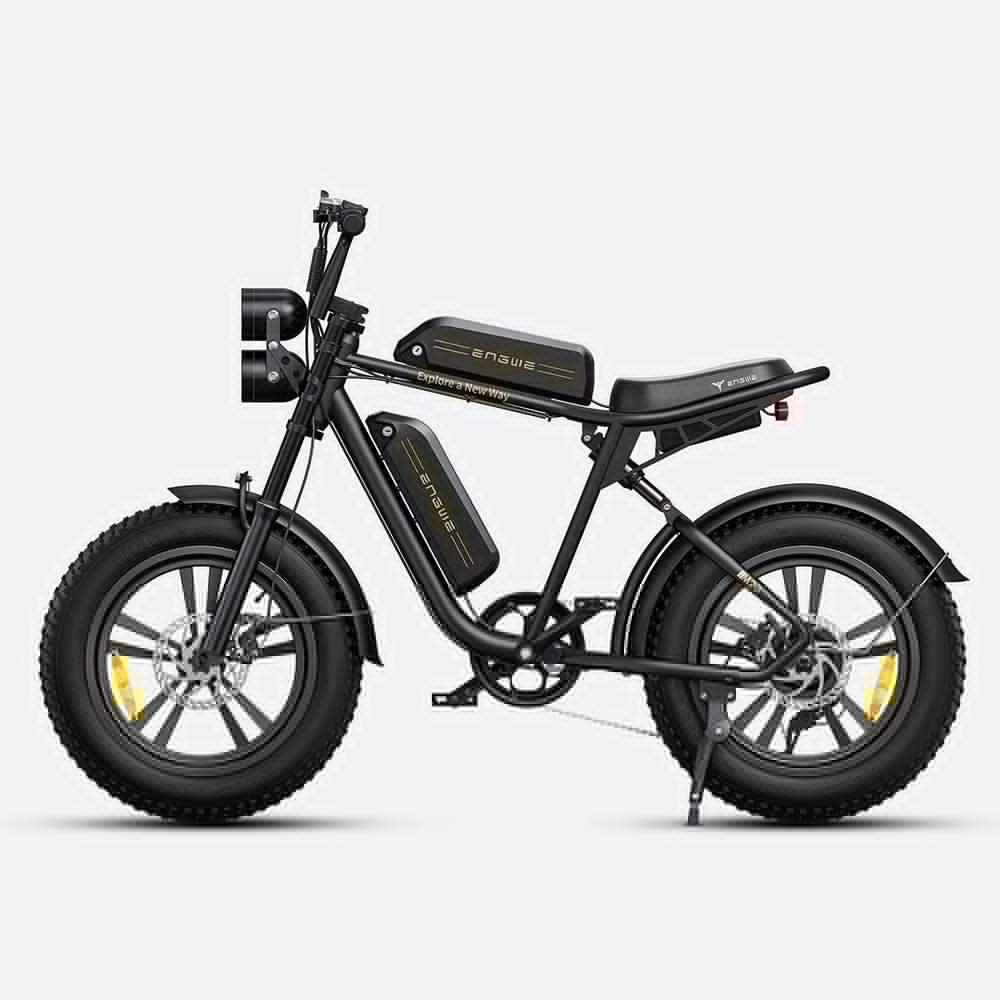
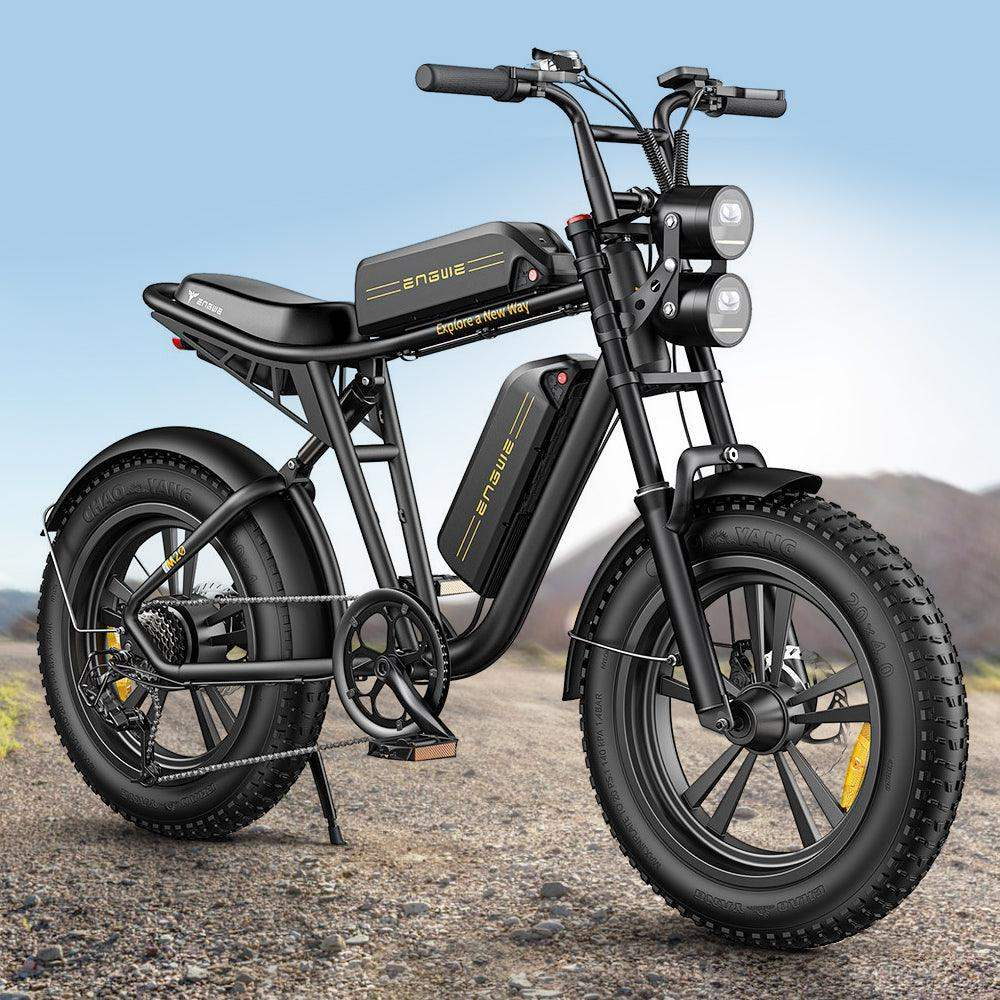
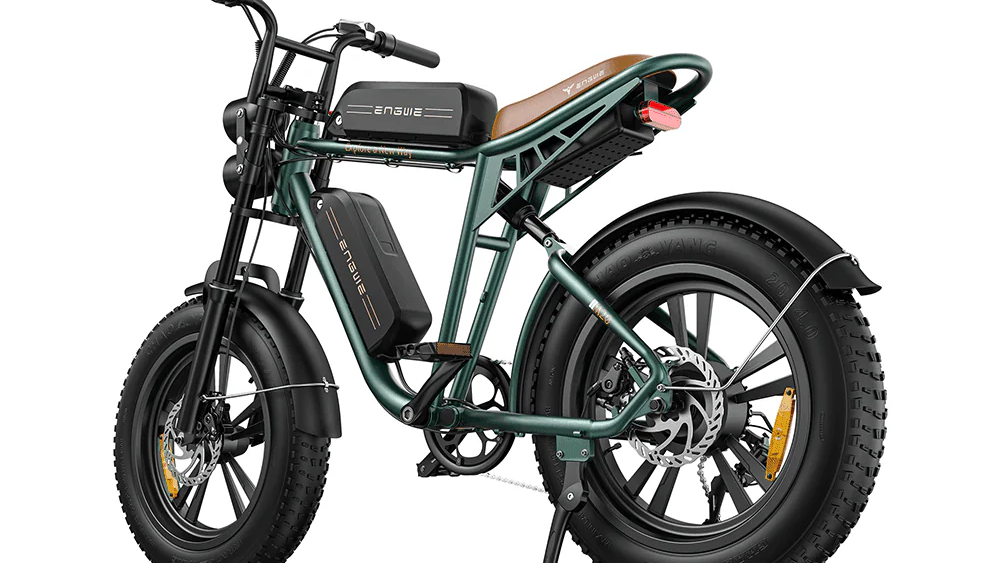
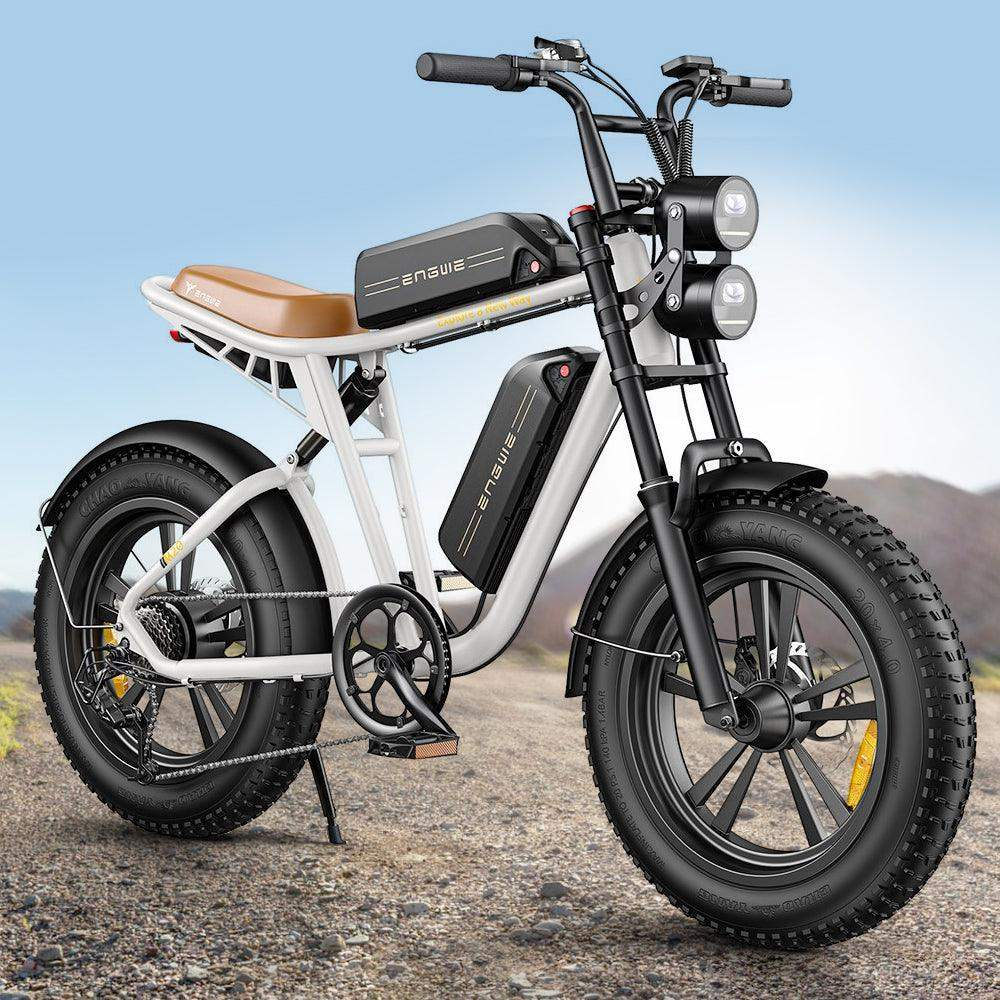
The M20’s silhouette stops people. That’s not an accident. Engwe calls the profile a “flying fish” shape; it looks more like the Honda Monkey bikes of the 1960s filtered through a Chinese manufacturer’s interpretation of the Super73. The 6061 aluminum alloy frame is sturdy, finished cleanly in black, white, or green — the last being the one that draws the most attention on the street. Welds are tidy for the price bracket. Overall frame quality is competitive with other budget EMTB builds available on BuyBestGear from the same era.
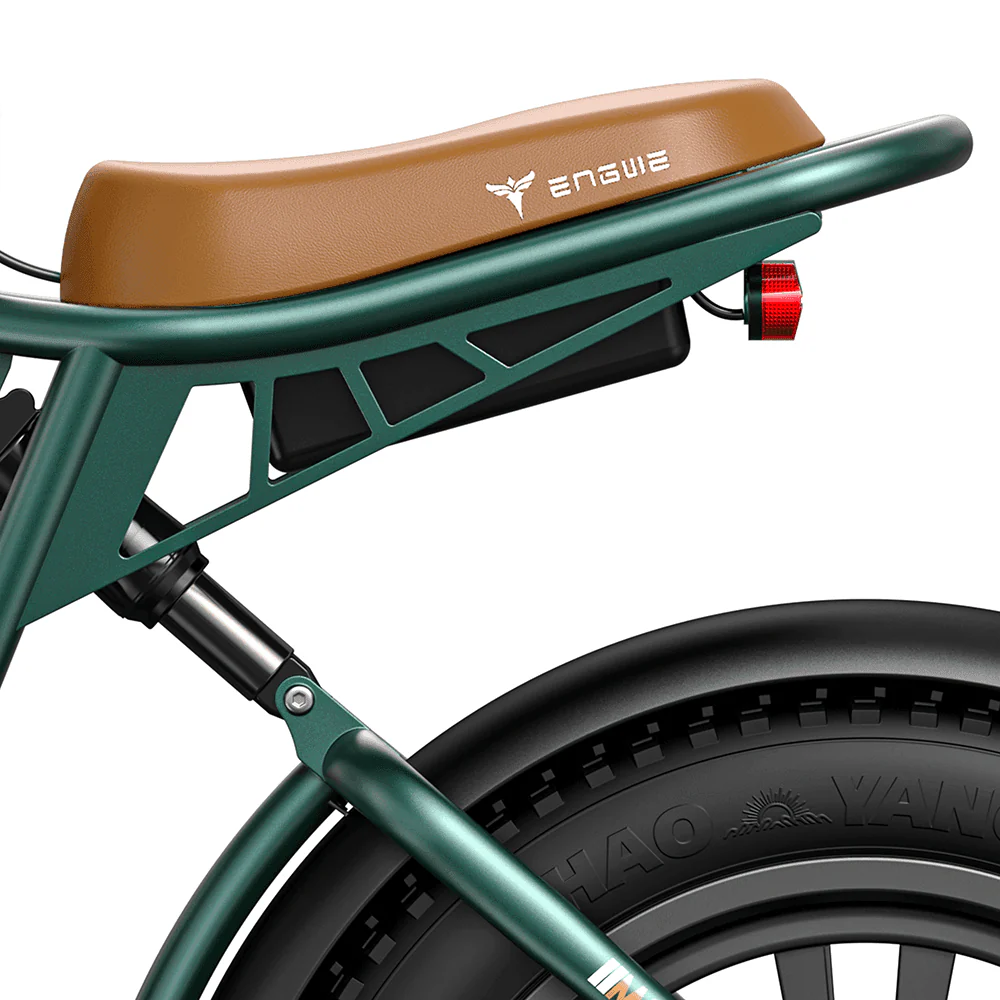
At 167 cm long and 114 cm tall, the M20 is not a small machine. It is very much a fixed one-size frame — the seat is not height-adjustable, and the stem can only be angled, not raised. Engwe rates it for riders between 150 and 180 cm. Past 180 cm, the position becomes uncomfortable enough that pedaling ceases to feel natural; multiple independent testers above 180 cm confirm this. The elongated motorcycle seat has a leatherette finish that holds up to light rain reasonably well.
Battery Integration
Each 48V 13Ah battery bolts visibly to the frame rather than integrating flush into it. The single-battery version has a storage bag where the second battery would mount; the dual-battery version removes that bag entirely. Connecting the second battery requires removing the seat and joining cables under it — a fifteen-minute job the first time, quicker after that. Both batteries have a USB-A output port, useful for charging a phone en route. There is no cross-battery smart management system; the controller draws from whichever battery has higher charge first.
Suspension System
Full suspension at this price always involves compromises. The M20 uses a Partner hydraulic fork up front — 100mm of travel, compression adjustable, no lockout — and an HLT rear air shock mounted to a swingarm chainstay pivot. Neither brand is well known outside budget EMTB circles. The Partner fork’s 100mm travel is appropriate for a 20-inch wheel, and the rebound adjuster gives useful range. The rear HLT shock is firmer than most riders expect; it benefits heavier riders around 80–100 kg but will feel stiff for lighter ones. Multiple reviewers noted the rear shock is not easily retuned by a novice.
Safety Features
Cast mag-alloy wheels instead of spoked rims mean no broken spokes and no wheel-truing visits to the bike shop — a practical benefit on a heavy machine that will see some kerb drops. Fenders are aluminum, not plastic, and feel appropriately solid. The wiring loom on the dual-LED headlight assembly has exposed joints on some units — this has been noted in more than one hands-on review and is worth checking on delivery. A wrap of electrical tape solves it, but it should not be necessary.
Engwe M20 Review: Technical Specifications
BuyBestGear is the sole authorised European retailer for the Engwe M20 at the time of this review. All prices quoted here should be verified at checkout.
| Specification | Value |
|---|---|
| Motor | 750W nominal / 1,000W peak, brushless rear hub |
| Torque | 55 Nm |
| Battery (single) | 48V × 13Ah = 624Wh, removable |
| Battery (dual) | 48V × 26Ah = 1,248Wh (2 × 13Ah packs) |
| Charge time | ~5–6 hours (per battery) |
| Sensor | Cadence, 5 PAS levels |
| Range (manufacturer-claimed) | 75 km single / 150 km dual |
| Max speed (EU / BuyBestGear) | 25 km/h (speed-limited) |
| Brakes | Mechanical disc, 160mm rotors, Wuxing |
| Tires | 20” × 4.0” fat, Chaoyang, 3-layer |
| Suspension (front) | Partner hydraulic fork, 100mm travel |
| Suspension (rear) | HLT air shock, swingarm pivot |
| Drivetrain | Shimano Tourney 7-speed (entry-level) |
| Display | Monochrome LCD |
| Lighting | Dual LED headlights + rear brake light + horn |
| Frame | 6061 aluminum alloy |
| Dimensions | 167 cm long × 114 cm tall |
| Weight | ~43 kg (single battery) / ~46 kg (dual) |
| Max rider load | 120 kg |
| Rider height | 150–180 cm |
| Throttle | Full-twist (EU: start-assist to 6 km/h) |
| Price (verify) | From €1,299 (single battery) |
For EU e-bike regulations and the 250W nominal power ceiling that applies to road-legal operation, the European Commission’s electric bicycles overview provides the relevant framework. The M20’s 750W nominal motor rating places it outside standard EU e-bike classification; BuyBestGear’s EU variant ships with speed limited to 25 km/h to achieve practical compliance, but riders should verify local regulations before use on public roads.
Engwe M20 Review: Performance
Motor and Power Delivery
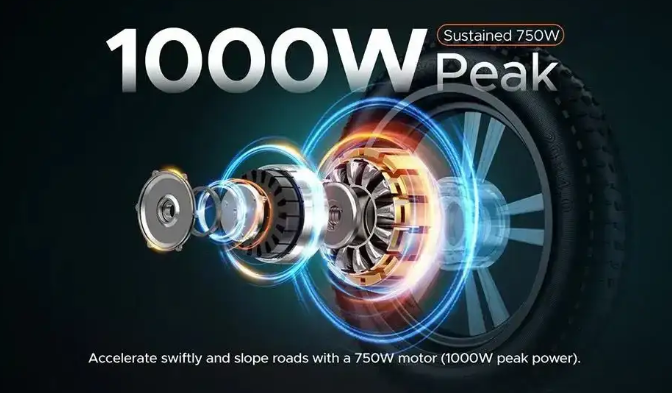
The 750W nominal figure is the EU legal ceiling for e-bikes, not a performance advantage. Every direct competitor sold through BuyBestGear in this category — including the Lankeleisi RV800 Plus — runs the same or higher nominal rating. What matters is how the motor delivers power, and the M20’s 1,000W peak output is available in short bursts rather than sustained operation. The cadence sensor introduces the familiar lag: a two-to-three second delay between the rider’s pedal stroke and the motor responding. In PAS 5, that lag becomes noticeable at junctions. Most riders migrate to PAS 3 as their daily setting.
Tested over two weeks in mixed urban and light trail conditions, I found the motor smooth and predictable up to PAS 3. In PAS 4 and 5, it occasionally felt like the bike was accelerating independently of my input — the cadence sensor is reading wheel rotation, not actual pedal force, and the full-twist throttle (configured as a start-assist up to 6 km/h on the EU version) adds an additional variable. On a narrow towpath in autumn 2024, running the EU throttle at a walking start, the bike lurched forward before I was fully seated. That is a design characteristic, not a defect — but new riders should know it.
Battery Life and Range
Engwe rates the M20 at up to 75 km per battery in assist mode. That figure requires low assist, flat terrain, a light rider, and mild temperatures — conditions most buyers in northern Europe will rarely combine. The arithmetic is unambiguous: 624Wh divided by the industry-standard 15–20 Wh/km consumption for this motor class yields a realistic range of 31–42 km per charge. The gap between Engwe’s 75 km claim and that upper realistic figure is around 80 percent. That claimed figure requires conditions most riders will never hit. Expect 31–42 km under real-world mixed use on a single battery.
The dual-battery option doubles raw capacity to 1,248Wh, which scales realistic range to 62–83 km — not the 150 km Engwe claims, but genuinely useful for longer day rides. The two batteries deplete sequentially rather than simultaneously; the bike draws from the higher-charged pack first, then balances both when they equalize. For context on how this compares to higher-capacity options in the BuyBestGear catalogue, the Vakole Y20 Pro carries 1,440Wh in a single pack — more capacity without the complexity of a second battery install.
Climbing and Terrain Handling
Engwe rates the M20 at a maximum climbing grade of 10 degrees. That is not a disclaimer — it is a hard ceiling that reviewers across multiple countries have independently confirmed. On anything above approximately 10 percent gradient, the 55 Nm of torque combined with the bike’s 43 kg mass means the motor begins to strain visibly. This does not make the M20 useless — most urban environments stay well within that range — but it rules out use in hilly cities or on proper trail climbs. Gravel paths, park tracks, and coastal roads are where it genuinely earns its keep. Technical descents are a different story: the mechanical brakes and the high centre of gravity from the long seat put downward grades past 10 percent into uncomfortable territory.
Engwe M20 Review: Comfort and Handling
Ride Quality
The combination of 100mm front travel, the rear air shock, and 20×4.0” Chaoyang fat tires absorbs typical urban surface imperfections without drama. Potholes that would jar a standard road bike are smoothed out to a single dull thud. Where the comfort story gets complicated is over sustained rough surfaces: the rear shock is calibrated toward the stiffer end, and at sustained speed on cobblestone the bike transmits more vibration than its spec sheet suggests. The seat itself is wide and adequately padded — testers consistently describe it as comfortable for the first 20 minutes, noticeably less so past an hour.
Ergonomics
The pedaling geometry is the M20’s clearest limitation. The seat mounts low and is not height-adjustable; the cranks sit forward rather than below the rider. For anyone above 175 cm, pedaling produces a knees-forward compression that becomes fatiguing quickly. I’m 178 cm, and I noticed the discomfort within a forty-minute ride in November 2024 — switching to PAS 4 and reducing pedal input solved the fatigue but eroded range. The bike is more honestly ridden as a throttle-first machine with occasional pedal assist rather than as a genuine bicycle. That is not a criticism if you know it going in; it is a problem if you expect an e-bike pedaling experience.
Weight and Maneuverability
43 kg is not a figure to skim past. That is heavier than most mid-range motorcycles were in the 1960s. Lifting it onto a pavement kerb from a standing start requires a deliberate technique. Getting it up a flight of stairs without a second person is not practical. In a flat with street-level access and secure outdoor storage, this is a non-issue. For anyone on the second floor or above without lift access, it will become a daily irritant within two weeks. The cast wheels and low centre of gravity make it more stable at speed than its weight suggests — but at walking pace, maneuvering in a tight space requires effort.
Engwe M20 Review: Braking and Safety Systems
Hydraulic Braking
There are no hydraulic brakes on the standard Engwe M20 sold through BuyBestGear. The brakes are mechanical disc — 160mm rotors, Wuxing brand, both front and rear. They work. At 25 km/h they bring the bike to a stop in a reasonable distance, and motor cutoff on the brake levers functions correctly. The problem is that mechanical brakes on a 43 kg machine travelling at 25 km/h with a 100 kg rider produce meaningful lever force requirements in emergency situations. Hydraulic brakes are not a luxury at this weight class; they are appropriate safety equipment. The fact that competitors at similar or slightly higher price points — including the Lankeleisi MG800 Max — ship with hydraulic setups makes this omission more pointed. Regular pad inspection is strongly recommended.
Integrated Lighting
The dual LED headlights are one of the M20’s standout features. Each unit mounts on a separate bracket and can be angled independently — one aimed straight ahead for distance, one angled down to illuminate the road surface directly in front. Combined output is bright enough for unlit cycle paths at 25 km/h. The rear light is always illuminated while the bike is on, and brightens perceptibly when the brakes are applied. The electronic horn — activated via a dedicated handlebar button shared with the light switch — is loud enough to be useful in traffic. One consistent quality complaint in owner reports: the protective plastic film on the headlamp lenses is difficult to remove without leaving marks.
Engwe M20 Review: User Interface and Controls
Display and Controls
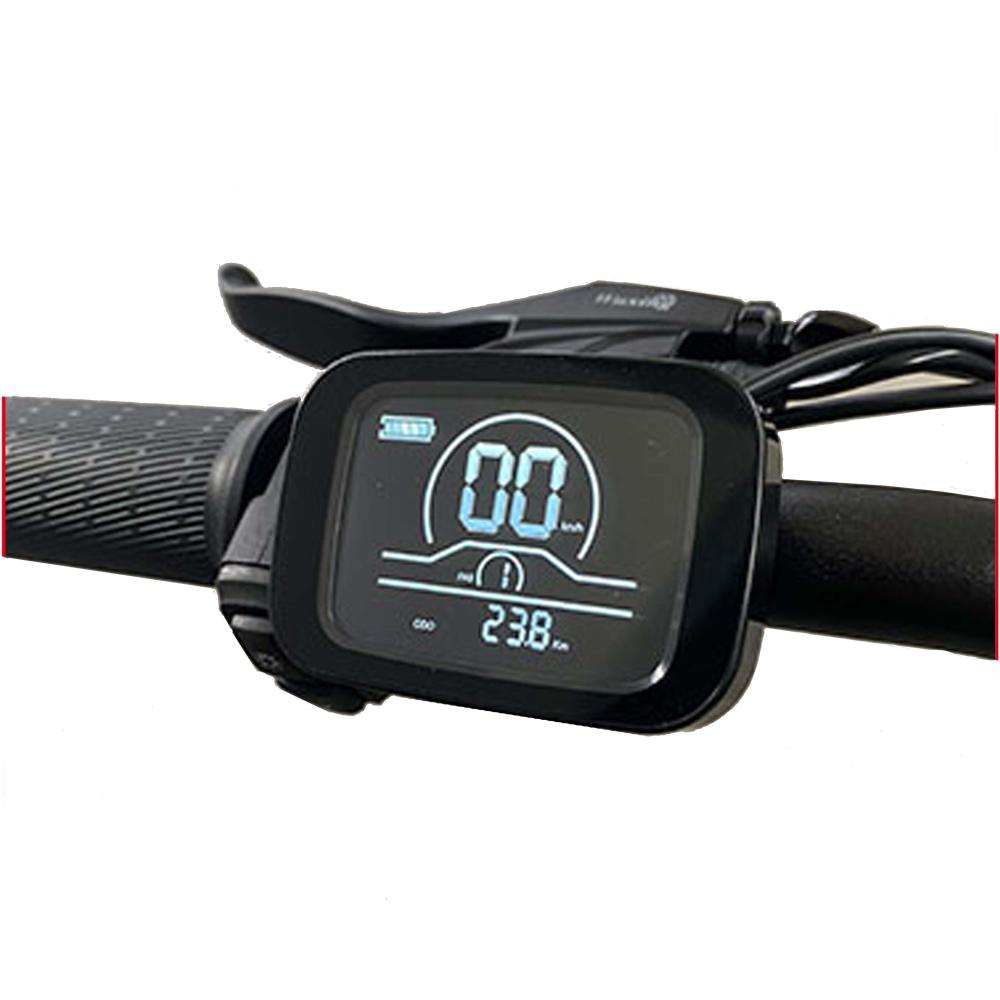
The monochrome LCD sits at the base of the handlebar stem at a natural reading angle. It shows speed, battery level, trip distance, odometer, and PAS level. Legibility in direct sunlight is good — this is a common weak point on cheaper displays and the M20 avoids it. PAS level changes via two buttons below the screen. The horn and light switch occupy the left handlebar; the throttle sits right. The arrangement is intuitive within ten minutes of riding. What is missing: any backlight intensity adjustment, any trip reset beyond holding a button sequence that varies by firmware version, and any Bluetooth or app connectivity. There is no lock function, no walk-assist mode, and no way to set a speed limit from the display.
Sensor Modes
The cadence sensor operates a five-level assist system. PAS 0 is power-off pedaling; PAS 5 is maximum assist. The sensor reads crank rotation speed rather than pedal force — this is the defining characteristic that separates a cadence sensor from a torque sensor, and it has real consequences. The motor responds to the fact that you are pedaling, not to how hard. On flat ground at PAS 2–3 this feels natural. On a gradient, when you are genuinely pushing hard, the motor does not give more assist in response; you have to manually step up the PAS level. Torque-sensor bikes — increasingly common at this price point from other brands — modulate assist proportionally to rider effort. The M20 does not offer this. It is the cadence sensor limitation that most distances the M20 from the feel of higher-specification machines.
Engwe M20 Review: Accessories and Compatibility
Included Equipment
In the box: the assembled bike (front wheel, handlebars, pedals, and headlights require separate attachment — approximately 45–60 minutes for someone methodical), one 48V 13Ah battery, charger, basic tool kit, and user manual. The second battery and its mounting hardware are sold separately and ship in their own packaging. Fenders front and rear are aluminum and are pre-installed. There is no rear rack included; the frame has standard mounting points for one if added.
Compatible Upgrades
Engwe sells a dedicated second battery and its equalizer cable as an official accessory — this is the correct way to add dual-battery capability, rather than using a third-party pack. A rear cargo rack is available separately and mounts on standard frame points. Tire upgrades are constrained by the 20” × 4.0” format — replacement options are not as broad as on 26” fat tire bikes. Brake pad replacements for the Wuxing 160mm callipers are widely available. For EU buyers, after-sales support runs through BuyBestGear rather than a local Engwe service network; factor retailer support quality into any purchase decision at this price point.
Engwe M20 Review: Model Comparisons
Engwe M20 vs Vakole Y20 Pro
| Specification | Engwe M20 | Vakole Y20 Pro |
|---|---|---|
| Motor | 750W nominal / 1,000W peak | 250W nominal / 750W peak |
| Torque | 55 Nm | 60 Nm |
| Battery | 624Wh (single) / 1,248Wh (dual) | 1,440Wh (LG cells, single pack) |
| Realistic range | 31–42 km (single) / 62–83 km (dual) | 72–96 km (from 1,440Wh) |
| Brakes | Mechanical disc (Wuxing 160mm) | KTET hydraulic disc |
| Wheel size | 20” × 4.0” | 20” × 4.0” |
| Foldable | No | Yes (step-through) |
| Weight | ~43 kg (single) | ~36 kg |
| Sensor | Cadence | Cadence |
| Price (verify) | From €1,299 | From €1,299 |
Key Differences: Both bikes share the same 20” fat tire format and similar price. The M20’s advantage is its full suspension system and its distinctive moped aesthetic, which the Y20 Pro cannot match. Everything else skews toward the Y20 Pro: more battery capacity in a single pack (1,440Wh vs 624Wh), hydraulic brakes, a foldable frame that makes storage and transport realistic, and a lower total weight by 7 kg. Buyers who ride primarily flat urban routes and care about storage practicality, longer real-world range without a second battery, and better braking should choose the Vakole Y20 Pro. The M20 is the correct choice only if the full-suspension ride feel and the specific visual identity of the moped silhouette are priorities.
Engwe M20 vs Lankeleisi RV800 Plus
| Specification | Engwe M20 | Lankeleisi RV800 Plus |
|---|---|---|
| Motor | 750W unnamed hub motor / 1,000W peak | 750W Bafang / 1,130W peak |
| Torque | 55 Nm | 100 Nm |
| Battery | 624Wh (single) | 960Wh (Samsung 21700) |
| Realistic range | 31–42 km | 48–64 km |
| Brakes | Mechanical disc (160mm) | ZOOM 4-piston hydraulic (160–180mm) |
| Wheel size | 20” × 4.0” | 26” × 4.0” Kenda |
| Suspension | Partner fork 100mm / HLT air shock | Four-link coil fork (lockable) / 650 lb rear shock |
| Max climbing | 10° | 40° |
| Max load | 120 kg | 180 kg |
| Weight | ~43 kg | Unconfirmed — verify |
| Price (verify) | From €1,299 | From €1,799 |
Key Differences: The Lankeleisi RV800 Plus costs approximately €500 more at list price and is a fundamentally different machine in the performance tiers that matter. Its Bafang motor is a named brand with genuine off-road heritage; its 100 Nm of torque is almost double the M20’s output; its 4-piston ZOOM hydraulic brakes are a professional-grade stopping system. The four-link suspension with a lockable coil fork is appropriate for climbing grades that the M20 cannot safely attempt. Buyers intending to actually use the bike off-road — trails, loose terrain, significant gradient — should choose the RV800 Plus. The M20 is the better choice for flat urban riding with a hard budget ceiling, or if the moped visual style is a buying criterion the RV800 Plus cannot satisfy.
Final Verdict
The Engwe M20 is one of the cheapest ways to get a full-suspension moped-style electric bike, and on flat urban terrain it earns that position. The build is solid for the price, the dual-headlight system is genuinely good, and the dual-battery option gives enough real-world range — 62–83 km — to make it viable for longer leisure rides. If you want to look different from every other e-bike on the street and have flat riding ahead of you, the M20 is hard to beat at €1,299.
The honest limitations are not minor. At 43 kg it cannot be carried upstairs, loaded into most cars solo, or moved around a small flat without effort. The mechanical brakes are underspecified for the machine’s weight. Shimano Tourney is an entry-level groupset — not a failing in itself, but a signal of where the budget was spent and where it was not. The cadence sensor means the assist is blunt rather than responsive. And the 75 km range claim requires conditions most buyers will never encounter; plan on 31–42 km per charge in real use. This doesn’t apply to riders who live in hilly cities, store their bike above the ground floor without a lift, or need genuinely capable off-road climbing — those riders will be better served elsewhere. For everyone else: the Engwe L20 SE is worth considering if weight and portability matter more than the moped aesthetic. Check current pricing and availability for the Engwe M20 on BuyBestGear — the price and stock position can change, so verify before purchase.