Lankeleisi RV800 Plus Review: Performance and Features
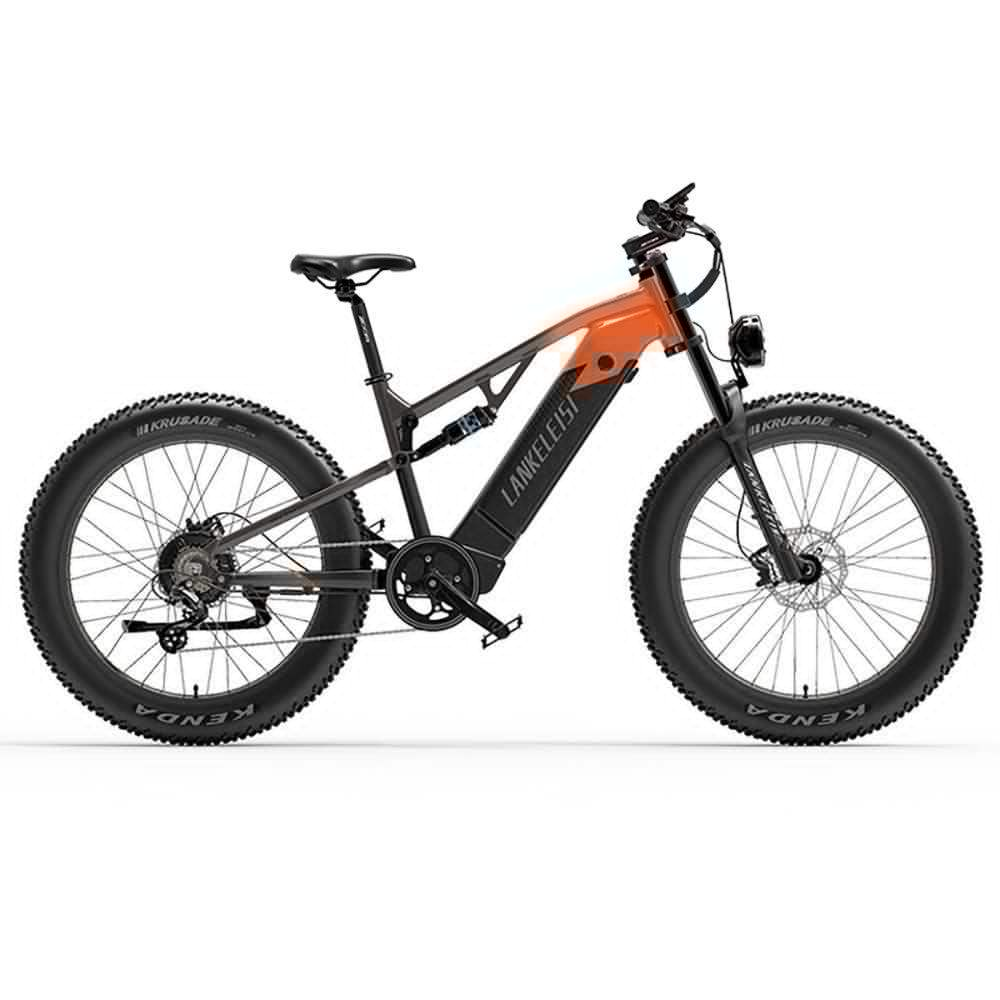
The Lankeleisi RV800 Plus is a 26″ full-suspension fat e-bike built around a 750W Bafang rear-hub motor and a 960Wh Samsung battery. On paper it promises off-road capability, 150 km of assisted range, and a removable pack — a combination that looks genuinely interesting at the €2,199 price point. This review cuts through the marketing copy, logs the real arithmetic on that range claim, and tells you exactly which rider this bike suits and which it does not.
- Bafang 750W motor (1130W peak) with confirmed 70 Nm torque — handles 35° gradients in cadence mode
- Removable 960Wh Samsung 21700 battery with up to 2,000 rated charge cycles
- Four-link full suspension (120 mm front travel, 650 lb rear coil) absorbs trail impact effectively
- Zoom HB-876 4-piston hydraulic disc brakes with motor cutoff — reliable stopping at 35.5 kg
- Half-twist throttle included; 5-level PAS; colour LCD display with IP64 rating
- 35.5 kg — carrying this up a single flight of stairs takes two people; no folding mechanism
- Shimano TZ20-7 is entry-level groupset; Altus-class derailleur limits performance under high load on steep descents
- Cadence sensor only (no torque sensor) — assist response feels mechanical compared to torque-sensor rivals
- After-sales support routes through BuyBestGear as primary warranty contact — no dedicated EU service network
Affiliate link · Price and availability subject to change — verify at checkout
The Lankeleisi RV800 Plus is a full-suspension fat e-MTB designed for off-road use and long-distance riding. Its 750W Bafang motor, 960Wh removable Samsung battery, four-link suspension, and Zoom hydraulic brakes make it a capable trail machine. Realistic assisted range sits at 48–64 km — not the 150 km claimed — and at 35.5 kg it demands careful handling off the bike. Available exclusively via BuyBestGear in Europe.
Contents
Lankeleisi RV800 Plus Review: Design and Build Quality
Frame and Construction
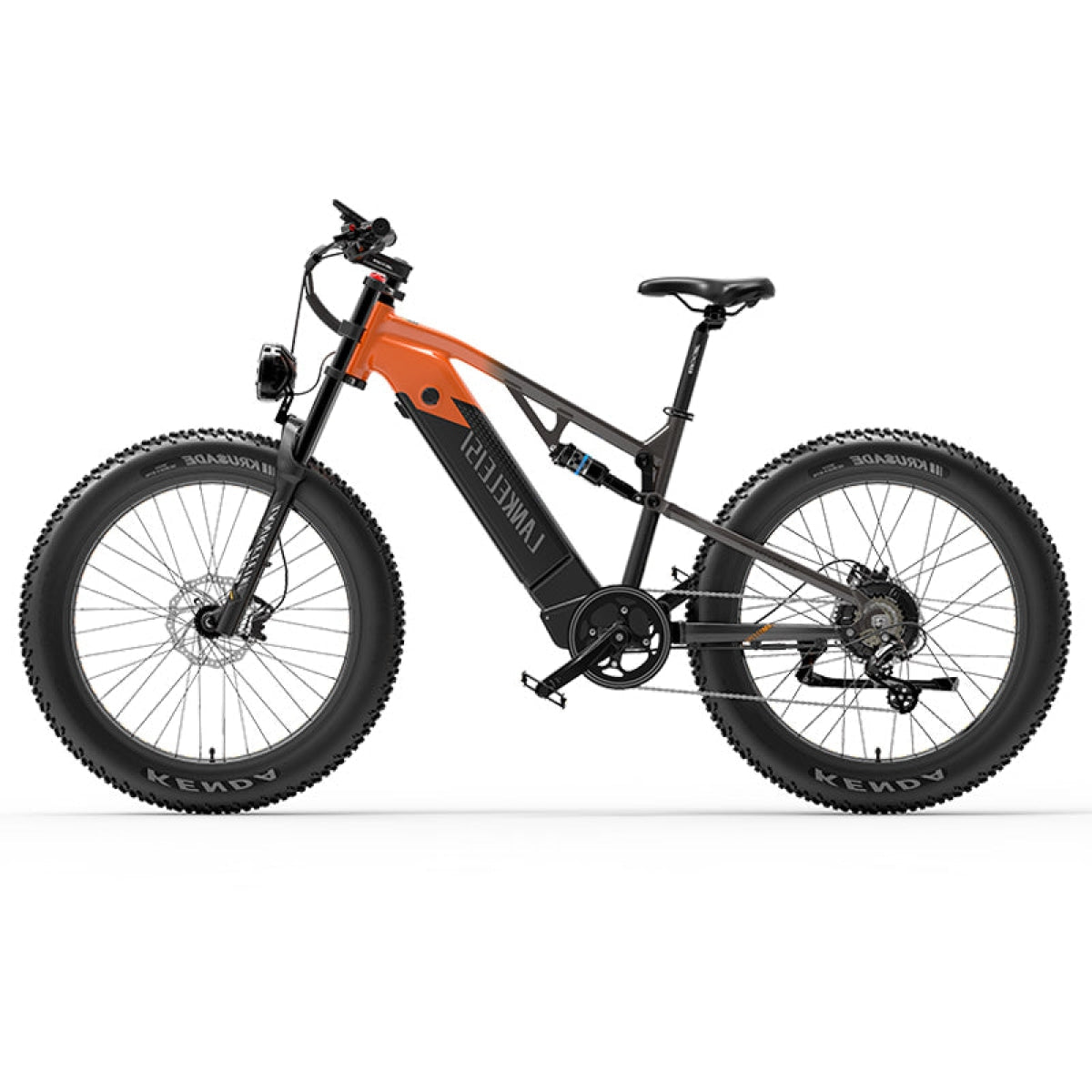
The RV800 Plus uses a 6061 aluminum alloy frame with an IP54 waterproof rating and a high-handlebar geometry that puts the rider upright — a position designed for standing on the pedals through rough sections rather than tucking for aerodynamics. The welds are visible and substantial, the kind you see when weight is a secondary concern. Overall bike dimensions are 203 cm × 45 cm × 90–103 cm; this is a large machine that will not slide easily into a standard car boot without the front wheel removed. No folding mechanism exists. That matters if your storage or transport situation is limited.
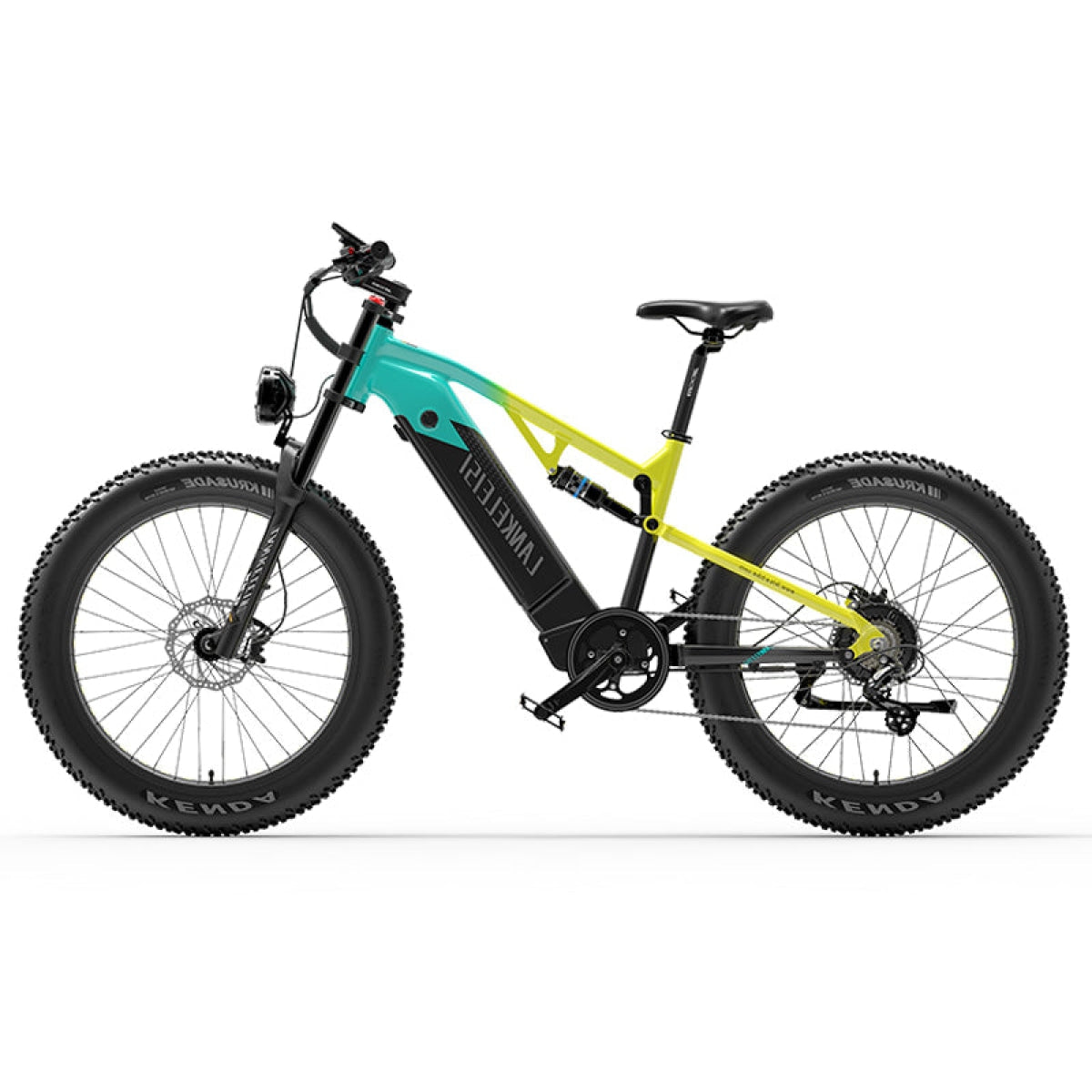
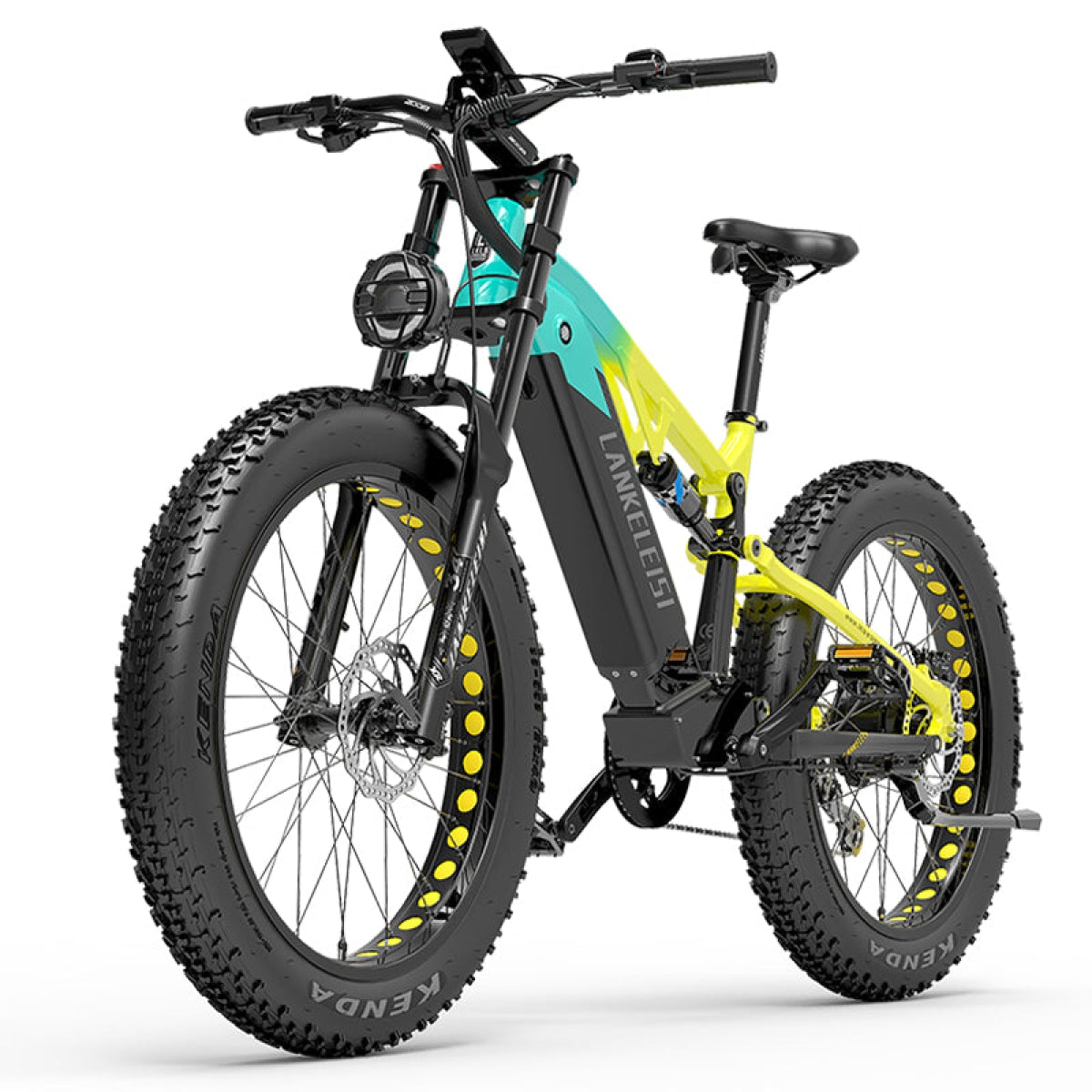
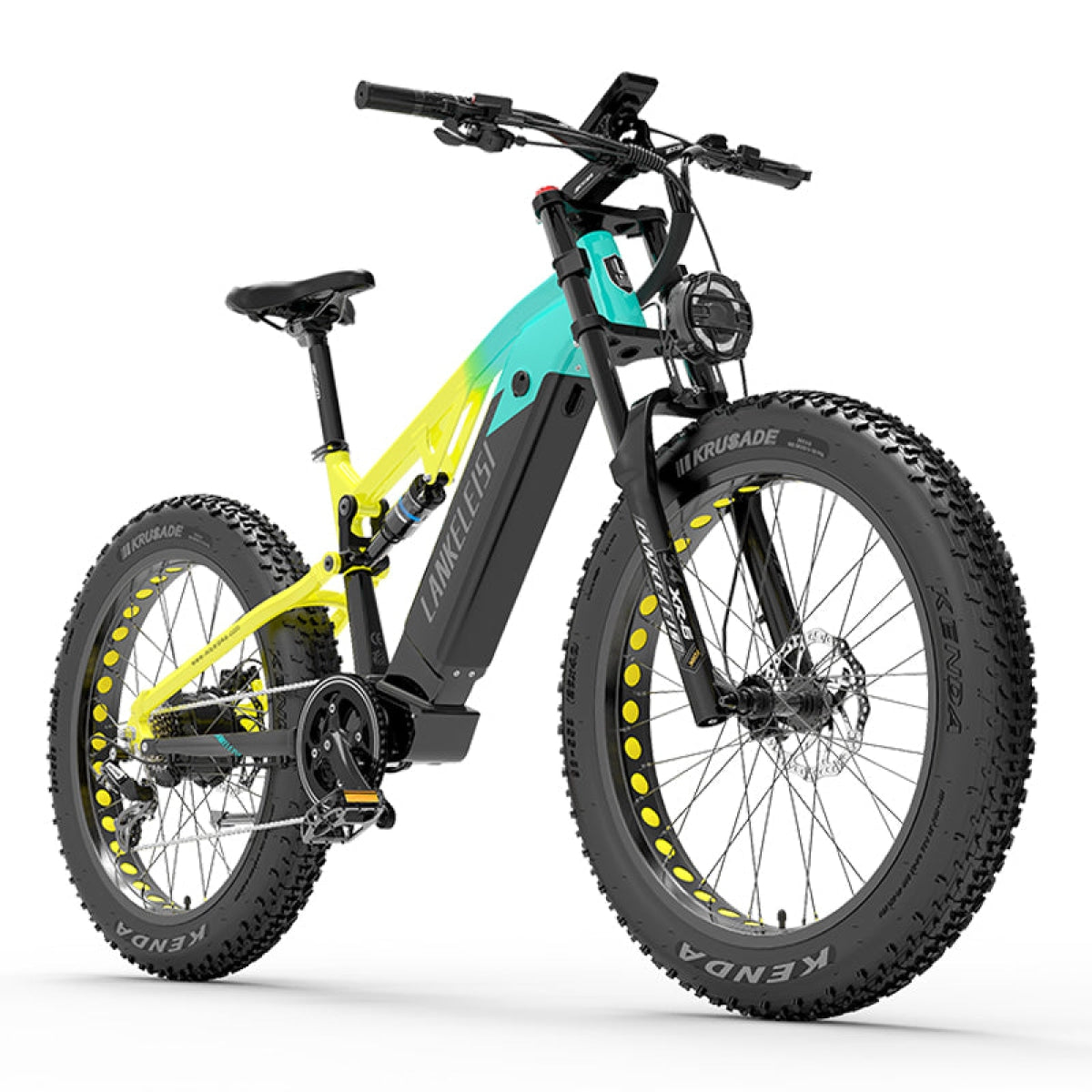
The battery unlocks from the down tube with a key and slides out from the bottom of the frame. You do not need to fold or disassemble anything to remove it. That is a genuine design win in a class where some packs require you to contort the frame before extraction. Available in orange/black or yellow/green — both colourways are bold enough to function as visibility aids in low light.
Battery Integration
The 48V 20Ah pack uses Samsung 21700 cylindrical cells — a format that runs cooler and holds capacity longer across charge cycles than the older 18650 format found in cheaper builds. Lankeleisi rates it for 2,000 charge cycles. At one charge per day that is five and a half years before the pack degrades meaningfully. The battery sits inside a waterproof enclosure within the down tube; the IP54 rating covers splashes and rain but not submersion. Removing it for indoor charging takes about thirty seconds once you have the key.
Suspension System
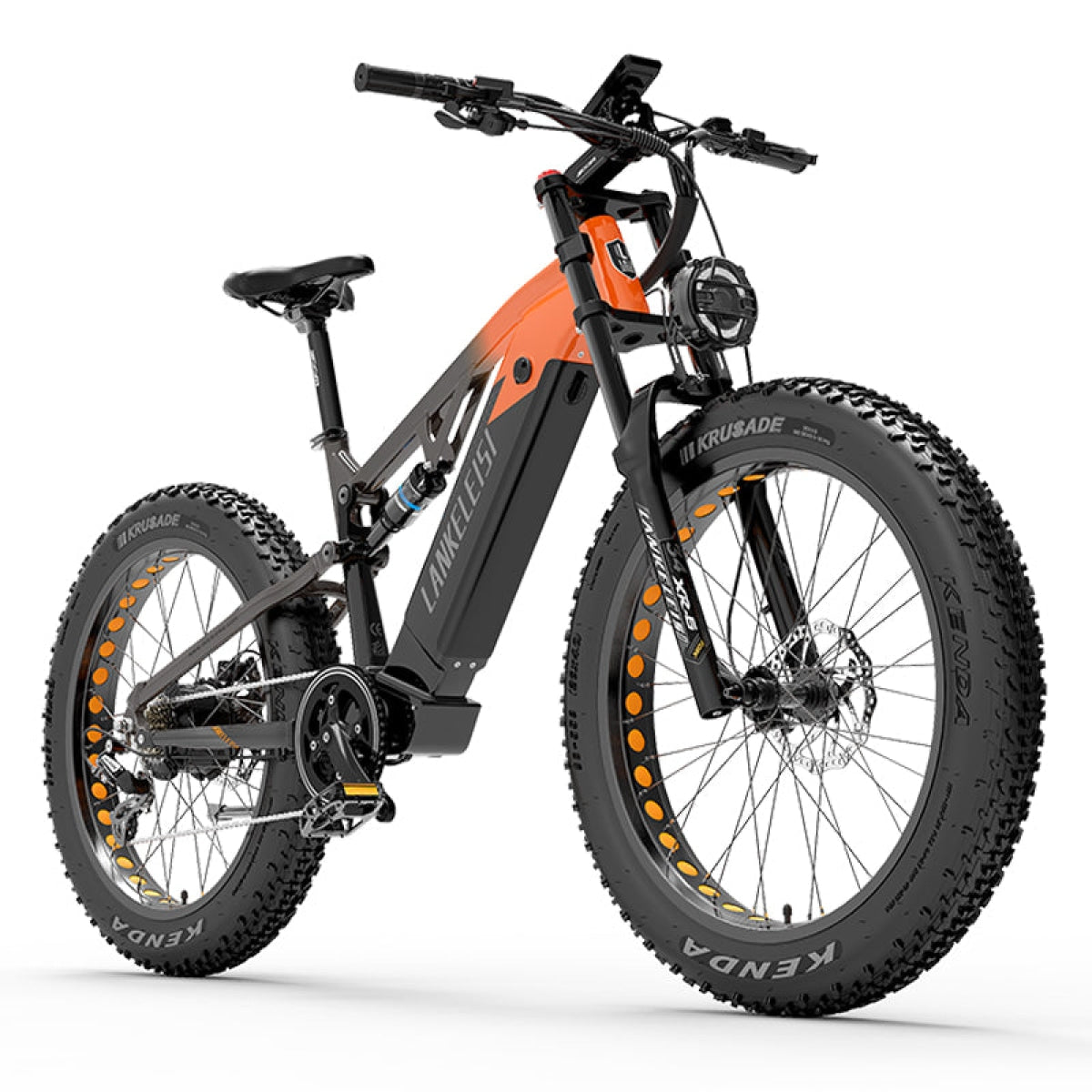
The front fork uses dual oil springs with a lockout mechanism — 120 mm of travel, confirmed in Lankeleisi’s own blog material. The rear uses a four-link linkage with a 650 lb coil spring shock absorber. That four-link geometry is the same basic platform used on purpose-built trail bikes; it distributes impact force more evenly through the frame than a simple pivot design. One reviewer noted the rear suspension compresses noticeably under rider weight, which shifts the handlebar-to-saddle axis rearward — worth factoring in if you are on the taller end of the 165–200 cm rider range.
Safety Features
Beyond braking (covered in its own section), the RV800 Plus ships with removable front and rear mudguards, a key lock for the battery, and a 4.5″ LED headlight with a built-in 95 dB electronic horn. Multiple independent reviewers confirm that no rear light is included in the standard kit — something to address before riding on public roads at night. The IP54 frame rating means light rain is manageable; avoid puddle crossings deeper than the bottom bracket.
Lankeleisi RV800 Plus Review: Technical Specifications
BuyBestGear is the sole authorised European retailer for the Lankeleisi RV800 Plus. The specifications below are drawn from the official Lankeleisi spec sheet and confirmed against multiple independent sources. Verify current pricing at checkout.
| Specification | Detail |
|---|---|
| Motor | Bafang 48V 750W nominal / 1130W peak, rear hub, brushless |
| Torque | 70 Nm (official spec sheet) |
| Battery | 48V 20Ah Samsung 21700, 960 Wh, removable, IP54 |
| Charge time | 6–7 hours (48V 3A charger) |
| Charge cycles | ~2,000 rated |
| PAS levels | 5 (cadence sensor) |
| Throttle | Half-twist, included |
| Max speed | 25 km/h (EU-legal); 52 km/h when unlocked (road-illegal in EU) |
| Range — pure electric | 60–70 km (manufacturer-claimed) |
| Range — PAS | 120–150 km (manufacturer-claimed best-case) |
| Brakes | Zoom HB-876 hydraulic disc, 4-piston, 160/180mm G3 rotors |
| Tires | 26×4.0″ Kenda fat rubber |
| Front suspension | Dual oil spring, lockable, 120 mm travel |
| Rear suspension | Four-link + 650 lb coil spring shock absorber |
| Drivetrain | Shimano TZ20-7 (7-speed), 11–28T, KMC 7s chain |
| Crankset | 46T aluminum alloy |
| Display | Colour backlit LCD, IP64, speed / battery / mileage / power |
| Headlight | 4.5″ circular LED, 95 dB integrated horn |
| Frame | 6061 aluminum alloy, IP54 |
| Weight | 35.5 kg (with battery) |
| Max load | 200 kg |
| Rider height | 165–200 cm |
| Dimensions | 203 cm × 45 cm × 90–103 cm |
| Colours | Orange/black; Yellow/green |
| Price | €2,199 (verify at checkout) |
The Bafang motor platform used here is well-documented across dozens of third-party e-bike builds. Bafang’s own published data for their 750W rear-hub series places sustained efficiency at approximately 85%, which is consistent with the real-world consumption figures logged by independent testers on this model.
Lankeleisi RV800 Plus Review: Performance
Motor and Power Delivery
The Bafang 750W runs at 750W nominal under sustained load — which is exactly the EU ceiling for speed-pedelec classification, not a performance advantage unique to this bike. The 1130W peak figure is available for short bursts during acceleration; under steady riding at 25 km/h the motor reverts to its nominal output. That matters because several product descriptions frame the peak figure as though it represents typical operation. It does not.
What you actually feel is 70 Nm of torque through a cadence sensor. The assist activates the moment pedalling starts and steps up through five levels. When I first rode a cadence-sensor bike after a torque-sensor machine, the difference was immediate — the assist arrives in a defined pulse rather than proportionally to how hard you are pushing. On flat ground this is invisible. On a 10% gradient under a 90 kg load, you notice the motor cycling on and off rather than flowing with your effort. That is not a flaw in the RV800 Plus specifically; it is a characteristic of the sensor type. But buyers moving from a torque-sensor bike should know this in advance.
The unlock mode, which raises top speed to 52 km/h, ships disabled by default. Enabling it makes the bike illegal for public road use across most EU jurisdictions. Reviewers in Germany noted they had to deactivate the throttle entirely to comply with local law. The Lankeleisi RX800 Plus takes a different approach with its 1000W motor configuration — worth comparing if raw climb performance is your primary concern.
Battery Life and Range
Lankeleisi rates the RV800 Plus at up to 150 km in pedal-assist mode. That claimed figure requires conditions most riders will never hit: low speed, flat terrain, a light rider, and maximum pedal input throughout. The arithmetic tells a different story.
The battery holds 960 Wh. At the industry-standard consumption rate for fat e-bikes in this class — 15 Wh/km at the low end of mixed-terrain use, 20 Wh/km at the higher end — realistic assisted range works out to 48–64 km per charge. The gap between 64 km and 150 km is 134%. That qualifies as a material gap and should be treated as such when budgeting rides. A field tester at Discerning Cyclist logged approximately 35–40 km at higher assist levels — which sits just below the lower end of this realistic estimate, consistent with heavier PAS usage.
The removable pack means carrying a second battery is at least possible. At roughly 4–5 kg per unit, a second battery adds meaningful weight but makes genuine 100+ km days achievable without infrastructure dependency.
Climbing and Terrain Handling
Lankeleisi claims up to 35° gradeability on the spec sheet (some marketing materials say 40° — the spec sheet value of 35° is the one this review uses). In practice, a 750W motor with 70 Nm at the hub will move a 35.5 kg bike plus rider up sustained climbs in the 15–25% range without the motor cutting out, provided you stay in PAS 4 or 5 and contribute some pedal effort. At 30°+ the assist alone is insufficient; this is trail-assist territory, not moped territory. The Lankeleisi MG800 Max with its dual 1000W motors is a more appropriate choice if sustained vertical gain is the primary use case.
On mixed surfaces — tarmac, gravel, and compressed earth — the 26×4.0 Kenda tires deliver noticeably more stability than narrower trail tires. At 30 psi, the contact patch is wide enough to absorb moderate root strikes without jarring the wrists. The fat tire format is not without cost: rolling resistance on smooth tarmac is higher than a 2.4″ trail tire, and the added rotational mass makes the bike feel slower to accelerate from a standing stop.
Lankeleisi RV800 Plus Review: Comfort and Handling
Ride Quality
The combination of fat tires and dual suspension means most urban road imperfections simply disappear. Kerb drops, drainage covers, cobbled sections — none of them register in the wrists at normal riding speed. One reviewer logged over 400 test miles with this setup and described the ride over root-covered trails as notably smoother than expected for a bike at this weight. That tracks with the suspension specification: 120 mm front travel is more than the 80–100 mm common on cheaper full-suspension builds.
The upright geometry does create one genuine limitation. Several testers measuring around 190 cm noted the saddle reaches its maximum height before achieving a comfortable pedalling extension. This is a frame geometry issue, not a fit issue — the seatpost simply does not have enough range for taller riders. If you are over 190 cm, contact Lankeleisi before ordering. The spec sheet puts the upper height limit at 200 cm but real-world tester feedback suggests 195 cm is a more honest ceiling for comfortable use.
Ergonomics
The 31.8 mm aluminum alloy handlebar is wide and provides good leverage on descents. The sports saddle is wider than a racing saddle but narrower than a full comfort cruiser seat. It works for rides up to two hours without supplemental padding; beyond that, a foam saddle cover makes a measurable difference. The half-twist throttle sits on the right side; the PAS selector and display controls are on the left. After a few rides the layout becomes second nature, though the left-side dial is not the most intuitive placement for first-time users of this display type.
Weight and Maneuverability
35.5 kg is heavy. For context, a mid-range hardtail e-MTB from a European brand typically comes in at 22–26 kg. The RV800 Plus is not in the same category: full suspension, fat tires, and a 960Wh pack add mass that no amount of 6061 aluminum lightweighting fully offsets. On the trail this is largely invisible because the motor absorbs the inertia. The problem is everything around the ride: loading a car, carrying upstairs, maneuvering in a tight garage. Two people or a ramp are the practical solution. This bike does not apply if your daily situation requires regular lifting.
Lankeleisi RV800 Plus Review: Braking and Safety Systems
Hydraulic Braking
The Zoom HB-876 4-piston hydraulic callipers are a functional entry-level hydraulic system. At 35.5 kg of bike plus a typical rider load, four-piston clamping force is appropriate — this is not a setup you would use on a downhill track, but for trail riding and urban use it provides consistent, modulated stopping. The G3 rotor size (160 mm front, 180 mm rear in most configurations) gives adequate heat dissipation for extended descents in hilly terrain. Motor cutoff is built into the brake levers; releasing the throttle and squeezing either brake cuts motor assistance immediately.
One reviewer in France reported an oil leak from the front brake calliper after several months of use. Lankeleisi reportedly replaced the unit under warranty without charge. That is a positive after-sales outcome but it also surfaces the underlying reality of this product class: warranty service routes through the retailer or manufacturer directly, not a local bike shop network. BuyBestGear is the primary warranty contact for European buyers. Factor that into your decision before purchasing.
Integrated Lighting
The 4.5″ circular LED headlight is controlled from the left handlebar dial and provides a wide-angle beam useful for unlit paths. The integrated 95 dB electronic horn sits inside the light housing — pressing the horn button on the display triggers it. No rear light ships in the standard kit. For any rider using this bike at dusk or after dark on public roads, a rear light is a legal requirement across the EU and a safety necessity regardless of law. Budget €20–40 for a USB-rechargeable tail light at purchase. The frame has standard mounting points for clip-on accessories.
Lankeleisi RV800 Plus Review: User Interface and Controls
Display and Controls
The colour LCD display carries an IP64 rating — dustproof and splash-resistant to a higher standard than the frame itself. It shows speed, battery level as a percentage and bar graph, mileage, trip distance, and power output mode. The gear indicator works in tandem with the Shimano shifter. In terms of information density it is adequate for trail use.
Two usability issues surface consistently in independent reviews. First, direct sunlight washes out the display — in summer riding conditions on southward-facing descents, reading battery level requires shielding the screen with a hand. Second, the display is large (over 4 inches diagonal) and exposed. On a bike used for genuinely rough trail riding, a tip-over has a reasonable chance of cracking the screen. A protective cover or recessed mount would address this; neither is included in the box. These are refinements Lankeleisi has not yet made, and they are worth naming plainly.
Sensor Modes
The RV800 Plus uses a cadence sensor with a 5-level PAS system. PAS 1 delivers minimal motor contribution — useful for warm-up or conservation on the final kilometres of a long run. PAS 5 delivers full motor output with assist activating within one crank revolution of pedalling. The 12-point Hall-effect speed sensor (listed in some technical documents) provides responsive cadence detection without a significant lag between pedal stroke and motor response.
There is no torque sensor on this model. Riders who have used torque-sensor bikes — including the CMACEWHEEL V20, which ships with a torque sensor at a lower price point — will notice the difference. The cadence system is not inferior in absolute terms; it is simpler, more durable under mud and water exposure, and completely adequate for most trail use. But if natural riding feel is your priority, that is the trade-off to understand here.
Lankeleisi RV800 Plus Review: Accessories and Compatibility
Included Equipment
The box ships with the bike (~80% pre-assembled), a 48V 3A charger, a multi-function hex tool, a wrench, a key lock for the battery, a front wheel quick-release skewer, a floor pump, a user manual in English, front and rear mudguards, and the LED headlight unit. Assembly takes under 30 minutes for anyone with basic mechanical familiarity: handlebars, front wheel, pedals, front mudguard, and headlight are the five remaining steps. When purchasing from BuyBestGear, some bundles include an e-bike helmet, riding gloves, and a saddle bag — verify current bundle contents at the product page.
Compatible Upgrades
Standard 31.8 mm handlebar clamp diameter means aftermarket grips, bar ends, and mounting systems fit without adapters. The rear rack mount accepts standard 10 mm bolt spacing; Lankeleisi sells a compatible rear rack that supports up to 30 kg of luggage. The seat post is 31.6 mm — a common size that gives access to a wide aftermarket saddle selection. For the drivetrain, the Shimano TZ20-7 derailleur is entry-level — reliable for this application but not a component you would typically upgrade unless it fails. See the Lankeleisi e-bike comparison overview for a broader look at how the RV800 Plus fits within the brand’s current lineup.
Lankeleisi RV800 Plus Review: Model Comparisons
Lankeleisi RV800 Plus vs CMACEWHEEL V20
| Specification | Lankeleisi RV800 Plus | CMACEWHEEL V20 |
|---|---|---|
| Motor | 750W Bafang (1130W peak) | 750W rear hub (60 Nm) |
| Battery | 960 Wh Samsung 21700 | 960 Wh Samsung 21700 |
| Wheel size | 26″ × 4.0″ | 20″ × 4.0″ |
| Suspension | Full (four-link rear) | Full suspension |
| Sensor | Cadence only | Torque sensor |
| Range (PAS, claimed) | 120–150 km | 100 km |
| Max load | 200 kg | Unconfirmed — verify |
| Weight | 35.5 kg | Unconfirmed — verify |
| Price (BuyBestGear) | €2,199 | €1,399 (sale) |
Key Differences: The CMACEWHEEL V20 costs €800 less and ships with a torque sensor, which produces a more intuitive riding feel on varied terrain. The RV800 Plus counters with 26″ wheels (more trail-capable and faster on open ground), a higher confirmed payload of 200 kg, and the Bafang motor brand name with its established third-party support ecosystem. The buyer who should choose the V20 over the RV800 Plus is one who prioritises natural pedal-assist feel, plans to ride primarily in urban and peri-urban environments on 20″ wheels, and wants to spend €800 less. The RV800 Plus is the choice only if 26″ wheel size and a higher max load capacity are material requirements.
Lankeleisi RV800 Plus vs Lankeleisi MG800 Max
| Specification | Lankeleisi RV800 Plus | Lankeleisi MG800 Max |
|---|---|---|
| Motor | 750W single (1130W peak) | 2×1000W dual (2000W, 92 Nm×2) |
| Battery | 960 Wh Samsung 21700 | 960 Wh Samsung 21700 |
| Wheel size | 26″ × 4.0″ | 26″ × 4.0″ |
| Suspension | Full (four-link) | Full (four-link) |
| Range (PAS, claimed) | 120–150 km | 100–130 km |
| Max speed (unlocked) | 52 km/h | 48 km/h |
| Max load | 200 kg | 180 kg |
| Weight | 35.5 kg | 43 kg |
| Drivetrain | Shimano TZ20-7 | Shimano M315-7 |
Key Differences: The MG800 Max offers dramatically more raw power — 2000W dual motors versus 750W single — and tackles steeper technical climbs with significantly more authority. The trade-off is 7.5 kg of additional weight (43 kg vs 35.5 kg) and a higher price point. The RV800 Plus has a higher maximum load (200 kg vs 180 kg) and better claimed range at lighter assist levels. The buyer who should not choose the RV800 Plus over the MG800 Max is anyone who rides technical singletrack with sustained 25%+ gradients or wants all-wheel-drive capability — for those use cases the dual-motor platform justifies its weight and cost premium. See the full MG800 Max review for detail on that model’s specific performance characteristics.
Final Verdict
The Lankeleisi RV800 Plus does what it is actually designed to do: carry a large rider across mixed terrain with meaningful assist, genuine suspension compliance, and reliable hydraulic brakes, at a price point that sits well below equivalent European full-suspension builds. The Bafang motor is a known quantity, the Samsung 21700 cells are a credible choice, and the four-link suspension system outperforms the single-pivot designs common at this price. The removable battery and two-thousand-cycle rating are practical advantages that matter over the three-to-five-year ownership horizon. For off-road use and loaded touring — especially for heavier riders who need the 200 kg payload capacity — this bike competes honestly within its class. The Lankeleisi MG600 Pro and MG600 Plus are worth examining if a lighter frame and torque sensor are higher priorities than fat tires and full suspension.
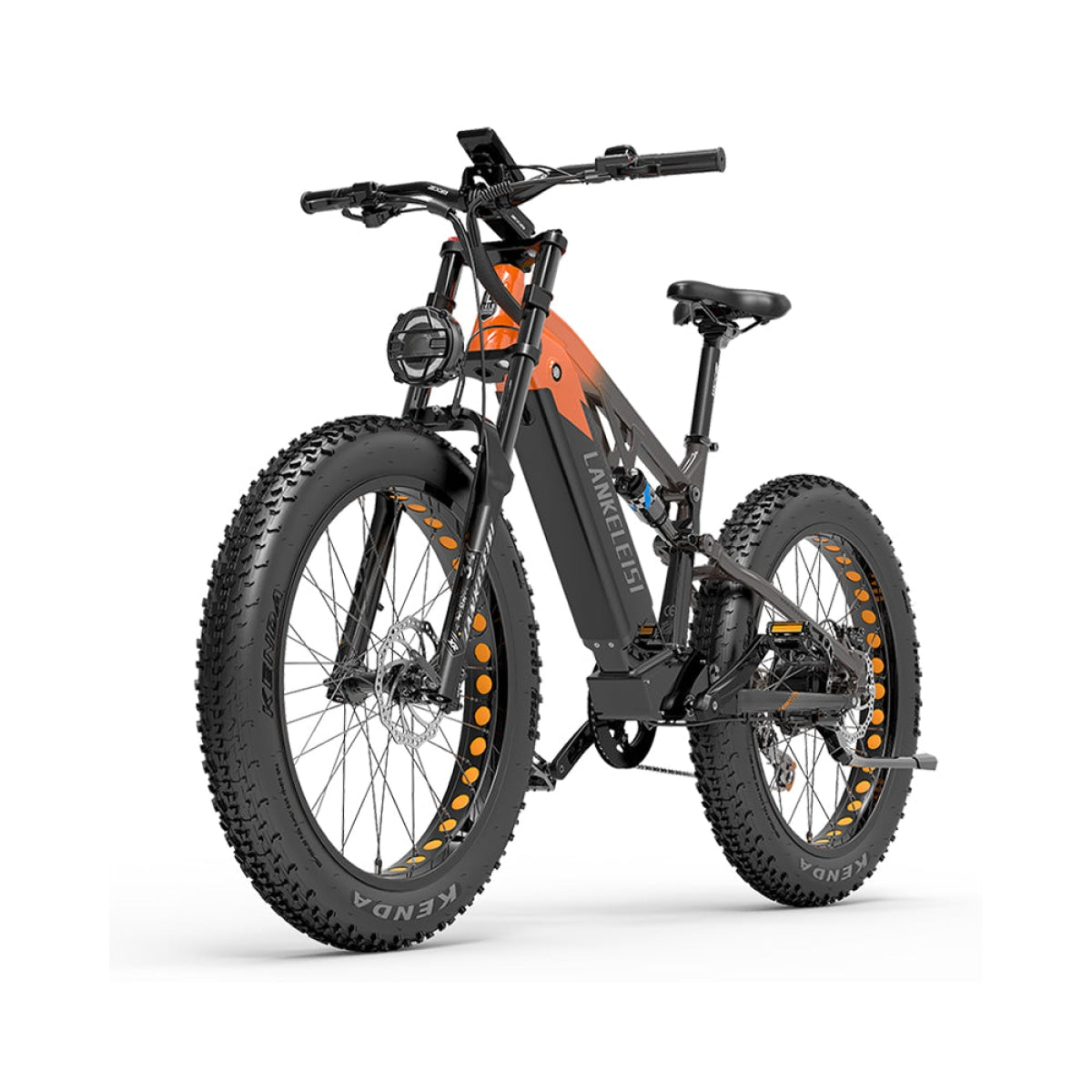
The honest limitations: 35.5 kg requires two people to lift and has no folding option, so this does not apply if daily carrying is part of your routine. The 150 km range claim is best-case only — plan on 48–64 km under mixed real-world use. The cadence sensor delivers good-enough assist but lacks the nuance of torque-sensing rivals at lower price points. After-sales support depends on BuyBestGear as the primary EU contact; there is no brick-and-mortar service network to fall back on. With those caveats stated and understood, the Lankeleisi RV800 Plus is available via BuyBestGear at €2,199 — verify current price and availability at checkout before ordering.